

When School Feels Impossible
by Adam Wurst
Is your child's resistance to school happening more often, and getting harder to manage?
You're not alone. Chronic absenteeism now affects more than 1 in 5 U.S. students, nearly double the pre-pandemic rate. Behind every attendance statistic is a family like yours: not failing, not apathetic, but genuinely struggling to understand what changed and how to help.
Every morning feels like a negotiation: the stomachaches, the tears, the missed assignments piling up. You've tried encouragement, consequences, even letting them stay home, but nothing seems to hold. Meanwhile, attendance warnings arrive, grades slip, and you're left wondering: What am I missing?
Here's what most parents don't realize: chronic absenteeism isn't about laziness or defiance. It's a signal that something in your child's system — emotional, cognitive, or environmental — has become overloaded. When you understand what's actually happening, you can finally help them move forward.
When School Feels Impossible gives you a clear, research-backed framework to help your child reengage with school — without pressure, punishment, or guesswork. You'll learn how to become your child's most effective coach, building the skills and routines they need to manage anxiety, strengthen follow-through, and rebuild confidence.
Inside, you'll discover:
~Why chronic absenteeism is rarely a behavior problem — and the three factors (anxiety, executive function, and environment) that create the perfect storm for attendance struggles.
~The STABILIZE → UNDERSTAND → BUILD → SUSTAIN framework — a four-phase approach that meets your child where they are and builds from there.
~What anxiety actually looks like in 4th graders versus high schoolers — and why the same strategies won't work for both.
~The parent-as-coach approach — how to support your child without becoming their therapist, drill sergeant, or homework police.
~Morning routines that reduce resistance — step-by-step guides for getting out the door with less conflict.
~How to work with schools strategically — what to say when teachers email, how to advocate without confrontation, and when to request formal support.
~Age-appropriate tools your child can use to communicate with teachers, manage assignments, and rebuild confidence in their own abilities.
~The bounce-back plan — what to do when setbacks happen (because they will), so one hard day doesn't become a lost week.
Plus: 13 ready-to-use tools in Appendix B — morning routine checklists by age, weekly planning templates, self-advocacy scripts for teens, and progress-tracking tools that build confidence without adding pressure.
Whether your child is in 4th grade or 12th, and whether they're missing occasional days or facing chronic absenteeism, this book meets you where you are. Practical strategies you can start using tomorrow morning — and a sustainable framework that works long-term.
You don't need another lecture about tough love or another expert cataloging your mistakes. You need clarity, compassion, and a proven path forward.
If you’re tired of dreading every school morning, get this book and start using the When School Feels Impossible framework with your child this week.
What readers are saying
“I highly recommend this guide to anyone who's child is struggling with school. I picked it up after my son, who isn't quite a teen yet, became increasingly difficult to get to school each day. We tried parent teacher conferences, bribery, switching schools, consequences, lectures, and nothing seemed to be working. Luckily, that is when we stumbled across this book. This book could not have come into our lives at a better time. It was a difficult journey filled with a roller coaster of emotions and heartache, but the end result was entirely worth it. This is a great guide to use at home between parents and kiddos, with a therapist or counselor, and even teachers and school”
— Mary Beth
“This book is a great not just for parents but for teachers too! Highly recommended if you’re looking for not just the “why” but also the “how.” The book gives real time, applicable strategies and routines to help better coach teens through what the real issues are that they’re facing. Must read for parents and teachers!”
— Lindsey Meyer Davies
“This is a great book for teens who may be struggling in school and being affected by it mentally! It doesn’t downplay how they feel and gives great tips.”
— Sarah Towler
“This book was exactly what parents need. Instead of blaming kids, it really explains what’s going on with anxiety, overwhelm, and school struggles. It’s practical, easy to follow, and full of strategies you can actually use right away. The “parent as coach” approach was a game changer for me. If your teen is struggling with school or attendance, I highly recommend this.”
— Angel Plute
“Anyone with a teen should have to read this book. It beautifully breaks down stresses that teens face , and how connected our nervous system is to our physical body. There are wonderful explanations, very helpful tips on how to connect with your teen and Ways to actually address what’s happening with them and guide them through. While also helping parents understand that as long as our intentions are in the right place and we are leading with compassion, we are doing our job and not everything is our fault. A great guide!”
— Erin
More books by Adam Wurst
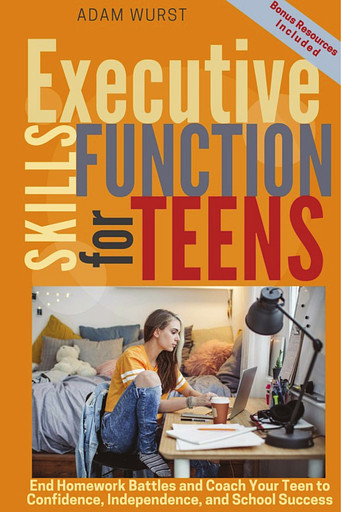
Executive Function Skills for Teens
End Homework Battles and Coach Your Teen to Confidence, Independence, and School Success
Is your teen bright, capable, and full of potential yet constantly overwhelmed, disorganized, or stuck in cycles of procrastination and frustration?
You’re not alone. And more importantly, you’re not doing anything wrong.
In Executive Function Skills for Teens, veteran educator and student success coach Adam Wurst provides parents with a clear, compassionate roadmap to help teens develop the essential skills needed to succeed in school and life. Drawing on more than 30 years of experience working with teens, families, and educators, this book reframes executive functioning not as a deficit, but as a set of teachable, coachable skills that develop over time.
Rather than relying on punishment, pressure, or constant reminders, this guide helps parents shift into the role of coach: someone who builds routines, strengthens habits, and restores confidence while maintaining connection and trust.
Inside, you’ll learn how to help your teen:
1) Build organization, time management, and follow-through
2) Improve focus, planning, and task initiation
3) Regulate emotions during stress, setbacks, and academic pressure
4) Develop independence without power struggles or micromanaging
5) Strengthen motivation, confidence, and ownership of learning
Whether your teen struggles with ADHD, anxiety, inconsistent motivation, or simply hasn’t yet developed strong executive function skills, this book offers practical strategies, real-world examples, and parent-friendly language that make complex concepts accessible and actionable.
This is not a quick-fix system or a one-size-fits-all solution. It is a steady, skill-building approach designed to support long-term growth—academically, emotionally, and socially while strengthening the parent-teen relationship along the way.
Take the first step from frustration to clarity. Order your copy today and start building the skills that support your teen’s long-term success.