 Atlas Wilder Publishing
Powered by Books.by
Atlas Wilder Publishing
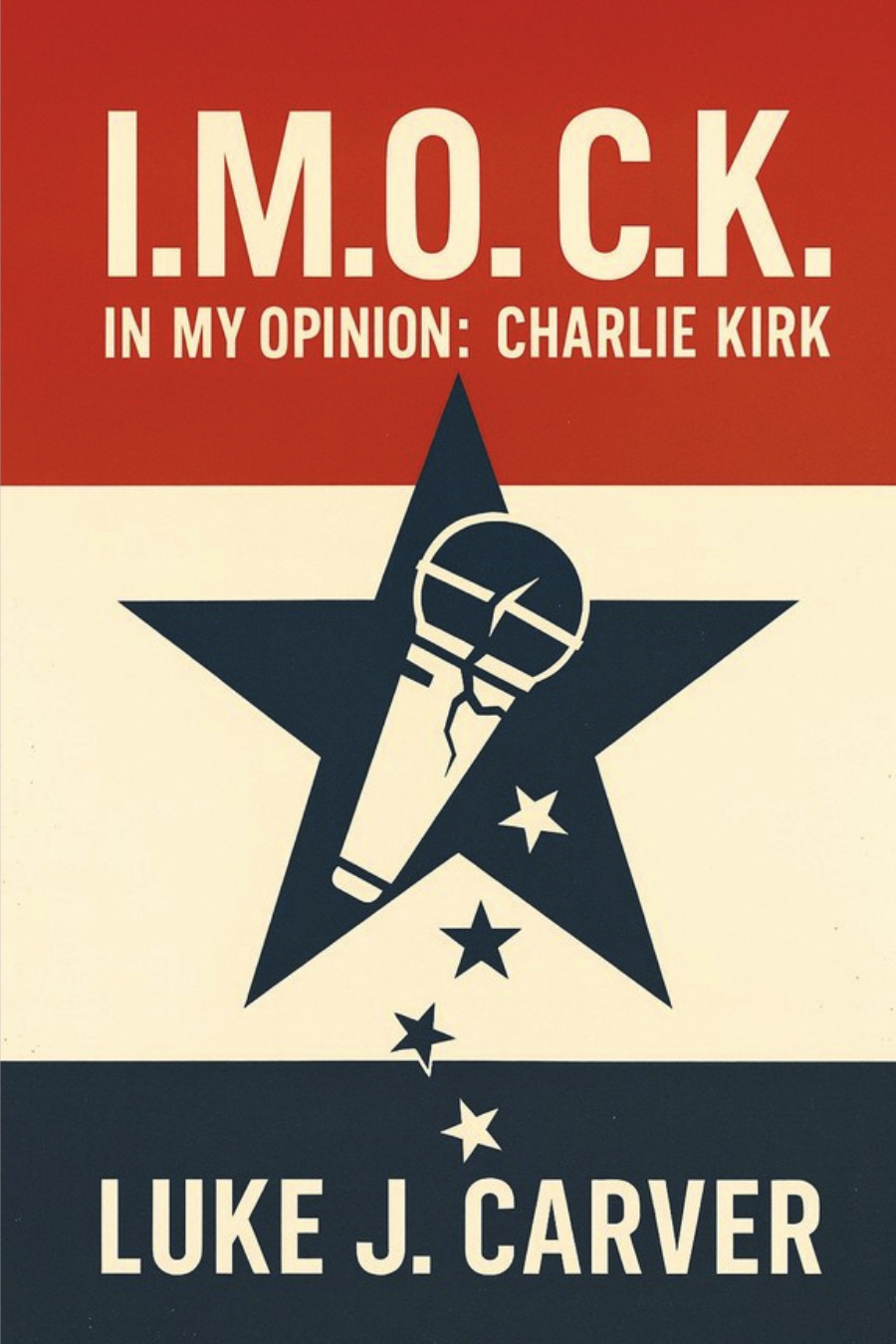
by Luke J Carver
I.M.O. C.K. is a searing work of commentary and documentation, tracing the rhetorical shifts that have reshaped public life in the United States from 2021 to 2025. Drawing on thousands of hours of broadcasts, speeches, and social media posts, Luke J. Carver assembles a clear-eyed record of what was said, who said it, and why it matters.
Rather than offering partisan talking points, Carver dissects the mechanics of modern grievance politics, how euphemisms harden into slurs, how conspiracy talk moves from the fringe to the mainstream, and how language primes audiences to accept cruelty, exclusion, and even violence as common sense.
Each chapter pairs sourced quotations with concise, accessible analysis, giving readers a way to see the through-lines across race, immigration, gender, elections, public health, and democratic institutions. The result is both unsettling and clarifying: a map of how norms are softened for rollback and how a pluralistic democracy is reframed as a zero-sum fight.
For readers who want to understand the present and interrupt its most dangerous trajectories, I.M.O. C.K. offers a necessary guide.
About the Author: Atlas Wilder is a fiction writer from Southern Alberta with a deep love for storytelling and creativity. He specializes in crafting bold, imaginative tales that blend fantasy, action, and science fiction. With a passion for building immersive worlds and unforgettable characters, Atlas invites readers on thrilling journeys beyond the ordinary.
Atlas Wilder writes dystopian fiction with a pulse. He’s the mind behind The Purity Saga, a long-arc series about bloodlines, surveillance, and the price of belonging. It begins with Purity: The Future of Bloodlines and widens into a dangerous question: when identity becomes a weapon, who gets to be human? Atlas builds worlds you can feel underfoot, echoing stairwells, cold fluorescent spill on hospital glass, data that tastes like metal. The camera stays tight on the people who have the most to lose: rebels and caretakers, loyalists and liars, each carrying private rules for love, loyalty, and survival. Quiet paranoia blooms into impact; choices ricochet across chapters and generations. He outlines like a tactician and edits like a thief, cutting anything that doesn’t move. World-building is excavation, not decoration. Readers come for the suspense and stay for the relationships that bruise, repair, and redefine what “victory” might mean. Right now, Atlas is deep in Book Two, map open to shadow corridors, contested archives, and the politics of inheritance. If you want high-stakes futures wired to a human heartbeat, you’re in the right place. For early chapters, release drops, and behind-the-scenes notes, subscribe to the newsletter, or reach out via the contact page.
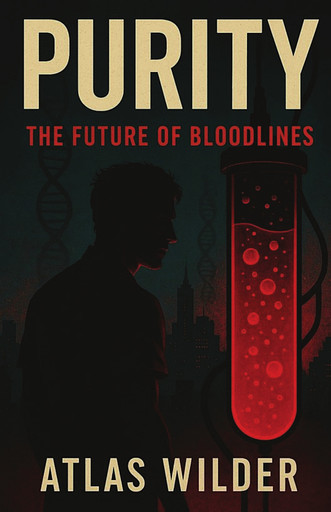
The Future of Bloodlines
When Hugo Matise is dragged from his cell and into a hidden basement lab, he discovers the unthinkable, he’s not just an inmate. He’s a test subject. Marked for a secret experiment involving human “purity,” Hugo takes a violent chance at freedom and vanishes into the outside world.
But the real danger is only beginning.