
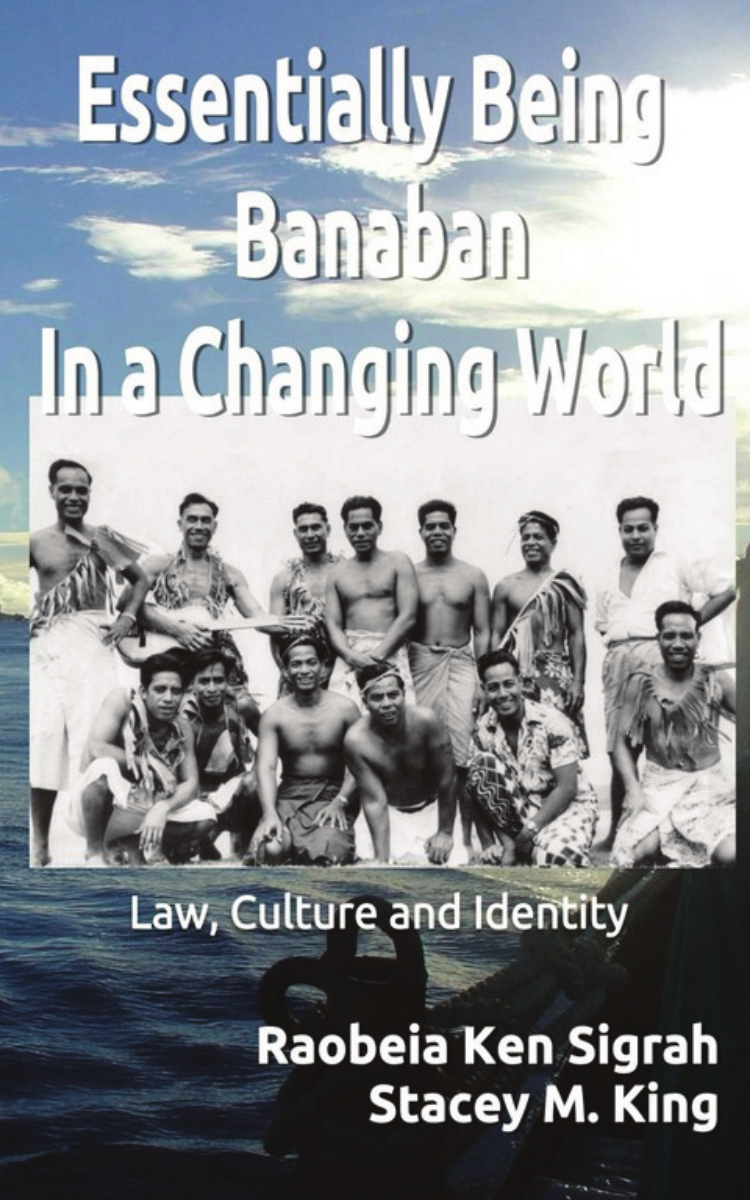
Essentially Being Banaban in a Changing World
by Stacey M. King
- Banaban Studies Series -
For centuries, the Banaban people governed themselves through Te Rii ni Banaba — the "Backbone of Banaba" — a traditional system of law settling questions of land, genealogy and a person's place in society. But colonial rule, the upheaval of the Second World War and forced exile to Rabi Island fractured that world, leaving a people caught today between Fiji and Kiribati, and a younger generation growing up under Western influence.
This study traces the resilience of a people determined to endure. Examining the obstacles that still threaten Banaban survival, it weighs the responsibility carried by clan leaders to preserve cultural integrity for those who come after — and argues that Banaban strength lies in unity with custom and tradition. Only by standing together, with one voice, can the Banaban people reclaim their place in history and chart a course toward self-determination.
More books by Stacey M. King
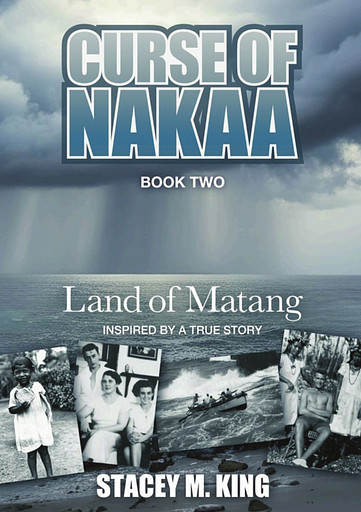
Curse of Nakaa
Land of Matang
NEW RELEASE
BOOK TWO - Land of Matang
Banaba, 1931. When the White family arrives on Ocean Island, they step into a world where colonial ambition collides with ancient tradition — and where the land itself is being stripped away, acre by sacred acre, to feed a phosphate empire.
For the Banaban people, the island is everything: the resting place of their ancestors, the keeper of their stories, the source of their very identity. But an old warning grows louder with each passing year — the curse of Nakaa has not been lifted.
As the world tips toward war, Japanese occupation shatters the fragile peace. Families are torn apart and scattered across the Pacific, to labour camps and unthinkable cruelty. Yet amid the horror, extraordinary courage emerges — a desperate escape by canoe, a mother's unbreakable faith, a love that refuses to die.
Spanning fifteen years and woven from real family history, Curse of Nakaa is a sweeping saga of greed and sacrifice, survival and remembrance — and the enduring spirit of a people who would not be erased.
The second book in the Land of Matang series, following Nakaa's Awakening.
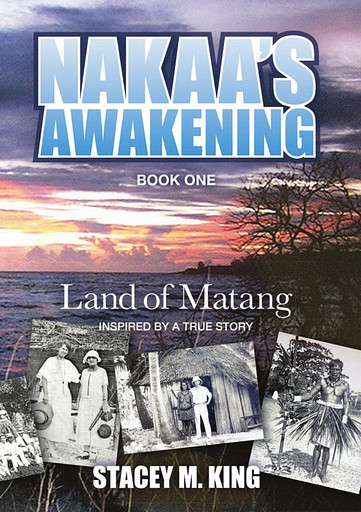
Nakaa's Awakening
Land of Matang
BOOK ONE - Land of Matang
When John Williams travels from Australia to Banaba (Ocean Island) in 1900 to oversee its newly discovered phosphate, his wife Ella and their young daughter Gwennie follow, expecting a new life. But as John is drawn deeper into the mining company's ruthless treatment of the island and its people, Ella and Gwennie are drawn the other way — into Banaban culture, magic and the beliefs of a people whose home is being destroyed around them. What begins as opportunity becomes a reckoning, for the family and for Banaba itself.
Drawn from the author's own family history and hundreds of original photographs and documents, Nakaa's Awakening brings a near-forgotten chapter of the Pacific to life — the story of an indigenous people who endure against industrial might, holding to their belief that good will overcome evil, and the wrath of the spirit Nakaa.
"Historical fiction at its best!" — Jeremy Cooper, media producer (UK)
Australia Banaba Relations
The Price of Shaping a Nation
- Banaban Study Series -
Australia's twentieth-century prosperity was built on its farmlands — and those farmlands were fed by superphosphate drawn from the rich rock deposits of Banaba (Ocean Island), a remote speck in the Central Pacific. For eighty years, Australia stood as a major shareholder alongside Britain and New Zealand in the venture that mined the island, stripping the homeland of its indigenous Banaban people until little remained.
Adapted from Stacey M. King's paper to the Pacific in Australia — Australia in the Pacific conference, this study traces a national success story back to its overlooked source and asks a pointed question: why, only a generation later, have these links been all but forgotten? It stands as a call for the Australian government to finally acknowledge the Banabans' profound contribution to the nation's history — and the price they paid for it.
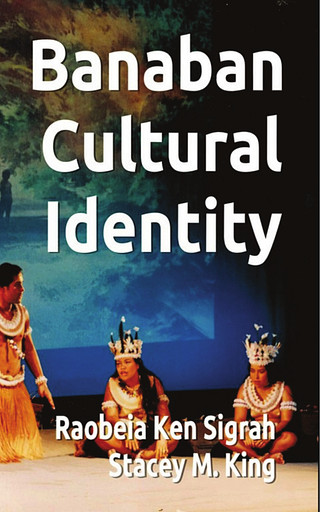
Banaban Cultural Identity
For years, scholars and colonial administrators have linked the Banabans to the I-Kiribati race, shaping the prevailing societal and political landscape of the Banaban people. Nevertheless, true historical accounts and origins have remained closely guarded secrets. Te Aka clan have been notoriously secretive about their identity, keeping their heritage hidden from outsiders.
The turning point comes with Lampert's archaeological findings at the Aka sacred burial ground. These discoveries challenge the existing narrative, suggesting that the Banabans were once part of a distinct and unique race, both physically and culturally, before assimilation processes began to reshape their population.
Banaban Cultural Identity examines Te Aka artifacts, presenting compelling evidence to support the argument that the Banabans' origins have never been accurately documented from their own perspective. Through the words of the Banaban people, passed down by their forefathers for generations, the true story of their ancestry unfolds.
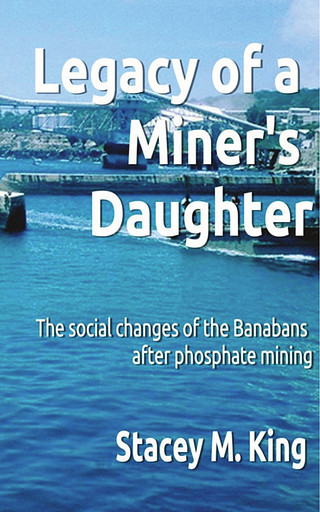
Legacy of a Miner's Daughter
The impact on the Banabans after phosphate mining
- Banaban Study Series -
For eighty years, phosphate mining stripped the tiny Pacific island of Banaba (Ocean Island) — and when the mining finally ceased, it left behind a devastated landscape and a displaced people. Decades on, little has been done to repair the damage or restore what was lost.
Written by Stacey M. King, herself descended from the Williams family who helped pioneer that mining, Legacy of a Miner's Daughter examines the lasting human and environmental cost of the phosphate era and the obstacles that still confront the Banaban people today. It is both an assessment of a culture pushed to the brink of assimilation and a call to the former colonial powers — Britain, Australia and New Zealand — to take responsibility at last, through rehabilitation, fair compensation and a just future for a resilient people determined to endure.

Rise & Fall of a Multi-Million Dollar Brand
I did it my way...
I DID IT MY WAY…
It began in a family garage—a mission to help a forgotten Pacific people and an idea unorthodox enough that most would have dismissed it. Stacey King didn't. She turned it into a multi-million dollar global brand.
This is her story: an accomplished Australian entrepreneur, corporate executive and philanthropist who built something the world hadn't seen before. How it all began—and how it all ended.
From the remotest Pacific villages to the rolling plains of Mongolia, Stacey forged a business path entirely her own. A cause-driven juggernaut built around a global message: the pursuit of justice, the importance of our shared humanity, and what each of us can do in our own lives to truly make a difference.
She started her first enterprise at fifteen, carried by an unshakable belief that anything is possible. Here she shares the full arc—the vision, the relentless determination, the conviction that you never give up—and the hard truth of what it costs to build something extraordinary and watch it reach its end.
This is her journey.
The Rise & Fall of a Multi-Million Dollar Brand.
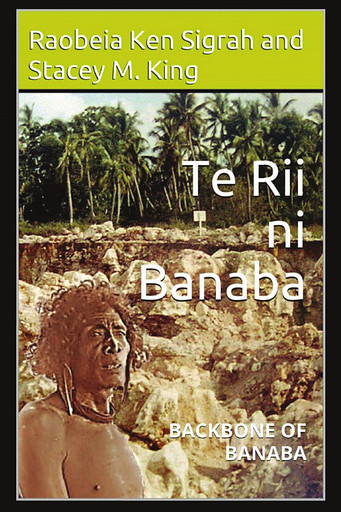
Te Rii ni Banaba
Backbone of Banaba
Te Rii ni Banaba: Backbone of Banaba (Second Edition)
Raobeia Ken Sigrah & Stacey M. King
Te Rii ni Banaba — Backbone of Banaba is the first history of Banaba, once known as Ocean Island, written from the Banaban perspective. For generations the island's story was told only by Europeans tied to the colonial administration or the phosphate industry, distorting the record of a people and their past. This landmark work reclaims that story, drawing on the knowledge of Banaban elders and clan members who lived the events it describes.
Through genealogies, myths, legends, customs, sports, music, dance, totems and magic rituals — including the long-guarded secrets of the mysterious te Aka clan — the book reveals the uniqueness of Banaban identity and the successive waves of migration and invasion that shaped it. It follows the arrival of the I-Matang (Europeans): beachcombers, blackbirders, whalers and missionaries, and then the miners who came in 1900 after the discovery of phosphate. That discovery marked a turning point, beginning a heartbreaking trail of exploitation, environmental devastation and loss.
The book records the atrocities suffered under Japanese occupation during World War II and the forced exile of the Banaban people from their homeland — first scattered during the Pacific War, then relocated to Rabi, Fiji, in 1945. The names of those killed on Banaba during the war, and of the survivors who arrived on Rabi, are preserved here so that future generations can trace their genealogies and land rights.
At its heart lies the Banaban struggle to hold on to culture and identity against the pressures of Fijian, I-Kiribati and Western influence — the authors' fear that, in time, future generations may no longer know themselves as Banaban. This second edition adds new photographs, the discovery of the missing link of the Toakira, the search for Teimanaia's skull, the identification of landowners from the first agreements of 1900, insights into the famous 1975 Banaban Court Case, and details of villages lost to mining.
Both a work of traditional knowledge and rigorous historical research, Te Rii ni Banaba is the authors' commitment to saving the remaining evidence of the old Banaba. It is essential reading for Banabans, and for anyone drawn to the story of migration, environment, human rights and the fate of an indigenous people in the modern world.
Praise for Te Rii ni Banaba
Honoured in the 27th Annual Writer's Digest Self-Published Book Awards, whose judge praised it as beautifully researched and produced, telling its story through visuals and text with an emotional depth that sets it apart from a conventional textbook — the work of authors with genuine ties to Banaba rather than outside observers.