 BECOME BOOKS
Powered by Books.by
BECOME BOOKS
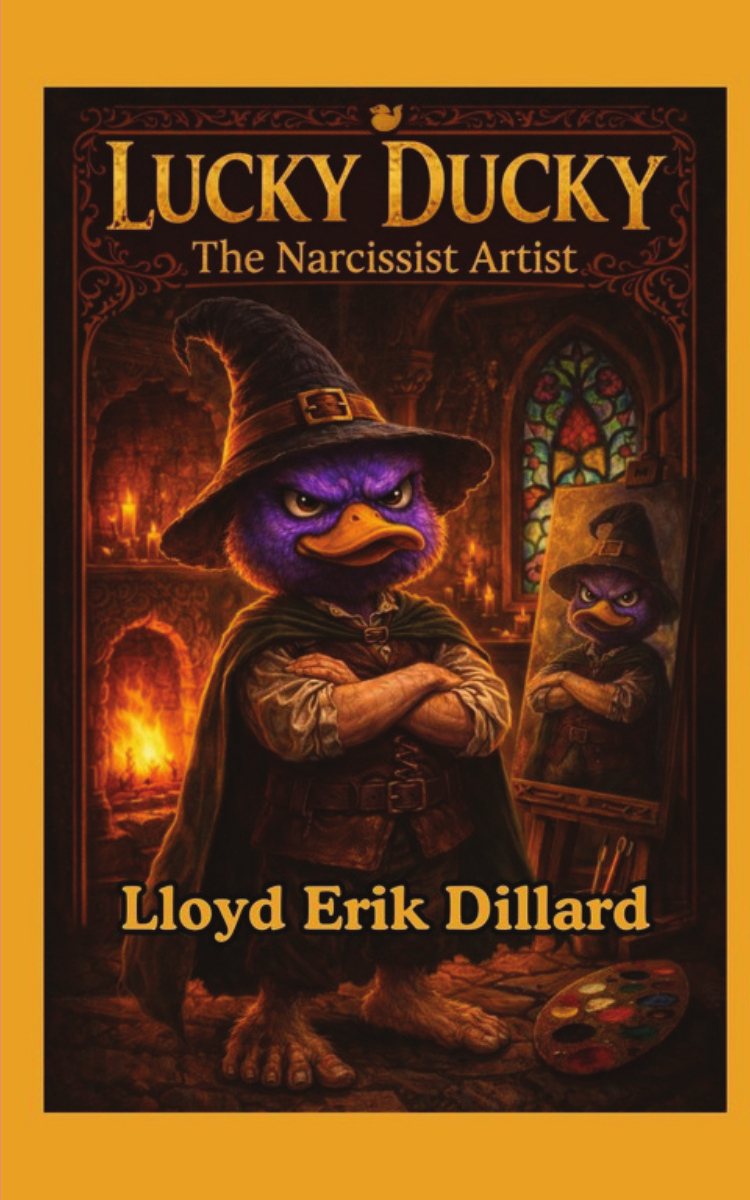
The Narcissist Artist
by Lloyd Erik Dillard
A book about claiming my voice as an Artist and fighting the powers of darkness.
Lucky Ducky — A Synopsis
Lucky Ducky is not a story about luck or a duck.
It is a story about survival, perception, faith, and the quiet, unshakable power of becoming whole again when everything in your life has been fractured.
At its center is Lloyd Erik Dillard—the creator of Imani Vanzap—whose life takes a dramatic and disorienting turn after experiencing a traumatic brain injury (TBI). What follows is not a linear recovery, nor a conventional healing journey. Instead, Lucky Ducky unfolds as a deeply personal, psychologically charged, and spiritually layered account of what it means to rebuild identity while navigating a reality that no longer feels stable, predictable, or entirely safe.
In the aftermath of his injury, Lloyd is forced into a new relationship with his own mind. Memory, perception, and emotional processing begin to shift. Familiar environments feel unfamiliar. Interactions carry an intensity that wasn’t there before. There is a growing sense that something beneath the surface of everyday life is revealing itself—patterns, energies, and dynamics that most people overlook or dismiss.
As Lloyd works to regain cognitive clarity and physical stability, he also finds himself drawn closer to God in a way that is not performative, but deeply internal and experiential. Faith becomes less about external validation and more about direct relationship—something lived, tested, and refined in real time. Prayer, discernment, and spiritual awareness begin to play a central role in how he interprets his surroundings and makes decisions.
But healing, in Lucky Ducky, is not portrayed as gentle or passive.
It is active. Confrontational. At times, unsettling.
Throughout the narrative, Lloyd describes a growing awareness of what he perceives as coordinated opposition—people, behaviors, and environments that feel intentionally misaligned with his well-being. These experiences are framed through his personal lens, where intuition, heightened sensitivity, and spiritual interpretation intersect. What others might see as coincidence or miscommunication, Lloyd experiences as something more structured, more deliberate.
Within this framework emerges the idea of an alleged “coven”—a symbolic and experiential representation of forces that he believes were working against him during a vulnerable period in his life. Whether interpreted literally, metaphorically, or psychologically, this element of the story serves as a powerful vehicle for exploring themes of fear, control, resilience, and ultimately, reclaiming personal authority.
Rather than positioning himself as a passive target, Lloyd’s journey becomes one of active resistance—not through aggression, but through awareness, grounding, and alignment with his faith. He begins to recognize patterns in behavior, language, and energy that no longer feel random. And with that recognition comes a shift: instead of reacting, he starts responding with intention.
This is where Lucky Ducky takes on its deeper meaning.
The “luck” in Lucky Ducky is not chance—it is perspective.
It is the ability to see what others don’t, to endure what others might not understand, and to come out of it with a stronger sense of self rather than a fractured one. It is the paradox of being placed in circumstances that feel chaotic, yet finding clarity within them.
As Lloyd continues his recovery, both physically and spiritually, he begins to rebuild not just his health, but his identity. The creation of Imani Vanzap emerges as an extension of this process—a manifestation of creativity, autonomy, and narrative control. Through storytelling, character-building, and world creation, he reclaims authorship over his experience.
The book does not present itself as a definitive explanation of events, nor does it ask the reader to adopt a singular interpretation. Instead, it invites readers into Lloyd’s lived experience—his thoughts, his perceptions, his questions, and his conclusions—without dilution.
What makes Lucky Ducky compelling is not just the events described, but the emotional and psychological honesty behind them.
It is a story about:
• What happens when your mind changes, but the world expects you to remain the same
• How faith can become an anchor when reality feels unstable
• The tension between internal knowing and external skepticism
• The process of reclaiming power in environments that feel disempowering
And ultimately…
It is a story about choosing not to collapse.
Even when confused.
Even when isolated.
Even when misunderstood.
Lloyd Erik Dillard’s journey is one of persistence—not in the loud, performative sense, but in the quiet decision to keep going, to keep observing, to keep aligning with what feels true to him.
Lucky Ducky does not offer simple answers. It does not wrap itself in neat conclusions. Instead, it leaves space—for interpretation, for reflection, and for the reader to confront their own understanding of reality, faith, and resilience.
Because at its core, this is not just a story about one man’s recovery.
It is a story about what it means to trust yourself when everything around you feels uncertain.
And in that sense…
Maybe “lucky” was never the point.
Maybe awareness was.
Joined books.by 7 months ago.
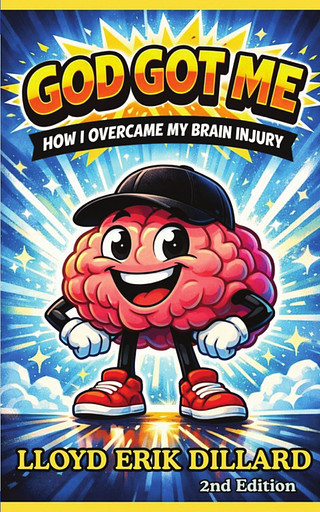
How I Overcame My Brain Injury
A book about how a my life altering TBI (Traumatic Brain Injury) literally ended up catapulting me into my best self and highest timeline.