
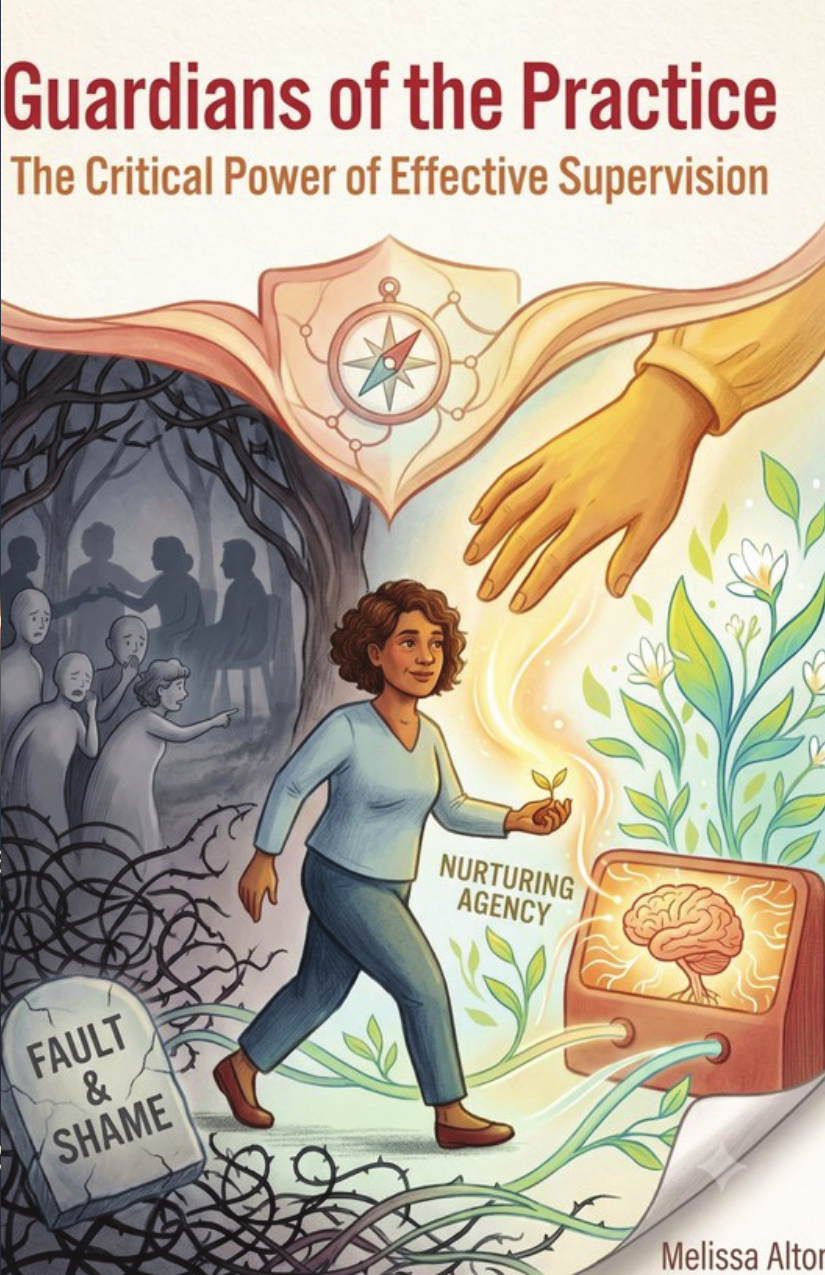
Guardians of the Practice
by Beyond the Chair
Guardians of the Practice
Effective supervision operates at the intersection of clinical excellence, risk management, and human care. In high-stakes fields—such as counseling, social work, healthcare, and education—supervision functions as both a shield for client safety and a scaffold for practitioner development.
Core Pillar Themes
The Gatekeeping Imperative: Maintaining professional standards by holding practitioners accountable to ethical codes, competencies, and client safety guidelines.
Reflective Practice over Reactive Compliance: Shifting supervision away from transactional box-checking into an active space for critical thinking, self-awareness, and emotional debriefing.
Vicarious Trauma and Sustainability: Utilizing supervisory sessions as a containment system to process secondary traumatic stress, mitigate burnout, and promote long-term career resilience.
Developmental Scaffolding: Adapting supervisory styles dynamically based on the supervisee's developmental stage—from direct oversight for novices to collaborative consultation for seasoned clinicians.
Relational Safety and Power Dynamics: Navigating the inherent power differential in supervisory roles to foster psychological safety, transparency, and honest disclosures of clinical errors.
Comprehensive Course / Workshop Outline
Module 1: Foundations of Clinical Gatekeeping
Ethical Frameworks and Scope of Practice: Legal obligations, vicarious liability, and standard-of-care requirements.
Defining the Supervisory Working Alliance: Establishing clear supervision contracts, expectations, and dual-relationship boundaries.
Evaluating Readiness: Assessing foundational competencies before independent practice.
Module 2: Models and Dynamics of Effective Supervision
Developmental Supervision Models: Tailoring feedback using models like Stoltenberg and Delworth’s Integrated Developmental Model.
The Process Model: Analyzing parallel processes—how interactions in client therapy manifest within the supervisor-supervisee dynamic.
Feedback Mastery: Balancing supportive encouragement with direct, actionable corrective feedback.
Module 3: Navigating Complexities and High-Risk Scenarios
Ethical Dilemmas and Boundary Violations: Spotting early red flags in practitioner-client relationships.
Crisis Management Protocols: Establishing clear escalation paths for client risk assessments, self-harm, and mandatory reporting.
Mitigating Impairment: Addressing substance use, emotional distress, or cognitive decline in supervisees compassionately and legally.
Module 4: Cultivating Cultural Humility and Diversity
Addressing Power and Privilege: Analyzing how social identities impact the supervisory triad (Supervisor – Supervisee – Client).
Cross-Cultural Supervision: Structuring open dialogues around implicit bias, cultural microaggressions, and systemic barriers.
Core Learning Objectives
By the end of this framework, participants will be able to:
Design and Implement Supervision Agreements: Draft structured, legally sound supervision contracts that clearly outline responsibilities, risk protocols, and evaluation metrics.
Apply Developmental Models: Accurately diagnose a supervisee's stage of development and adapt supervisory interventions accordingly.
Execute High-Impact Feedback Loops: Deliver constructive feedback that addresses performance gaps while maintaining psychological safety.
Identify Parallel Processes: Recognize and intervene when supervisee-client dynamics mirror within the supervision room.
Establish Resilience Systems: Build institutional and individual strategies to monitor and combat vicarious trauma and professional fatigue.
Practical Applications and Tools
Supervision Matrix: Use a quarterly tracking matrix to evaluate core competencies across theoretical knowledge, ethics, self-reflection, and intervention skills. This eliminates subjective evaluations and establishes clear benchmarks for career advancement.
Reflective Case Presentation Format: Require supervisees to present cases using a structured four-part framework: Context, Clinical Dilemma, Internal Reaction/Countertransference, and Intended Outcome. This shifts case reviews away from routine storytelling toward deep clinical reflection.
Critical Incident Debrief Protocol: Deploy a structured psychological debriefing framework immediately following high-stress client events, such as suicide attempts or severe violence. This protects practitioner mental health while auditing procedural accuracy in real time.
Psychological Safety Self-Audit: Administer a periodic five-question anonymous survey to evaluate supervisees' comfort level with disclosing clinical errors or asking for help. This uncovers blind spots in supervisory leadership and power dynamics before issues compound.
More books by Beyond the Chair
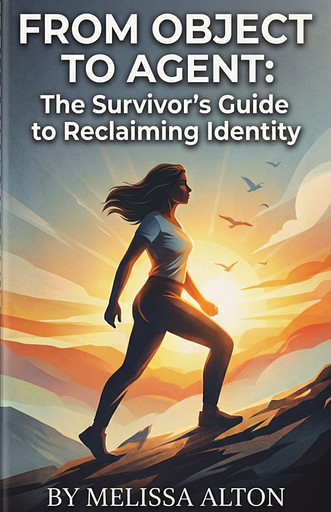
From Object to Agent
The Survivor's Guide to Reclaiming Identity
From Object to Agent: The Survivor's Guide to Reclaiming Identity
How do you rebuild a self when you have been treated like a variable to be managed, an object to be used, or a voice to be silenced? When trauma, emotional abuse, or systemic control reduces a person to an object, the injury runs deeper than stress or fear—it strikes at the very core of human agency. Over time, you learn to perform, adapt, and minimize your needs just to survive, slowly losing touch with your own preferences, boundaries, and identity.
From Object to Agent is a definitive, compassionate roadmap for moving beyond mere survival and actively stepping back into the driver’s seat of your life. Bridging psychological insight, trauma-informed self-advocacy, and grounded exercises, this book walks readers through the subtle mechanics of objectification and the concrete steps required to reverse it.
Within these pages, you will explore how prolonged control and gaslighting strip away personal authority, and you will learn to recognize the quiet survival strategies your mind used to keep you safe. The text guides you from passive compliance to active self-determination, showing you how to dismantle internal constraints, stop self-objectifying, and step out of performance fatigue. You will discover practical methods to set clear boundaries without guilt, reconnect with bodily intuition, and rebuild trust in your own decision-making process. Ultimately, it provides a structured approach to authoring your next chapter, helping you navigate relationships, career, and personal goals as a fully realized agent.
Whether you are healing from an abusive relationship, recovering from a high-control environment, or simply tired of living life on everyone else's terms, this book offers the clarity and validation needed to stop enduring your life and start living it. Clear, deeply realistic, and empowering, this guide gives you the essential tools to reclaim your voice, reinstate your autonomy, and step permanently out of the shadow of your past.

Beautifully Unbroken
Surviving Toxicity Without Becoming Toxic
Beautifully Unbroken: Surviving Toxicity Without Becoming Toxic explores how to walk through the fire of painful relationships without letting the experience consume your empathy, integrity, and warmth. In a world that often responds to hurt with bitterness and self-defense with aggression, this book offers a compassionate path forward for anyone who has endured emotional abuse or manipulative dynamics and refuses to let trauma dictate who they become.
When you spend years surviving narcissistic behavior, boundary violations, or emotional volatility, the instinct to build thick walls is strong. However, there is a crucial difference between protecting your peace and losing your capacity to trust, love, and connect. This guide provides a blueprint for maintaining your humanity while fiercely safeguarding your well-being.
Throughout its pages, you will learn how to process deep betrayal without adopting the hurtful behaviors used against you, establish unshakeable boundaries without guilt, and break generational patterns so they end with you. It guides you through peeling back the self-doubt, gaslighting, and conditioned responses that follow trauma, allowing you to rediscover your authentic self. Ultimately, true healing is not about forgetting or excusing harm, but freeing yourself from carrying the burden of other people's unresolved issues.
Beautifully Unbroken is not about pretending the pain never happened, nor is it about passive endurance. It is a bold call to emotional sovereignty. You do not have to become harsh to survive a harsh world, nor do you have to stay broken to prove you were hurt. You can emerge from the chaos entirely intact, deeply wise, and genuinely restored.
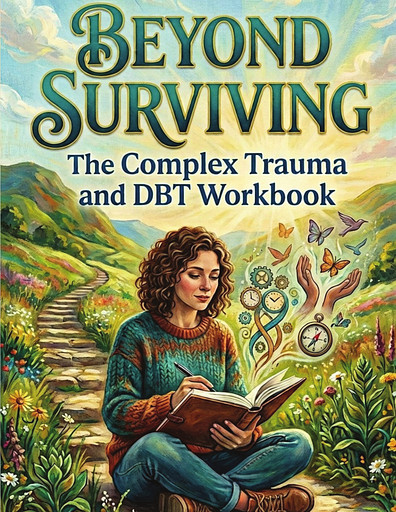
Beyond Surviving: The Complex Trauma and DBT Workbook
Practical Tools and Exercises for Healing Deep Wounds
Beyond Surviving: The Complex Trauma and DBT Workbook
Practical Tools and Exercises for Healing Deep Wounds
Chronic trauma rewires how we experience the world, leaving the nervous system trapped in a persistent loop of protection, hypervigilance, and emotional exhaustion. When you have spent years surviving impossible circumstances, safety often feels unfamiliar, and self-compassion can feel entirely out of reach.
Rooted in the evidence-based framework of Dialectical Behavior Therapy (DBT), Beyond Surviving bridges clinical insight with profound personal empowerment. This workbook is designed for individuals navigating the heavy echoes of complex trauma, childhood wounds, and chronic invalidation who are ready to move beyond coping mechanisms that merely keep them afloat.
Inside this comprehensive guide, you will find targeted skill-building modules featuring actionable, step-by-step exercises focused on the core pillars of DBT—mindfulness, distress tolerance, emotion regulation, and interpersonal effectiveness—specifically tailored for trauma recovery. You will also discover practical somatic and cognitive tools for nervous system grounding to safely navigate triggers, soothe emotional dysregulation, and quiet the inner critic without judgment. Through gentle yet powerful prompts, the workbook helps you untangle your true self from survival responses, rebuild self-trust, and reclaim your personal identity and agency. Thoughtfully curated reflective journaling spaces encourage deep, introspective processing at your own pace, honoring the complexity of your unique healing timeline.
Healing from complex trauma is not about erasing your past; it is about expanding your capacity to inhabit the present with grace, resilience, and unshakeable self-agency. Whether used independently or as a companion to therapy, **Beyond Surviving** provides the steady, compassionate roadmap you need to transform deep-seated wounds into enduring strength—moving you gently from merely surviving to truly thriving.