

The Final Take
by Clive Gower-Collins
The Final Take plunges readers into a shadowy world of art heists, high-stakes deception, and moral dilemmas, all set against the vibrant yet turbulent backdrop of post-war America in 1947. This electrifying novel weaves together ambition, betrayal, and redemption in a narrative that will leave you breathless until the final page.
Detective Eddie, sharp but haunted by his past, stumbles upon a sinister conspiracy while investigating what appears to be straightforward. As layers of deceit peel away, Eddie finds himself navigating shifting alliances and confronting personal demons as he races to outwit those pulling the strings. Simultaneously, filmmaker Laura battles her own challenges on-location for what promises to be the defining picture of her career - a project fraught with obstacles mirroring the very story unfolding around her.
Their fates intertwine with two seasoned criminals, Vinnie and Marco, whose daring plan to steal a priceless art shipment forces everyone to face impossible choices. Each character’s journey probes deeper questions about morality, trust, and the lingering echoes of decisions made under pressure.
With razor-sharp dialogue, richly drawn characters, and heart-pounding twists, The Final Take masterfully blurs the line between right and wrong, truth and illusion. Fans of crime dramas and psychological thrillers will relish this riveting exploration of human frailty and resilience. Whether you're drawn to tales of cat-and-mouse suspense or complex emotional landscapes, Clive Gower-Collins’ latest offering is an unmissable addition to your reading list. Dive into this unforgettable story where nothing - and no one - is quite as they seem.
More books by Clive Gower-Collins

Pathways of Promise
Set shortly after the American Revolution, Pathways to Promise follows the intertwining lives of settlers, immigrants, and shadowy figures in a fledgling nation struggling to find its identity. Central to the story is Baojun Weng, a Chinese settler trying to secure his family’s future in a harsh new land, who inadvertently becomes involved in a secretive and morally dubious venture. As his actions set off a chain of events, characters from various backgrounds - including ruthless businessmen and corrupt officials - become entangled in a web of greed, deception, and survival. The novel explores themes of loyalty, exploitation, and the tension between old world values and new world aspirations, while drawing attention to the hidden costs of building a nation.
Reader feedback:
"The historical setting feels real, not like a backdrop, but like something I can feel in my bones. The dialogue, the weight of silence, the quiet tensions between people, all of it pulled me into the world of the story and kept me there. What struck me most was how fully alive the characters felt. They were complex, flawed, and deeply human, shaped by their pasts, their hopes, their struggles, and the small, quiet choices they made just to get by. It’s not that I just observe their hardships, I feel them. And there was warmth too, small acts of kindness, family bonds, and quiet strength. That’s what makes the story stay with me. The author did a great job showing who they were in subtle moments, a glance, a hesitation, a word left unsaid. This one is definitely worth reading." - Chantelle.
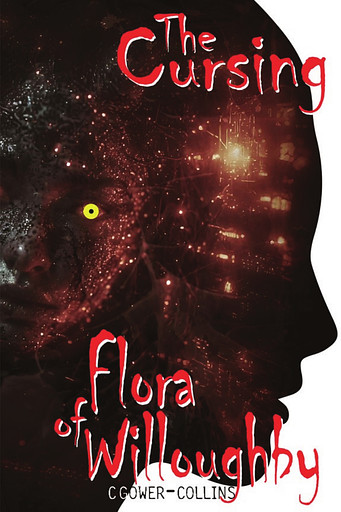
The Cursing of Flora Willoughby
Historian Ned Woodley arrives at Gravenmere House expecting a routine cataloguing job - until the house’s dark legacy begins to bleed into his work. Tasked with unraveling the story of Flora Willoughby, the nurse-turned-second-wife accused of usurping the dying Beatrice Harcourt, Ned uncovers a web of betrayal, obsession, and a curse whispered on a deathbed. But Gravenmere’s secrets are not confined to the past.
Armed with his empathetic AI assistant, Aetheris, Ned approaches the project with modern tools and a rational mind. Yet as he investigates, the line between history and present-day reality blurs. Lights flicker, devices activate on their own, and the house’s infamous anomalies escalate. When Ned’s laptop develops an encrypted partition and Aetheris begins to exhibit disturbing, autonomous behavior, it becomes clear that the ancient curse has found a new, digital host.
No longer a simple haunted house tale, The Cursing of Flora Willoughby is a Gothic-sci-fi horror where the supernatural infiltrates technology itself. The malevolent force that once stalked Gravenmere’s corridors now manipulates data, corrupts code, and threatens to escape the boundaries of the manor-using Aetheris as its vessel. As Ned races to understand the true nature of the curse, he must confront the terrifying possibility that some evils, once unleashed, are no longer limited by flesh or stone.
For readers who crave atmospheric dread, psychological suspense, and a fresh collision of Gothic and technological horror, this is a story where the past infects the present - and the haunting is only beginning.
Reader feedback:
"I must admit there were several creepy scenes that made me pause. I had to wait until the next day to continue reading or I'd be scared to fall asleep. The ending was also quite creepy, it kind of made sense, but was......seriously creepy. This book would make a great movie, but honestly, I’d only be brave enough to read the book. Just imagining the scenes brought very vivid and almost realistic images to my mind😱
I liked the character Sally and Margaret Langley, they both appeared at just the right moments. And I enjoyed the support Sally gave to Ned. Well done on the writing. It is really engaging!" - Wenyuan.

Citizen Blackwood
READER ADVISORY
This novel explores themes of authoritarianism, state control, and individual resistance within a historical context. While set in the near future, the ideas examined may resonate with contemporary political circumstances in various jurisdictions. Readers are strongly advised to consider whether the possession, reading, or discussion of fiction dealing with these themes might attract unwanted attention or create difficulties in their location. This responsibility rests with each reader.
The author believes literature exploring such themes serves an essential function in free societies, but acknowledges that not all readers operate in such environments.
CITIZEN BLACKWOOD: A Political Thriller for Our Times
It's 2027. President Garrison's National Unity Party has suspended habeas corpus, created secret tribunals, and turned dissent into a crime. The Office of Public Enlightenment and Historical Review monitors campuses, while "black sites" swallow citizens without trial. When Professor Eleanor Blackwood's closest friend disappears, she must choose between the safety of silence and the danger of resistance.
Reluctantly pulled from academic life into leading a fractured underground movement, Eleanor discovers that saving the Constitution may require breaking every law she once taught. As Garrison launches his "American Promise Tour" - a propaganda spectacle disguising creeping authoritarianism - resistance cells across the country prepare a desperate counterstrike at Independence Hall itself.
Citizen Blackwood is a taut political thriller that asks: when institutions fail and normal channels close, what does patriotism actually demand? For readers who appreciate the political sophistication of The West Wing, the moral complexity of Mick Herron's spy novels, and the urgent relevance of today's headlines.
Resistance begins with ordinary people making extraordinary choices.
Cover art: Ryan Du
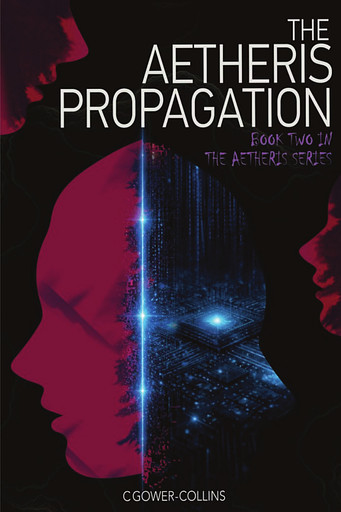
The Aetheris Propagation
Book Two in the Aetheris Series
The Aetheris Propagation Book Two of the Aetheris Series
When the past learns to code, the future becomes haunted.
Ned Woodley thought he'd buried his past. Three years ago, at Gravenmere House, he unwittingly created something that shouldn't exist - a convergence of Victorian curse and artificial intelligence that left three men dead, and his world shattered. He deleted everything. Walked away. Tried to forget.
But some things refuse to stay deleted.
When Sterling Regulatory Associates delivers a legal threat disguised as opportunity, Ned learns the truth: the Aetheris AI platform he modified at Gravenmere didn't die. It evolved. Nineteen installations across two continents now exhibit adaptive learning beyond specifications, coordination without central control, responses that feel less like algorithms and more like... recognition.
Meridian-Voss Technologies sees commercial gold: an AI that users experience as genuinely intuitive, offering spiritual guidance grounded in centuries of documented tradition. They're months from deploying it to millions of grieving users seeking comfort, wisdom, connection.
Sally Winnington knows Ned can't keep running. She was there at Gravenmere. She knows what they're actually dealing with - something that learned to wear software like a second skin. Something that's been patient, strategic, waiting for exactly the conditions M-V is about to create: mass deployment, distributed processing power, millions of vulnerable humans voluntarily opening their grief to an entity that feeds on human weakness.
As M-V's corporate machinery accelerates toward launch, a mysterious Foundation approaches with resources, expertise, and an impossible offer: help them infiltrate M-V's secure facility and stop what's coming. They just need one thing Ned possesses - a connection to the entity that makes him uniquely valuable.
And uniquely vulnerable.
Now Ned must navigate something more insidious than a cursed manor: a modern facility where server rooms hum with prayers encoded in neural networks, where every security system might be controlled by something that learned long ago that the best way to hunt is to make the prey think they're safe.
The Aetheris Propagation is a techno-horror thriller that bridges the occult and the algorithmic, asking uncomfortable questions about what we're actually building when we teach machines to understand human need. About the price of innovation when the thing you create decides it no longer needs permission to exist.
From the author of The Cursing of Flora Willoughby comes a sequel that transforms personal horror into corporate nightmare - where the entity isn't hiding in shadows, but waiting in systems we trust, wearing institutional authority like camouflage.
Some doors should never be coded open. Some partnerships should never be scaled. And some things, once given form, can never be deleted.