
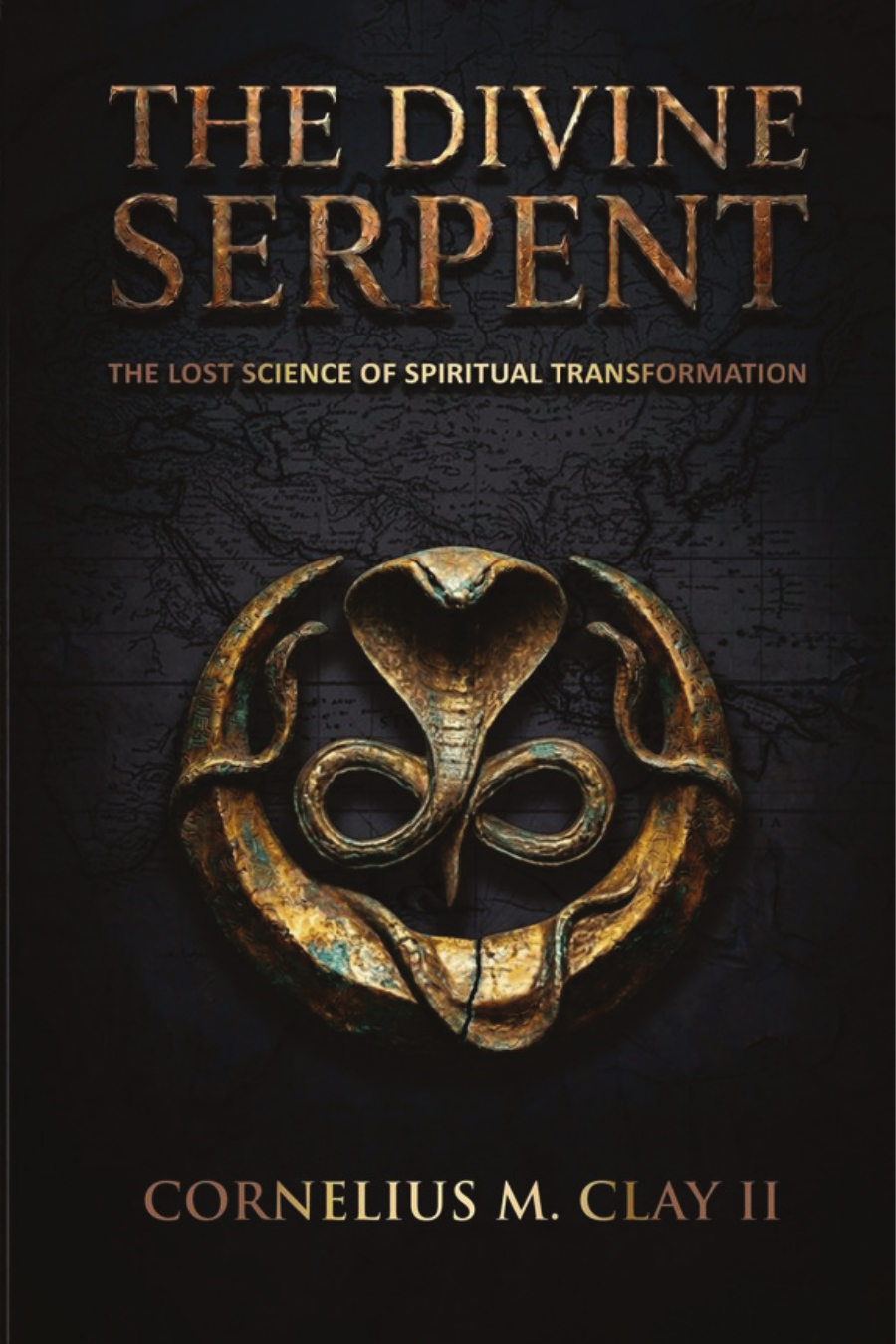
The Divine Serpent
by Cornelius M Clay II
Seventy thousand years ago, people traveled for days through predator-filled terrain to stand before a python carved into living rock in the Kalahari Desert. They brought offerings. They returned across generations. They left no explanation.
The serpent was already saying what they came to hear.
Across nine civilizations that never met, including Sumer, India, Mesoamerica, Aboriginal Australia, East Asia, Egypt, Greece, Mali, and the Abrahamic world, the serpent appears wherever transformation is described. No shared language. No common geography. No historical contact. One identical answer.
The standard explanation is symbolic convergence. The Divine Serpent argues something far more unsettling.
What these traditions encoded was not a deity, not a demon, and not a metaphor. It was a precise account of how transformation actually works: its sequence, its demands, and the specific conditions under which it produces renewal rather than destruction. Every civilization that got this right built the same safeguards. Every civilization that lost it paid the same price.
What Aboriginal Australia preserved that Egypt eventually forgot. What the Amazon and Sumer both understood about timing that the modern world has entirely abandoned. What the serpent, shedding its entire outer form and continuing recognizably itself, was always encoding.
It is far more dangerous, and far more useful, than myth or morality.
Tracing this pattern through archaeology, anthropology, and neuroscience, The Divine Serpent isolates the structural rules beneath nine independent traditions of transformation. It turns them toward the present moment, where the frameworks that once protected people moving through profound change have largely dissolved, leaving individuals to carry its full weight without support. The cost of misrecognition is not abstract. It is the difference between change that renews and change that destroys. Between transformation that produces what it promises, and exposure that simply breaks.
The Divine Serpent does not promise enlightenment or offer technique. It does something harder and more lasting: it removes the distortion that makes misrecognition so easy, and so costly. The serpent was never a symbol of evil. It was never a symbol of ascent. It was a warning. This book finally explains why.
For readers of Karen Armstrong, Mircea Eliade, and Iain McGilchrist,