 Forrist Tanner Lytehaause
Powered by Books.by
Forrist Tanner Lytehaause
The B2B Vineyard Biological Blueprint
by Forrist Tanner Lytehaause
Biological inputs, compost recipes, sensors, and consultants all promise a better block. What most vineyards lack is a reliable way to tell whether a practice earned its cost on their own rows, in their own seasons. A vine planted this year is still in the ground in fifteen, and a wrong turn costs years, not weeks.
THE VINEYARD ADVANTAGE shows vineyard managers and their advisers how to name the microbes they actually use, turn pomace and pruning wood into a measured resource, and run a fair pilot that answers one question at a time. Each season ends with a clear decision: continue, revise, stop, or inconclusive.
Every year the same conversation comes around. A section of the block never quite established. The pomace and pruning wood are piling up again. The same corner shows disease pressure every wet spring. Someone proposes a fix: a compost program, a biological input, a new sensor, a consultant's recommendation. And you have to decide whether it is worth the money, the labor, and the risk of disturbing a system that, however imperfectly, is already working.
The Vineyard Advantage: A Measured Microbiome and Residue-Management Program for Vine Resilience and Fruit Quality is a B2B field guide for vineyard managers, winegrowers, and the consultants who advise them. Its premise is simple: you are not short on options, you are short on a reliable way to tell whether a practice actually earned its cost on your block, under your conditions. In a vineyard that matters more than anywhere else. A vine planted this year is still in the ground in fifteen, and a wrong turn costs years, not weeks.
The book starts by replacing the word "microbes" with something you can test: the named consortium and product you actually use, and the idea of microbial leadership that explains why a small, well-organized population can influence a much larger community. It then makes the block visible, sorting soil, canopy, landscape, and winery sensors, AI tools, and simple field instruments such as the refractometer and penetrometer by the decision each one can support and the limits each one carries.
At its center is the fair vineyard pilot: the five things a comparison needs before anything is applied, why repeated readings are not replicates, and how one estate's compost comparison changed several things at once and could not isolate the inoculant. From there the application chapters follow the vine's life. Winery and vineyard residues are treated as materials to be screened for suitability before anyone asks what they do in the field, including on-site bokashi and liquid EM production. Establishment is examined through a three-year nursery trial in which named Streptomyces strains reduced infection by young-vine decline pathogens. Fruit quality is followed from vine balance to the winery record, with the winemaker brought in before the first treated row. Vine protection draws on research with Bacillus, Trichoderma, and Pseudomonas that connects named organisms with particular diseases and observed responses.
Every route through the book ends at the same place: deciding whether a practice earned another season. You judge three questions separately: did the vines respond, how confident are you that your practice caused it, and did it pay. Continue, revise, stop, and inconclusive are all legitimate answers. If you ferment your own inputs, the book shows how to build cost per accepted unit and a break-even point from your own numbers. The closing chapter explains how to scale only what earned it, keeping production gains and field results as separate claims.
Five appendices make it usable in the field: an example Measured Vineyard Pilot Brief with a savable online worksheet, evidence and claim labels for reading any study or vendor summary, a technology decision check, an on-site bokashi and liquid EM production protocol with a batch log, and a practical guide to interpreting Brix and penetrometer readings.
This book does not promise a microbial rescue for a struggling block, and it does not prescribe a universal formulation or dose. It gives you the method to find out, on your own rows, what actually works, and the discipline to say so plainly.
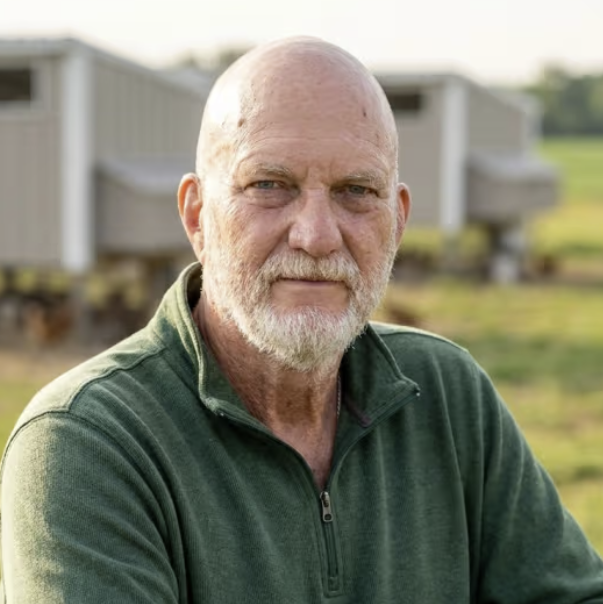
has spent over a decade at the intersection of applied microbiology and systems design.
As Managing Director of EdenBound Probiotics, LLC (2013–2018), he developed microbial products for commercial and consumer markets, building on R&D that began in 2008. Earlier, in 2006, he founded the Health and Wellness Research Institute, designing and funding a double-blind, placebo-controlled clinical study overseen by an independent institutional review board. Since 2018 he has led Planetary CARE L3C, a multi-stakeholder regenerative-agriculture cooperative built on the same cascade thinking behind this book: treat the system, not the symptom. He describes his approach as integrating systems thinking with elegant design — connecting mechanism to measurable, auditable results.
Using Beneficial Microbes to Build a Healthier, More Productive Farm
A dairy is not a collection of separate problems. Water, feed, herd health, manure, and forage are one living system. The Dairy Advantage shows you how an effective microbes based product, delivered through the water line you already use, can become a practical, measurable starting point for a healthier, more productive farm.
How Compost Tea Equipment Sellers Beat the Four-Hour Clock, Cut Pathogen Liability, and Extend Delivery Radius with One Automated System
Compost tea works. The four-hour clock that starts the moment the aerator shuts off is the part nobody sells you on: the delivery radius it caps, the pathogen risk it hides in plain sight, and the customers it quietly costs you every season.
Supercharging Compost Tea is a field guide for equipment sellers, nursery owners, and soil consultants who want to add a shelf-stable anaerobic fermentation layer, EM/ASAM, alongside the compost tea programs their customers already trust, not instead of them. It covers the pathogen science your customers are already exposed to, the automated dual-tank system that runs on autopilot, a documented Arizona case where soil organic matter nearly quadrupled, and a plan for reactivating the customers who said no to compost tea over labor or cost, not the biology.
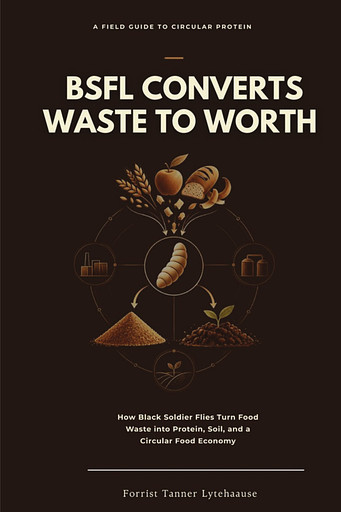
How Black Soldier Flies Turn Food Waste into Protein, Soil, and a Circular Economy
Every day, food processors, bakeries, breweries, and packing houses generate organic streams that still hold protein, fat, and minerals — value already paid for, then treated as disposal. BSFL Converts Waste to Worth follows black soldier fly systems that turn those pre-consumer streams into feed protein, oils, and soil inputs inside a circular food economy. Buyer specs, life-cycle assessment, and industrial-symbiosis design are treated as operating tools, not slogans. Oberland Agriscience appears as a worked commercial case, not a franchise kit.
The B2B Water-Line Biological Blueprint
Three weeks from harvest, paw scores climb and litter packs damp under the drinker lines, even though chlorine reads fine at the header. The problem is inside the pipe, where nobody looks, because nobody can.
The Poultry Advantage is a fully cited field guide for operations managers, flock supervisors, integrator technical services staff, and poultry veterinarians. It shows that water quality, gut health, and litter condition are one chain reaction, not three separate problems, and that the cheapest place to break it is the water birds already drink dozens of times an hour.
Inside: how invisible buildup evades standard water tests, a no-extra-labor treatment schedule using equipment most farms already own, and how to grow your own supply on-site instead of buying finished product at retail cost. Every claim is backed by published research.