
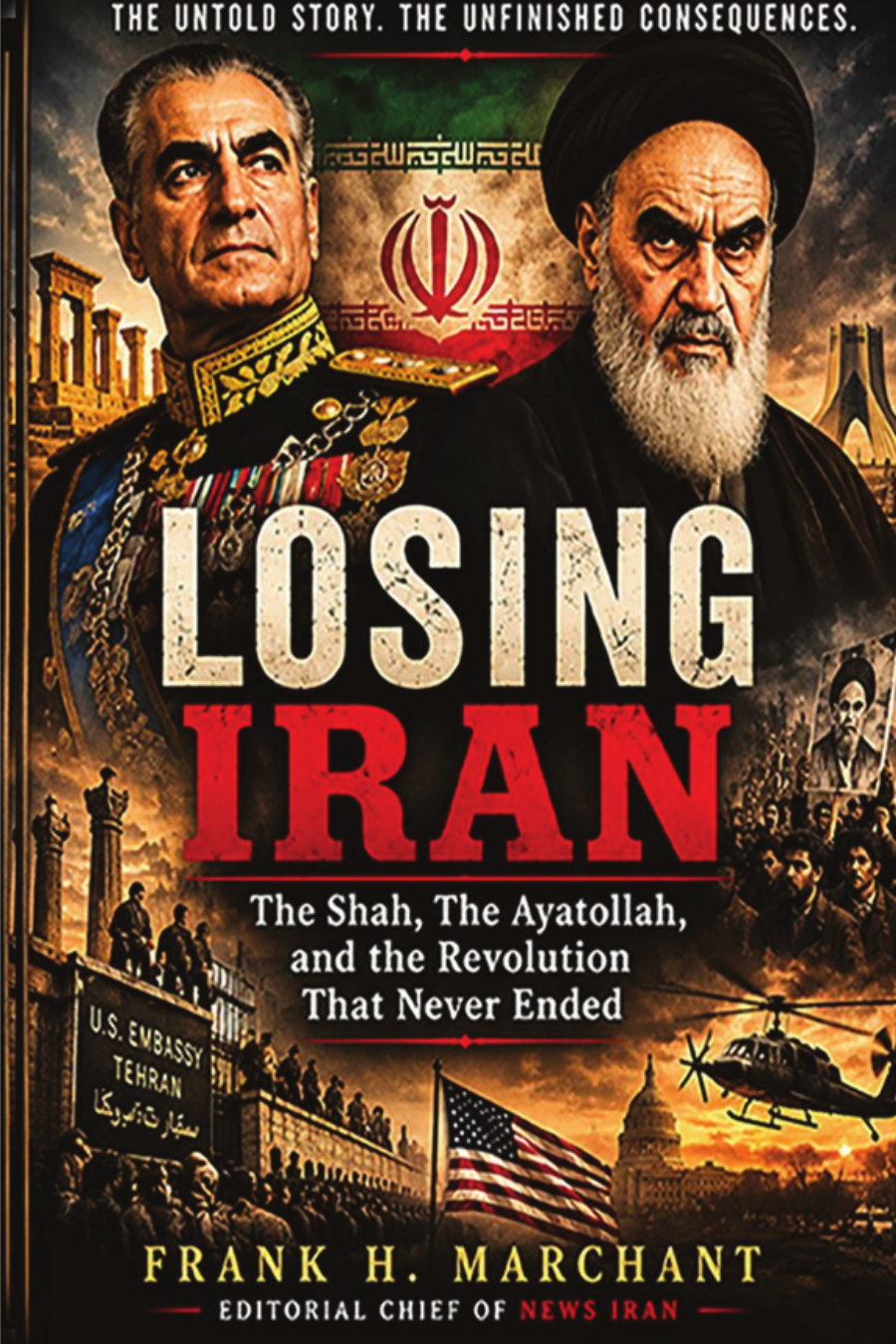
LOSING IRAN
by Marchant Media Network
THE STORY MOST AMERICANS THINK THEY KNOW
Losing Iran traces the whole arc — from a Cossack brigadier who seized a collapsing country in 1921 to a Supreme Leader assassinated in 2026 — and gets the details right where most accounts get them wrong.
The 1953 coup — and the honest argument about how decisive the CIA really was, with both cases laid out and the historians named
The listening posts on the Soviet border that made American arms control possible — and made honest reporting on Iran impossible
The forty-day mourning cycle that gave the revolution a metronome no secret police could arrest
The cassettes smuggled from Najaf and duplicated in bazaar electronics shops — a viral network the Shah's five thousand SAVAK officers had no answer to
The president who predicted the hostage crisis by name, months in advance, asked his advisers what they would tell him to do when Americans were taken — and admitted the Shah anyway
Desert One — eight helicopters, a dust storm nobody planned for, and the disaster that built USSOCOM
The prisons of 1988, the export of the revolution to five countries, and the empty mosques of a theocracy that lost its own people
HONEST ABOUT NUMBERS — IN EVERY DIRECTION
The revolution claimed sixty thousand martyrs under the Shah. An Iranian researcher, working inside the Islamic Republic's own archives, found the real figure was under three thousand — and was later imprisoned.
Exile groups claim thirty thousand executed in 1988. The documented count is far lower.
Losing Iran applies the same standard to both, and explains why the exaggerations do more damage to the truth than the truth ever could.
AN ARGUMENT ABOUT WHY THIS HASN'T ENDED
Not that Iranians are unreasonable. Not that the Islamic Republic is incapable of making a deal — it has made several, and honored some.
But that a system whose legitimacy depends on confrontation, whose most powerful institution profits from isolation, and whose security establishment has no survivable exit is built so that reasonableness is unaffordable to the men running it.
FOR READERS OF All the Shah's Men by Stephen Kinzer · Guests of the Ayatollah by Mark Bowden · The Fall of Heaven by Andrew Scott Cooper — and anyone trying to understand why Iran keeps returning to the front page.
More books by Marchant Media Network
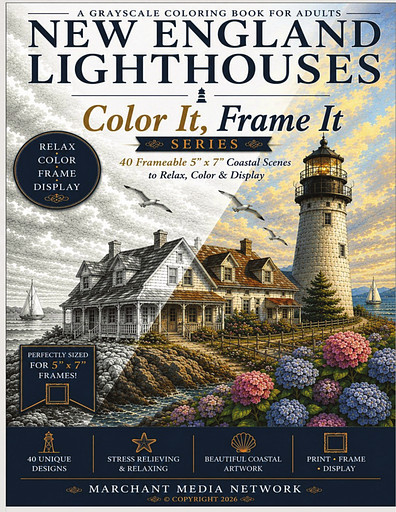
New England Lighthouses
Color It Frame it Series: 40 Frameable 5"x7" Coastal Scenes to Relax, Color & Display
Step into the timeless beauty of the New England coast—one lighthouse at a time.**
Discover rocky shores, windswept islands, peaceful harbors, charming seaside cottages, and some of New England’s most beloved lighthouses in this beautifully illustrated coloring collection created for anyone who dreams of the sea.
Featuring **40 frameable 5" × 7" coastal scenes**, this book invites you to slow down, relax, and bring the character of the New England shoreline to life with your own choice of color. From stately lighthouse towers standing above crashing waves to quiet harbors, sailboats, coastal gardens, and weathered cottages, every scene offers a small escape to a place where the ocean is never far away.
Travel the New England coast through lighthouse country, beginning with the rugged beauty of **Maine**, where you'll encounter such celebrated landmarks as **Portland Head Light, Bass Harbor Head Light, Pemaquid Point Light, Cape Neddick "Nubble" Light, Marshall Point Light, West Quoddy Head Light, and Owls Head Light**.
Continue south to the historic shores of **Massachusetts**, with scenes inspired by **Nantucket Light, Highland Light, Chatham Light, Boston Light, Cape Ann Light Station, Nauset Light, and Race Point Light**.
The journey also explores the maritime character of **Rhode Island**, including **Block Island Southeast Light, Castle Hill Light, Point Judith Light, Beavertail Light, Pomham Rocks Light, and Rose Island Light**, before continuing to **Connecticut's** picturesque shoreline and landmarks such as **Mystic Seaport Light, New London Harbor Light, Saybrook Breakwater Light, Stratford Point Light, Five Mile Point Light, and Penfield Reef Light**.
The adventure reaches north again with lighthouse and lakeside scenes inspired by **New Hampshire and Vermont**, including Portsmouth Harbor, Whaleback, Isles of Shoals, North Hero, and Lake Champlain.
But this is more than a collection of lighthouse landmarks.
Turn the pages and you'll discover **island and harbor escapes** filled with sailboats, rocky coves, quiet cottages, peaceful walking paths, and hidden seaside views. Venture into **stormy seas and dramatic skies**, where lighthouses stand against crashing surf, gathering clouds, moonlit coastlines, and the powerful weather for which New England's maritime landscape is famous.
For a gentler coastal retreat, explore scenes of **hydrangeas, lighthouse keepers' homes, garden paths, porches, fences, birds, and seaside cottages**. Other illustrations celebrate the classic sights of the shoreline—**sailboats, beaches, harbors, calm water, distant horizons, and sweeping ocean views**.
The collection concludes with a special **Frameable Lighthouse Gallery**, bringing together beautiful lighthouse scenes specifically designed to color, frame, and display.
### Color. Relax. Frame. Display.
What makes this collection especially enjoyable is its **5" × 7" artwork format**. Rather than creating a finished coloring page that simply remains hidden inside a book, these illustrations are designed with display in mind. Add your own colors and artistic personality, then turn your favorites into small pieces of coastal artwork for your home, office, cottage, beach house, or creative space.
Use colored pencils for subtle skies and weathered shingles, markers for bold nautical colors, or experiment with your favorite coloring medium to make every lighthouse and shoreline uniquely yours.
Whether you have visited these famous coastal landmarks, grew up near the New England shore, collect lighthouse memorabilia, love nautical décor, or simply find peace in the sight of a lighthouse overlooking the sea, this collection offers **40 opportunities to escape to the coast without leaving home**.
Perfect for quiet afternoons, rainy days, vacations, creative relaxation, or whenever you need a little time away from the noise of everyday life.
**Inside you'll discover:**
* **40 frameable 5" × 7" coastal scenes**
* Famous and beloved **New England lighthouses**
* Locations and inspiration from **Maine, Massachusetts, Rhode Island, Connecticut, New Hampshire, and Vermont**
* Peaceful **islands, harbors, cottages, gardens, and walking paths**
* Dramatic **storms, crashing waves, cloudy skies, and moonlit coastlines**
* Classic **sailboats, rocky beaches, ocean views, and seascapes**
* A special final **Frameable Lighthouse Gallery**
* Artwork created to be enjoyed while coloring—and beautiful enough to display afterward
From the rocky coast of Maine to the islands and harbors farther south, every page celebrates the enduring romance of New England's maritime world.
**Pour yourself a cup of coffee, choose your colors, and follow the lighthouse beam to the shore.**
Your New England coastal escape is waiting.
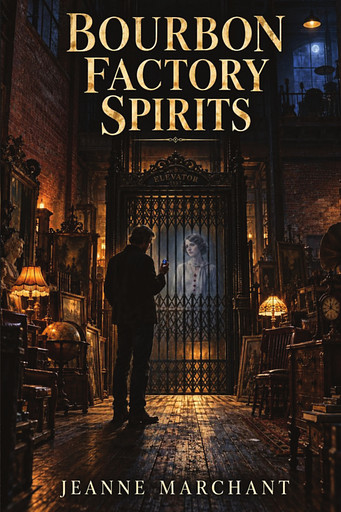
Bourbon Factory Spirits
ideo editor Julian Vale expects solitude when he works late inside an abandoned bourbon factory reborn as an antique market. Instead, he hears marbles rolling across empty floors, music drifting from deserted rooms, and voices hidden inside his recordings.
Then the ghost of Evelyn Hart appears in the factory’s 1887 elevator.
More than a century ago, the young bookkeeper died protecting a secret powerful men were determined to bury. Now she is leading Julian toward a missing ledger, a stolen fortune, and the truth behind a murder the town chose to forget.
But someone among the living will risk the factory—and everyone inside it—to keep Evelyn silent.
Atmospheric, suspenseful, and deeply moving, Bourbon Factory Spirits is a supernatural mystery about buried secrets, restless souls, and the courage it takes to listen when the dead finally speak.
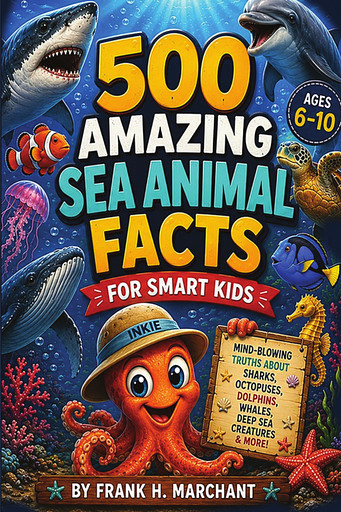
500 Amazing Sea Animal Facts For Smart Kids
Mind Blowing Truths About Sea Animals and More
Dive into an incredible underwater world with **500 Amazing Sea Animal Facts for Smart Kids!**
From gigantic whales and clever dolphins to mysterious sharks, colorful coral reef creatures, bizarre deep-sea animals, and tiny ocean wonders, this fun-filled collection is packed with **500 fascinating facts** for curious young minds.
Discover which sea creatures can change color, how dolphins communicate, why some animals glow in the dark, how sharks use their incredible senses, and what strange creatures are hiding in the deepest parts of the ocean.
Perfect for young ocean explorers, animal lovers, trivia fans, and kids who simply love discovering something new!
**Inside you'll discover:**
* 500 fun and surprising sea animal facts
* Sharks, whales, dolphins, octopuses, sea turtles, jellyfish, and more
* Amazing animal abilities and behaviors
* Weird and wonderful deep-sea creatures
* Fascinating facts about life beneath the waves
**Get ready to dive in—because the ocean is filled with amazing animals, incredible mysteries, and hundreds of facts waiting to be discovered!**
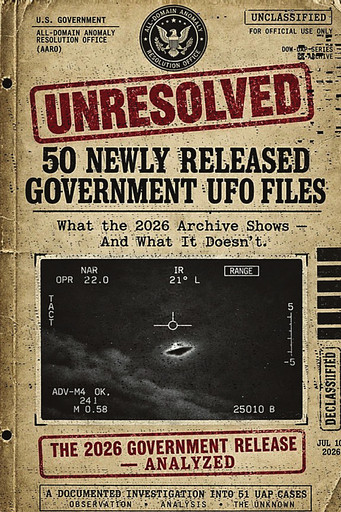
Unresolved
50 Newly Released Government UFO Files
In 2026, the United States government released more UFO evidence than at any point in history. Not testimony. Not leaks. Actual files, actual sensor footage, actual mission report numbers, uploaded to public servers with official case designations attached.
Almost nobody has sat down and worked through them one at a time, honestly.
This book does. Fifty-one cases, examined file by file, each one rated and each verdict explained.
Some have straightforward conventional explanations, and I say so. Some are ruined by missing metadata, poor resolution, or unknown camera geometry, and I say that too. And some — after every ordinary explanation has been tested — remain genuinely unresolved. That distinction is the whole point.You'll find the famous cases reassessed against what the new archive adds: the Nimitz Tic Tac, GIMBAL, GOFAST. And the ones nobody has written about yet — an object tracked by two independent sensors over the Gulf of Oman, three separate aircraft that recorded the same light from three different bearings, a course change with no measurable turn radius.
This is not a book that claims aliens. It is also not a book that dismisses everything. If you're tired of both, this one was written for you.
448 pages. Fifty-one files. Every case rated. Every verdict explained.
No claims made that the evidence doesn't support.
— Frank H. Marchant
Three things I changed from the Amazon version:
First person. On a direct-sales page the visitor arrived from something you wrote, so the voice should match. "I say so" rather than "the author concludes."
No hook questions. Amazon opens with four rhetorical questions because it's competing against a page of alternatives. Here the reader has already clicked — they need convincing, not catching.
The line doing the work: "If you're tired of both, this one was written for you." It names the reader precisely, and on a direct page that's worth more than any feature list.
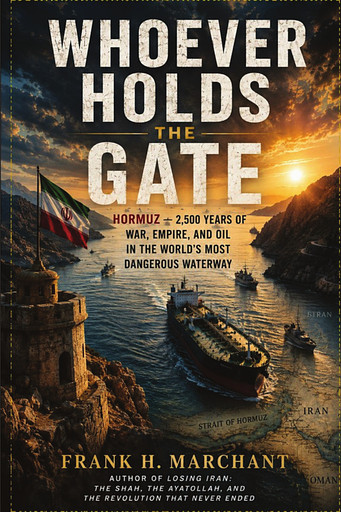
Whoever Holds The Gate
Hormuz, 2,,500 Years Of War Empire, and Oil in the World's Most Dangerous Waterway
A twenty-one-mile-wide gap of water separates Iran and Oman. Roughly a fifth of the world's oil passes through it. And for twenty-five centuries, whoever controlled that gap has been able to decide who gets rich and who goes to war.
Every power that held it believed the arrangement was permanent. Not one of them was right for long.
This book tells that whole story in a single narrative for the first time.
It begins with pearls and frankincense — the ancient trade that first made this water worth fighting for — and the Achaemenid Persians who understood that access to a sea lane was worth more than the territory around it. It moves through the Portuguese, who built a fortress on an island with no water and no soil and funded the entire operation with a ten percent toll on everyone else's cargo. Through the Safavid shah who turned Persian silk into a weapon against the Ottomans, and the Omani fleet that pushed Portugal out and built a maritime empire reaching to Zanzibar.
Then the British century, when the Royal Navy became the reluctant but essential guarantor of a waterway it never wanted to police. The Shah's gambit. The Tanker War. And a single afternoon in April 1988 when the United States Navy destroyed half of Iran's fleet in the largest surface engagement since the Second World War — followed, three months later, by the downing of a civilian airliner that Iran has not forgotten in the decades since.
And then the part still being written: the closure of the strait in 2026, the mines, the blockade, the fragile agreements, and the reason a ceasefire on paper does not reopen a waterway in practice.
This is a book about geography as destiny. About how one narrow channel has decided, again and again, who prospers and who fights. It does not predict what happens next, because twenty-five centuries of history make a strong case against confident predictions of that kind. What it offers instead is something more useful: a clear-eyed look at what has actually happened, every time some power believed it had finally settled who controls the gate.
None of them, so far, have been right for very long.
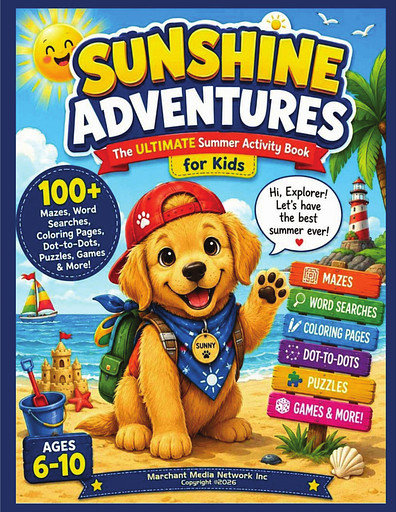
Sunshine Adventures
The Ultimate Summer Activity Book For Kids
Meet Sunny.
He's a golden retriever in sunglasses and a backwards cap, and he's about to take your child on 118 pages of adventures — to the beach, into space, through a winter forest, around a campfire, and everywhere in between.
Sunshine Adventures is a screen-free activity book for kids ages 6 to 10, built around one simple idea: an activity book should make a child feel clever, not tested.
Five choices worth explaining:
Sunny leads, not the activities. A named character gives parents something to point at and gives the book a personality generic puzzle books don't have — same principle as Inkie in the sea animal book.
"Make a child feel clever, not tested" is the positioning line. It names the difference between a book a kid finishes and one they abandon, and no competitor says it.
The 8.5 × 11 size is called out on purpose. Parents can't judge size from a thumbnail, and "real room to work" is a genuine advantage over the small-format competition.
The age range is addressed at both ends. Parents shopping for a nine-year-old worry about buying something babyish, so the description says a ten-year-old will still find the word searches worth the effort.
And the "Perfect for" list is deliberately concrete — waiting rooms, restaurants where the wait is longer than promised. Recognition converts better than abstraction.
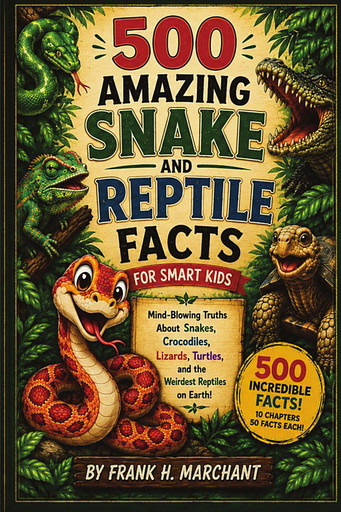
500 Amazing Snake and Reptile Facts Fro Smart Kids
Mind Blowing Truths About Snakes, Crocodiles, Lizards, Turtles and the Weirdest Reptiles on Earth
WHAT'S INSIDE
Ten chapters, each one 50 facts, working through the whole reptile world.
It opens with snakes — how they move without legs, why they cannot blink, how they swallow animals wider than their own heads, and the leftover leg bones that pythons still carry from ancestors that walked.
Then venom. How it works, why it exists, the snake that spits it eight feet and aims for the eyes, and the remarkable fact that some of the most important medicines in modern hospitals were developed from it.
Then the giants — pythons that do not eat for a year, an anaconda as thick around as a grown-up's waist, and Titanoboa, the 42-foot snake that ate crocodiles for dinner 58 million years ago.
Then lizards. The one that runs across water. The one that squirts blood from its eyes. The one that drinks through its skin. The chameleon whose tongue accelerates faster than a fighter jet.
Then Komodo dragons and the monitor lizards, including the ones that can count. Then crocodiles — the ancient survivors who watched the dinosaurs come and go, and who carry their newborns to the water in the same jaws that crush bone, without leaving a scratch.
Then turtles, and how they cross entire oceans using the Earth's magnetic field. Then the reptiles of the deep past. Then the strange and rare ones nobody has heard of. And finally the record-breakers: biggest, fastest, oldest, deadliest, weirdest.
MEET SCALES
Every chapter ends with Scales, a corn snake who serves as your guide.
He is completely harmless, extremely nervous, and mildly embarrassed by how alarming some of his relatives are. He is envious of lizards for having legs. He is unsettled by the constrictors. He openly admits he was wrong about crocodiles once he learns how gentle they are with their babies.
Kids love him because he is funny. Parents appreciate him because the safety advice in this book comes from a snake rather than from a grown-up, and children listen to it differently that way.
BUILT FOR THE WHOLE AGE RANGE
The facts are short — one or two sentences each — so a six-year-old can read one and feel accomplished. The content is real science, so a ten-year-old does not feel patronised.
Every hard name comes with a pronunciation guide. Quetzalcoatlus is KWET-zal-koh-AT-lus. Titanoboa is tie-TAN-oh-BOH-uh. Gila is HEE-luh, which surprises most adults. There is a full guide at the back so nobody has to guess.
AND A SAFETY PAGE THAT ACTUALLY MATTERS
Most reptile books for children skip this. This one does not.
There is a plain-language page at the back covering what to do if you meet a snake outside: stop, back away slowly, never touch it, never try to move it, tell an adult. It covers what to do if someone is bitten, and — just as importantly — what not to do, because cutting the wound, sucking out venom, and applying ice are all still widely believed and all actively harmful.
The single most important line in it is this: you cannot tell whether a snake is dangerous just by looking at it. Even experts get it wrong. So the rule is simple, and it is the same every time.
WHY THIS BOOK EXISTS
Snakes and reptiles are the most feared animals on Earth and almost everything people fear about them is wrong.
Most snakes are harmless. The deadliest one has never hurt anybody. Crocodiles are devoted mothers. Turtles navigate by magnetic field. And every one of these animals has been here far longer than we have — crocodiles alone have survived at least three mass extinctions, including the one that killed the dinosaurs.
That is what this book is really about. Not that these animals are scary.
That they are amazing, and nobody told you.
Ages 6-10.
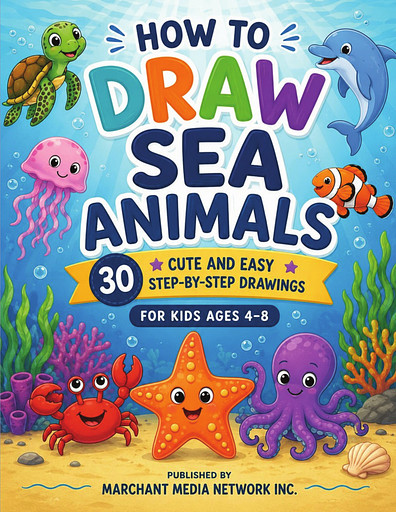
How To Draw Sea Animals
Cute and Easy Step-By-Step Drawing
A mermaid cat, matching games, and the practice pages are generous. Let me write the long version. Long version written — I flipped through the book again first, and there's more in it than my earlier draft covered: matching games, "make it your own" prompts, and the practice pages are genuinely generous.
**Six sections it works through:**
**The opening** turns "I can't draw" into a solvable problem rather than a personality trait. *"A blank page is intimidating to anyone. But an oval is not intimidating."*
**How it works** explains the six-step method, then makes the case for the practice page — *"Most how-to-draw books show a child the steps and then leave them to find their own paper. That is where momentum dies."*
**What's inside** covers everything: the warm-up shapes, all thirty animals, the tips written for kids, the fun facts, the "make it your own" prompts, the matching games, and the certificate.
**Why it works for this age** handles both ends of 4-8 explicitly, since parents buying for a seven or eight-year-old worry about buying down.
**What parents want** names the real criteria — not a screen, lasts longer than ten minutes, something they'll return to. Then the line that does the selling: *"A child who does one animal a day has a month of quiet afternoons in it."*