 Get The Edge Coach Daniels
Powered by Books.by
Get The Edge Coach Daniels
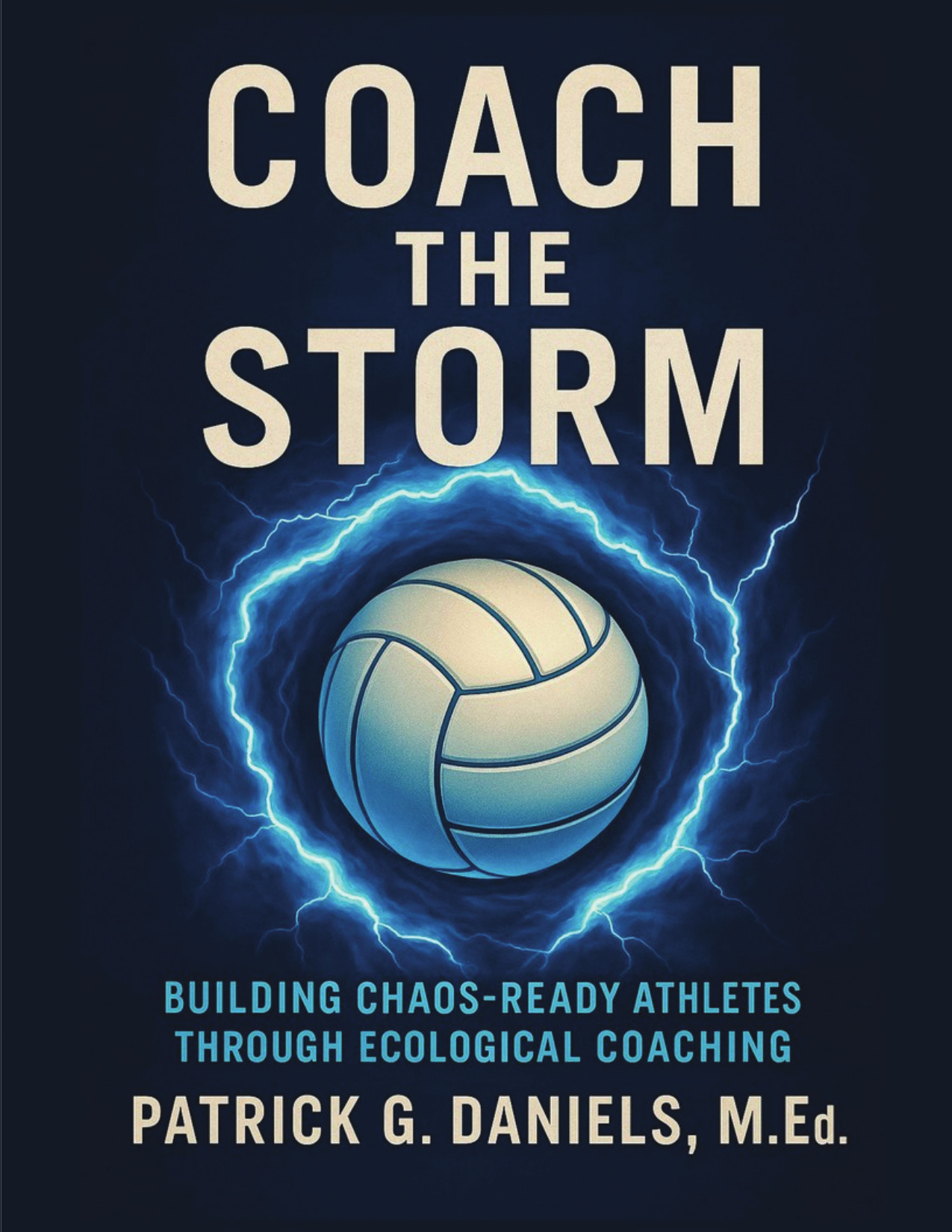
Building Chaos-Ready Athletes Through Ecological Coaching
by Patrick G Daniels M.Ed.
COACH THE STORM
Building chaos-ready athletes through ecological coaching
Your team can look sharp in warmups, then fall apart the first time the rally gets strange. The pass floats, and your setter ends up off the net. Every clean drill you ran all week suddenly feels like it belonged to a different sport.
Coach the Storm is written for that moment.
You get a reader-friendly coaching guide for volleyball coaches and parents who want performance that holds up when the gym turns unpredictable. Athletes will benefit from it too, because the pages are built around what players can actually do on the court.
The goal is simple. Build athletes who can handle the mess and still compete with confidence.
If your practices look perfect, your athletes can get addicted to perfect. Then match day shows up, and the sport laughs at your plan.
Coach the Storm helps you train what matches demand. Decision-making under pressure. Fast recovery after mistakes.
THE METHOD IN PLAIN ENGLISH
The book is built on ecological coaching and constraints-led practice design. The terms sound technical. The idea is not.
You shape the environment so better habits show up.
You adjust the rules and space, then tweak the scoring or decision-making demands. When you want more stress, you change the pace.
Athletes stop waiting for instructions and start solving problems. They learn to find answers under stress because you rehearsed stress on purpose.
One example you can run tomorrow. You want defenders to read earlier. Run a wash game where the dig only counts if the defender calls the hitter’s option before contact. Track accuracy for two weeks. You are training the eyes and the mind, not begging for faster feet.
WHAT THE CHAPTERS COVER
You start by embracing “beautiful chaos,” where messy reps become the training ground for calm play. You learn how to use games to teach creativity that survives pressure. You learn how to talk less during practice, so athletes learn to own decisions. You learn how to use weird cues that stick when nerves spike. You learn how to serve with intent, so the serve disrupts systems and creates free points.
The mental side gets practical, fast. You get 60-second reset tools that help athletes recover after an error and return to the next point with a clear plan. You get training ideas that improve anticipation, so athletes see the game sooner and move smarter.
Then you move into the deeper work that wins seasons. Culture. Trust. Leadership. Transparency. You learn how to build standards that stay alive when the score swings and the ref misses a call.
Advanced tools round it out. You learn how to use stats that tell the truth, rather than stats that flatter. You learn how to design practice like match point, so adaptability grows across the season instead of peaking once in August.
THE STORM BEHIND THE STORM
The method did not come from a comfortable path. It came from a life that forced me to coach with less control and more clarity.
Multiple Sclerosis entered my life in 2000. Later came a stroke. Prostate cancer followed. A severe MRSA infection nearly finished the job. Another stroke showed up later.
Those storms did not end my purpose. They sharpened it.
When I could not demonstrate every rep or manage every detail, I had to design learning that worked without constant talk. I had to trust athletes to think. I had to build sessions that teach resilience in real time.
That is the parallel you will feel in these pages. Your athletes do not need a perfect environment to grow. They need a practice environment that prepares them for reality.
WHY YOU CAN TRUST THE GUIDE
I have coached volleyball for more than three decades, from youth gyms to high-pressure programs. I have lived the film sessions and the long seasons. I know the joy of growth. I know the sting of a tough loss.
My head coaching record is 634 wins and 86 losses. I earned a CIF 500 Win Award. I coached in a championship culture that demanded standards every day. I served as a collegiate assistant at San Francisco State, helping run an offense that reached the NCAA Division II playoffs.
I also coached as a father, building game IQ through film work with my daughters, including a Division I libero.
Credentials are not the point. You want results that show up on match day. The ideas in this book have been used in busy gyms, under pressure, with athletes who had to perform when things got messy.
WHO THIS BOOK IS FOR
Coach the Storm is for coaches working with school or club athletes from middle school through high school, and for parents who want to understand why a “messy” practice can be a gift. Athletes can use it to recover fast after errors and compete with a plan.
WHAT YOU GET
You get a system you can run and practice designs you can plug in. You also get games that force better decisions and coaching language that builds responsibility without breaking the connection. A quick reference path helps you find what you need before your next session. Sample practice plans help you apply it fast.
If you want athletes who can handle chaos and still play free, Coach the Storm was written for you.
Available through my bookstore on books. by, with more coaching resources at coachdaniels.com.
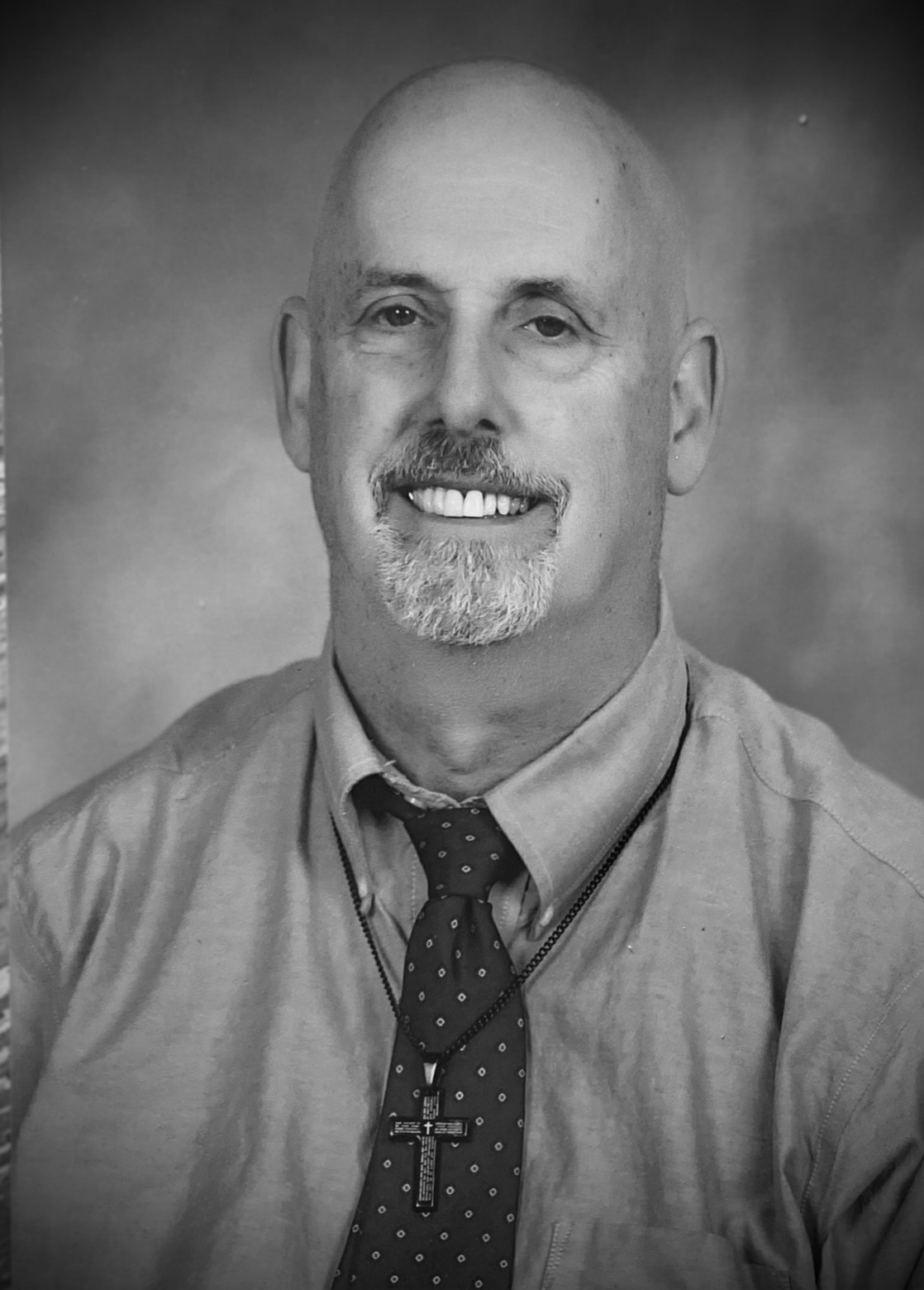
Patrick Daniels is a veteran volleyball coach, sports psychology-minded mentor, and longtime educator with 35 years of experience developing athletes and building winning team cultures. He’s known for blending high standards with real relationship-based leadership—helping coaches and parents turn pressure moments into growth, and talent into toughness. Heart of the Game is his hard-earned playbook for coaching that wins and lasts.
Patrick Daniels is a veteran volleyball coach, sports-psychology-minded mentor, and longtime educator who’s spent **35 years** building athletes and programs that hold up under pressure. Known for blending **high standards with real connection**, Patrick coaches the whole person—skill, mindset, leadership, and the habits that show up when the match gets tight and nobody feels “ready.” His credibility isn’t just built on seasons and scoreboards—it’s forged in adversity. Patrick was diagnosed with **Multiple Sclerosis in 2000**, a reality that eventually forced him to step away from coaching around 2010. Later, he survived a **stroke** that nearly took his life and fought his way back to his baseline level of disability. He also overcame **prostate cancer**, and during recovery faced a life-threatening **MRSA** infection that put him in the hospital for weeks and required months of rehabilitation. Through it all, he refused to let suffering write his identity—choosing instead to model resilience, discipline, and faith-driven purpose for the athletes and families he serves. Those battles became a blueprint for his coaching philosophy: don’t wait for calm conditions to lead well—**coach through the storm**. In *Heart of the Game* (and in the “Coach the Storm” message that runs through his work), Patrick pulls back the curtain on what actually builds durable teams: clarity, accountability, selfless culture, honest communication, and athletes who learn to think under fire instead of depending on a coach to rescue them. Patrick’s writing is direct, practical, and conviction-filled—made for coaches, athletes, and parents who want more than motivation. His goal is simple: help you develop competitors who can perform with poise, carry themselves with integrity, and win the moments that decide a season—and a life.

Volleyball Toolbox
Heart of the Game (Second Edition) is a no-fluff coaching playbook for building tougher athletes and tighter teams. Practical tools, real talk, and standards that show up under pressure—on the court and in life.
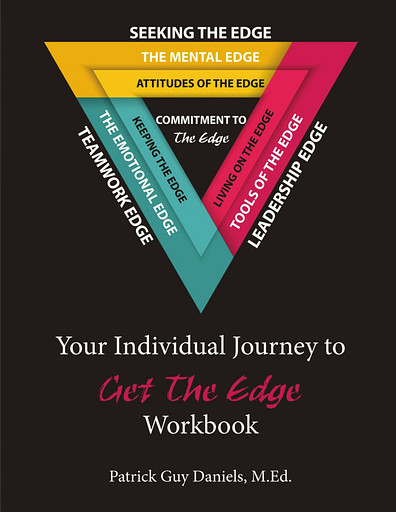
Your Individual Journey to Get The Edge Workbook
Get The Edge Workbook is a practical, athlete-centered guide to building mental toughness, emotional control, and next-level consistency. Through a progression of workshops—goal setting, teamwork, leadership, mental skills, emotional resilience, and performance tools—you’ll develop your personal “Edge” and learn how to hold it when the stakes rise. Designed to help athletes perform at the top of their ability—regardless of circumstances.
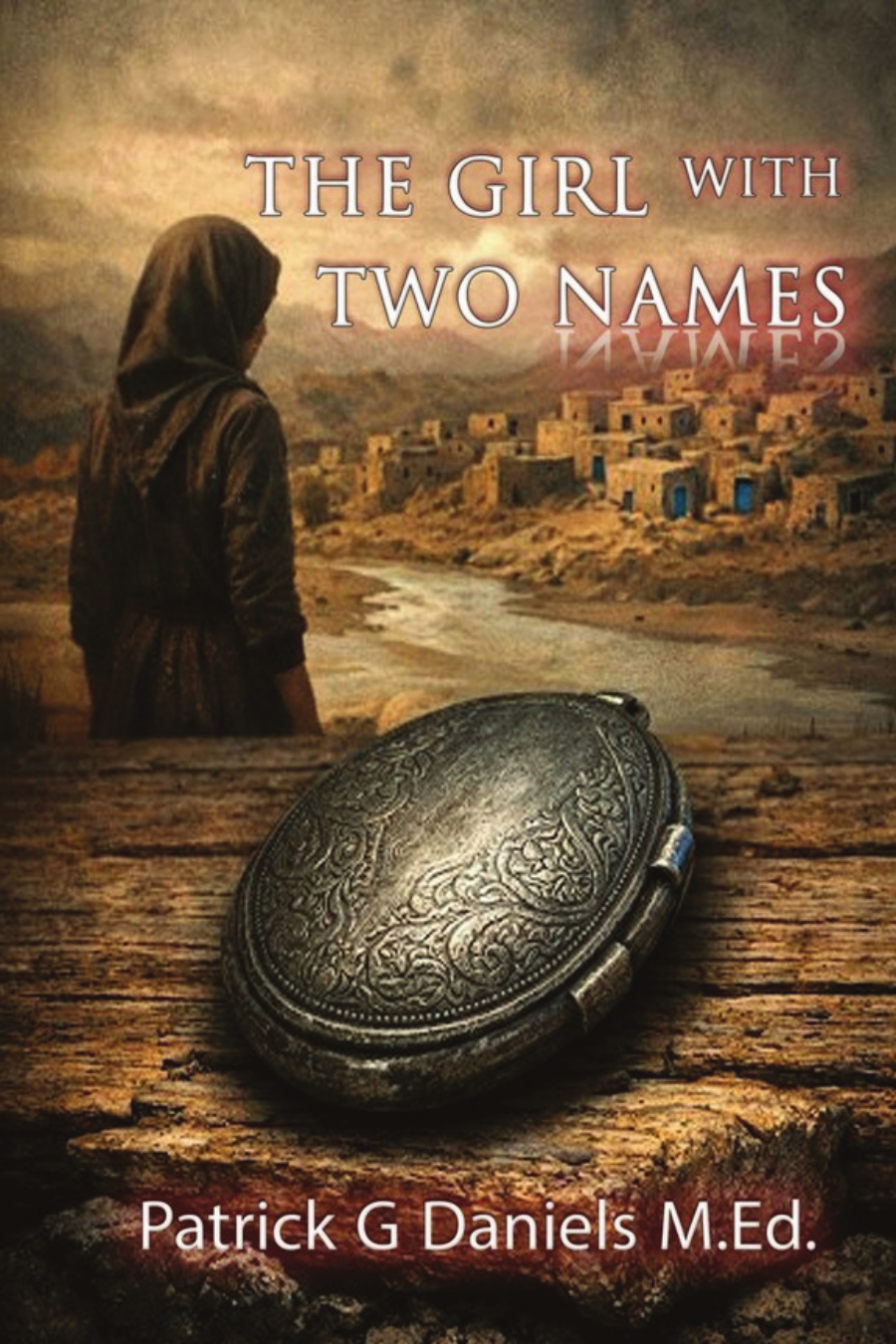
Two families. Two names. One impossible journey
**Two families. Two names. One locket that opens a door to the truth—and a danger that won’t stay buried.**
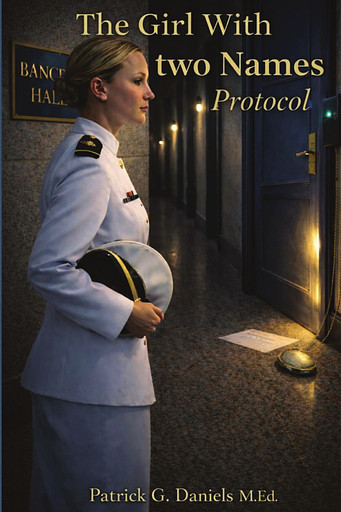
The Blue Door Protocol
She walks into the Naval Academy with one name on her papers and another buried in her blood. Sam Williams is a plebe. Hêvî Dilvin is a girl someone in Istanbul is paid to find. She has kept those two worlds apart since the day Thunder Daniels carried her out of Kurdistan. She cannot keep them apart much longer.
In Annapolis, the system does not need guns. It has paperwork and people who believe they are helping. Across an ocean, Khalid al-Tikriti has something worse: patience.
He found her name on a list.
Now he is watching her walk to class.
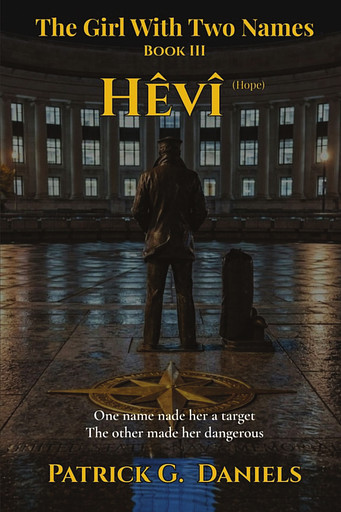
Book III Hevi
Two names.
One system.
No safe door.
BOOK SUMMARY
Hêvî means hope.
For Ensign Samantha Williams, it becomes evidence.
Fresh out of the Naval Academy, Sam enters Naval Intelligence ready to serve, read patterns, and trust the process.
Then her Kurdish name appears in a logistics stream where it has no reason to exist.
Hêvî Dilvin.
The record does not point to Sam alone. It points to her grandmother in Kurdistan, the woman behind the blue door who gave Sam the name before she ever knew it was hers.
Someone built the link.
Someone hid it inside contractor records, policy channels, and redacted systems.
Now Sam must follow the trail before her identity becomes leverage and her family becomes bait.
She has two names.
They made both of them evidence.
And this time, Sam is not waiting to be found.
The Girl with Two Names
HêVÎ (HOPE)
BOOK III