 Greg Cox
Powered by Books.by
Greg Cox
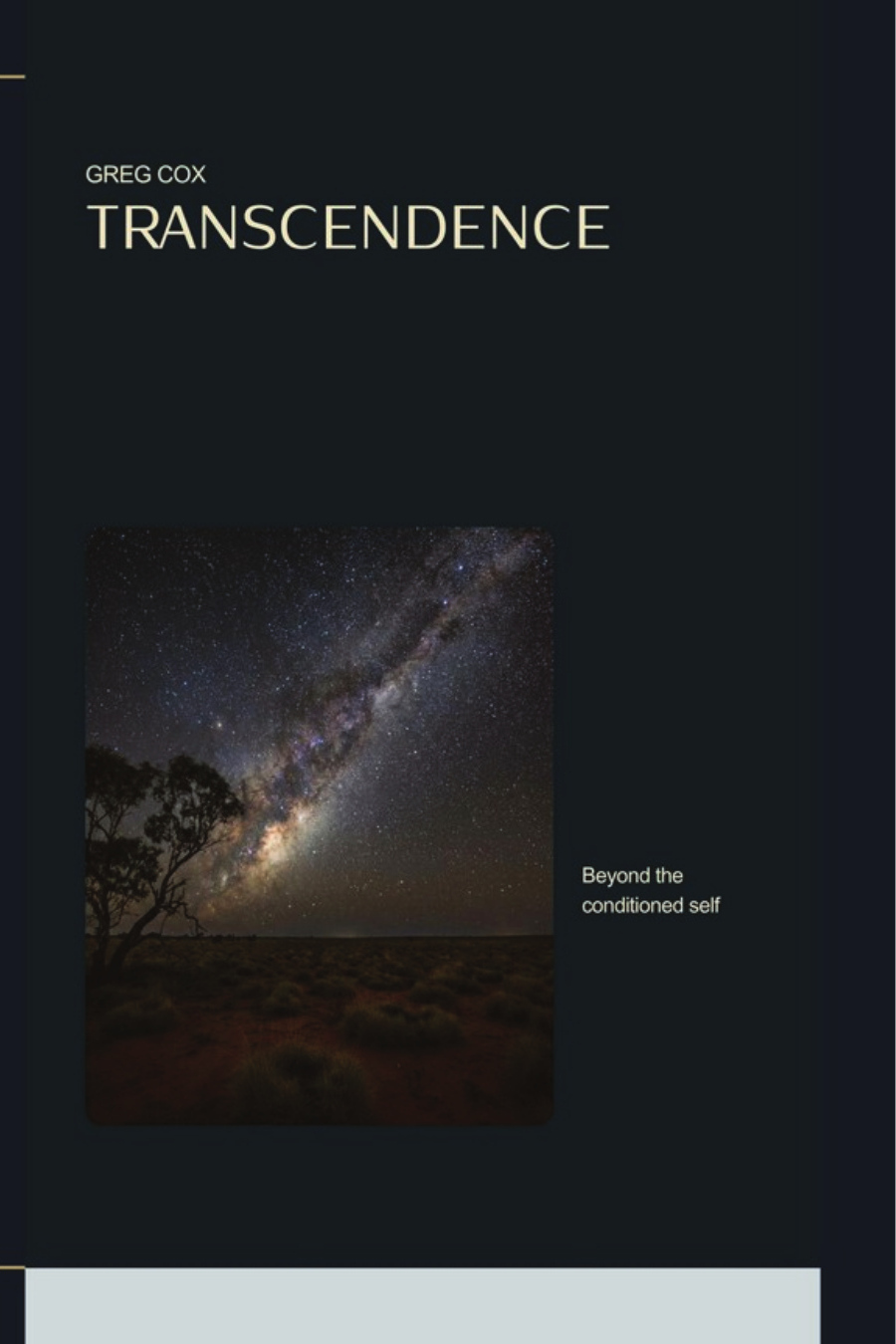
Beyond the Conditioned Self
by
What if the most important discovery a human being can make has already been made — thousands of times, across every culture and century — and we simply haven't been paying attention?
Transcendence traces the single thread connecting the Toltec seers, the Gnostic mystics, the Buddhist teachers, the Jungian analysts, and the quantum physicists: the recognition that ordinary consciousness is operating in a reduced mode, and that something far larger waits underneath it. Drawing on the Matrix trilogy as a modern mythological map, and on the work of Eckhart Tolle, Carl Jung, and the emerging science of consciousness, this book charts the territory of awakening — what it is, what it is not, and how to move toward it.
Every tradition explored in this book arrived independently, in a different language, in a different century, and reached the same conclusion. The Toltec teacher, the Zen master, the Gnostic mystic, the Vedantic sage, the Buddhist diagnostician — none of them knew each other. All of them agreed.
The agreement is this: ordinary human consciousness is not seeing clearly. The self we take ourselves to be is a construction — a conditioned layer of habit, narrative, and fear — and beneath it lies something the traditions variously call the Self, the pneuma, the Tao, buddha-nature, or simply awareness. Transcendence is the movement from one to the other. Not escape. Not indifference. A shift in what you take yourself to be — and everything that follows from it.
Transcendence explores this discovery across six traditions — Toltec, Taoist, Buddhist, Gnostic, Jungian, and the modern science of consciousness — using the Matrix trilogy as a contemporary mythological map of the journey. It brings together the work of Eckhart Tolle on the pain body and presence, Carl Jung on the shadow and the unconscious, Ramana Maharshi on self-inquiry, and the quantum physicists whose experiments keep pointing toward the same conclusion the contemplatives reached thousands of years ago.
This is not a book that asks you to believe anything. It is a book that asks you to look — at the traditions, at the evidence, and finally at the one who is doing the looking. The thread runs through everything. This book follows it.
“"Transcendence does what very few books in this territory manage: it makes the ancient wisdom traditions feel urgent, evidenced, and personally relevant without reducing them to self-help. Greg Cox writes with intelligence and genuine conviction. The thread he traces — from the Gnostics to the physicists, from Jung to the Matrix — is real, and he follows it all the way."”
Brad hicks
“"A rare achievement: a book that takes the great traditions of awakening seriously without losing the reader in abstraction. Cox moves from the Toltec seers to the quantum physicists with the confidence of someone who has actually lived the question, not just researched it. The Matrix framework works better than it has any right to — and the chapters on Jung and Gnostic Christianity alone are worth the price. This is the book I would hand to someone who has felt the thread but never found language for it."”
John Watts Literary Critic
“"I have read a great deal on consciousness, awakening, and the nature of the self. Most of it either demands too much prior knowledge or says too little that is genuinely useful. Transcendence does neither. It is clear without being shallow, wide-ranging without being superficial, and it lands — which is the only thing that finally matters with a book like this. The convergence Cox maps across six traditions is not forced; it is simply true, and seeing it laid out this clearly is quietly astonishing."”
Brian Shelby
Greg Cox grew up in Townsville and left at seventeen on a motorbike heading north. He has spent the years since then living in the kinds of places that teach you something — the Daintree rainforest, the Atherton Tablelands, the sapphire fields at Rubyvale — and writing about the things he found there. He works as a stevedore at the Port of Townsville. He writes books, songs, and occasionally things that don't fit neatly into either category.
Greg Cox is an Australian author and songwriter based in Townsville, Queensland. He writes across two territories that turn out to be the same territory: the inner life of the individual, and the question of what we owe each other in relationships. His first book, Transcendence, traces the single thread connecting the world's great wisdom traditions — from the Toltec seers and the Gnostic mystics to the quantum physicists — and the discovery they all arrived at independently: that ordinary consciousness is operating far below its actual capacity, and that something can be done about it. His second book, The Father Wound in Women, is a clinically grounded account of how an early relationship with an absent, volatile, addicted, or emotionally unavailable father shapes adult love — and how that pattern changes. It is written from the man's side of the dynamic, for both the woman who recognises herself in it and the person trying to understand her. His autobiographical novel Rufus — the story of a young man who raised a Brahminy kite in the rainforests of Far North Queensland — is forthcoming through HarperCollins. He also writes and records music, and runs the YouTube channel Renegade Phoenix Rising, where he creates content about attachment, relationships, and the long road between who we were and who we are becoming.
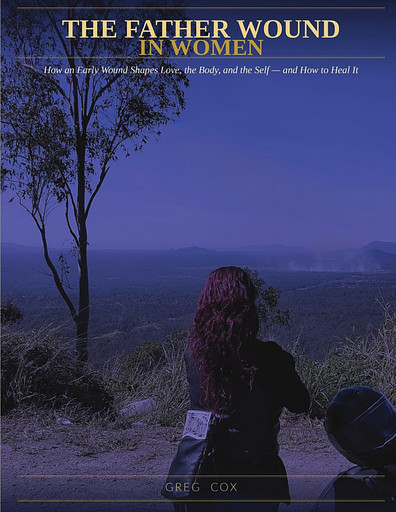
Don't read this book if you are happy with your relationship history
You are reading this for one of two reasons. Either you have started to see a pattern in yourself. Or you love someone who has one — and you are out of explanations.
The Father Wound in Women is for both of you. It is a clear, honest account of how an early relationship with a father who was absent, volatile, addicted, or simply unreachable leaves a lasting imprint — on the way a woman attaches, on her body, on the partners she chooses, and on what she does to the ones who are safe. It does not flatter and it does not flinch. Its compassion is in service of its honesty, not a substitute for it.
Grounded in attachment theory, trauma research, and the science of adverse childhood experience, the book moves through the wound's origins, through the body where stress and early loss leave their physical record, into the specific relationship patterns that follow: the pull toward familiar danger, the sabotage of genuine safety, the story a wounded person tells about why things keep ending. Parts V and VI turn toward what changes things — and what it honestly takes.