by Gregory J Fellows
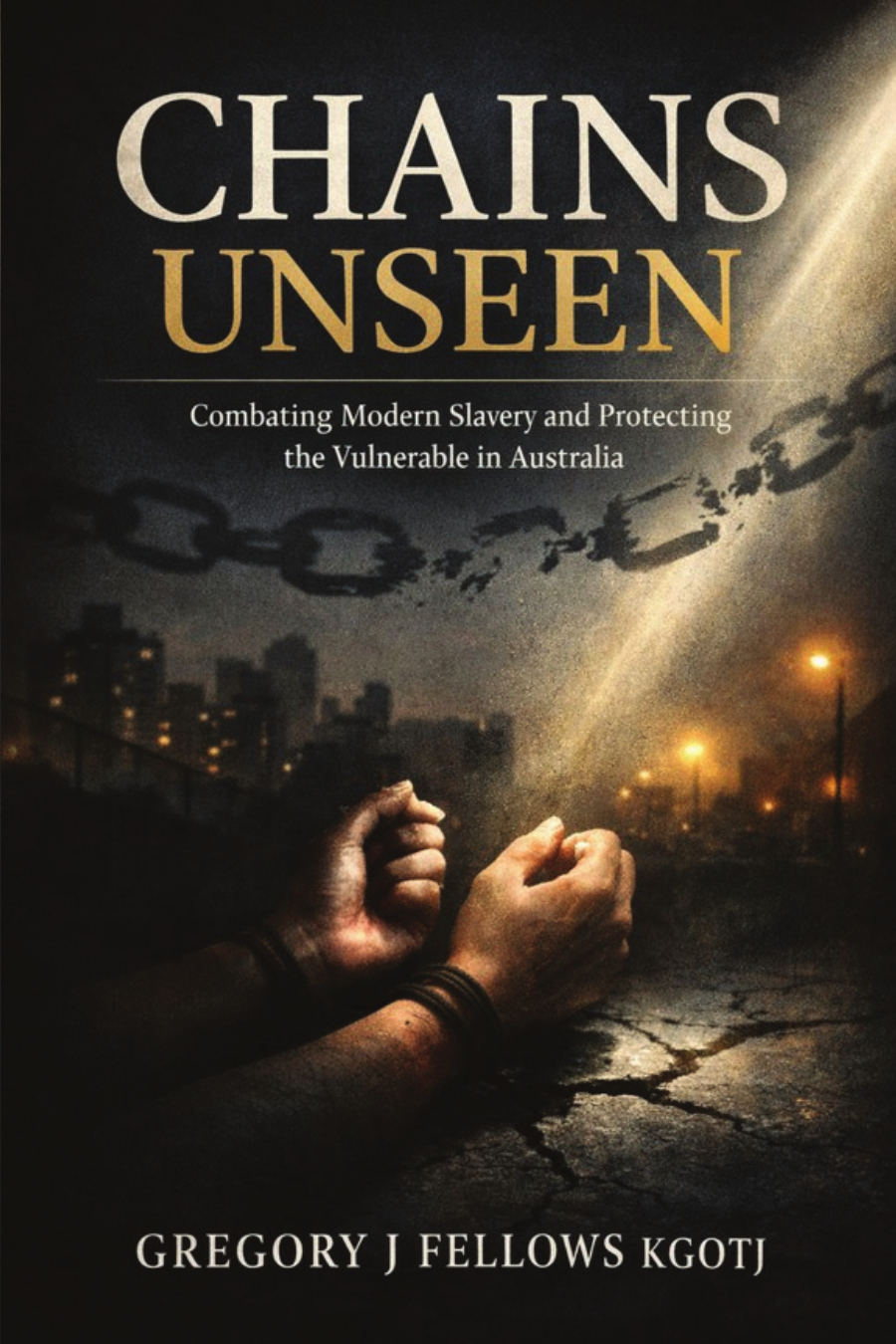
Combating Modern Slavery and Protecting the Vulnerable in Australia
About the Book
Slavery didn’t end. It learned how to hide.
And in Australia—prosperous, lawful, confident Australia—it hides in plain sight.
In Chains Unseen: Combating Modern Slavery and Protecting the Vulnerable in Australia, Gregory J. Fellows delivers a powerful, unsettling exposé that shatters the illusion that exploitation is someone else’s problem, happening somewhere else, to someone else.
This is not a book built on shock tactics or moral grandstanding. It is far more dangerous than that.
It tells the truth.
With precision, authority, and quiet force, Chains Unseen reveals how modern slavery operates through systems we trust—workplaces, supply chains, visa frameworks, labour arrangements, and regulatory structures designed to reassure rather than protect.
There are no iron chains here. There are contracts that silence.
Bureaucracies that look away. Profits that depend on invisibility.
“This doesn’t happen here,” we tell ourselves.
This book proves otherwise.
Fellows takes the reader behind the comforting language of compliance and responsibility and exposes what lies beneath: exploitation sustained not by villains alone, but by gaps in oversight, institutional inertia, and collective denial.
Modern slavery thrives not because it is dramatic—but because it is ordinary. Because it looks legal.
Because it feels distant. Because no one is required to feel responsible.
Until now.
Grounded in Australia’s legal, social, and economic realities, Chains Unseen interrogates the laws meant to protect the vulnerable—and asks why so many still fall through the cracks.
It challenges reporting regimes that reward paperwork over outcomes and corporate frameworks that measure intent rather than impact.
The question it forces into the open is unavoidable: If the system is working, why are people still trapped?
This book does more than expose injustice—it redefines responsibility. Fellows refuses to let the reader remain a passive observer.
If exploitation exists within the systems we rely upon, benefit from, and defend, then responsibility cannot be endlessly outsourced.
Silence, he argues, is not neutrality. It is participation.
The most confronting chapters examine vulnerability itself—how poverty, migration status, disability, homelessness, Indigenous disadvantage, and social isolation are not accidents, but predictable conditions that exploitation feeds upon.
These risks are known. Repeated. Ignored.
Until the damage becomes too visible to deny.
Chains Unseen challenges the cycle of outrage after exposure and asks why prevention is so often treated as optional.
Yet this is not a book of despair.
It is a book of resolve.
Rather than lingering on harm, Fellows turns to what actually works: upstream investment, ethical leadership under pressure, institutional courage, and reforms designed for real-world impact—not public relations.
The solutions are sober, practical, and unglamorous. They are also effective.
This is the hard work of justice—and Chains Unseen demands it be taken seriously.
Crucially, the book refuses to turn suffering into spectacle.
There are no sensationalised stories, no borrowed trauma for emotional manipulation.
The vulnerable are treated with dignity, restraint, and respect—giving the book a moral authority that cannot be dismissed.
This is not a book you read and forget.
It is a book that changes what you notice.
What you tolerate.
What you can no longer pretend not to see.
For policymakers, legal and corporate professionals, educators, community leaders, and citizens who suspect the official story is incomplete, Chains Unseen is essential reading.
It speaks to anyone who believes justice requires more than good intentions—and accountability requires more than words.
Read it. See it. Then decide what kind of society you’re willing to be part of.
Because once the chains are visible, looking away is no longer an option.
Reader Reviews
““A book that removes excuses” There are books that inform, and there are books that leave you with nowhere to hide. Chains Unseen does the latter. What struck me most was not the horror of modern slavery—disturbing as that is—but how calmly and convincingly Gregory J. Fellows shows that the problem is embedded in systems many of us participate in without question. This isn’t an angry book. It’s a precise one. And that makes it far more confronting. Fellows writes with moral authority without preaching, which is rare in this genre. He doesn’t rely on sensational stories to jolt the reader awake; instead, he dismantles the comforting narratives we tell ourselves about compliance, legality, and distance. By the time you finish, it’s impossible to keep saying, “Someone should do something,” without realising you might be one of those someones. Chains Unseen is deeply uncomfortable in the best possible way—and essential reading for anyone who believes ethics don’t stop at good intentions.”
““Quietly devastating, intellectually rigorous” What makes Chains Unseen so powerful is its restraint. Gregory J. Fellows refuses to exploit suffering for emotional impact, and that decision gives the book enormous credibility. The analysis is sharp, disciplined, and grounded firmly in Australian legal and social realities. This is not a theoretical discussion of human rights; it is an exposure of how exploitation survives inside systems that appear functional, regulated, and even well-meaning. The chapters on vulnerability are particularly devastating—not because they are dramatic, but because they are predictable. Fellows shows that modern slavery is not a freak anomaly but a foreseeable outcome of neglect, policy gaps, and institutional convenience. As a reader, you feel less manipulated and more indicted. That is a hard balance to strike, and Chains Unseen strikes it flawlessly. This book belongs on the desks of policymakers and professionals—but it should also be read by ordinary citizens who want to understand the true cost of looking away.”
“"One of the most important Australian books of the decade” Chains Unseen doesn’t scream for your attention. It assumes you’re capable of listening—and then rewards that trust with clarity, courage, and depth. Gregory J. Fellows has written a book that exposes modern slavery in Australia without sensationalism, without theatrics, and without allowing the reader the luxury of detachment. That combination is rare—and profoundly effective. What elevates this book above others on the subject is its insistence on responsibility. Fellows makes it clear that exploitation persists not just because of criminals, but because of systems that diffuse accountability until no one feels obliged to act. The call to action is unmistakable, but never simplistic. This is not activism by slogan; it is reform by understanding. Once you read Chains Unseen, ignorance is no longer plausible—and neutrality is no longer defensible. That alone makes it an essential, and enduring, contribution to Australia’s moral literature.”

More Books