
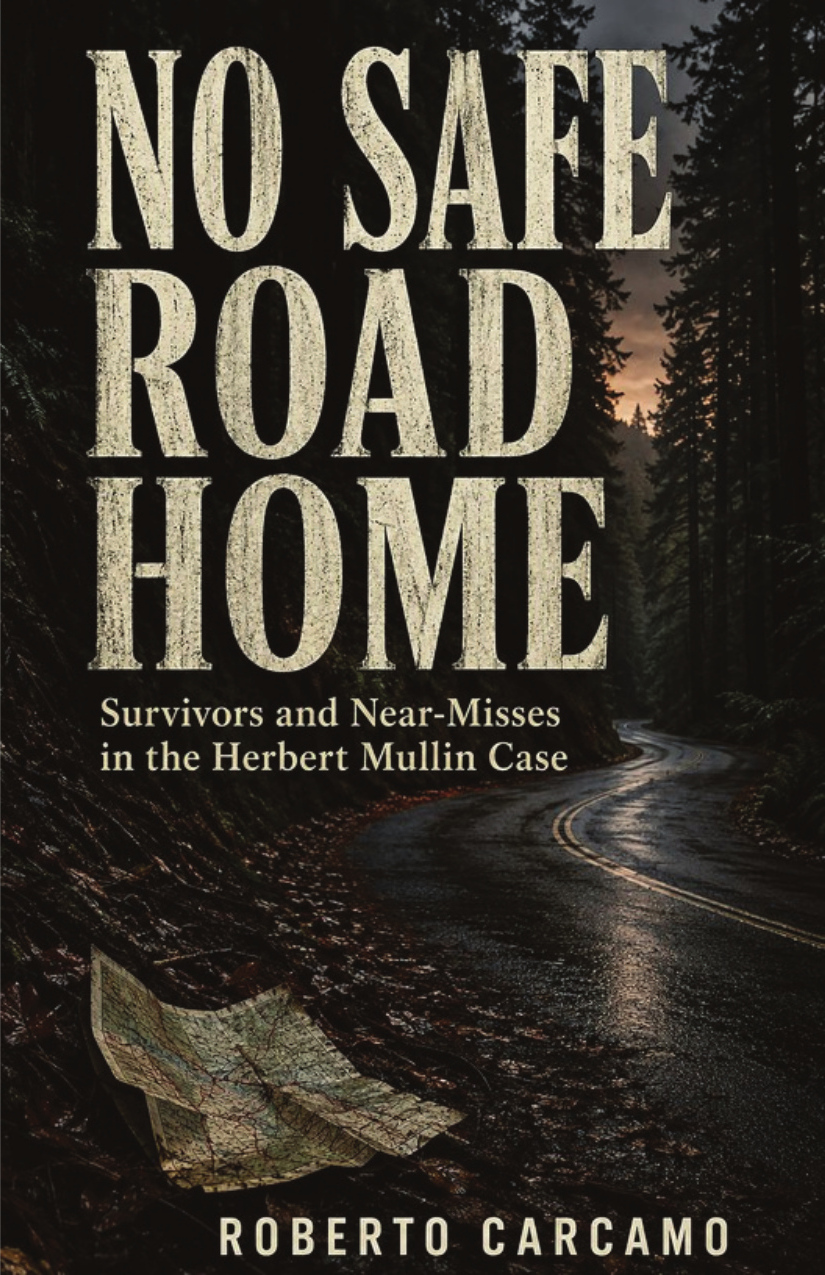
No Safe Road Home
by HN Bazaar by Roberto Carcamo
Sales Description:
In the Santa Cruz Mountains, danger did not arrive like a stranger. It borrowed the shape of ordinary life.
A man stopped beside a road. A student accepted a ride. A priest entered a confessional. Families opened doors, boys camped under redwoods, neighbors tended yards, and mountain routes that once felt familiar began to hold a different meaning. Between October 1972 and February 1973, Herbert W. Mullin killed thirteen people across a region already struggling to understand why violence had come so close to home.
No Safe Road Home retells the documented Herbert Mullin case through the people who trusted the routines around them: roads, trails, church doors, campsites, porches, and the casual mercy of stopping when someone seemed to need help. The book asks the question at the heart of the case: how did ordinary passages through a close-knit landscape become corridors of mortal risk before the community could recognize the pattern?
This victim-centered true crime account follows the slow suffocation of certainty in 1970s Santa Cruz, where overlapping violence, institutional blind spots, mental-health failures, and public fear blurred what residents thought they knew. It keeps the emotional center where it belongs: with the victims, their families, the witnesses who survived with memory, and the community that had to keep driving the same roads afterward.
More books by HN Bazaar by Roberto Carcamo
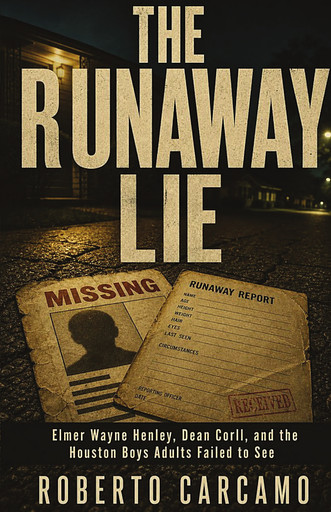
The Runaway Lie
Elmer Wayne Henley, Dean Corll, and the Houston Boys Adults Failed to See
In Houston, the explanation came too easily.
The boys had run away.
That sentence moved through police stations, kitchens, school corridors, and neighborhood gossip until it hardened into something almost official. Parents were left to search alleys, bus stations, and telephone poles while adults with authority treated absence as teenage rebellion. Behind that assumption, Dean Corll built a private system of coercion, reward, fear, and silence. Around him, two teenage boys became messengers, witnesses, and accomplices inside a world that should never have reached them.
The Runaway Lie returns to the Houston Mass Murders through the terrible contradiction of Elmer Wayne Henley Jr.: the adolescent who survived the final room, exposed the graves, and was convicted for helping bring other boys into that danger. This is not a killer-centered legend. It is a survivor-and-victim-centered account of what happened when a city confused vulnerability with delinquency, when ordinary neighborhoods taught themselves not to notice, and when the truth finally arrived too large for denial.
The central question drives every chapter: how did a community learn to call endangered children runaways while violence unfolded behind familiar doors?
Written with documentary restraint, moral clarity, and immersive true crime tension, this book follows the missing boys, the families who were dismissed, the teenage psychology Corll exploited, the investigative rupture that forced Houston to look, and the aftermath that could not restore what had been taken. It is a story of coercion without absolution, testimony without innocence, and names that kept returning long after the courtroom went quiet.
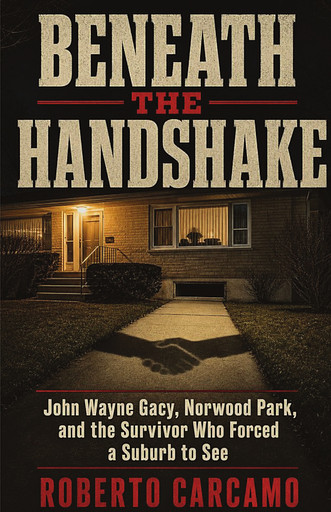
Beneath the Handshake
John Wayne Gacy, Norwood Park, and the Survivor Who Forced a Suburb to See
In 1970s Norwood Park Township, danger wore the face of civic trust.
John Wayne Gacy was not a stranger passing through the edge of town. He was the contractor with a clipboard, the neighbor with a party tent, the precinct figure whose handshakes carried the polish of belonging. Around him, boys and young men disappeared into a suburban order that explained away absence, minimized fear, and mistook social comfort for safety.
Then Jeffrey Rignall survived.
After a night that fractured his body and sense of reality, Rignall tried to tell the world what had happened. The world answered with doubt, delay, and the familiar cruelty reserved for victims who did not fit the clean shape institutions preferred. So he did what the systems around him would not do with urgency. He looked. He waited. He followed memory through expressway ramps, car models, street turns, and terror until the man everyone else found respectable had a name and an address.
Beneath the Handshake tells the Gacy case through the survivor's fight to make private truth heavier than public denial. It moves through fluorescent suburbia, neighborhood complicity, police hesitation, family grief, the disappearance of Robert Piest, the excavation of the Summerdale house, and the courtroom where testimony forced a community to confront what it had normalized.
The central question is not only how a serial killer hid. It is how so many people helped him remain imaginable as safe.
This is a victim-centered true crime narrative about survival, institutional failure, and the terrible cost of a community's refusal to believe what was happening beneath its own floorboards.
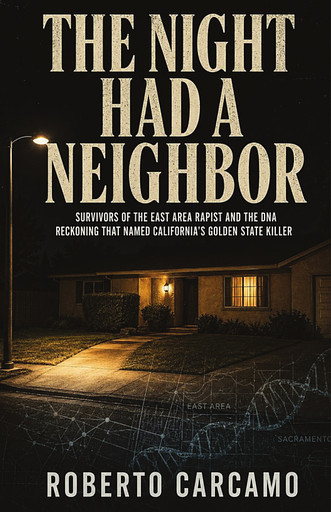
The Night Had a Neighbor
Survivors of the East Area Rapist and the DNA Reckoning That Named California's Golden State Killer
In the planned suburbs of 1970s California, safety had a sound: sprinklers ticking across lawns, garage doors lowering at dusk, screen doors clicking shut against the heat. Then bedrooms became crime scenes, and ordinary families learned that a locked door did not mean they were alone.
The man first known as the East Area Rapist moved through Sacramento-area neighborhoods with a patience that made the familiar feel unreal. He watched homes, learned routines, entered at night, and left survivors to rebuild their lives inside rooms that could no longer feel like shelter. For years, fear spread faster than facts. Counties held separate pieces of the same predator. Communities told themselves the danger could be managed with porch lights, dogs, neighborhood patrols, and new locks. Survivors carried a harder truth: the violence had not ended when he left the house.
The Night Had a Neighbor follows the Golden State Killer case from the survivor experience outward, tracing the emotional aftermath of the East Area Rapist attacks, the institutional fragmentation that allowed the offender to remain unnamed, the escalation into murder, and the late forensic reckoning that finally brought Joseph James DeAngelo into a courtroom. Built around the central question of how one man could terrorize ordinary homes for years while the systems around them failed to see the whole pattern, this book places the living at the center of the story: the women and families who survived, the people murdered, and the communities forced to confront how long truth can be delayed.
This is a true crime narrative of suburban dread, forensic patience, and survivor testimony. It is not the story of a monster made fascinating. It is the story of people who were told, by time and silence and bureaucracy, to live around the wound - and who lived long enough to hear the wound named.
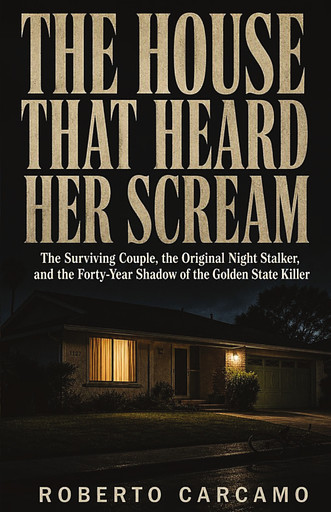
The House That Heard Her Scream
The Surviving Couple, the Original Night Stalker, and the Forty-Year Shadow of the Golden State Killer
A bedroom was supposed to be the safest room in the house.
On an October night in 1979, an unnamed couple in Goleta, California woke to a stranger who had already crossed the line between the outside world and their private life. He used the house against them. He used darkness, binding, whispered threats, and the ordinary geography of rooms to make reality feel unstable. They survived because terror became action, because a scream broke the script, and because a neighborhood heard what the intruder had planned to silence.
But survival did not end the crime.
The man who fled into the night became part of a larger California nightmare: the offender later known as the Original Night Stalker and Golden State Killer. Other couples would not survive. Families would spend decades inside unanswered questions. Police agencies would struggle to connect names, patterns, counties, and evidence. The attacker would disappear into ordinary life for nearly forty years before DNA and investigative genetic genealogy pulled him back into view.
The House That Heard Her Scream is a victim-centered true crime account of one documented Southern California home invasion and the long shadow surrounding it. Through the lens of the surviving Goleta couple, it examines the weaponization of domestic space, the choreography of control, the community's shifting fear, and the systemic delays that allowed one offender to become many names before he became one man.
The central question is not only how he got in.