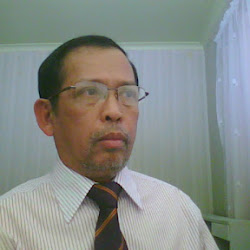
 Manith Chhoeng
Powered by Books.by
Manith Chhoeng
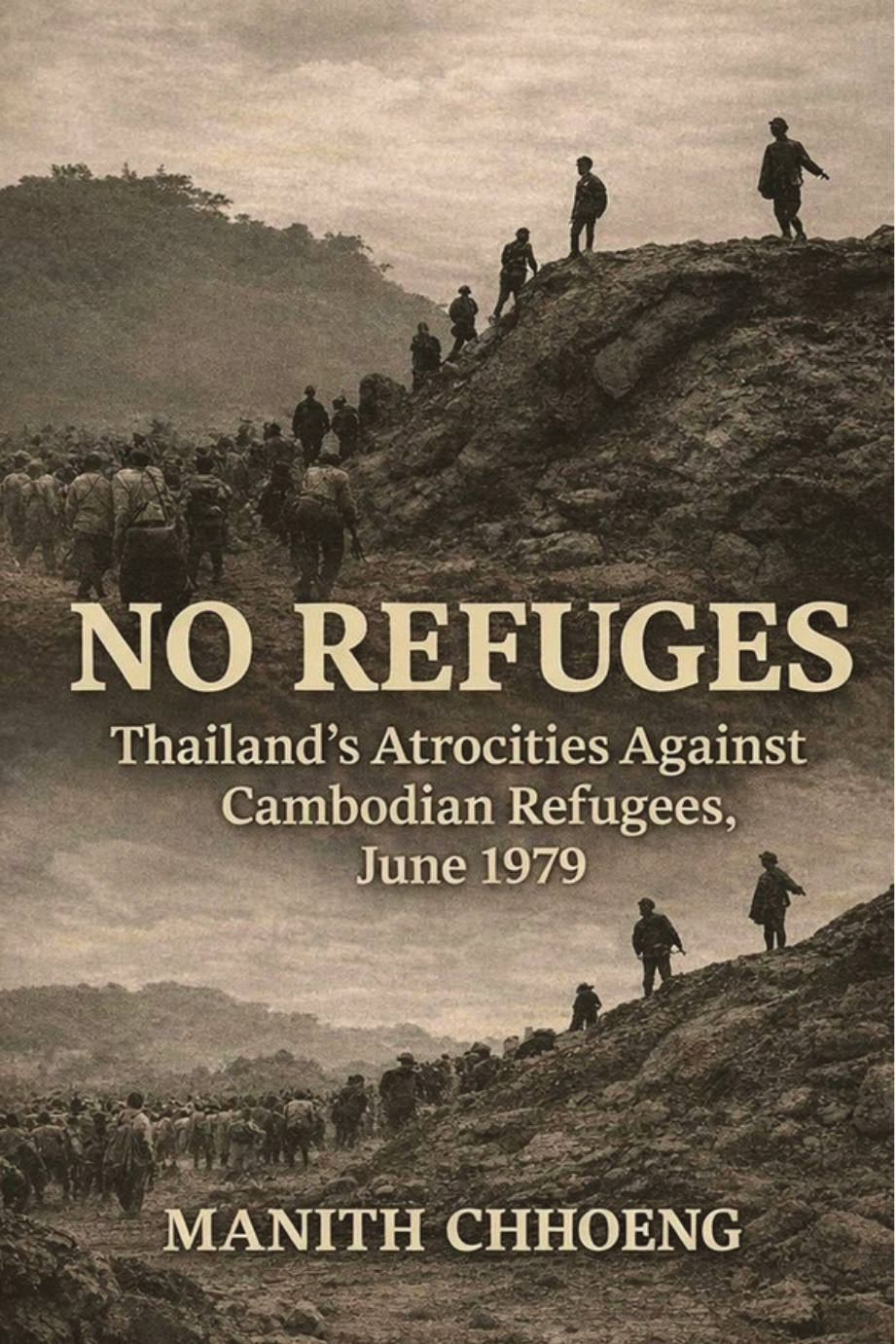
Thailand's Atrocities Against Cambodian Refugees, June 1979
by MANITH CHHOENG
In 1979, thousands of Cambodian refugees fled the violence and starvation to seek refuge across the border to Thailand. Rather than finding the safe haven, they were forced at gunpoint back toward the high cliff line at the Dangrek Mountain, near Preah Vihear Temple, a 600-metre escarpment over mined ground. What followed was a catastrophe shaped by deliberate policy decisions.
In June 1979, tens of thousands of Cambodian refugees, already scarred by famine and the terror of the Khmer Rouge, were driven at gunpoint down the mined cliffs of Preah Vihear. No Refuge is a searing work of historical research that reconstructs this atrocity through survivor testimony, diplomatic cables, and humanitarian records.
Author Manith Chhoeng, himself a survivor of the Killing Fields, exposes how Thailand’s policies of “humane repatriation” masked forced returns and mass fatalities. The book traces the collapse of Democratic Kampuchea, the desperate exodus to Thailand, and the betrayal that turned borders into weapons. It examines the silence of allies, the complicity of Cold War geopolitics, and the failure of international law to protect the vulnerable.
From the chaos of border camps, mud, ration lines, covert searches, schools built from scrap, to the echoes of artillery in 2025, No Refuges shows how unresolved history resurfaces in new forms. It is both a chronicle of suffering and a call to conscience: memory as resistance, testimony as justice, and remembrance as law.
This is not just history, it is a demand for recognition, memorialisation, and the discipline of “never again.”
A witness for the dead. A voice for the living.
I am one of the survivors of the Killing Fields. This book is not just a story—it is a reckoning with memory, silence, and survival. Born from the shadows of Cambodia’s darkest chapter, this book traces the echoes of a past that still reverberates through generations. As someone who lived through the horrors of the Khmer Rouge regime, I carry the weight of loss, resilience, and the unspoken truths that history often overlooks. This work is my tribute to those who were silenced, and a voice for those still searching for meaning in the aftermath. Through symbolic imagery and emotional depth.
Manith Chhoeng is a survivor of the Killing Fields and a former refugee whose journey from Cambodia to Australia has shaped a life devoted to justice, healing, and transformation. With over 25 years of experience in organisational development, project evaluation, and social research, he has worked across juvenile welfare, drug rehabilitation, disability inclusion, and human rights, bringing both lived experience and professional insight to his work with international and local NGOs. Manith has led and contributed to numerous research initiatives, including studies on drug use and addiction, Cambodian disability and education development, barriers to alternatives to incarceration for women and youth who use drugs, school-based violence against children, care reform, and project scalability. His work reflects a deep commitment to evidence-based policy and inclusive development. He holds a Master’s in Social Science (International Development) and a Bachelor of Science in Computer and Mathematical Science, blending analytical precision with a nuanced understanding of global and community-level challenges. His story—both personal and professional—informs Aluch, a powerful reflection on survival, memory, and the enduring human spirit.
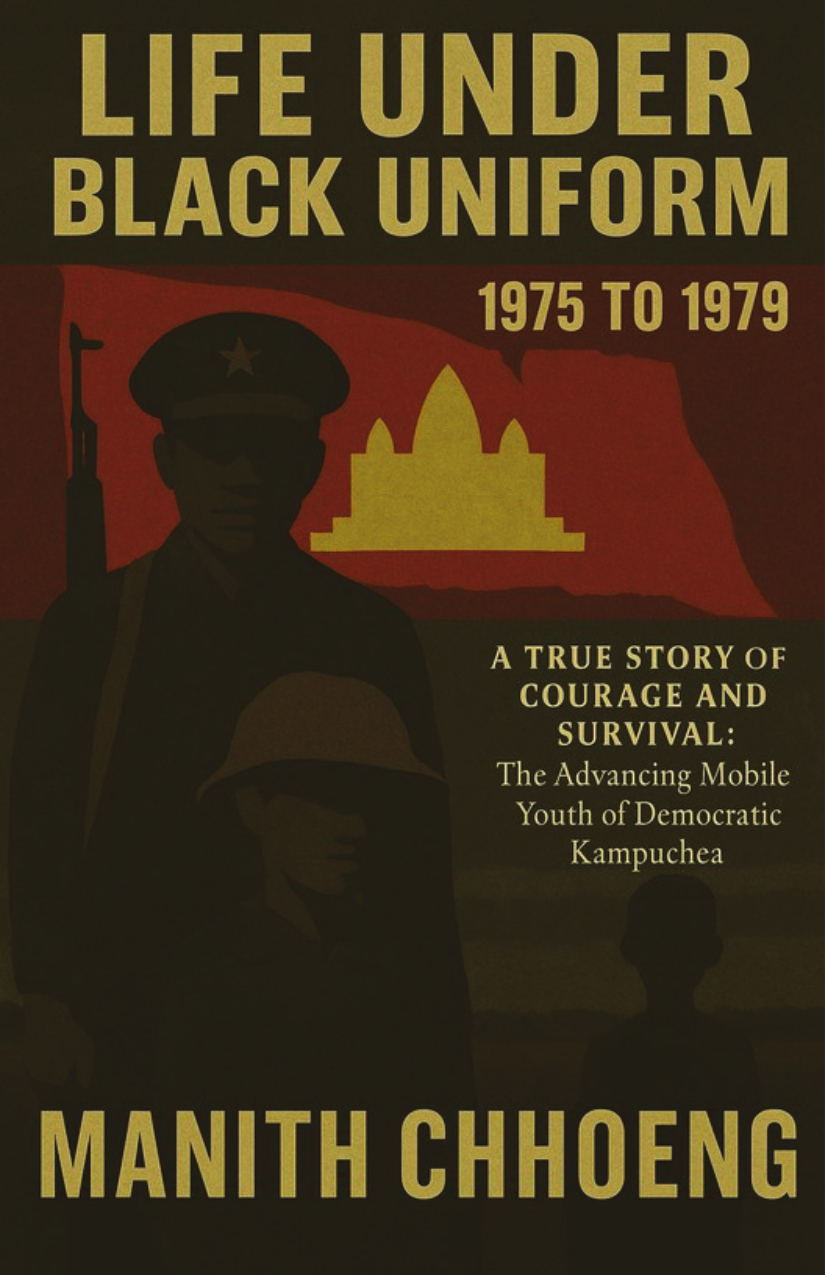
A TRUE STORY OF COURAGE AND SURVIVAL , The Advancing Mobile Youth of Democratic Kampuchea
"My story is about survival - about facing the shadow of death and never forgetting where I come from.
I was born in a place torn by war, a country that tried to erase people like me. But I lived. I carried memories through jungle paths and refugee camps, across the ocean, into a new land.
This is not just my story; it's my people's voice. Our struggle. Our resilience.
If you read this, know that we are still here.
And we remember."