 Media Well Done, LLC
Powered by Books.by
Media Well Done, LLC
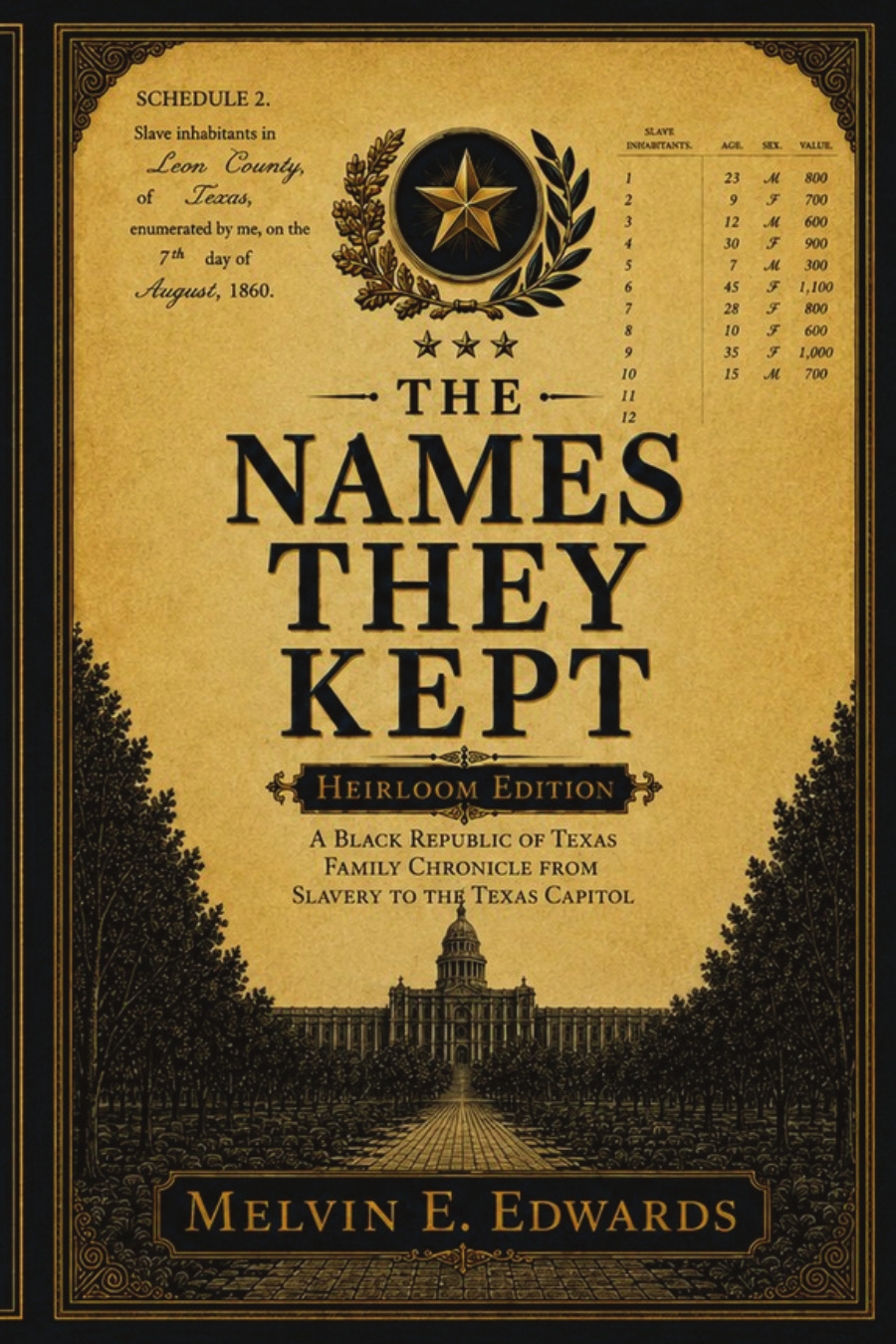
A Black Republic of Texas Family Chronicle from Slavery to the Texas Capitol
by Melvin E. Edwards
What happens when a family refuses to let its history disappear?
Beginning with enslaved ancestors whose names were omitted from official records and following six generations to the halls of the Texas Capitol, The Names They Kept is an extraordinary work of genealogy, history, and remembrance. Award-winning journalist Melvin E. Edwards pieces together nearly four decades of research to recover the lives behind forgotten documents, faded photographs, courthouse records, military service, and family stories that might otherwise have been lost forever.
A Black Republic of Texas Family Chronicle from Slavery to the Texas Capitol
Every family inherits stories.
Some inherit silence.
For nearly forty years, award-winning journalist and author Melvin E. Edwards pursued one question: "Who were the people whose names history nearly erased?"
That search became The Names They Kept -- a sweeping chronicle spanning more than two centuries, beginning with enslaved ancestors in Virginia and Maryland, continuing through the Republic of Texas and Reconstruction, and culminating beneath the dome of the Texas Capitol.
Drawing from thousands of historical records, census schedules, deeds, probate files, military records, newspapers, church archives, oral histories, and family photographs, Edwards reconstructs the lives of generations whose stories were scattered across history. Among them are Isaac and Elvira Bladen, who journeyed to Texas before statehood; families who endured slavery and emancipation; ministers, soldiers, craftsmen, teachers, mothers, and fathers who built lives despite overwhelming obstacles; and descendants who carried their legacy into modern Texas.
Rather than simply presenting names and dates, Edwards restores personality, context, and humanity to each generation, revealing how courage, faith, education, military service, and family bonds shaped a lineage that refused to disappear.
At its heart, The Names They Kept explores universal questions:
* How do families preserve identity when history attempts to erase it?
* What responsibilities do descendants owe those who came before them?
* How does one generation's sacrifice become another generation's opportunity?
Richly illustrated with historical photographs, archival documents, maps, and family records, this definitive edition combines decades of scholarship with compelling storytelling to create a work that is both historically rigorous and emotionally resonant.
Part genealogy, part Texas history, part African American history, and wholly American, The Names They Kept demonstrates that the nation's history is best understood not only through presidents and generals, but through ordinary families whose perseverance shaped extraordinary futures.
For readers of *The Warmth of Other Suns*, *Finding Me*, and multigenerational American family histories, this volume offers an inspiring reminder that while history may forget names, families do not.
**The Names They Kept** is more than the story of one family.
It is the story of memory reclaimed, heritage preserved, and a legacy passed from one generation to the next.
About
Media Well Done, LLC is an independent publishing imprint and storytelling company founded in Texas in 2026. We publish literary fiction and historically grounded nonfiction that examines the intersection of law, culture, race, and the human experience — stories that demand to be told with rigor, care, and narrative precision.
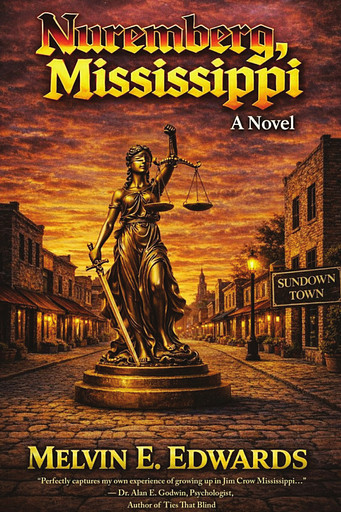
In this literary-legal drama set in the mid-20th century, a Black man’s arrest for being out at night becomes the catalyst for a federal lawsuit challenging the architecture of Jim Crow. The narrative follows attorney Silas Thorn as he attempts to apply the legal precedents of the Nuremberg Trials to the systemic injustices of a Mississippi "sundown town." The novel examines the "mechanism" of state-sanctioned discrimination, focusing on the complicity of the legal profession and the bureaucratic habits that render atrocity invisible through official procedure and professional courtesy.