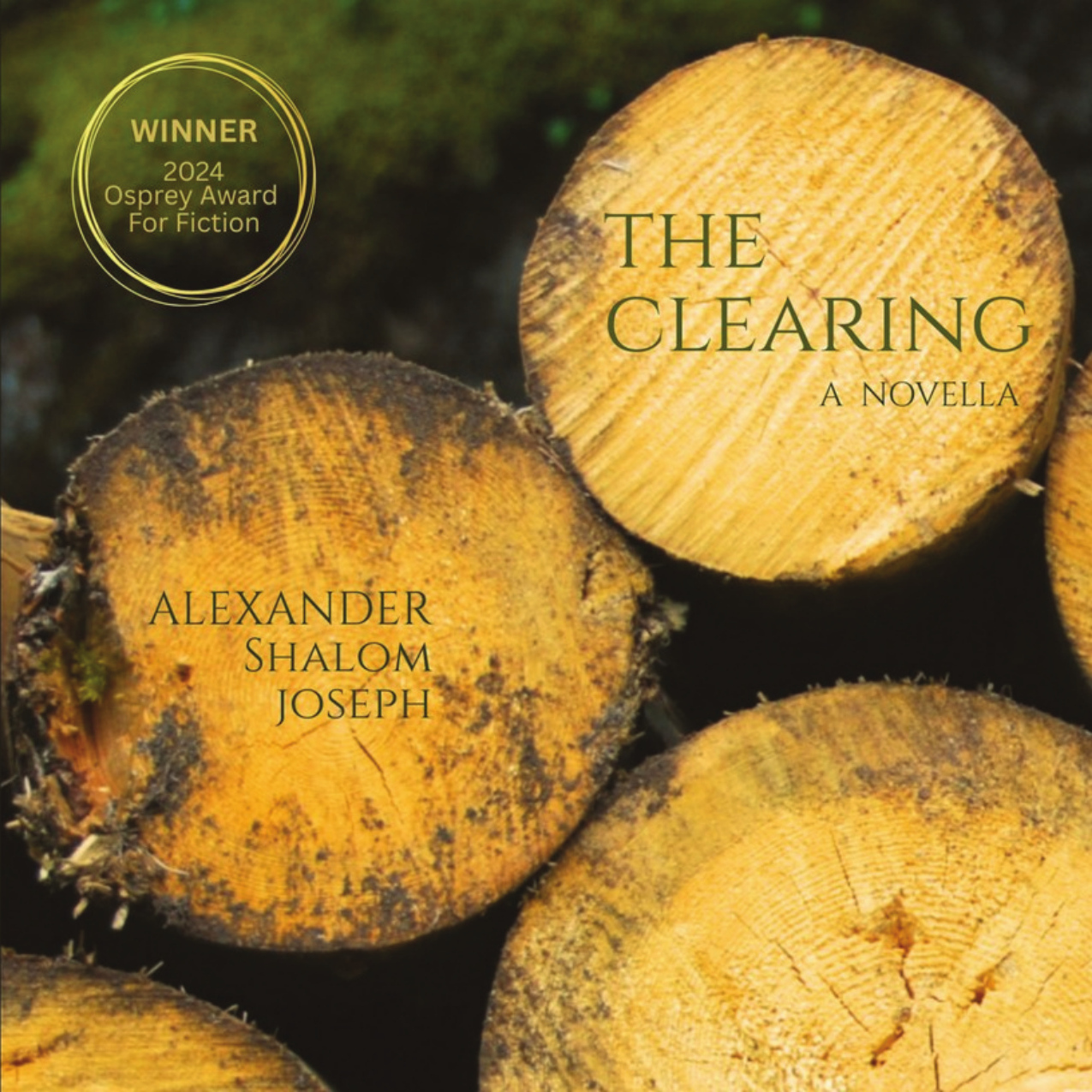
The Clearing
by Middle Creek Publishing & Audio
The Clearing is a haunting and introspective novella about a disillusioned man in search of solace and purpose. After a string of failed relationships and dead-end jobs, he takes a position as caretaker on a sprawling 3,000-acre ranch, secluded deep in the mountains and far from civilization. Living alone, he dedicates himself to carving a path through the dense forest at the behest of a wealthy landowner.
As the weeks stretch into months, the solitude sharpens his awareness of the woods—and of himself. Strange and unsettling occurrences begin to erode his grip on reality, pulling him into an eerie confrontation with his past, his psyche, and the untamed wilderness surrounding him. The deeper he ventures into the forest, the closer he comes to an elusive clearing—both literal and metaphorical—that may hold the answers he seeks or lead to his unraveling.
A poignant meditation on isolation, toxic masculinity, trauma, humanity’s fraught history of imposing on the land, and the disconnection from the natural world, The Clearing explores what it means to be both lost and found in the wilderness within and without.
What readers are saying
“"An ironic and provocative existential thriller that poses questions about solitude, purpose, and the ego that none of us can answer but all of us should ask." ”
— Alison Turner, author of Defensible Spaces, finalist, Colorado Book Award
“"This work is attuned both to the violence of late-stage capitalism, and the beauty that still persists in small pockets of wilderness when we look for it. Ultimately, this story is a parable for our times."”
— Sage Marshall, author of Echolocation
More books by Middle Creek Publishing & Audio
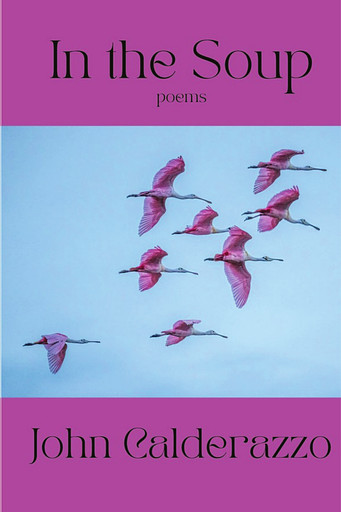
In the Soup
Ranging gracefully from the high Himalayas to the town dump, John Calderazzo’s literal and imaginative journeys guide us through the elusive, liminal landscape that lies between an unyielding reality and our most astonishing dreams. At moments laced with loss, at others buoyed by humor, these radiant poems artfully braid close observation and deep reflection with a genuine humility in the face of the unfathomable. In its profound engagement with the richness and complexity of both human and more-than-human lives, In the Soup offers a beautiful reminder that grief and joy are ever our fellow travelers.
—Michael P. Branch, author of Raising Wild and On the Trail of the Jackalope
Good poetry affirms the life it also questions, undoes our certainties by renewing our sense of mystery, mocks the ease of our pieties with an earthly mirth, and through doubt’s strange course revitalizes a faith we didn’t know we had lost—this faith living fully requires. John Calderazzo’s In the Soup dances between sorrow and ecstatic whimsy, recognizes the suffering of self and others without being sentenced to despair. What a rare thing it is—to find a book of poems that, when all is said and done, is a book that reminds us that joy is an acceptable response to finding yourself in the vast trouble of the world. It is joyful, this being alive—and it’s a joy to read poems by a poet honest and unashamed of whatever it is happiness might be: not a form of denial, but a form of acceptance, dark and light, bitter and sweet, all in mutual embrace, where “suffering has been acknowledged. I bite into / my first strawberry, my teeth hurting / from the chill.”
—Dan Beachy Quick
ABOUT THE AUTHOR
John Calderazzo's poems, essays, and literary journalism have appeared in Audubon, Bellevue Literary Review, Brevity, Georgia Review, Orion, Terrain.org and elsewhere. His first poetry collection is The Exact Weight of the Soul (Red Mountain Press, 2020). Among his three nonfiction books is Rising Fire: Volcanoes & Our Inner Lives. His work has appeared in many anthologies, including Best American Nature Writing, Best Travel Adventure Stories, and Copper Canyon Press’s Here: Poems for the Planet. English Professor Emeritus at Colorado State University, he’s won a Best CSU Teacher Award, a Colorado Council on the Arts Fellowship and founded the literary nonfiction track of the CSU Creative Writing program. Nowadays, he teaches scientists to use storytelling skills to communicate with the public and enjoys trekking among high mountains around the world.
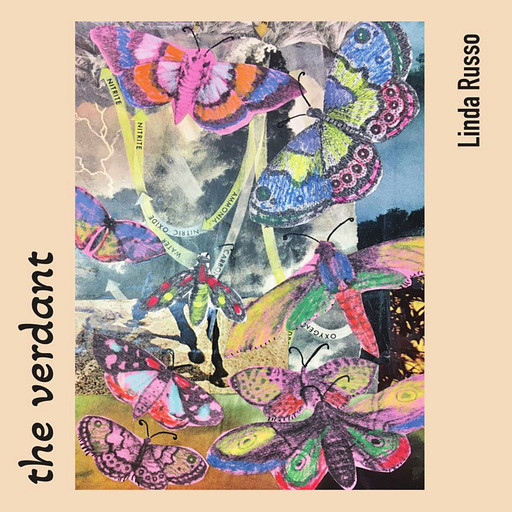
the verdant
WINNER 2023 Halcyon Poetry Award
the verdant tells of springtime emergence in intimate attunement with the more-than-human world. It is a spacious, lyrical serial poem that holds myriad presences and voices in an imaginative terrain beyond human individualism. Over a lunar cycle, from the Flower Moon of May to the Strawberry Moon of June, the verdant, who is “charged to comprehend,” escapes the "capitalocene" logics and temporalities to find vibrancy, companionship, and counsel among other beings. Through deepening immersion, land community reveals an interspecies amplitude particular to the prairie, woods, and waterways of the high desert of the inland northwestern US. What arises is a mystical day book of entanglement with animal and plant others that documents the urgency of becoming newly human and fostering a biome-centered energetics.
“In The Making of the Pré, Francis Ponge writes of a bird “flying low in direction counter to the writing.” What if instead the poet turned toward the bird, following bird's direction across the sky to understand more deeply how humans might find gentler place within the world? Linda Russo's verdant “cannot be at peace as an individual// with book of earth underfoot." Russo turns away from anthropocentric hierarchy, dominance and extraction in a newly resonant process of decomposition toward daily witness of the vernal cycles of life and death in her own ecological niche of the inland northwest. With “novel pronoun," shrinking dominating capital I to open-hearted (, Russo softens human trespass to passage, and passage to perception of who humans might be amid our true reality of multispecies being. No chance, after reading the verdant, of bunker fantasies or a simulacrum of life on Mars protected from the consequences of trying not to be, after all, human. In a transformative attempt to imagine our humanity anew, the verdant wakes us to the intimate power of being in community from our bodies to everything that surrounds us. ”
—Marcella Durand, author of Rays of the Shadow (Tent Editions, 2017) and Le Jardin de M. (The Garden of M.) (joca seria, 2016)
“Putting forth an open but never closed parenthesis to signify human agency, the verdant enacts a new form of lyric presence to forge a poetics of invitation beyond the anthropocentric “I” (“western kingbird, wooly mullein, hawkweed, come in,”). This is a poetics wrought from contact, consideration, and love that never confirms or confines. “[H]umans may again/ become/ creatures of/ community,” the poem proclaims as it invites its readers to record their own “Animacies/Encounters” as well as their “Desires, Dreams, Ideas and Other Intimacies.” An experiment in lyric possibility and an invitation to our own “being-among,” the verdant stakes out a lyric future and offers its readers a rare dose of ecopoetic hope.”
—Susan Briante, author of Defacing the Monument, Utopia Minus, and Pioneers in the Study of Motion.
ABOUT THE AUTHOR
Linda Russo is a poet, writer, and student of ecospheric care. Her published works include Participant (Lost Roads), Meaning to Go to the Origin in Some Way (Shearsman), To Think of Her Writing Awash in Light (Subito), Mirth (Chax Press), and, as co-editor, Counter-Desecration: A Glossary for Writing Within the Anthropocene (Wesleyan University Press) and Geopoetics in Practice (Routledge). She lives on traditional Nimíipuu and Pelúuc homelands where she teaches at Washington State University and directs EcoartsonthePalouse.com.
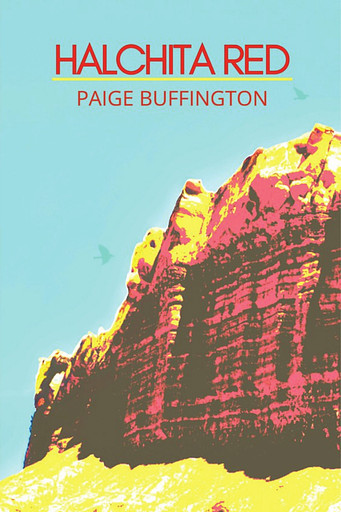
Halchita Red
Oh, this book. With gritty intimacy, cinematic poetics, and clear-eyed devotion, Paige Buffington transports us through memory and dream to a place where time might be told by the migration of cranes. Buffington explores not only what is home, but who is our home? Who leaves? Who returns? And how do we carry home with us wherever we are, marked forever by its wounds, its gifts, its landscapes, its heartbreaks, its language, its traditions, its love. So quietly, so surely, Halchita Red transported me.
—Rosemerry Wahtola Trommer, author of The Unfolding and host of The Poetic Path
Remember, these story-poems insist. "Remember being thrown in morning snow, boiling water over fire." In such memories of Navajo traditions, with fierce intimacy, these poems weave imagery of ruptures, trauma, and tenderness, a tapestry of beauty where everything is included, where memory is alive, where the land and culture and family trace a line home. These are poems to remember the medicine of poetry. What a gift Paige Buffington offer us.
—Anne Haven McDonnell, author of Breath on a Coal
In Halchita Red, Buffington offers a text—or rather, a voice—a sepia light, a visceral reminder of what has survived with its beauty intact, despite what 400 years of colonization continues to attempt to disappear. Halchita Red acts as a reliquary of words and stories finding their way home, cinematically-expressed sentiments—simultaneously gorgeous and gritty—spinning a multi-generational Native narrative of loss, grief, heartbreak, hope, and beauty, reminding us that we should “repeat the words like cedar and meadow, cicada.” Remember grandmother’s spirited advice, “be careful, but keep going.
—David Anthony Martin, author of The Ground Nest, Founder and Editor Middle Creek Publishing & Audio
In these poems a reader can get lost, a process happily encouraged by Buffington’s frequent use of second person pronouns. We are there. We taste the wind. We smell the sagebrush. We feel our fingers sticking to the table of a midnight diner. Buffington sucks us into this narrative and does not let us go.
—Marissa Harwood, Reviewer, Rocky Mountain Reader.
Paige Buffington’s poetry is storyteller, and like all good storytellers it teaches us to pay attention, to see what is going on around the shining story. Poets are seers trained to see “the foamy backbone of rain." They remind us not to get stunned by the glare of the story because “shiny things make us crazy.” We humans are easily overwhelmed, but Buffington leads us safely through.
—James Thomas Stevens (Aronhió:ta’s) author of Combing the Snakes from His Hair, and others
ABOUT THE AUTHOR
Paige Buffington is Navajo, of the Naashashi (Bear Clan), born for the Biligaanaa (White People). Her grandparent clans are Ashiihi (Salt) and Biligaanaa. Her family is originally from Tohatchi N.M., a town sitting at the base of the Chuska Mountains in Navajoland. She received an MFA in poetry from the Institute of American Indian Arts in 2015. Hashtags accompanying her poems have included “American West,” “memory,” “family,” and “desert Southwest.” Her poems can be found in The Dine Reader, Narrative Magazine, Honey Literary, and Contra Viento, among others. Her poem “From 20 Miles Outside of Gallup, Holbrook, Winslow, Farmington, or Albuquerque” was awarded the 2023 Zocalo Public Square Poetry Prize. Her essay, “What Are You Looking For?” was selected as a finalist for the 2024 Waterston Desert Writing Prize. Her essay, “Restless” was named the winner of Prism International’s Creative Nonfiction Contest. She currently lives in Gallup, N.M. She teaches Kindergarten near the Rock Springs, Yatahey, and China Springs communities on the Navajo Nations.
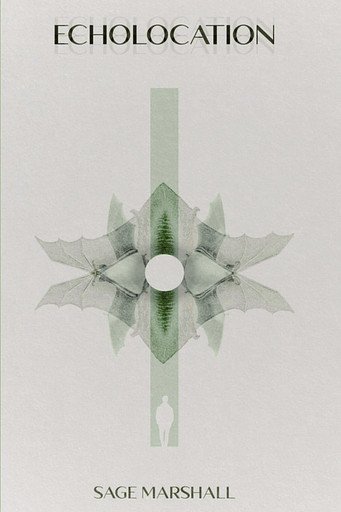
Echolocation
Outdoor writer Sage Marshall's debut poetry collection Echolocation weaves the landscapes and ecologies of the American West against themes of violence, adolescence, and beauty. This critical yet compassionate examination of the brutality of boyhood and popular conceptions of masculinity is infused with a deep attunement to the natural world, offering moments of clarity and grace amidst the reality of violence and pain.
"In this series, the body and the landscape are one. The night as well as our bodies are bruised; the fire on the hillside, which is watched like a drive-in movie, ends with ash in our mouths; the forgiveness we have swallowed turns to swallows bursting from deep thickets of grass. This is poetic echolocation. This is a sacred call and response between a writer and all the environments he inhabits."
—Alexander Shalom Joseph, author of Our Mother, The Mountain and Broken Light in a Burning Wood
"In Echolocation, Sage Marshall has crafted poems of brilliant reflection, finding his way through questions we all must ask of coming into our own, even when answers can be held but briefly. Marshall’s poems are vulnerable and inspired, acutely aware of both the beauty we inherit of the world and the pain we inflict on ourselves and others. This is a remarkable debut."
—Erin Block, Author of How You Walk Alone in the Dark, winner of the Colorado Book Award
"Tough and bloody, full of the grit of real life, of lives lived close to the land, lives lived in struggle and brotherly competition and the great stakes of father and son relationships, Sage Marshall’s debut, Echolocation, still manages to be a book of deep tenderness, of love and honor and the wisdom of hard years and the natural world."
—Joe Wilkins, author of Thieve and When We Were Birds, winner of the of the Oregon Book Award
"Sage Marshall’s Echolocation is built by poems of the body and the intensely physical world. For Marshall, everything is supported by blood. From the obvious hunting and fishing to the locker rooms after hockey practice to hiking mountains to walking home from the bar late at night. But even within the momentum of this collection, Marshall delivers moments without violence where the quiet offers a space to glimpse the relief when a cheek goes unpunched or a duck makes it to the horizon unscathed: “I have fired before / and will again / but today / I stole nothing from the sky.”
—Noah Davis, winner of the Wheelbarrow Books Poetry Prize and author of Of This River
"To read Sage’s poetry is to step into a beautiful place of “dank twisted love” that deftly navigates both our natural world and the one of “boys learning to collide.” These poems teach us how to live in a violent world with grace, compassion, and curiosity."
—Michael Garrigan, author of River, Amen & Robbing the Pillars
About the Author
Sage Marshall is a poet, essayist, and outdoors journalist from southwest Colorado. He has lived across the U.S. and currently resides in Western Montana, where he explores the rivers and mountains around Missoula with his partner Bela and their adopted bird dog Gunney. He’s a student of many outdoor pursuits, from skiing and backpacking to fly fishing and duck hunting. Marshall is a contributing writer and former editor of Field & Stream. His creative work has been featured in publications such as The Missouri Review, Sport Literate, Catamaran, and elsewhere.
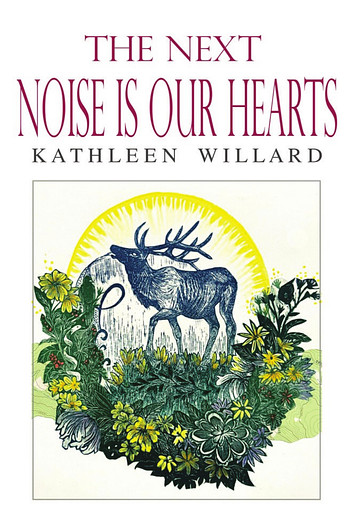
The Next Noise is Our Hearts
"In Kathleen Willard’s The Next Noise Is Our Hearts, a phrase from her poem “Sunset: Sangre de Cristo Mountains” that keeps piercing me is “a periodic table of agitation.” These poems will agitate and disturb readers in multiple ways. The first poem, in a child’s voice as he chooses his favorite planet, ends, “Earth / Because we live here.” The poems go on to announce that beetles are invincible architects of the new world” and a fossil found on a hike as “a stoic token of a once-was world” In “The Meadow Calls,” Willard embraces “the alternate universe of fireflies.” And yet: “We are their executioners.” From “I Turn Animal” come the words “Say farewell, our earth’s autopsy begins /while forensics document the obvious.” In the last poem, “Call to Action,” the poet writes, “I celebrate, instead, / the whole ecosystem . . . each a hinge that stitches our home together.” These poems open our hearts—let them make the next noise!"
—Veronica Patterson, author of Sudden White Fan and Swan, What Shores?
"Katherine Willard’s The Next Noise is Our Hearts draws on history, science, and poetic language to raise our awareness of the interdependence of humans and the natural world. Poetic words draw the reader into the wonder and awe of the natural world while learning scientific facts on the demise of species or damage to the environment. Fascinating scientific facts are offered - honeybees make twenty-five thousand trips for every pint of honey, and then, we are reminded that humans depend on pollinating invertebrates, forty percent of which face extinction. Our forgetfulness is called out that drought is part of our western climate, that aquifers are withering and “once they are gone, they are gone.” The poems are eloquent and to the point. The reader is reminded that ‘the world floods with eerie beauty,’ that “small miracles” are right outside your back door, that beauty and wonder and ecological damage occur across the West. The subtext is go out into the world, you will be amazed and appalled, and hopefully called to action. She ends with a call to action; the evidence cannot be ignored."
—Linda Joyce, Emeritus Research Ecologist for the USDA Forest Service Rocky Mountain Research Station and owner of the Kealakoa tree farm in Hawaii.
“Kathleen Willard’s book is a cri de coeur, and a eulogy for the more-than-human world that is dying all around us yet whose death cries often go unnoticed. From poems depicting fireflies trapped in a jar beating their wings against glass, to a hippopotamus confined to live in a circus’s boxcar’s aquarium, to the stench of bison killed by the millions and left to rot, Willard’s poems move readers beside a suffering world, so we keenly sense the affect human life has on the natural world. [...] We stand at a turning point in history. Willard’s sharply defined images serve as a kind of wake-up call, helping us to notice how our lack of tenderness toward the Earth has devastating consequences.”
—Anna Citrino, author of A Space Between
ABOUT THE AUTHOR:
Kathleen Willard’s poems have appeared in Bombay Gin, Matter, Pinyon Poetry Review, Flint Hill Review, and in the anthologies Landscape and Place, The Poetic Inventory of Rocky Mountain National Park, Proud to Be, Against Agamemnon, Icarus and elsewhere. She received fellowships for two residencies at the Vermont Studio Center and to attend the Disquiet International Literary Program in Lisbon, Portugal. She received a Fulbright-Hays Fellowship to study and write in India. She is also the author of several other collections of poetry.
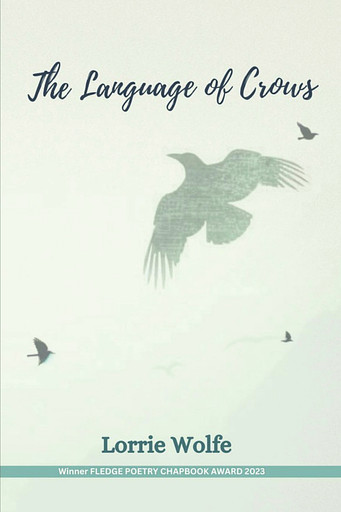
The Language of Crows
One of the most powerful relationships in our lives is with time, and in The Language of Crows, Lorrie Wolfe deftly offers us poetic lenses for seeing our lives in terms of days, months, seasons, years, “perennial youth” and “tree time.” Her poems help us touch what is most precious—solitude, language, love, kindness, a small brown songbird, our own fragile epiphanies, milkweed floss and the brief flutter of our lives—even as we learn to let it all go. A beautiful collection of free verse and form, humble and wildly true.
—Rosemerry Wahtola Trommer, author of All the Honey and Hush
From the opening poem, “Creation,” throughout this collection of poems, a singular vision of human life blossoms that derives from the poet’s love of nature and radiates like the psalms of Orpheus with the presence of people she loves. She loves like a hummingbird, “whirling feathers in a showy dive;” she notices the arrival of a first frost as “Egyptian gauze;” the splendor of fall aspens “spill their golden coins;” she follows mountain trails which are “highways for birds and small-footed animals;” indeed, the book is resplendent with bird song and earned wisdom and a special kind of reverence for life itself as in “A Seed’s Prayer.” Readers of this fine collection will be richly rewarded with the knowledge that nothing cherished is truly lost.
—Bill Tremblay, author of Walks Along the Ditch
In The Language of Crows, the poet balances on a tightrope between turning seasons and grief’s seasons. Its poems capture images of the luminous world around us, its tangled, exquisite self: the “cottonwood’s ruckled trunk.” Certain poems vibrate with birds, from hummingbird to crow, owl to flicker, heron to hawk. Other poems grieve the one who came, who loved, who will not return, yet is present as words emerge from loss: “letting go of grief makes all things possible.” Wings. Flight.
—Veronica Patterson, author of Sudden White Fan and Swan, What Shores?
ABOUT THE AUTHOR
Lorrie Wolfe is a poet, technical writer and editor living in northern Colorado. She was nominated for a Pushcart Prize in 2023. Her work has appeared in Plant-Human Quarterly, Earth’s Daughters, Progenitor Journal, Tulip Tree Review, Pilgrimage, Pooled Ink, Encore, and others. Her chapbook, Holding: from Shtetl to Santa, was published by Green Fuse Press. She edited and contributed to the 2017 anthologies Mountains, Myths & Memories and Going Deeper. She served as poetry editor for RISE, which won the 2019 Colorado Book Award for anthologies. Lorrie was named Poet of the Year at Denver’s Ziggie’s Poetry Festival for 2014-15. Her two-word mantra is “Show up.”
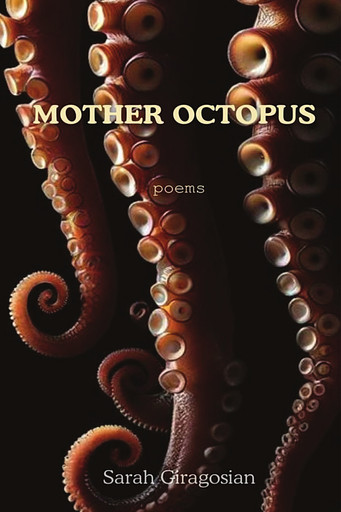
Mother Octopus
"Sarah Giragosian’s Mother Octopus is a book of love—erotic, familial, and above all, ecological. It is also a book of grief—for the speaker’s mother, for the lacunae of language, for America and its many self-inflicted traumas, and especially for the dying earth. In richly musical, exquisitely lineated poems, Giragosian introduces readers to snowy owls, fig wasps, and, of course, the titular mother octopus, inviting us to slow down to the epic pace of glaciers, fossils, and stones even as we remain firmly planted in “the hour of the brutal present.” Through her elegiac queer eco-poetics, Giragosian holds vigil for all that is and will be lost while still finding hope for the future embedded in each of nature’s miracles; of the peacock, she writes: “Maybe we can learn to be beautiful too.” If so, it will be thanks to poems like these."
—Alyse Knorr, author of Ardor (2023), Mega-City Redux (2017), Copper Mother (2016), and Annotated Glass (2013)
"How do these biologically and imaginatively intimate poems manage to weave reckonings with whiteness, queer love across borders, the loss of a beloved mother, human history and deep time, climate collapse, migration, and the end of empire with the worlds of wings, fins, and paws of our animal kin? I don’t know, but I’ll be studying to learn from the brilliant leaps and sonically stitched imagery of these haunting, beautiful poems that stun into blazes of feeling and thought. In their traverse of worlds and speakers and species, we learn the poetic magic of empathy, of metaphor, of seeing deeply into other beings and into our own animal bodies. Sarah Giragosian has written poems we need in this moment of precarious cruelty and persistent wonder."
—Anne Haven McDonnell, author of Breath on a Coal, winner of the Halcyon Prize (2022)
“I need to believe in vigilant mothers,” writes Sarah Giragosian. Lookout for the hidden mother, alert and secretly attending. Lookout for her protective care. The mother proliferates within Giragosian’s lyrics. Mother Octopus seeks the vestiges of a hawk-eyed motherhood who survives disappearance, returning as the riddle of mercy, a salve for this age of “nuclear fallout and extinction.” It is a book of possibilities, observations, and intersections, in which unexpected threads come together because we yearn and love in a world of racism, xenophobia, unfreedom, and environmental decline. Giragosian’s poems are seated in a fractured space where attention to the present unfolding of disasters interacts with the onslaught of memory. These poems depart from the sadness and the incapacities of language yet rescue words claiming them in the name of love and grief. This is a medicinal book of brilliant openings toward expectancy, of lyrics that surgically dig us out of collapse and risk a fearless retrieval of love writ large. These poems mother our losses.
—Isabel Sobral Campos, author of Your Person Doesn’t Belong to You and How to Make Words of Rubble
ABOUT THE AUTHOR:
Sarah Giragosian is the author of the poetry collections Queer Fish, a winner of the American Poetry Journal Book Prize (Dream Horse Press, 2017), and The Death Spiral (Black Lawrence Press, 2020). In 2023, the University of Akron Press released the craft anthology, Marbles on the Floor: How to Assemble a Book of Poems, which she co-edited with Virginia Konchan. Sarah’s writing has appeared in such journals as Orion, Ecotone, Tin House, Pleiades and Prairie Schooner, among others. She teaches at the University at Albany-SUNY.
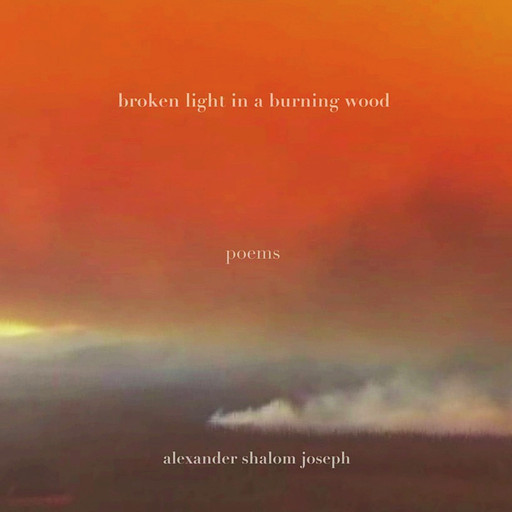
broken light in a burning wood
"Broken Light in a Burning Wood betrays a relentlessly discursive pattern of mind. Its shapes are lovely and the reader slides easily into the rapture of its litany, a bright and vivid deluge always humming towards the upper limits of song. It also stands as a staggering inventory of loss and heat, living in the state of being beyond warning. This book reminds me of the best of Bernadette Mayer's sequences, the complete immersion job cracked with an innate musicality. In Alexander Shalom Joseph's work poetry is an elemental trance with an ever expanding vision."
—Cedar Sigo, author of Royals and Guarding the Mysteries
"What a thoroughly honest book. Despite the catastrophic fires and uncertain times of our season on earth, Alexander Shalom Joseph has gone off in search of beauty, like John Keats did two hundred years ago. Love moves through these pages on invisible feet. In this work, we find that we can’t hope for beauty without telling some hard, hard truths."
—Andrew Schelling author of Love and the Turning Seasons: India’s Poetry of Erotic & Spiritual Longing
"In Broken Light in a Burning Wood, Joseph looks unflinchingly at the environmental crisis, giving voice to his pain and anger about the state of the world, while also reflecting on the small moments of love and joy that carry him forward and give meaning to his life. While much of the art and conversation focused on climate change is either too bleak or not hard hitting enough, Joseph attempts to strike an honest balance and enter the burning wood with eyes wide open and pen in hand, creating a visceral response to the conditions and environment of these times and a testament to the broken light which still shines in this world."
—David Anthony Martin, author of Bijoux and The Ground Nest, and others
ABOUT THE AUTHOR:
Alexander Shalom Joseph is a poet and writer, author of Our Mother, The Mountain (Middle Creek Publishing & Audio) and American Wasteland (Owl Canyon Press). He lives in a cabin in rural Colorado.
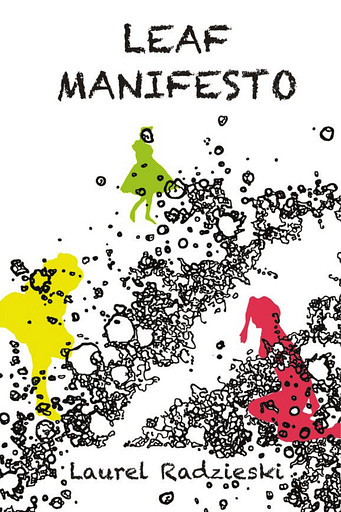
Leaf Manifesto
Leaf Manifesto examines the trend of women turning into trees through the lens of standardized testing. Informative, playful, and often participatory, Leaf Manifesto is a beginner’s guide to treehood for anyone interested in being a tree, being a woman, or being alive. An earlier version of this manuscript was a finalist for the 2024 Sowell Emerging Writers Prize.
_______________________
In a landscape where women become trees, communities are many-leafed and greened, and evolution is always one step away, Laurel Radzieski’s Leaf Manifesto introduces to contemporary poetry a haunting biosphere previously unimagined. Replete with “root rot” and “unification,” the poems in Leaf Manifesto are a staggering homage to the loneliness and rebirth of transition. While the speaker is preoccupied with arboreal transformation, a modern-day reader can’t help but glean from these poems a fierce resistance to U.S. fascism and transphobia. “Must I always be how I have always been?” asks Radzieski’s speaker. And, later: “I knew I was not in heaven / because none of us / had ever died.” This book gives me hope.
– Remi Recchia, author of Quicksand/Stargazing
Employing a medley of forms, Radzieski weds fantasy and social critique to reconsider womanhood. These inquisitive and inventive poems playfully masquerade while encouraging personal transformation. Looking to trees as, at times, paradigms of wholeness and freedom, Radzieski here presents an ecopoetry in the style of mythology. These are poems in which you will find continual inspiration and delight.
—Christopher Nelson, editor of Green Linden Press, author of Blood Aria, Fugitive and Windshear
In Leaf Manifesto, Laurel Radzieski invites readers on a journey that tenderly subverts “society’s linear tendencies,” offering sharp insights rooted in deceptively simple language. Through a playful and thought-provoking question/answer, true/false format, Radzieski challenges our assumptions about identity and what it means to live freely. “Women are dangerous. / Best cross to the other side of the street / when one or several of them are near,” she writes—an inversion that typifies the book’s ability to turn the familiar inside out. Leaf Manifesto invites us to imagine transformation not as escape, but as liberation: to create a life “with a goal that [doesn’t] / stem from shame.” This graceful reimagining of self is both manifesto and meditation—a captivating exploration of what grows when we choose to root ourselves differently.
—Elena Georgiou, author of The Immigrant’s Refrigerator
ABOUT THE AUTHOR:
Laurel Radzieski is a poet and the author of Red Mother, a love story told from the perspective of a parasite that was published by NYQ Books in 2018 and won the 2020 Whirling Prize in Poetry from Etchings Press. Her poems have appeared in Witcraft, The New York Quarterly, Rust + Moth, Atlas and Alice, House of Zolo’s Journal of Speculative Literature, Clockhouse, Hoot, and elsewhere, including on a street sign and roadsides in Wisconsin. She earned her MFA at Goddard College and has been a writer-in-residence at Wormfarm Institute. Laurel enjoys writing poems for strangers in community spaces. She lives in Reading, Pennsylvania and writes at the Goggleworks Center. When not writing poems, Laurel is the Director of Grants at Alvernia University. She enjoys playing board games that take up the whole table.
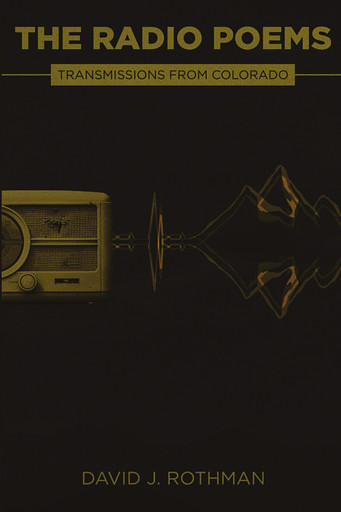
The Radio Poems
Transmissions from Colorado
The Radio Poems is a rare collection of public poetry with a Preface eloquently musing on the role of the laureate—to speak for us as well as to us. The rigor, humor and pathos in the poems themselves remind us that “you just can’t dance to the news.” We can find expert commentary in poems like “Let’s Have Real Debates Again,” trenchant satires, and more personal musings that go well beyond the editorial page. “Poetry matters, for matter is poetry,” Rothman tells us. Here you will find matter for thought, amusement, and real edification.
—David Mason, Colorado Poet Laureate 2010-‘14, author of Ludlow: A Verse Novel and other books
While the news does its best to tell us the facts, the poet meets the news with humanity. In The Radio Poems, David J. Rothman approaches public events in Colorado with humor, paradox and musicality, honoring the complexities and nuances of our time. And though the poems are a few years old, reading them now we see how the adage rings true, everything old is new again—especially when told through poetry.
—Rosemerry Wahtola Trommer, Poet Laureate of Colorado’s Western Slope 2015-‘17, author of Hush and The Unfolding, host of The Poetic Path
The Radio Poems is a breezy ride into the recent past and the news of the day, which Rothman reminds us, via William Carlos Williams, is difficult to get from poems. In typical Rothman style, the impressive use of rhyme and rhythm bring energy and surprise to every line, and make me fall in love with the sonic rhythms of the English language all over again. While returning to the events of the last several years may seem to promise a catalogue of anxieties, Rothman’s deft hand carries us back safely, and somehow brings a sense of happy nostalgia—and a good dose of wisdom.
—Michael J. Henry, Co-Founder and Executive Director of Lighthouse Writers Workshop, author of Gun Poems and Mountain Biking the Colorado Trail
From “Doggerel for the Inaugural” to Joe Cocker in Crawford to a remarkable epistle to educators, David Rothman’s The Radio Poems is an American civics performance in verse, an ode to Colorado—and a serious reminder that “What will have mattered is the laughter, / What will have mattered is if you can forgive…” Once again Rothman proves well-crafted poetry makes room for music, elucidation, poignancy, profundity and full-on laughter.
—Wendy Videlock, Poet Laureate of Colorado’s Western Slope 2023-‘25, author of Wise to the West
ABOUT THE AUTHOR
David J. Rothman is the author of six previous volumes of poetry, including The Elephant’s Chiropractor and My Brother’s Keeper, both of which were Finalists for the Colorado Book Award. He is also the editor of an anthology, The Geography of Hope: Poets of Colorado’s Western Slope and, with Jeffrey Villines, of Belle Turnbull: On the Life & Work of an American Master, whose purpose is to reintroduce readers to one of Colorado’s greatest poets. A creative writing textbook co-authored with Susan Spear, Learning the Secrets of English Verse, appeared from Springer in 2022. His poems and essays have appeared in Appalachia, The Atlantic, The Best American Poetry Blog, The Formalist, The Gettysburg Review, Hudson Review, The Journal, Kenyon Review, Light, Measure, Poetry, Threepenny Review and scores of other newspapers, magazines, and journals. Among other awards, he has won a Pushcart Prize, the Karen Chamberlain Award for Lifetime Achievement in Colorado Poetry and the Frederick Turner Poetry Award from Artus Mundiam Press.
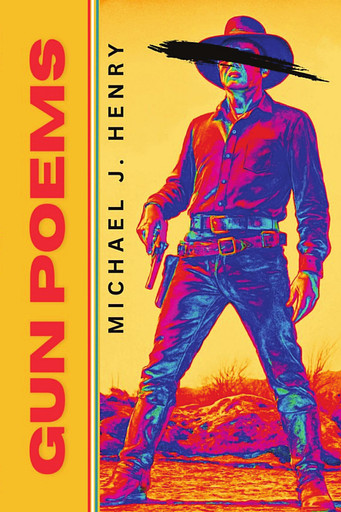
Gun Poems
With its volatile trickster—sometimes a man and sometimes a lethal gun—Michael Henry’s new collection chronicles our efforts to try and do right and to heal in a polarized country fixated with firearms. Somewhere between action and inaction and our daily gut checks, Gun Poems holds out its heart to us with its gruff hands and powerful poems.
—Juan J. Morales, author of Dream of the Bird Tattoo
Reading these daring and mesmerizing new poems is like hearing the final cries of the town fool everyone has ignored at their own peril for too long because the fool is a gun, and we are all carrying, even when we know what that costs us and what is to come. The great Japanese film director, Akira Kurosawa, reminds us that “To be an artist means never to avert one’s eyes.” By this standard alone then, Michael J. Henry is not only an artist, he is an essential American poet, and Gun Poems is an absolutely essential new collection.
—Andre Dubus III, author of Townie, Ghost Dogs, and House of Sand and Fog
Gun Poems is a startling, necessary, troubling, courageous, beautiful book. In the face of our greatest, most intractable problems, poets remember, and therefore remind us, that the imagination is the only solution. To inhabit the spirit of the gun, and therefore to confront its essence, is an act of imaginative courage. Only a poet of great skill and creativity could pull this off. The poet addresses the gun: “I write and write all these words,/ useless black stitches.” These words gather us in our sorrow and anger, so we can resist together.
—Matthew Zapruder, author of I Love Hearing Your Dreams and How to Continue
Michael Henry’s mesmerizing Gun Poems summons one of the dark genies of American culture, endowing it with an eerily believable voice, psyche, and perspective. This is imaginative prestidigitation of the highest caliber, and one of the most engrossing poetry collections I’ve read in a long, long time.
—David Wroblewski, author of Familiaris and The Story of Edgar Sawtelle
Hunter S. Thompson reportedly said that the only interesting character in American literature is a suitcase full of money. But he’s wrong, it’s a gun, and Michael Henry’s Gun Poems is a masterpiece on the subject. Unflinching, wily, scathing, stand-up-and-slap-somebody funny, brilliant, and my favorite book of poetry in a very long time.
—Ben Whitmer, author of the forthcoming trilogy, The Nihilists, about guns
Michael Henry’s Gun Poems presents us with a new American anti-hero—a character with bad intentions but completely relatable insecurities. Henry is such and skilled and sympathetic writer that we can’t help but feel Gun’s longing and loss, while at the same time we laugh in recognition at his human foibles. Gun is in some way all of us. And this is the genius of the poet: his captivating language charms us with our own monstrous reflection.
—J Diego Frey, author of Umbrellas or Else and The Year the Eggs Cracked
Gun Poems by Michael J. Henry is a haunting, unflinching examination of America’s tangled obsession with guns, masculinity, and the systemic violence of individualism. This devastating work of contemporary myth-making—a book-length conjuring of Gun, a trickster persona cut from the same cunning cloth as Marvin Bell’s Dead Man or Ted Hughes’ Crow, yet with distinctly American alloys of chrome and powder.
—David Anthony Martin, author of The Ground Nest and others.
ABOUT THE AUTHOR:
Michael J. Henry is co-founder and Executive Director of Lighthouse Writers Workshop, one of the largest literary centers in the country. His poetry and nonfiction have appeared in places such as The Writer, 5280 Magazine, Georgetown Review, Threepenny Review, Poets Reading the News, Posit, and Copper Nickel, and he’s published two books of poetry, No Stranger Than My Own and Active Gods, and a nonfiction how-to book, Mountain Biking the Colorado Trail. Born and raised in Buffalo, New York, he holds a BA in English from the University of Rochester, and an MFA in creative writing from Emerson College.
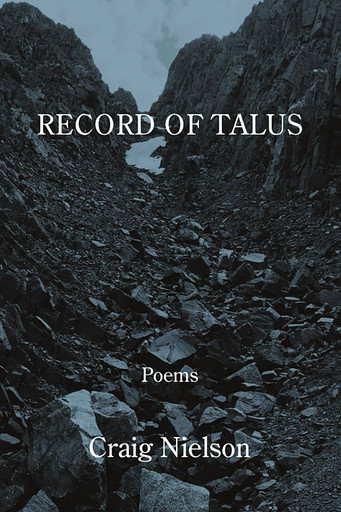
Record of Talus
In Record of Talus, Craig Nielson gathers a lifetime of movement across the American West into a body of work that is as reflective as it is unflinching. These poems emerge from lived experience—trails walked, summits reached, rivers followed—and from a deep attention to the people and places that define the region. What unfolds is not a romanticized landscape, but one shaped by tension: between beauty and damage, solitude and community, reverence and exploitation.
Nielson writes from within these contradictions. His poems hold space for grief over altered and diminished wild places, while also honoring what persists—the quiet resilience of desert light, the slow shaping of stone, the hidden currents beneath what is visible. There is a sense throughout of searching: for origin, for meaning, for a way to inhabit the West that is both honest and sustaining.
Rooted in the tradition of the wandering poet, Record of Talus moves fluidly between the outer terrain and the inner life. The journeys here are physical and spiritual, tracing not only landscapes but the contours of memory, identity, and belonging. Through spare, evocative language, Nielson reveals a world where decay and renewal coexist, where even in fractured ground something vital continues to grow.
This is a collection that does not turn away from the West’s difficult histories, but instead seeks to understand them—finding, within that reckoning, a hard-won sense of home.
About the Author:
Craig Nielson is a poet, architect, climber, landscape photographer, and explorer of desert landscapes. He is the author of two full-length collection of poems, including Worn Open Places, published by Kelsay Books in 2025. He is the founding member of the southern Colorado-based performance poetry troupe River City Nomads and co-organizer of the quarterly live poetry event Season of Words in Salida, Colorado. His work has appeared in Pilgrimage, Mountain Gazette, Colorado Central Magazine, Central Avenue, Madblood; the anthologies, A Democracy of Poets, Open Windows 2005, and Telling It Real; and the chapbook, On Stage: River City Nomads. He writes, designs, climbs, and explores from his home base in the central Rockies of Colorado.
Cover Photo: Craig Nielson, final couloir to the summit of West Needle Mountain, a remote 13er in the San Juan range
Cover Design: John Takacs with Poahtree
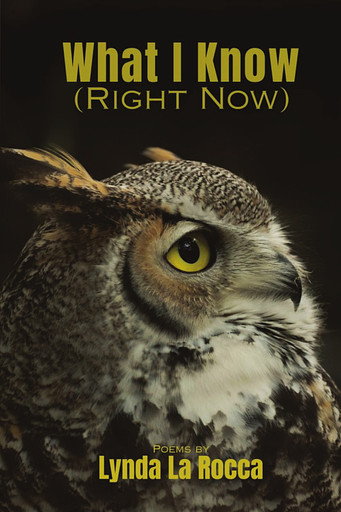
What I Know (Right Now)
In What I Know (Right Now), Lynda La Rocca writes from a place of deep attention—listening closely to the world, to the self, and to the spaces where understanding begins to dissolve into mystery. These poems are grounded in the physical and living world—breath, seed, bird, body—yet they continually reach beyond it, asking enduring questions about existence, identity, and what lies beyond the visible.
Rather than offering conclusions, La Rocca’s work dwells in the act of inquiry itself. The poems move through uncertainty with honesty and grace, acknowledging both the limits of knowledge and the human longing to understand. In this tension, they uncover something essential: a way of being present that allows for both wonder and unease, both sorrow and quiet joy.
There is a remarkable balance in this collection between vulnerability and strength. La Rocca does not turn away from pain or the difficult contours of experience, but meets them with openness and care. Her voice is at once intimate and expansive, drawing connections between personal experience and the larger, living world that surrounds it.
Throughout the collection, moments of insight emerge—not as final answers, but as glimpses of connection, resilience, and possibility. These poems suggest that meaning is not always found in resolution, but in the willingness to remain attentive, to stay with the questions, and to continue loving the world even in its uncertainty.
What I Know (Right Now) is a courageous and deeply felt collection that invites readers into a space of reflection, presence, and profound engagement with both the known and the unknowable.
About the Author:
Lynda La Rocca is a New York City-born poet, editor, and freelance writer who has also worked as a municipal and general-assignment reporter for New Jersey’s Asbury Park Press and a teaching assistant at Colorado Mountain College in Leadville, Colorado. Her five previous poetry collections include Unbroken (2023) and It Could Have Gone Another Way (2024), both published by Kelsay Books, and Spiral (2012, Liquid Light Press). Lynda’s individual poems have appeared in such publications as The New York Quarterly; the Haiku Society of America’s Frogpond; The Colorado Sun; Encore (National Federation of State Poetry Societies, Inc.); and THINK: A Journal of Poetry, Fiction, and Essays. She was the 2020 poetry-category winner of the Soul-Making Keats Literary Competition, a National League of American Pen Women arts-outreach program; and a “Top-Four” winner in the 2021 Maria W. Faust Sonnet Contest. Since 2004, Lynda has been a member of the River City Nomads, a performance-poetry troupe based in Salida, Colorado, where she lives with her husband, writer-photographer Steve Voynick.
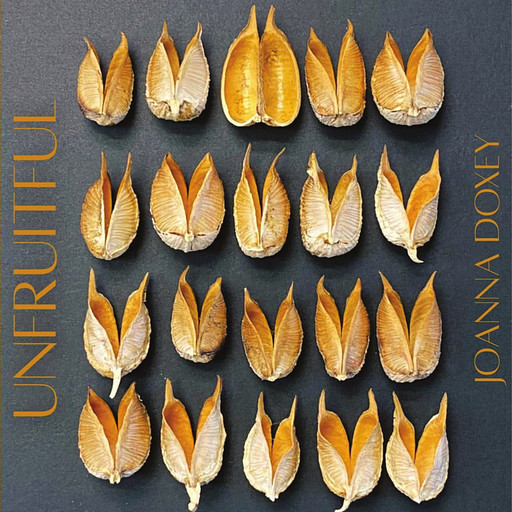
Unfruitful
Unfruitful speaks to much of both the barrenness, the emptiness, the "un-progress"—or sense/feeling of such—of these contemporary times we are living through, as it does to the shifting or reframing, and recalibration of meaning and value we must adopt beyond the physical primacy and tyranny of a human socio-cultural environment ever pushing the myth of individualism.
Doxey’s use of the topic of fragmentation in relation to wholeness (and all things wholly—and holy) is mirrored in the structure employed in her poetics. Unfruitful is an exploration of the whole as ineffable and unfathomable and yet a territory wherein we find meaning in fragmentation. We find through studying the interconnected nature of all things—this ontological mystery found in the literal biological queerness of all things—that fragment is all we know, all we have experienced, perceived, and that so much of our desire for meaning of "the whole" can only be found in the meaning we divine (or weave, or constellate) from fragments, pieces, and nodal points of discovery & experience—that fragmentation is our only digestible narration (and highly suited to poetry) when we humbly realize our limited abilities as individuals—an as individuals, we are ourselves but fragments.
Throughout the collection, the allusions to "unbearing," and growth or expansion discounted of any multiplication—or even through "unfruitfulness"—emerges a subtle subtext that is highly important to the overall theme of Unfruitful and its constellationary [sic.] form. Through the reading this becomes the lens with which one can eventually read the whole in a new light, and thus literally embodies the or illustrates the thematic exploration, offered as an invitation of experience to the reader.