 mike hillebrecht
Powered by Books.by
mike hillebrecht

by mike hillebrecht
Twelve candidates. Three days. One round table where no promoter comes through the door and no topic is off limits. Leon Scheffield didn’t want to do a conference. Marguerite Fontaine told him this wasn’t a conference. She was right.
What happens over three days in a room outside Kansas City is what happens when someone stops getting in the way of the prior grace and lets it do what it does. Twelve people who arrived performing their best answers leave carrying the questions underneath them.
The first thing Leon Scheffield says to the twelve candidates is a question.
The second thing he says, to the first person who answers it, is: ‘Non-denominational bullshit. Try again.’
This was never going to be a conference. Marguerite Fontaine negotiated the terms before Leon agreed to them — twelve people, a table, no promoters in the room, no topic off limits — because she has spent three years learning to create the conditions for what Leon carries. She walked into Clairmont carrying an unfinished composition and left it completed. She has been making rooms for the prior grace ever since.
The twelve candidates she selected are about to spend three days finding out that everything they were trained to give as an answer is the introduction to a question they haven’t been asked yet. A seminary graduate who has an answer for everything. A megachurch apprentice who has never sat with a dying person. A deconstructor who has been tearing things down for three years without building anything to replace them. A survivor of a controlling church who doesn’t yet know the difference between not reproducing the damage and building something real. And one young woman who says, on Day One, that she doesn’t know if she wants to build — she just knows she can’t not. Leon stops. ‘That,’ he says, ‘is the only answer anyone has given me today that I believe entirely.’
Three days. One room. Twelve people who are about to discover that the ground the institutions were built on was always more prior than the institutions.
If your beliefs today are the same as they were last year, five years ago, or even ten years ago, you are not growing spiritually.
Where Grace Is Not a Doctrine — It’s a Discovery — You Were Never Who They Said You Were. Somewhere along the way, you were handed a story about yourself. Maybe it came from a pulpit. Maybe from a parent. Maybe from the relentless inner voice that counts your failures before you’ve finished your morning coffee. The story goes like this: You are broken. You need fixing. If you try hard enough, believe correctly enough, confess thoroughly enough — maybe then, you’ll be acceptable. Mike Hillebrecht has spent decades dismantling that story. Not with cleverness. Not with theological gymnastics. But with the one thing that story cannot survive: The truth that grace was never about fixing you — because you were never as broken as they said.
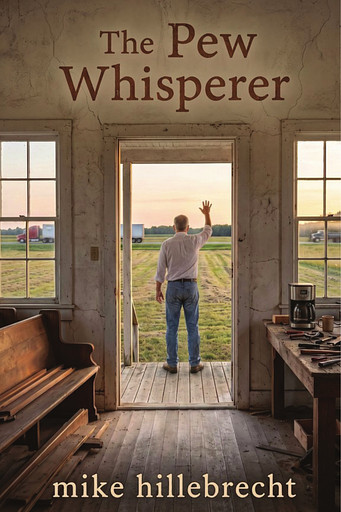
Wes Conrad lost his wife, his ministry, and any right he believes he still has to forgiveness. Tate Wyecomb lost his brother to an addiction he thinks he could have stopped, if he'd loved him the right way instead of the correct way.
Neither man planned on the other. But four days in a half-restored church — one truck, one bottle of bourbon, one photograph that never comes down off the wall — is long enough for two very different kinds of grief to finally sit in the same room together.
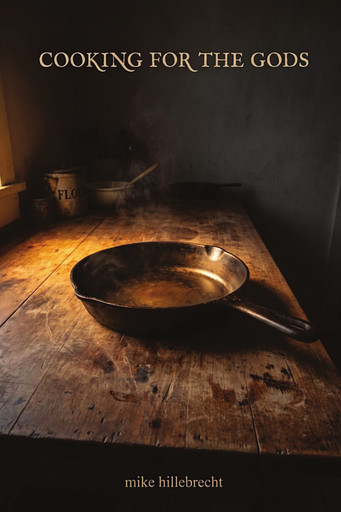
A day in the kitchen, and a case for grace that was never rationed. Cooking for the Gods moves through Morning, Midday, Afternoon, and Night Watch, pairing recipes with reflection to make one plain claim: the meal doesn't create the sacred — it reveals what was already there. Part memoir, part theology, part cookbook. Come hungry.
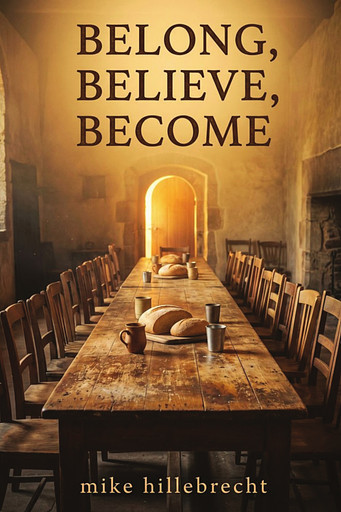
If you've ever sat in a pew doing math on your own worthiness, this book is for you. Belong, Believe, Become argues — slowly, honestly, without pretending the hard questions away — that grace was never a transaction, belief was never a password, and becoming was never a performance. It's short enough to read in an evening and honest enough to sit with for a lot longer.
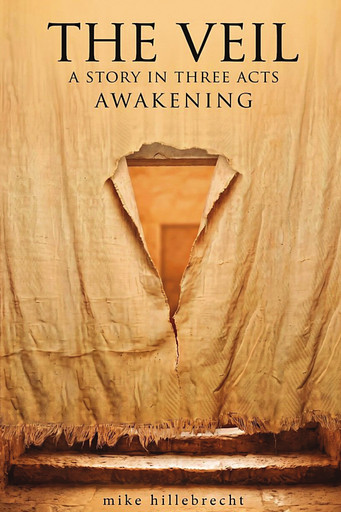
Awakening
Five strangers in a grief support group. Five ordinary griefs. One discovery none of them saw coming: that what they'd spent their lives trying to earn was never being withheld in the first place. A literary novel about walls, quiet marriages, competence, and the door that was open the whole time.
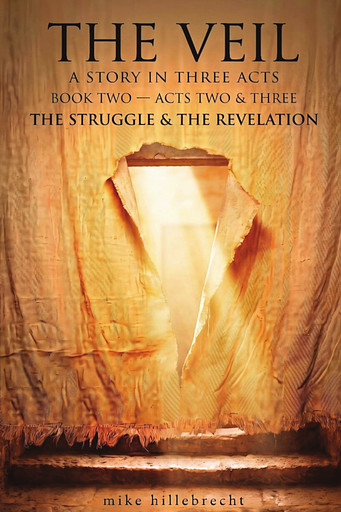
The Struggle & The Revelation
Grace was never the hard part — living inside it is. The five people from Book One are back, further into ordinary lives cracked open by an idea they can't stop discovering is true. A group that keeps growing. A confession four years overdue. A room that finally gets fast enough to say the true thing. Book Two of The Veil.
Thresholds
Forty-eight true-to-life scenes about the moment ordinary people notice grace was never something to earn — only something to recognize. No guru. No required order. Just the ground, closer than you thought.
Two men died on either side of Jesus at Calvary. History kept only one of their names. The Other Two traces the mechanism that made sure of it — backward through a reformer, an empire, and a crowded field of forgotten men who all claimed too much — to the exact moment a community’s peace started depending on having exactly one legitimate thing left standing
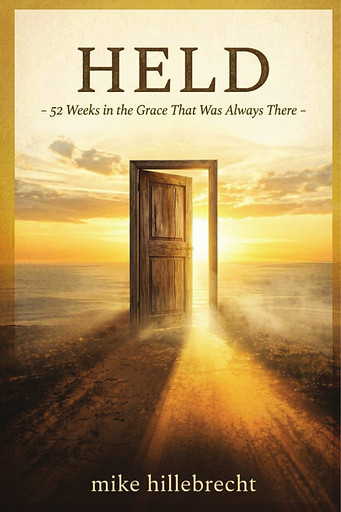
52 Weeks in the Grace That Was Always There
There is a voice that has been telling you what you are and what you deserve for as long as you can remember. HELD calls it the Veil. And underneath it — quieter, older, and there the whole time — is another voice entirely.
This 52-week devotional follows five ordinary people in Nashville: a senior VP who has never once felt he arrived, a principal who did everything right and still can't find the joy she was promised, a man who calls his self-sufficiency discernment, a father who kept showing up long after he had any reason to expect a door to open, and a spiritual director who can hold space for anyone but herself. They are not illustrations. They are characters with histories and wounds — and across a year, their lives intersect in ways none of them expect.
Each week follows the same six-part rhythm: a story to inhabit rather than decode, a direct confrontation between the Veil and the Spirit beneath it, a single sentence to carry with you, Scripture read as a door rather than a proof-text, seven days of contemplative practice, and a blessing to close.
This is not a devotional that asks you to try harder. It's an invitation to notice the grace that was never waiting on your performance to begin with.
52 weeks. Five lives. One grace — that was there before you started looking for it.

The RV, Grandkids, or a Pew
Nobody in this book gets fixed. Everybody gets a little more room to breathe.

Leon Scheffield has been delivering the same sermon for twelve years. He walks into dying churches, says the thing the pastor can't say, and leaves them changed. He has a list of churches that called him and a shorter list of the ones he actually went to. He knows how to read a room from a single phone call.
Then a letter arrives from a woman he's never met.
Marguerite Fontaine has been through five traditions in thirty years and can't stay in any of them — not because she stopped believing but because none of them have been adequate to what she believes. She uses a phrase in her letter that Leon has never shown to anyone. He doesn't know how she has it. He goes.
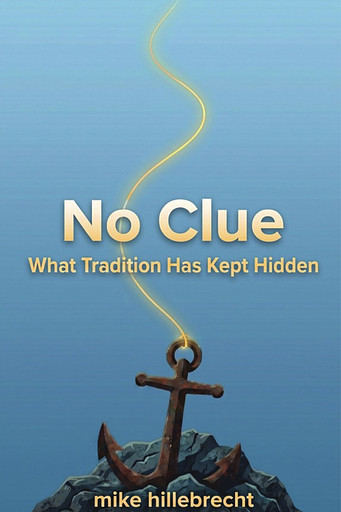
What Tradition Has Kept Hidden
What if everything you were taught about grace started too late?
No Clue: What Traditions Have Kept Covered reaches beneath centuries of religious tradition to uncover a truth hiding in plain sight: God's love was never waiting for you to qualify for it. From the ancient Hebrew chesed to the grace revealed in Christ, Mike Hillebrecht challenges the performance-based faith many Christians inherited and reveals a God whose love does not retreat, recalculate, or begin after repentance.
For anyone exhausted from trying to earn what God never withheld, No Clue offers a startling possibility:
You were never as far from God as you were told.
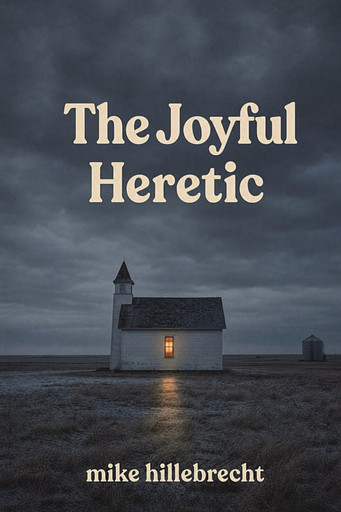
Smuggling God Back Into Their Lives
The Joyful Heretic is a novel about the truths we tell the grieving, the smaller God we hand them when we're afraid, and what it costs — to a woman, to a town, to a faith — when someone finally decides to tell it larger.
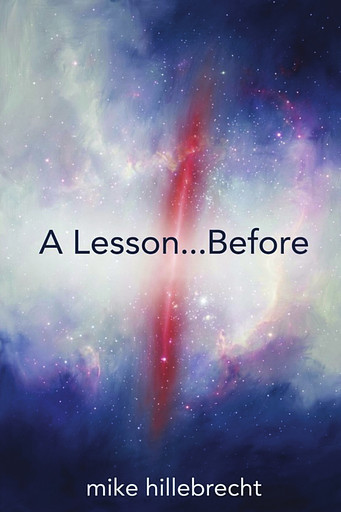
A Lesson Before explores the provocative idea that grace preceded creation itself. Blending Scripture, theology, and contemplative insight, it challenges readers to move beyond performance-based faith and awaken to a deeper reality: that God's acceptance, presence, and love may have been established long before humanity ever knew it was needed.

Two Sides of the Same Coin
Most of us were handed a smaller version. A God whose warmth had to be maintained. Whose nearness was earned. Whose love waited to see if your performance was sufficient before it fully applied to you.
That version of God required constant management. And the exhaustion that came from it was real — because the system that produced it was real.
It just wasn't describing the God who spoke from Sinai.

Before Every Tradition
You came from somewhere specific. This book is for the specific shape of your somewhere.
Across nine chapters, six Christian traditions are addressed on their own terms — Reformed/Calvinist, Progressive/Post-Evangelical, Pentecostal/Charismatic, Baptist/Evangelical, Catholic, Methodist/Wesleyan — with each tradition’s wounds named precisely, its texts read carefully, and the prior grace it was always pointing toward made visible.
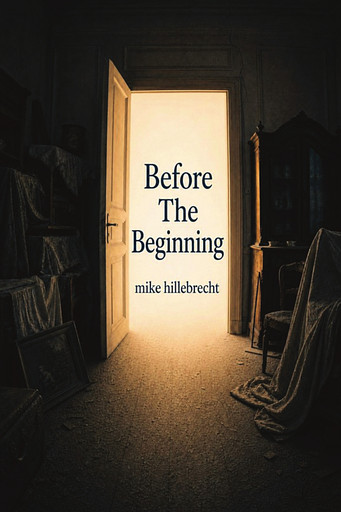
Finding What Was Always There
You left. Or you’re thinking about it. Or you’re still inside and finding it harder to stay. Or you walked away from a tradition years ago and the hunger didn’t leave with you and you don’t know what to do with that.
Before the Beginning is for all of those situations. Because all of them are really the same situation: a person who was told that grace worked a certain way, and who found, at some point, that the way they were told it worked wasn’t adequate to what they actually needed.