
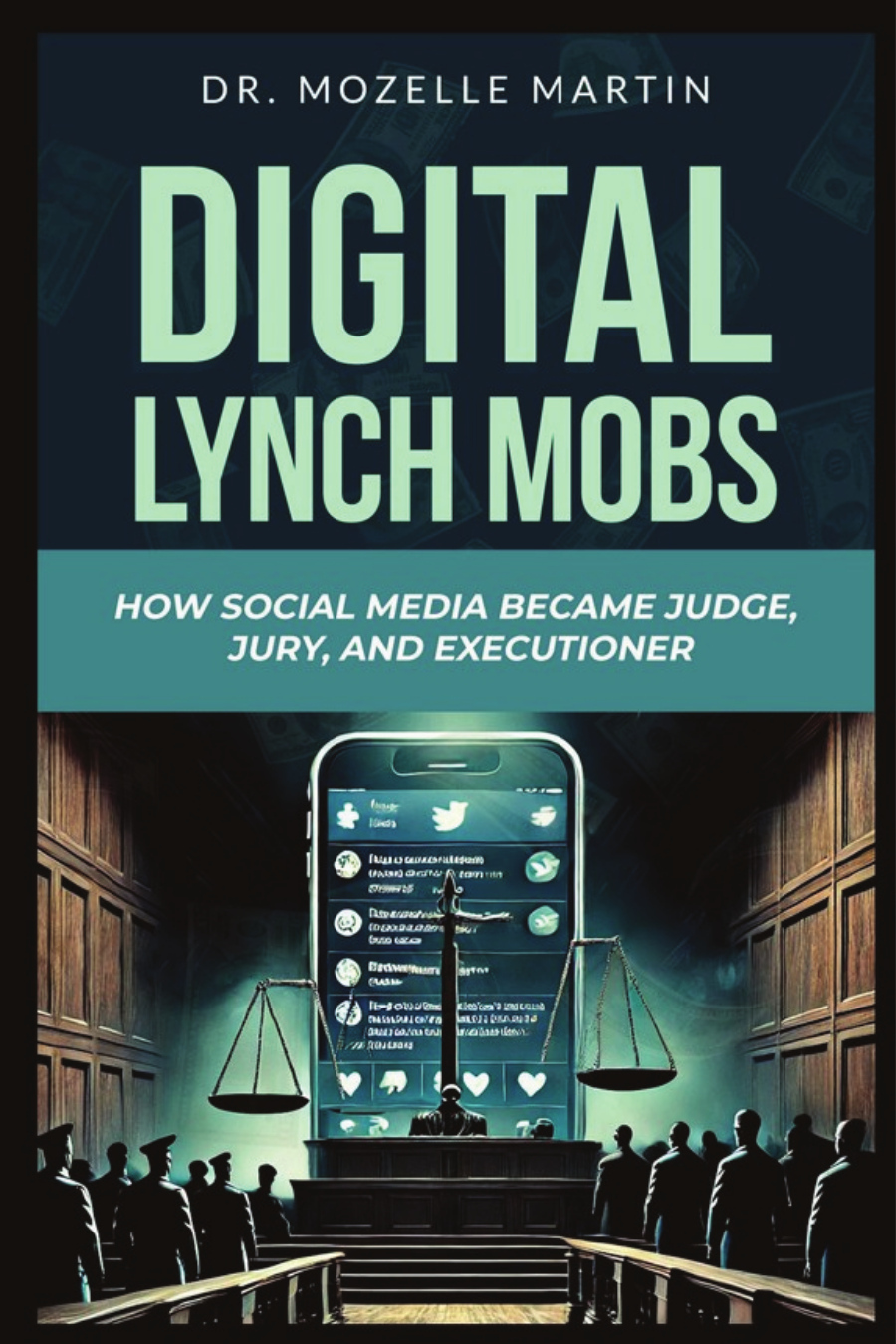
Digital Lynch Mobs:
by Dr. Mozelle Martin
Digital Lynch Mobs examines how social media environments produce rapid judgment, reputational harm, and collective punishment long before facts are established. Drawing on forensic analysis, trauma-informed insight, and legal study, Dr. Mozelle Martin looks at the mechanisms that turn online platforms into systems of accusation, amplification, and public destruction. This book explains how outrage is rewarded, how platforms benefit from escalation, and how media narratives, algorithmic exposure, and crowd behavior can converge against a single target. Rather than treating these events as isolated episodes, it examines them as a repeatable social process with real psychological and civic consequences. For readers trying to understand online pile-ons, cancel-driven exposure, and the erosion of due process in digital culture, this book offers a more disciplined account of how those forces operate and why they persist.
What readers are saying
““Digital Lynch Mobs captures a truth the law still struggles to address: online punishment is being normalized without procedures, standards of proof, or proportionality. Dr. Mozelle Martin shows how platforms turn moral panic into a product, and why the collateral damage is predictable, repeatable, and profitable.””
— G. Halvorsen, Esq.
More books by Dr. Mozelle Martin
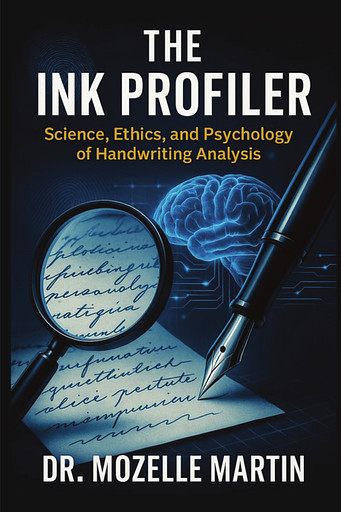
The Ink Profiler
Science, Ethics, and Psychology of Handwriting Analysis
The Ink Profiler examines handwriting as trace evidence of thought, motor control, and decision-making in real time. Drawing on decades of forensic work, Dr. Mozelle Martin explains how legitimate handwriting analysis differs from party tricks, reckless shortcuts, and the misinformation that has weakened public understanding of the field. This book addresses the science, ethics, and professional standards required for responsible handwriting analysis in both forensic and behavioral contexts. It also considers the damage done when unqualified voices turn a disciplined field into spectacle. For law enforcement, legal professionals, mental health practitioners, and serious students of human behavior, this book offers a grounded account of why handwriting analysis still matters and what separates credible work from pseudoscience.
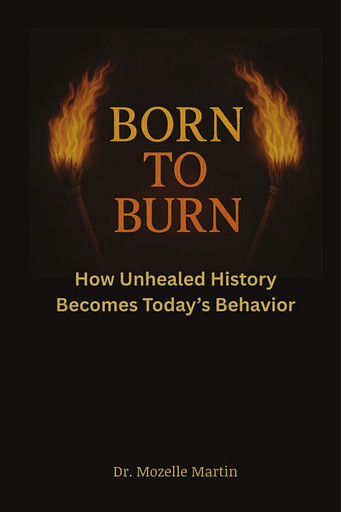
Born to Burn:
How Unhealed History Becomes Today's Behavior
Born to Burn examines how unhealed history continues to shape contemporary behavior. Drawing on decades of work in forensic science, criminology, and behavioral analysis, Dr. Mozelle Martin looks at how war, famine, plague, cruelty, and instability leave effects that do not end with the original event. This book considers the ways inherited stress, collective injury, and long-standing human harm can influence personality, conflict, fear, culture, and public life across generations. Rather than treating modern volatility as detached from the past, it places current behavior in continuity with older wounds that were never fully resolved. For readers interested in trauma, behavior, and the lasting consequences of historical suffering, this book offers a disciplined look at how the past continues to live inside the present.
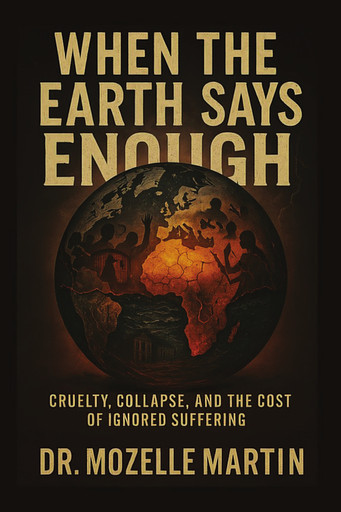
When the Earth Says Enough:
Cruelty, Collapse, and the Cost of Ignored Suffering
When the Earth Says Enough examines environmental collapse through the lens of cruelty, exploitation, and long-ignored suffering. Dr. Mozelle Martin approaches the subject as a record of consequence, tracing how repeated acts of human harm toward animals, people, and ecosystems accumulate into wider patterns of destruction. Rather than treating disasters as isolated events, this book considers them within a broader framework of neglect, profit-driven damage, and systemic indifference. It brings together evidence, scope, and moral seriousness without drifting into sentiment or abstraction. For readers concerned with environmental collapse, animal suffering, and the human behaviors that make both easier to ignore, this book offers a harder and more disciplined account of what sustained harm leaves behind.
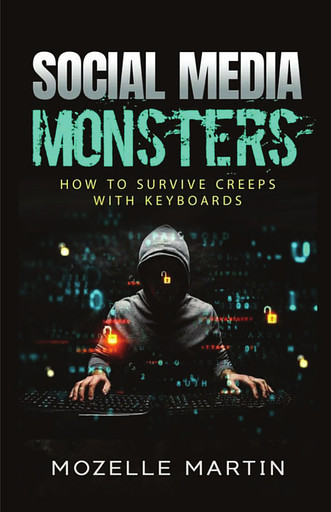
Social Media Monsters
How to Survive Creeps with Keyboards
Social Media Monsters examines the psychology of online harassment through the lens of forensic psychology and lived observation. Dr. Mozelle Martin looks at the motives, reinforcements, and social conditions that allow digital cruelty to continue long after facts, proportion, and basic decency have been abandoned. Rather than treating cyber-hatred as random bad behavior, this book looks at it as a recognizable human problem shaped by attention, anonymity, grievance, and reward. It offers readers a clearer understanding of what drives these environments and why they so often escalate. For readers trying to understand, confront, or survive online hostility, this book provides a more grounded view of the people behind the screens and the damage they cause.
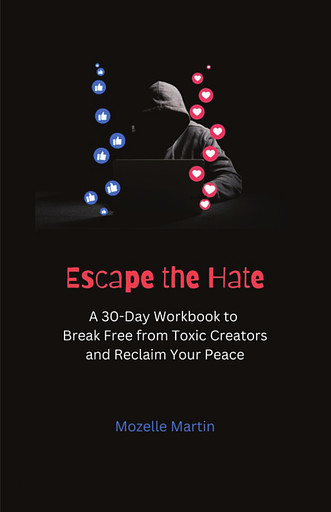
Escape the Hate:
A 30-Day Workbook to Break Free from Toxic Creators and Reclaim Your Peace
Escape the Hate is a practical 30-day workbook for reducing exposure to toxic creators, online hostility, and the psychological strain that comes with prolonged digital stress. Drawing on professional experience in mental health, trauma, and behavioral analysis, Dr. Mozelle Martin provides a structured approach to boundary-setting, reflection, and recovery. The workbook helps readers identify harmful online influences, interrupt unhealthy engagement habits, and rebuild a steadier relationship with digital spaces. Rather than offering slogans or empty encouragement, it focuses on concrete daily work that supports clarity, resilience, and self-protection. For readers overwhelmed by online negativity, this book offers a disciplined path toward disengagement, better judgment, and a more stable inner life.
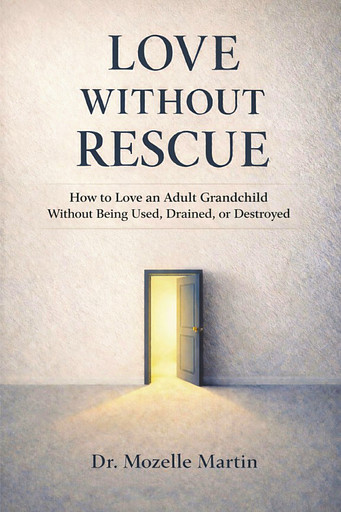
Love Without Rescue
How to Love an Adult Grandchild Without Being Used, Drained, or Destroyed
You can love your adult grandchild and still be damaged by the role you were pulled into. Many grandparents step in during crisis and slowly become the stabilizing system: the money, the rides, the planning, the crisis management, and the emotional regulation. Then, when they finally try to step back, they are treated as cold, selfish, or disloyal. Love Without Rescue examines how help becomes substitution, how money becomes regulation, and how guilt turns boundaries into betrayal. Dr. Mozelle Martin names the family arrangements most people avoid discussing and shows how overfunctioning becomes expected rather than appreciated. This is not a book about fixing your adult grandchild. It is a book about staying humane without being consumed. For grandparents carrying too much for too long, it offers a steadier posture: warmth without urgency, connection without collapse, and love without self-erasure.
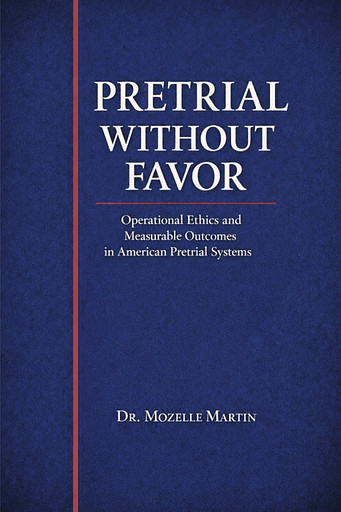
Pretrial Without Favor
Operational Ethics and Measurable Outcomes in American Pretrial Systems
American pretrial systems operate at the intersection of liberty and public safety. They are designed to function without bias, favor, or informal influence. In practice, operational culture can erode neutrality when alignment overrides procedure. Pretrial Without Favor presents a structural ethics framework for maintaining constitutional supervision standards across jurisdictions. Drawing on field-based experience and administrative analysis, Dr. Mozelle Martin outlines practical integrity safeguards, including documentation fidelity, risk-matched verification, role-separated accountability, audit triggers, and measurable harm-prevention metrics. This book is a disciplined blueprint for administrators, magistrates, pretrial officers, and justice leaders who understand that neutrality is not sustained by intention. It is sustained by structure, and that structure must be measurable.
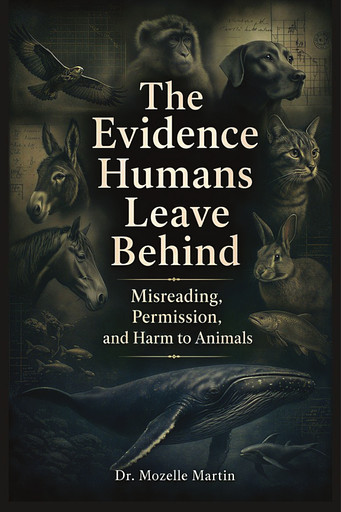
The Evidence Humans Leave Behind
Misreading, Permission, and Harm to Animals
Human beings often believe they understand animals because animals live near us. We name them, feed them, confine them, rescue them, regulate them, study them, mourn them, and use them. From that constant proximity comes a dangerous confidence. Proximity becomes understanding. Affection becomes ethics. Law, management, and procedure become mercy.
Dr. Mozelle Martin examines what happens when that confidence hardens into ordinary practice. Across households, shelters, clinics, farms, laboratories, tourism, wildlife policy, enforcement, and public memory, animals are misread, renamed, compressed, sentimentalized, categorized, and absorbed into systems that let human beings keep thinking well of themselves. Cruelty rarely needs overt sadism to survive. It survives through convenience, distance, routine, legality, selective concern, administrative language, and the quiet willingness to let animals absorb the cost of human preference.
Drawing from a forensic, behavioral, and ethical lens, Martin follows the record humans leave behind: the body, the file, the enclosure, the scar, the missing route, the managed population, the softened word, the dead animal, the unasked question. The result is a disciplined, unsparing account of what animals kept showing us, what human beings kept refusing to learn, and what remains once the last excuse has been stripped away.
This book does not ask readers to love animals harder. It asks them to examine the systems, habits, language, and permissions that made love so easy to claim and consequence so easy to avoid. Animals were never the confusing part. Human beings were.
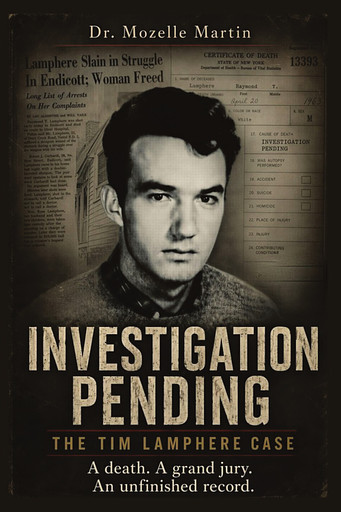
Investigation Pending
The Tim Lamphere Case
On April 20, 1963, 22-year-old Raymond Thompson “Tim” Lamphere was shot inside a residence in Endicott, New York. The explanation that survived through the years was simple enough to repeat: a window, a struggle, and a shotgun. But decades later, the surviving record did not match the certainty of the story people carried.
After making a promise to Tim’s surviving brother, William Le Roy “Bill” Lamphere, Dr. Mozelle Martin began following the paper trail. What she found was not a clean official answer, but a fractured historical record: family memory, public reporting, agency responses, missing files, a grand jury outcome, and a death certificate that still refused to finish the case.
Investigation Pending reconstructs Tim’s death through documented fact, family-source recollection, public narrative, and the hard line between what can be known, what can be questioned, and what can no longer be proven.
This book is not about forcing a verdict from a damaged record. It is about what remains when the system closes a case before the record is finished. The case was closed in 1963. More than 60 years later, the record is still unfinished.