
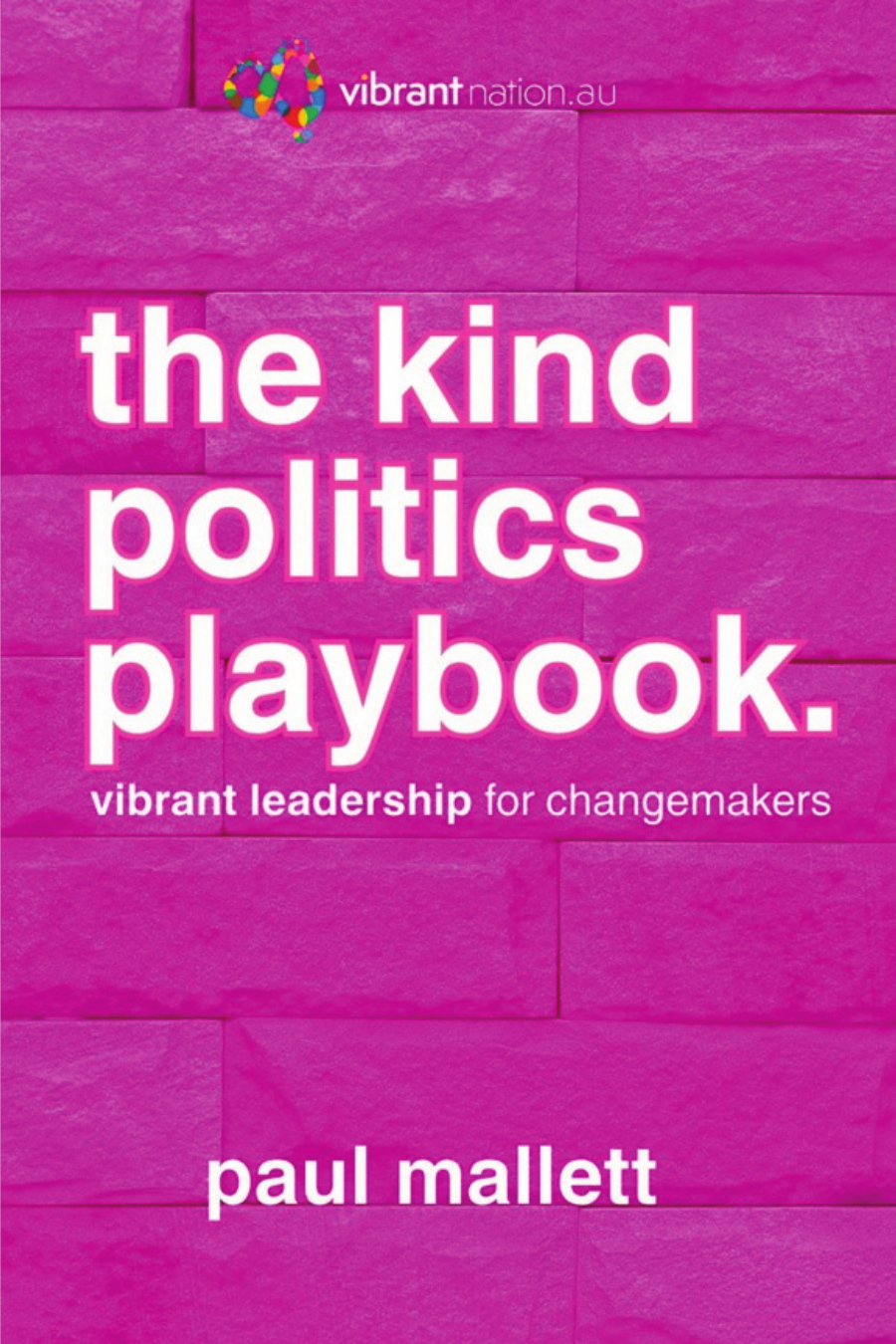
the kind politics playbook
by paulmallett
What if leadership began in the heart and endured in hard places?
Complex problems demand leaders who can think systemically, act collaboratively, and sustain reform over time. The Kind Politics Playbook translates these demands into practice. Written in the spirit of the vibrant nation trilogy, it is a call to re-humanise politics and rediscover leadership as a collective act.
Through sixty plays drawn from frontline practice, leadership experiences, and case study research, paul mallett invites readers to see systems clearly, act with humility, and hold steady through long seasons of change. This is a book for people who serve, the ones who build trust where it has been broken, who hold a mirror to power, and who know that kindness is not weakness but discipline with purpose.
This is a resource for advocates, people leaders, public servants, and reformers who seek upstream impact, where prevention pays dividends and kindness becomes a standard of performance. Part manifesto, part toolkit, and part companion for the road, The Kind Politics Playbook shows that compassion and strategy are not opposites; they are partners in the pursuit of lasting social change.
“I will not avert my eyes from injustice or suffering. I will not accept not trying to make things better. I accept that our efforts may not always succeed, and that we may sometimes fall short. But there is one thing I will not do: I will not give up on the pursuit of communities that are more socially, economically, racially, and environmentally just. I will keep working with others to build systems where every person can bring their skills and talents to bear on the pursuit of a more just and liveable world.”
paul mallett, 2025
More books by paulmallett
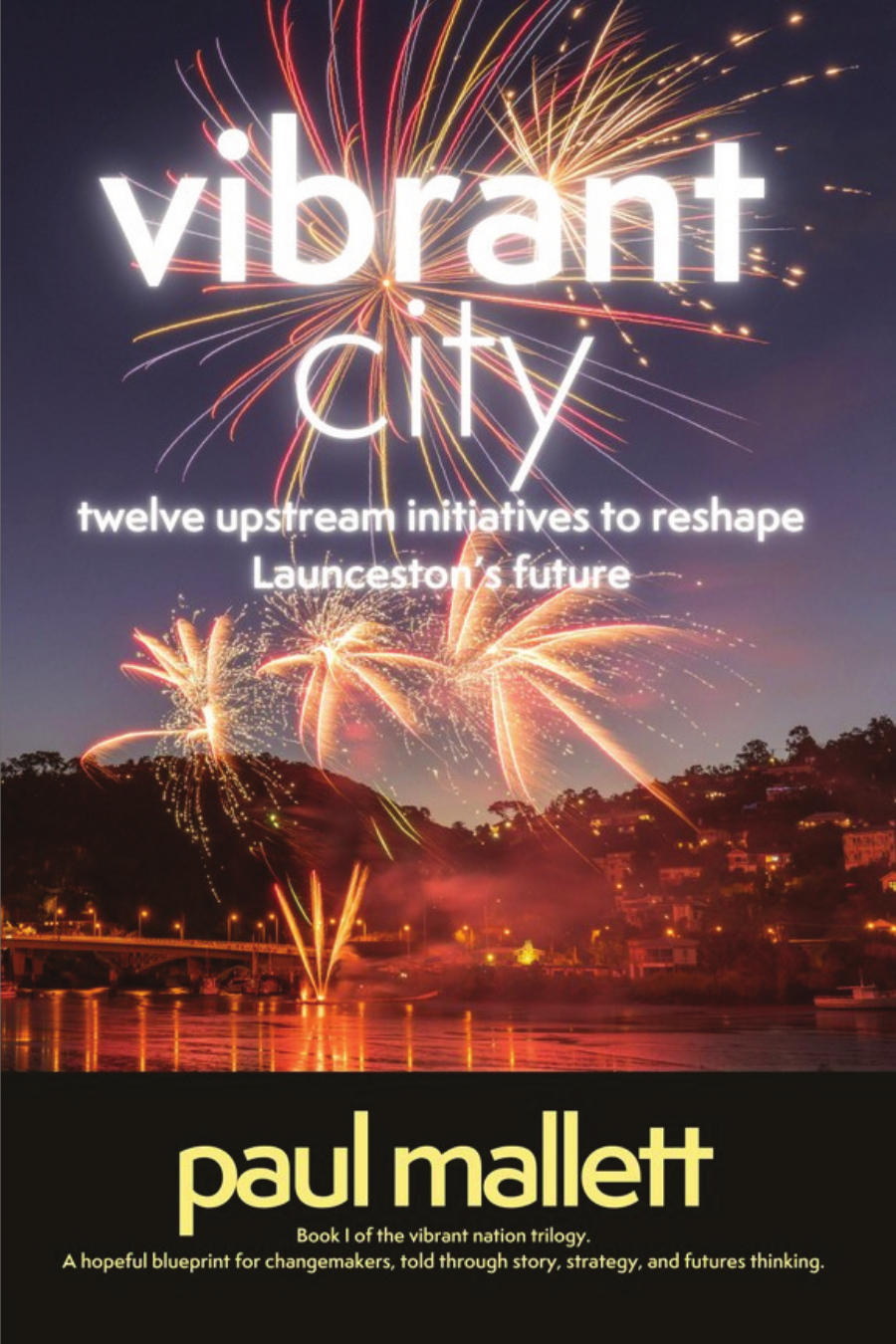
vibrant city
twelve upstream initiatives to reshape Launceston’s future
Set in near-future Launceston, Tasmania, vibrant city is a story-led blueprint for public policy that puts prevention, upstream thinking, and equity at the centre of everyday life. Through an intergenerational walk-and-talk-paul, an experienced reformer, and Willow, a young leader-the book explores how one regional city chose kind politics and built systems that advance community wellbeing, public health, and belonging.
Each chapter follows an upstream initiative that turns values into visible change: Tamar Lake and a people-first bridge that reorients city planning to the water; "Every Child Succeeds" and a schools-community compact; Changemaker High, where learning, enterprise, and civic action meet; a creativity turn that commissions murals and markets and treats celebration as social infrastructure; sport and movement loops that make health a daily habit; good-work pathways, a stronger care economy, and culture-shaping reforms that put people first. Together, these moves show how a city can bake dignity into design, shifting "normal" from patching harm to preventing it-one street, school, clinic, club, and corridor at a time.
This isn't a manifesto and it isn't technocratic. It's part memoir, part field guide, part civic futures narrative: practical enough for councils and coalitions, human enough for readers who want hope with evidence. If you've ever believed a city could be more than roads, rates, and rubbish-if you've wondered what happens when we invest early and measure success by the harm we prevent-this book invites you to begin the walk.
At its heart are three organising principles that run through the trilogy and anchor this first volume: Upstream Thinking (prevention and structural redesign), Kind Politics (leading with empathy and dignity), and solutions shaped by lived experience, informed by the Power Threat Meaning Framework (PTMF)-which reads distress through how power operates, the threats people face, and the meanings they make. These ideas aren't soft; they are working frameworks for real transformation: redressing power, reducing threat, and restoring dignity.
vibrant city is an invitation to communities everywhere: design for belonging, align city planning with care, and let kindness become contagious-a city worth caring for, a future worth making.
vibrant state
ten kind policies to transform Tasmania
Set across lutruwita/Tasmania and told from the vantage point of 2064, vibrant state is a story-led blueprint for a kinder, prevention-first state. Through an intergenerational walk and talk between paul, an older reformer with a long memory of struggle, and Willow, a young leader shaped by the age of “zeros”, the book asks what happens when a state chooses care over control and courage over caution.
Each chapter advances a civic floor rather than a slogan: zero excuses on land return, with truth-telling made structural, Country restored, and Treaty with teeth; zero intimate partner violence, with “love without harm” as a public standard; Vision Zero roads that forgive human error; the economic triad of zero poverty, zero unemployment, and zero homelessness, supported by TAFE pathways, social enterprise, and a public sector that models fair, purpose-filled work; zero avoidable hospital admissions through prevention hubs, trauma-informed care, and social prescribing; zero harm to animals; zero bullying across schools, workplaces, and online; and zero suicides through whole-of-society connection and upstream care.
Along the way, Tasmania reforms local government through fewer councils, ward representation, and reserved Aboriginal seats, strengthening shared power and civic legitimacy. The state measures what matters through the Avoidable Costs Unit (ACU), a public yardstick for the dollars not spent when prevention works. Futures tools such as MemoryLoom, CivicLoom, and DeepSeequence allow communities to see consequences before they legislate, while policy snapshots and ACU matrices turn vision into practical steps.
Like its companion volume vibrant city, this is neither a party platform nor a technocratic manual. It blends memoir, strategy, and evocative futures writing. The result is human enough to move readers and rigorous enough to guide Cabinets, councils, coalitions, and community campaigns. Grounded in three principles that run through the trilogy, Upstream Thinking, Kind Politics, and the Power Threat Meaning Framework, vibrant state shows how a small place with a big heart can lead by redesigning systems to prevent harm, widen dignity, and make fairness ordinary. If you have ever believed Tasmania could be a model rather than a margin, this book offers a map.
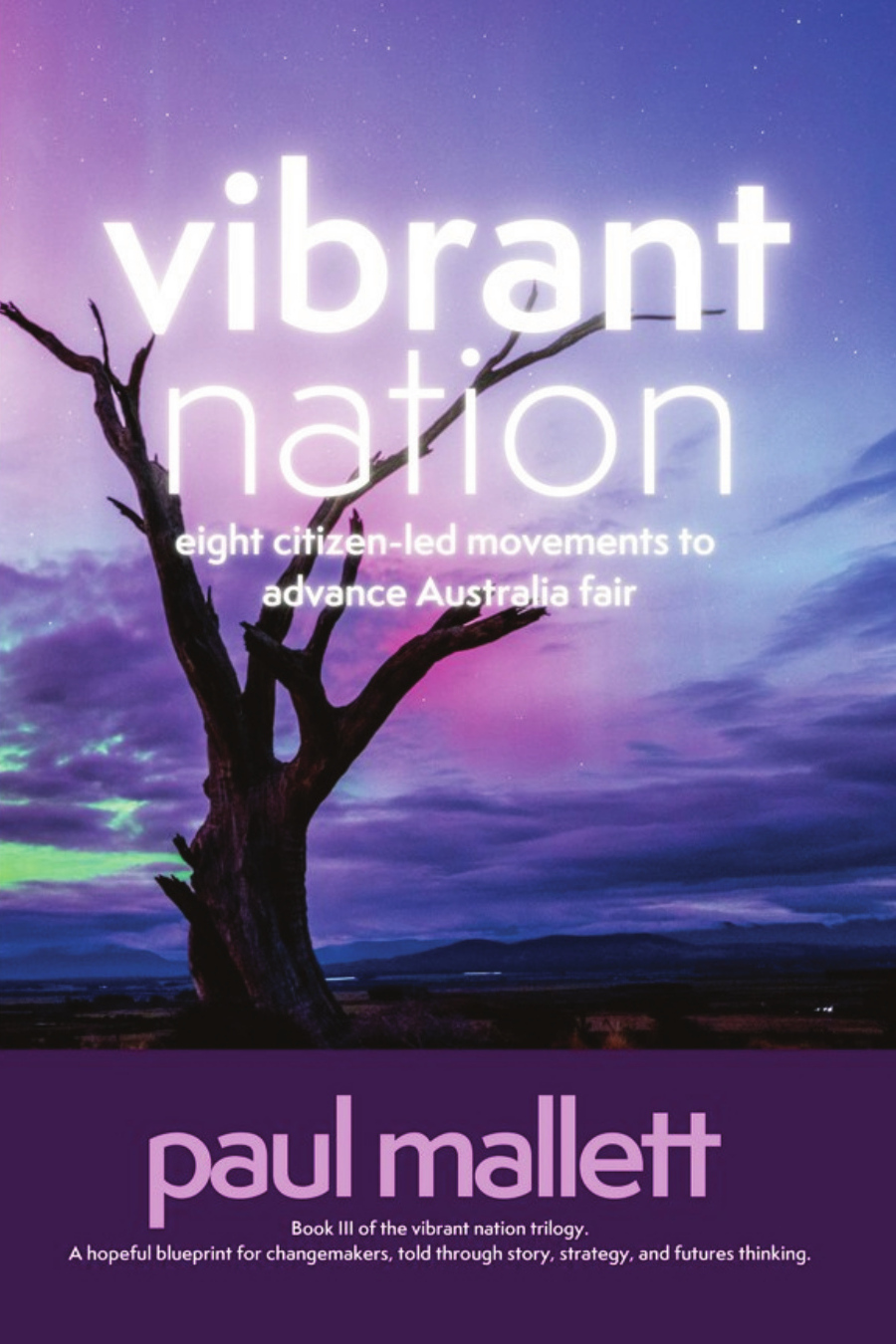
vibrant nation
eight citizen-led movements to advance Australia fair
Set in 2064, vibrant nation is a story-driven blueprint for public policy that places prevention, upstream thinking, and equity at the heart of Australian life. Through an intergenerational walk and talk between paul, an experienced reformer, and Willow, a young leader, the book explores how a country chose kind politics and rebuilt its institutions to widen dignity, strengthen public health, and deepen belonging.
Each chapter follows a movement that turns values into visible change: a republic grounded in truth-telling and shared symbols; liquid democracy that builds an infrastructure of trust and participation; a Children and Young Persons Accord that centres equity from pregnancy to adulthood; fair work with portable entitlements and a care economy that values contribution as well as output; a public digital charter that curbs surveillance capitalism; environmental covenants for Ocean, Rivers, Land, and Air; a sanctuary-first approach to protection and resettlement; and upstream budgeting measured through a public Avoidable Costs Unit (ACU). Together, these shifts show how a nation can build dignity into its design and move the definition of “normal” from patching harm to preventing it, one parliament, service, platform, and policy at a time.
Like its companion volumes, this is not a political manifesto or a technocratic treatise. It is part memoir, part field guide, and part civic futures narrative. The book is practical enough for Cabinets, coalitions, and campaigns, yet human enough for readers who want hope grounded in evidence. If you have ever wondered what might happen when a country invests early and measures success by the harm it prevents, this book invites you to begin the walk on the national stage.
At its heart are the three organising principles that run through the trilogy and anchor this final volume: Upstream Thinking, which focuses on prevention and structural redesign; Kind Politics, which centres empathy and dignity in public life; and solutions shaped by lived experience and informed by the Power Threat Meaning Framework, which interprets distress through the dynamics of power, the threats people face, and the meanings they make. These ideas are not soft. They are practical frameworks for transformation that seek to rebalance power, reduce threat, and restore dignity.
vibrant nation is an invitation to communities everywhere: design for belonging, align national systems with care, and let kindness become contagious. It imagines a country worth caring for and a future worth making.
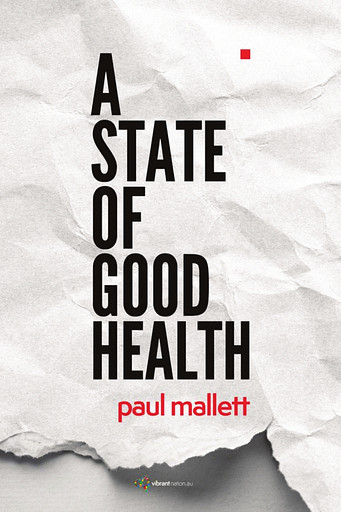
A State of Good Health
A Blueprint for a Prevention-First Tasmania
Most of the illness, distress and early death that Tasmania's health system manages every year is not caused by bad choices or bad luck. It is produced, predictably and repeatedly, by how systems are designed to operate. A State of Good Health is the book that shows exactly how, and sets out what to do about it.
Across four deliberate Readings, the book traces a single argument from lived experience to system design to reform. Reading One tells the Stories: how illness, fatigue, stress and lost capability build up through ordinary days shaped by waiting, insecurity, exposure and quiet adaptation. Reading Two makes sense of it, showing how responsibility is fragmented, prevention is treated as optional, and harm is tolerated until it becomes visible enough to treat. Reading Three sets out the Strategies: a deliberate sequence of reforms that would let Tasmania act earlier, sustain capability for longer, and stop harm before it hardens into illness. Reading Four draws it together through system logic and the Power Threat Meaning Framework, showing that waiting, withdrawal and endurance are not personal failures but rational responses to power, threat and constraint, and that the fix lies in redesigning conditions, not fixing people.
The patterns are consistent and, once named, unmistakable: people living under constant material and time pressure; support that only arrives after damage is done; systems organised around portfolios instead of lived experience; technology that adds steps instead of removing burden; known harms that are tolerated, normalised or even profited from; and responsibility scattered just widely enough that no one is ever quite accountable. None of this is accidental. It is predictable, and it is avoidable.
The book's Call to Action turns this analysis into twenty-four integrated Recommendations, organised into Five Action Pillars: making prevention a core responsibility of government, building health that lasts a lifetime, designing daily life to reduce chronic stress, strengthening capability and connection across communities, and acting early to prevent harm and protect future health. Together they form a coherent, policy-ready blueprint spanning legislation, regulation, funding, workforce design, data and accountability, with explicit recognition of Aboriginal authority and self-determination throughout.
A State of Good Health reframes prevention as a core task of governance, not a lifestyle message or a collection of programs bolted onto a system built to respond after the fact. It shows how health is shaped long before anyone reaches a clinic or hospital, through housing security, income adequacy, transport access, time scarcity, digital design, social connection, and exposure to regulated and unregulated risk. When these systems fail to align, chronic stress accumulates, healthspan shortens, and public costs escalate, whether or not anyone intended that outcome.
Written for policymakers, practitioners, educators, community leaders and anyone carrying the downstream costs of preventable harm, this book does not call for more effort inside a failing system. It is a working document, designed to be used, adapted, referenced and acted on, showing how Tasmania's systems can be redesigned so that prevention lowers harm, lowers cost, and frees up resources for further prevention. It is not an argument for sympathy. It is a case for resolve.
Part of a wider body of work by paul mallett examining how Tasmania's systems produce and could prevent avoidable harm, A State of Good Health asks a single, unavoidable question: now that we know what it takes to make Tasmania a prevention-first state of good health, what are we prepared to do next?