
Sunken Treasure
by JC Reardon
There are thousands of undiscovered sunken treasure ships around the world, lost due to storms, piracy, wars, and accidents. Many of these wrecks are believed to hold vast riches in gold, silver, jewels, and artifacts. Here are some of the most famous undiscovered treasure ships:
________________________________________
1. Flor de la Mar (1511) – Indian Ocean
• Origin: Portuguese
• Cargo: Estimated $2.6 billion in gold and treasure
• Lost: Sank off the coast of Sumatra, Indonesia, during a storm
• Status: Never found
The Flor de la Mar was a massive Portuguese carrack loaded with treasure from the conquest of Malacca. Its location remains a mystery, though many suspect it lies near the Strait of Malacca.
________________________________________
2. Merchant Royal (1641) – English Channel
• Origin: English
• Cargo: 100,000 pounds of gold and silver, worth over $1.5 billion today
• Lost: Sank in a storm off the coast of Cornwall, England
• Status: Undiscovered
Dubbed the "El Dorado of the Seas," this ship was carrying Spanish treasure back to London when it was lost. Treasure hunters continue searching the waters around Cornwall.
________________________________________
3. San Miguel (1715) – Florida, USA
• Origin: Spanish
• Cargo: Gold, silver, and emeralds from the New World
• Lost: Part of the 1715 Treasure Fleet disaster off the coast of Florida
• Status: Never found
The San Miguel was one of the smaller ships of the 1715 Spanish treasure fleet but was heavily loaded with riches. Unlike others in the fleet, its wreck remains undiscovered.
________________________________________
4. São José (1622) – Near Mozambique
• Origin: Portuguese
• Cargo: Gold and treasure from India
• Lost: Sank in a storm near Mozambique
• Status: Unfound
The São José was carrying treasure from Goa when it was lost. Some believe it could be one of the richest wrecks ever found if discovered.
________________________________________
5. The Bonhomme Richard (1779) – North Sea
• Origin: American (Continental Navy, commanded by John Paul Jones)
• Cargo: Possible hidden gold or valuables
• Lost: Sank after battle with HMS Serapis
• Status: Unfound
While primarily a warship, some theories suggest the Bonhomme Richard had treasure or important valuables aboard when it sank.
________________________________________
6. The Leocadia (1800) – Off the Coast of Ecuador
• Origin: Spanish
• Cargo: Estimated 3,000,000 pesos worth of gold and silver
• Lost: Wrecked near Ecuador due to rough seas
• Status: Unfound
This Spanish treasure galleon was carrying an enormous fortune when it sank near Ecuador. Despite some clues, it remains undiscovered.
________________________________________
7. The Lutine (1799) – North Sea, Netherlands
• Origin: British
• Cargo: 1.2 million pounds of gold and silver
• Lost: Sank in a storm near the Netherlands
• Status: Mostly undiscovered
The shipwreck was partially salvaged, but much of its gold and silver remains hidden beneath the North Sea.
________________________________________
8. The Santa Maria (1492) – Caribbean
• Origin: Spanish (Christopher Columbus' flagship)
• Cargo: Possibly gold and artifacts from the New World
• Lost: Ran aground off the coast of Haiti
• Status: Unconfirmed discovery, but remains debated
While it may not be a traditional "treasure ship," the Santa Maria is of extreme historical significance. Some claim to have found it, but evidence remains inconclusive.
________________________________________
Other Notable Undiscovered Treasure Ships
• The Atocha's Sister Ship (1622) – A part of the same fleet as the famous Nuestra Señora de Atocha, but remains lost.
• The San José (1708) – A Spanish galleon sunk off Colombia, rumored to be worth over $20 billion in gold and emeralds.
• The Maravillas (1656) – Spanish galleon lost in the Bahamas, believed to hold gold and silver.
________________________________________
Why Haven't These Ships Been Found?
• Deep water: Many wrecks lie at depths beyond current diving technology.
• Shifting sands: Wrecks can be buried under silt, coral, or sand.
• Legal battles: Even when ships are found, governments and treasure hunters often dispute ownership.
• Historical inaccuracy: Many records were lost or unreliable, making locations hard to pinpoint.
Many treasure hunters continue searching for these lost fortunes, hoping to strike gold—literally!
More books by JC Reardon
Hiram Abif & The Temple of Solomon
SUMMARY
Overview
Hiram Abif & The Temple of Solomon by John Reardon is a historical-fiction epic that blends biblical history, Masonic legend, and imaginative storytelling to recount the life, trials, and legacy of Hiram Abif—the master craftsman behind King Solomon’s Temple. While inspired by scriptural accounts and Masonic ritual, the book is a work of narrative fiction, using dramatic scenes, rich character development, and symbolic elements to portray Hiram’s journey, the building of the Temple, and the creation of a moral brotherhood dedicated to wisdom, integrity, and spiritual enlightenment.
The novel follows Hiram from his arrival from Tyre to Jerusalem, through years of construction, mentorship, and conflict, culminating in the legendary conspiracy that surrounds the Master Mason’s secrets. It also explores political tension in Tyre, spiritual symbolism within the Temple’s architecture, and the birth of a philosophical brotherhood that foreshadows modern Freemasonry.
________________________________________
Hiram’s Call and Journey to Jerusalem
The story opens in Tyre with Hiram—renowned bronze craftsman, son of a widow—summoned by King Hiram of Tyre to lead the metalwork and design for King Solomon’s Temple. Hiram is portrayed as a master artisan of great integrity, discipline, and wisdom. After assembling a team of elite craftsmen, including the gifted young stonemason Adoniram, he departs for Jerusalem.
Upon arriving, King Solomon personally welcomes Hiram and the Tyrian craftsmen. Together, Solomon and Hiram refine the Temple’s design, which incorporates sacred geometry, cosmic symbolism, and precise architectural harmony. The construction site becomes a vast, multicultural workforce involving Israelites and Tyrians working under Hiram’s direction.
Construction of the Temple
The narrative describes the building of the great pillars Jachin and Boaz, the massive bronze sea, intricate gold interiors of the Holy of Holies, and the precise stonework carved without the sound of iron tools at the site. The Temple becomes a character in its own right—symbolic, sacred, and transformative.
Hiram is not only a builder but also a mentor, spiritual guide, and moral anchor for the craftsmen. Themes of integrity, craftsmanship, and duty are woven throughout his leadership.
As construction progresses, tensions arise among workers who feel excluded from the “master’s secrets”—the advanced knowledge and symbolic teachings reserved for senior craftsmen. These tensions set the stage for conflict later in the book.
________________________________________
Secrets, Symbolism, and the Inner Brotherhood
The novel shifts into the esoteric realm as Hiram reveals to Adoniram and selected masters the deeper symbolic meaning of the Temple’s design. Every architectural element represents cosmic principles: duality (Jachin and Boaz), creation (the bronze sea), harmony (golden proportions), and divine unity (the Holy of Holies).
To preserve this sacred knowledge, Hiram and Solomon establish a formal order of master craftsmen bound by an oath of secrecy, virtue, and mutual support. This order forms the philosophical blueprint for Freemasonry. The story details the rituals, degrees, teachings, and moral expectations of this brotherhood.
Rising Conflicts and the Shadow of Tyre
Back in Tyre, families of the craftsmen struggle during their absence, leading to resentment and unrest. Religious leaders fear that Israel’s monotheism threatens Phoenician traditions. Ambitious or jealous artisans—like the sculptor Jabin—stir conspiracy and form underground groups seeking the Temple’s hidden knowledge.
These external tensions mirror growing unrest in Jerusalem among labourers resentful of being excluded from the master craftsmen’s secrets. Among them are the three ruffians—Jubela, Jubelo, and Jubelum—whose envy and frustration eventually drive them to confront Hiram.
Foreshadowing of the Legendary Tragedy
The book builds toward the well-known Masonic legend: the attempt by the three ruffians to force Hiram to reveal the “Master’s Word.” Although the provided excerpt does not yet reach the climax, the foreshadowing is clear. The conspirators lurk in the shadows, echoing the traditional tale of Hiram’s martyrdom—symbolizing fidelity to principle even unto death.
Core Themes
Across all chapters, the book explores:
• Integrity and moral courage
• The craftsman as a spiritual builder
• The Temple as a symbol of cosmic order and inner transformation
• Brotherhood, loyalty, and duty
• The corrupting power of envy and ambition
• The timeless search for wisdom
Papal Murder!
The Facts
The papacy, an institution steeped in centuries of religious, political, and cultural significance, has witnessed numerous dramatic and often violent episodes throughout its long history. Among the most intriguing and unsettling of these are the deaths of several popes under suspicious circumstances. This book, "Papal Murder - Fact or Fiction," delves into the murky waters of papal history, exploring the lives and deaths of ten popes whose demises have sparked rumours, theories, and debates about foul play.
From the early days of Christianity to the modern era, the papacy has been a focal point of power, intrigue, and conflict. The stories of these ten popes St. Clement I, St. Martin I, John VIII, Benedict VI, John XIII, Leo VIII, Alexander VI, Clement XIV, John Paul I, and Paul II offer a fascinating glimpse into the often-tumultuous world of ecclesiastical politics. Each of these pontiffs met their end in ways that have raised questions and fuelled speculation about whether they were victims of murder, political machinations, or simply the unfortunate circumstances of their time.
The aim of this book is not to provide definitive answers but to present the available evidence, historical context, and various theories surrounding each case. By examining the circumstances of their deaths, the political climate of their respective eras, and the motives of potential adversaries, we can begin to unravel the mysteries that shroud these papal deaths. Were these popes truly murdered, or are the tales of their demise merely the product of historical embellishment and conspiracy theories?
Knights Templar
The Rise and Fall
The Knights Templar are among the most iconic and enigmatic figures of the medieval period, remembered for their wealth, military prowess, and tragic downfall. Their story spans nearly two centuries, from their founding during the First Crusade to their dramatic dissolution in the early 14th century. Below is an overview of their rise and fall:
The Rise of the Knights Templar
1. Foundation (1119):
The Order of the Poor Knights of Christ and the Temple of Solomon, commonly called the Knights Templar, was founded by Hugues de Payens and eight other knights. Their initial purpose was to protect Christian pilgrims traveling to the Holy Land after the First Crusade (1096-1099).
2. Papal Endorsement:
In 1129, the Templars gained formal recognition at the Council of Troyes. With the support of Bernard of Clairvaux, they were granted a rule based on the Cistercian monastic order, blending religious devotion with military service.
3. Privileges and Growth:
• The Templars were exempted from local laws and taxes, answering only to the Pope.
• They received donations of land, money, and resources, enabling them to establish a vast network of estates and commanderies across Europe and the Middle East.
• They became a powerful military force, defending Christian territories in the Crusader States and participating in key battles such as the Siege of Acre and the Battle of Hattin.
4. Economic Power:
The Templars became pioneers in finance. They developed an early banking system that allowed pilgrims to deposit money in one location and withdraw it in another. Their wealth and influence extended beyond the battlefield into commerce and governance.
The Fall of the Knights Templar
1. Decline of the Crusades:
By the late 13th century, the Crusader States had collapsed, culminating in the fall of Acre in 1291. With the loss of their primary mission in the Holy Land, the Templars' purpose was increasingly questioned.
2. Rivalries and Suspicion:
The Templars’ immense wealth and autonomy made them a target of envy and suspicion among European monarchs and rival institutions.
3. King Philip IV of France:
• Deeply indebted to the Templars, Philip IV sought to seize their wealth and eliminate their influence.
• In 1307, Philip orchestrated the arrest of the Templars in France, accusing them of heresy, blasphemy, idolatry, and other crimes.
4. Trial and Suppression:
• Many Templars were tortured into confessing false charges.
• Pope Clement V, under pressure from Philip, disbanded the Order in 1312 at the Council of Vienne.
• Jacques de Molay, the last Grand Master, was burned at the stake in 1314, famously cursing his persecutors before his death.
5. Legacy and Myths:
After their dissolution, the Templars’ assets were largely transferred to the Hospitallers. However, legends of their secret rituals, hidden treasures, and enduring influence have fueled countless myths and conspiracy theories, from the Holy Grail to connections with Freemasonry.
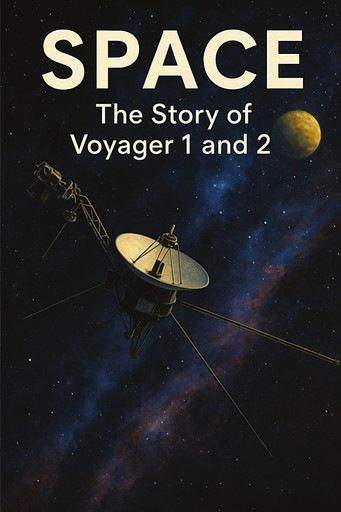
SPACE - Voyager 1 and 2
Their Story
The Voyager 1 and Voyager 2 spacecraft are twin robotic space probes launched by NASA in 1977. Their primary mission was to study the outer planets of our solar system, and they have since become humanity's farthest-reaching explorers.
Key Details:
Launch and Mission Goals
• Voyager 1:
• Launched: September 5, 1977
• Initial Mission: To study Jupiter and Saturn, including their moons and rings.
• Achievements:
• Captured detailed images of Jupiter and Saturn.
• Studied Saturn's moon Titan, revealing its dense atmosphere.
• Now the farthest human-made object from Earth, traveling in interstellar space.
• Voyager 2:
• Launched: August 20, 1977 (before Voyager 1 due to a different trajectory).
• Unique Achievement: The only spacecraft to visit all four outer planets—Jupiter, Saturn, Uranus, and Neptune.
• Provided detailed studies of Uranus and Neptune, including their moons, magnetic fields, and ring systems.
Golden Record
• Both spacecraft carry a Golden Record, a 12-inch gold-plated phonograph disc containing sounds, music, images, and greetings from Earth.
• The record serves as a message to any extraterrestrial life that might encounter the spacecraft.
Current Status
• Both probes have exited the heliosphere (the bubble of solar wind and magnetic fields surrounding our solar system) and entered interstellar space.
• Their instruments continue to send data back to Earth, studying cosmic rays, interstellar magnetic fields, and plasma waves.
• Communication: Operated via NASA's Deep Space Network (DSN).
• Power: The probes use radioisotope thermoelectric generators (RTGs), but their power is gradually diminishing.
Significance
• Voyager 1 and 2 have greatly expanded our understanding of the outer planets and the interstellar environment.
• They represent humanity's desire to explore and reach out into the unknown, carrying Earth's story into the cosmos
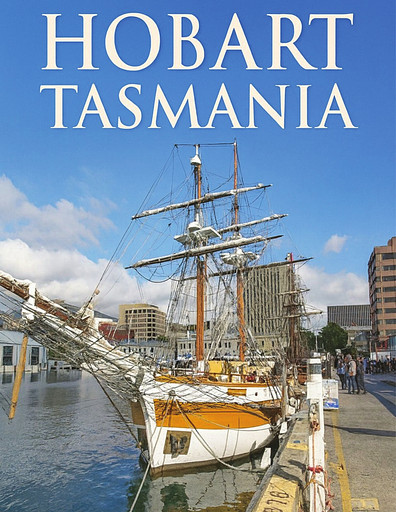
Hobart Tasmania
A Full Guide
Hobart, the capital of Tasmania, is Australia’s second-oldest city, founded in 1804 as a British penal settlement. Lieutenant-Governor David Collins established the colony at Sullivans Cove on the western shore of the River Derwent, chosen for its deep harbour and strategic position. The early settlement grew around a mix of convicts, soldiers, free settlers, and whalers, forming the foundation of a bustling port town.
Throughout the early 19th century, Hobart became a centre for sealing, whaling, shipbuilding, and trade. Historic districts such as Battery Point and Salamanca Place emerged during this time, featuring the sandstone warehouses and narrow colonial streets still preserved today. By the mid-1800s, the end of convict transportation and the growth of agriculture, timber, and mining expanded Hobart’s economy and population.
In the 20th century, Hobart modernised while retaining its strong maritime identity. The Tasman Bridge disaster in 1975 marked a significant moment in the city’s history, reshaping local infrastructure and community planning. Today, Hobart is known for its heritage architecture, vibrant arts scene, Antarctic research links, and natural beauty framed by Mount Wellington (kunanyi). Its blend of colonial history and modern culture makes it one of Australia’s most distinctive and picturesque cities.
---
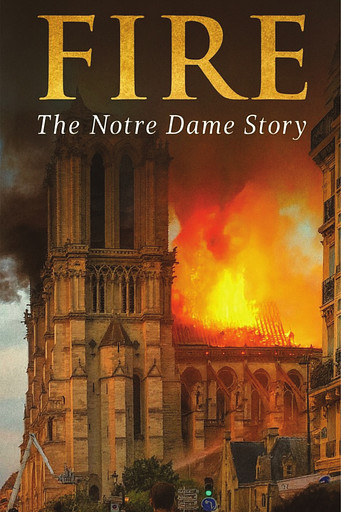
FIRE - The Notra Dame Story
The Facts
The fire at Notre Dame Cathedral on 15 April 2019 was one of the most shocking cultural tragedies of the modern era. As evening fell over Paris, flames were first noticed rising from the roof, quickly spreading through the ancient wooden framework known as “the forest,” some of which dated back to the 12th century. Despite the rapid response of hundreds of firefighters, the blaze intensified, fed by centuries-old timber and the building’s great height. Within hours, the cathedral’s iconic spire—added in the 19th century by architect Eugène Viollet-le-Duc—collapsed dramatically, a moment watched in anguish around the world.
Much of the roof structure was destroyed, and the upper walls suffered severe damage from heat and falling debris. Yet, thanks to the heroic efforts of Paris firefighters, the main stone structure, the famous rose windows, and countless priceless religious artifacts were saved. The Crown of Thorns, believed by many to have been worn by Jesus, was carried out in a human chain formed by rescuers and clergy.
The fire sparked a global outpouring of grief and solidarity, with nations, institutions, and individuals pledging support for restoration. Today, the rebuilding of Notre Dame stands as a symbol of resilience, heritage, and the enduring power of shared history.
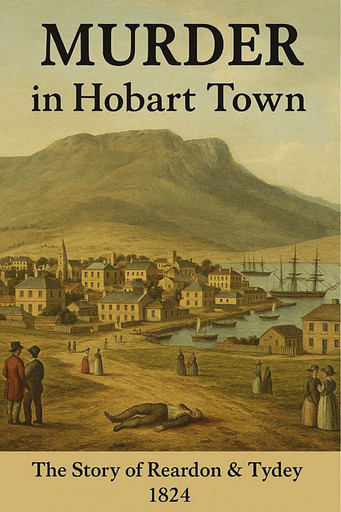
MURDER in Hobart Town
The Story of Reardon & Tydey 1824
Murder in Hobart Town is a detailed narrative reconstruction of the 1823 killing of John Street, a stonemason in early colonial Hobart. Blending documented historical fact with carefully crafted fiction, the book recreates the volatile atmosphere of a young settlement struggling with crime, poverty, and a fragile legal system. Against this backdrop unfolds the story of Owen Reardon and William Tydey, two labourers whose bitter quarrels, financial pressures, and simmering resentments place them at the centre of a murder investigation.
The manuscript follows the discovery of Street’s body beneath a collapsed chimney—initially ruled an accident—before rumours, witness accounts, and conflicting testimonies reveal a far more sinister possibility. Key figures such as James Pratt and James Alexander provide crucial evidence, recounting threats, drunken admissions, and violent clashes leading up to Street’s death. As the trial progresses, the narrative exposes deep flaws in colonial justice: unreliable forensics, biased witnesses, competing motives, and the stark contrast between the coroner’s accidental verdict and mounting circumstantial evidence.
Rich in historical atmosphere, the story immerses readers in a raw, unforgiving Hobart Town while exploring themes of truth, justice, and human frailty within a young and turbulent colony.
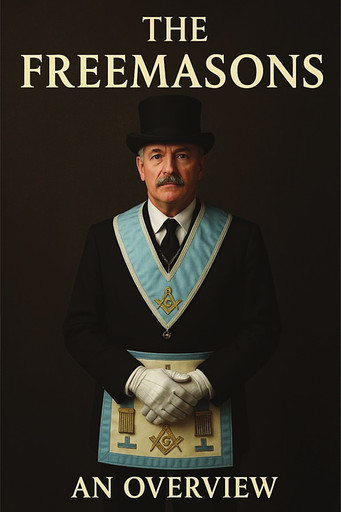
The Freemasons
An Overview
The Freemasons—often simply called Masons—are one of the world’s oldest and most enduring fraternal organisations. Their origins can be traced back to the stonemasons’ guilds of medieval Europe, where craftsmen built cathedrals, castles, and great public works. Over time, these guilds evolved from practical trade groups into philosophical societies, welcoming members who were not literal stonemasons but who were interested in moral development, fellowship, and learning. By the early 1700s, Freemasonry had taken on the structure recognisable today.
At its core, Freemasonry promotes brotherhood, charity, integrity, and self-improvement. Members meet in local groups known as lodges, where they participate in rituals, symbolic ceremonies, and charitable activities. These rituals, based on allegory and moral lessons, use tools of the stonemason—such as the square, compass, and trowel—as metaphors for building a virtuous life.
Freemasons are known for their strong tradition of philanthropy, supporting medical research, children’s hospitals, aged care, disaster relief, and community services worldwide. The organisation is non-religious and non-political, yet it encourages members to uphold high ethical standards and to believe in a higher power, however they individually understand it.
Due to its privacy, symbolism, and long history, Freemasonry has often been surrounded by mystery and speculation. However, most modern lodges emphasise openness, community service, and personal growth rather than secrecy.
Today, Freemasonry spans continents and cultures, uniting millions of members who share a common commitment: to become better individuals and contribute positively to society.
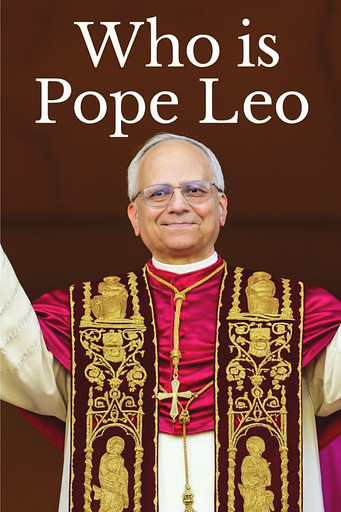
Who is Pope Leo
An Overview
His early acts have included continuing the Vatican’s accord with China over bishop appointments, and initiating new safeguarding efforts aimed at clergy abuse. He speaks multiple languages (including English, Spanish, Italian, French, Portuguese and some German) and brings to the papacy both deep pastoral experience in Latin America and a global perspective.
In short, Pope Leo XIV presents a blend of tradition and modern engagement: rooted in Catholic doctrine and ecclesiastical continuity, while attentive to global challenges such as migration, social justice and the interface of faith with the rapidly changing technological world.
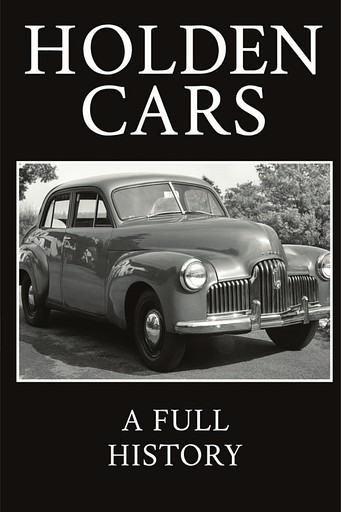
Holden Cars
A Full History
Origins: Saddlery Beginnings (1856–1908)
The company began in 1856 in Adelaide, South Australia, as a saddlery business. Founded by James Alexander Holden, the company initially focused on crafting horse saddles, harnesses, and leather goods. By the turn of the 20th century, Holden had established itself as a successful business.
Transition to Automotive (1908–1931)
With the advent of the motorcar, Holden adapted to the changing market. In 1908, James Holden’s grandson, Edward Holden, joined the business, introducing a focus on the burgeoning automotive industry.
By 1917, during World War I, the company began building vehicle bodies due to restrictions on importing fully assembled cars. By 1923, Holden was producing car bodies for major manufacturers, including Ford, Chevrolet, and Chrysler.
In 1931, General Motors (GM) acquired the company, forming General Motors-Holden’s Ltd. This acquisition solidified Holden’s role as GM's Australian subsidiary.
The First Australian Car (1948)
The post-war period marked Holden's rise as a national icon. In 1948, Holden unveiled the 48-215 (commonly known as the "FX"), the first mass-produced car designed and manufactured in Australia. Marketed as "Australia's own car," it became a symbol of national pride.
Golden Era (1950s–1970s)
Holden dominated the Australian market during this period, holding nearly 50% market share at its peak. Iconic models like the FJ Holden, EH Holden, and Kingswood became household names, reflecting the Australian way of life. The brand was known for robust, reliable vehicles suited to Australia's rugged conditions.
Holden also expanded into motorsport, particularly with the introduction of the Torana and the high-performance Commodore, earning a loyal following among racing enthusiasts.
Challenges and Globalization (1980s–2000s)
From the 1980s onward, Holden faced increasing competition from Japanese and European automakers. The Australian government’s reduction of tariffs on imported vehicles added pressure.
Holden responded by diversifying its lineup, producing small cars like the Barina and introducing international models rebadged under the Holden name. Despite these efforts, its reliance on large sedans, such as the Commodore, made it vulnerable as consumer preferences shifted toward SUVs and smaller vehicles.
Decline and Factory Closures (2010s)
By the 2010s, Holden faced declining sales, high manufacturing costs, and shrinking demand for traditional sedans. In 2013, GM announced it would cease Holden’s local manufacturing by 2017, marking the end of an era. The final car produced in Australia was a Holden Commodore on October 20, 2017, at the Elizabeth plant in South Australia.
Holden transitioned to an importer of vehicles, primarily rebadged GM models, but struggled to compete with other brands.
End of the Road (2020)
In February 2020, GM announced it would retire the Holden brand entirely, citing the inability to make the business sustainable in the long term. The decision marked the end of 164 years of Holden’s presence in Australia. By the end of 2020, Holden dealerships closed, and the brand faded into history.
Legacy
Holden remains a cultural icon in Australia, remembered for its contributions to automotive innovation, its role in Australian motorsport, and its influence on the nation’s identity. Enthusiasts and collectors continue to celebrate Holden vehicles, ensuring that its legacy lives on in Australian history.

JAGUAR
The Worlds Most Iconic Car
Jaguar is one of the most iconic names in the automotive world, renowned for its blend of British elegance, powerful performance, and distinctive design. Founded in 1922 as the Swallow Sidecar Company, Jaguar initially produced motorcycle sidecars before evolving into a manufacturer of luxurious and sporty automobiles. The brand truly came into its own in the 1940s and 1950s, introducing sleek, high-performance cars that set new standards in style and engineering.
One of Jaguar’s early breakthroughs was the XK120, launched in 1948. It became the world’s fastest production car at the time and established Jaguar as a leader in performance motoring. Its successors, including the XK140 and XK150, further solidified that reputation. In the 1960s, Jaguar introduced what many consider one of the most beautiful cars ever built: the E-Type. Its long bonnet, sculpted body, and remarkable speed made it an icon of automotive design and a symbol of British innovation.
Jaguar also developed a reputation for refinement and comfort with its luxury saloons. Models such as the Mk2, XJ6, and later the XJ series offered a unique combination of grace, space, and pace—words that became synonymous with the brand. Throughout the 1980s and 1990s, cars like the XJS grand tourer and the S-Type continued Jaguar’s tradition of classic styling and smooth, powerful engines.
In recent years, Jaguar has embraced modern technology while maintaining its heritage. Vehicles like the F-Type sports car and the all-electric I-PACE show the brand’s commitment to performance and innovation. Today, Jaguar remains a symbol of craftsmanship, sophistication, and timeless automotive style.
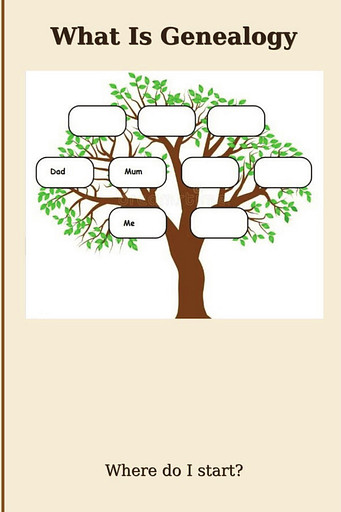
What is Genealogy
Where do I start ?
Genealogy is the study of family history, lineage, and ancestral connections. It involves tracing a person’s family tree back through previous generations to understand where they come from and how different family members are related. People explore genealogy for many reasons—some want to preserve family stories, others hope to connect with lost relatives, and many simply enjoy the detective work involved in uncovering the past.
At its core, genealogy uses a range of records to piece together a family’s story. These records can include birth, marriage, and death certificates, census data, immigration and military documents, old newspapers, church records, and even family letters or photographs. By gathering and comparing these sources, genealogists can build accurate family trees and timelines. Modern technology has transformed the field, with online databases and DNA testing offering powerful tools to discover information that may once have been impossible to find.
Genealogy is more than just names and dates; it helps reveal the lives, struggles, and achievements of those who came before us. It can uncover fascinating stories—migrations across continents, involvement in historical events, or long-lost branches of a family. In many cases, it provides a deeper sense of identity, belonging, and cultural heritage.
Today, genealogy is one of the world’s most popular hobbies, supported by societies, libraries, and digital archives. Whether pursued casually or with professional rigor, it offers a meaningful way to connect the past with the present. Through genealogy, people honour their ancestors and ensure their stories are not forgotten.
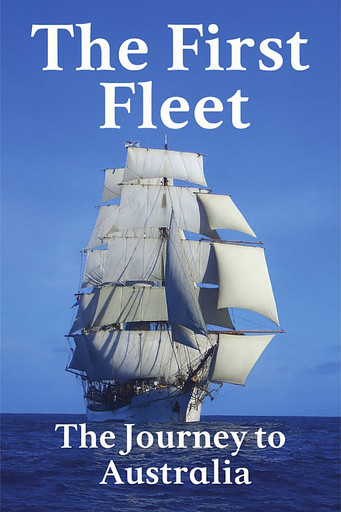
The First Fleet
Journey To Australia
The Australian First Fleet marks one of the most significant events in the nation’s early history, representing the beginning of European settlement on the continent. Comprising 11 ships—two naval escorts, six convict transports, and three supply vessels—the fleet set sail from Portsmouth, England, on 13 May 1787. Commanded by Captain Arthur Phillip, the expedition carried approximately 1,400 people, including more than 700 convicts, as well as marines, officers, sailors, and a small number of free settlers. Their mission was to establish a penal colony in New South Wales, following Britain’s urgent need to relocate prisoners after the loss of the American colonies.
The journey to Australia was long and perilous, spanning more than 24,000 kilometres and taking eight months to complete. The fleet made several stopovers, including at Tenerife, Rio de Janeiro, and Cape Town, to take on essential supplies such as food, livestock, and fresh water. Despite the length and harsh conditions of the voyage, the fleet maintained an unexpectedly low mortality rate due to Phillip’s strict focus on hygiene, rationing, and onboard discipline.
On 18 January 1788, the first ships arrived at Botany Bay, though Phillip soon deemed it unsuitable due to poor soil and limited fresh water. The fleet relocated to Port Jackson, where on 26 January 1788—now commemorated as Australia Day—the British flag was raised at Sydney Cove.
The First Fleet laid the foundations of modern Australia, shaping the nation’s demographic, cultural, and historical landscape in ways still felt today.
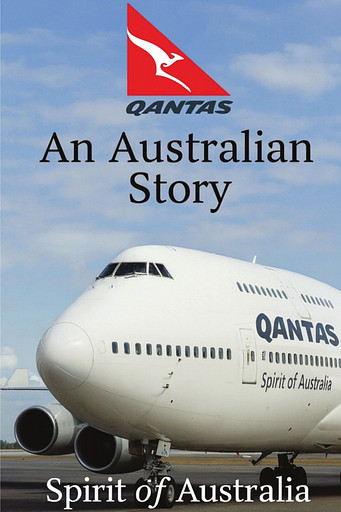
QANTAS
The Spirit of Australia
Qantas, founded in 1920 in outback Queensland, is one of the world’s oldest and most iconic airlines. Originally established as the Queensland and Northern Territory Aerial Services, it began as a small mail-delivery and passenger service using simple biplanes along remote routes. Over the decades, Qantas grew into Australia’s national carrier and a symbol of the nation’s pioneering spirit, innovation, and connection to the wider world.
A major milestone came in the 1930s and 1940s, when Qantas launched international services and played an important role during World War II, operating some of the world’s longest and most dangerous wartime flights. After the war, the airline expanded rapidly, introducing larger and more advanced aircraft, including the famous Boeing 707 jets in the 1950s. Qantas quickly became known for safety, reliability, and exceptional engineering standards.
The Boeing 747 era, beginning in the 1970s, transformed Qantas into a truly global airline. The “Queen of the Skies” allowed millions of Australians to travel overseas, cementing Qantas’ reputation for long-haul excellence. Later innovations included record-breaking non-stop flights, such as the Perth to London service and test flights of Project Sunrise, aiming to connect Australia directly with New York and London.
Throughout its history, Qantas has embraced the slogan “Spirit of Australia,” reflecting its cultural importance and national pride. The red kangaroo logo has become internationally recognised, symbolising quality, safety, and Australia’s warm hospitality. Today, Qantas continues to evolve, maintaining its place as a leading global carrier and an enduring part of Australia’s story.

The Internet
How it works
The Internet is a vast global network that connects millions of computers, devices, and servers, allowing people around the world to communicate, share information, and access digital services. At its core, the Internet is a massive infrastructure made up of physical cables, data centers, wireless technologies, and networking equipment that work together to move data from one point to another at incredible speeds.
Information on the Internet travels in small units called data packets. These packets move across a network of routers and switches that direct them to their destination—whether it’s loading a webpage, streaming a video, or sending an email. Each device connected to the Internet has an IP address, which works like a digital home address, ensuring that data is delivered accurately.
The Internet relies on a decentralized design, meaning no single organization controls the entire system. Instead, many independent networks collaborate using standard communication rules called protocols, the most important of which is TCP/IP. This shared framework allows completely different types of devices and networks to communicate seamlessly.
Today, the Internet powers almost every aspect of modern life. It enables social media, online banking, e-commerce, cloud computing, video conferencing, and smart home technology. It also acts as the backbone for smartphones, wireless networks, and countless online applications.
Beyond its technical structure, the Internet has transformed society by making information instantly accessible and connecting people across vast distances. It has opened opportunities for learning, business, creativity, and global communication, becoming one of the most influential inventions in human history.
________________________________________
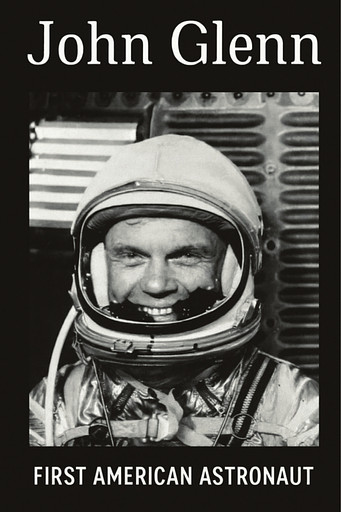
John Glenn
First American Astronaut
John Glenn was a pioneering American astronaut, military aviator, and statesman whose achievements helped define the early era of human space exploration. Born on July 18, 1921, in Cambridge, Ohio, Glenn developed a passion for aviation at a young age. He served with distinction as a fighter pilot during World War II and the Korean War, flying a combined 149 combat missions. His exceptional skill led to his selection in 1959 as one of NASA’s original Mercury Seven astronauts—the first group chosen to launch the United States into the Space Age.
On February 20, 1962, John Glenn became the first American to orbit the Earth, piloting the Mercury-Atlas 6 mission, also known as Friendship 7. During the nearly five-hour flight, Glenn completed three orbits around the planet, demonstrating that the United States could match the Soviet Union’s earlier orbital achievements. His calm handling of an alarming heat shield warning during re-entry further cemented his status as a national hero. The mission was a turning point in the Cold War space race and boosted American confidence in NASA's growing capabilities.
Following his successful mission, Glenn left NASA and entered politics, serving as a U.S. Senator for Ohio from 1974 to 1999. In 1998, at age 77, he made history again by flying aboard the Space Shuttle Discovery, becoming the oldest person to travel into space.
John Glenn passed away on December 8, 2016, but remains an enduring symbol of courage, exploration, and American achievement.
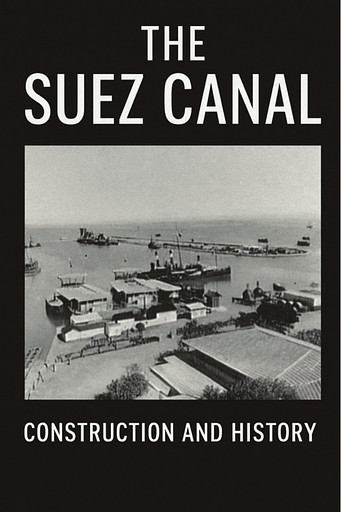
The Suez Canal
Construction and History
The Suez Canal is one of the most important and strategic waterways in the world, linking the Mediterranean Sea with the Red Sea and providing a direct maritime route between Europe and Asia. Completed in 1869 after ten years of construction, the canal represented a monumental engineering achievement of the 19th century. Before its opening, ships traveling between Europe and the Indian Ocean had to navigate the long and hazardous journey around the Cape of Good Hope at the southern tip of Africa. The Suez Canal dramatically shortened this distance, reshaping global trade and maritime travel.
The project was led by French diplomat Ferdinand de Lesseps, who secured permission from Egypt’s ruler, Said Pasha, to construct the canal. Tens of thousands of workers, including many local Egyptians, labored under harsh conditions to carve the 193-kilometre waterway through desert and marshland. When it opened, the canal instantly became a vital artery for international commerce, allowing ships to move more efficiently between continents.
Throughout its history, the Suez Canal has held immense geopolitical significance. It has been the focus of international disputes, including the 1956 Suez Crisis, when Egypt nationalised the canal, leading to military intervention by Britain, France, and Israel. Despite these conflicts, the waterway has continued to expand and modernise, including major widening projects in recent years to accommodate larger vessels.
Today, the Suez Canal remains a cornerstone of global trade, carrying around 12% of all world shipping. Its influence on economics, politics, and engineering continues to be felt across the globe.
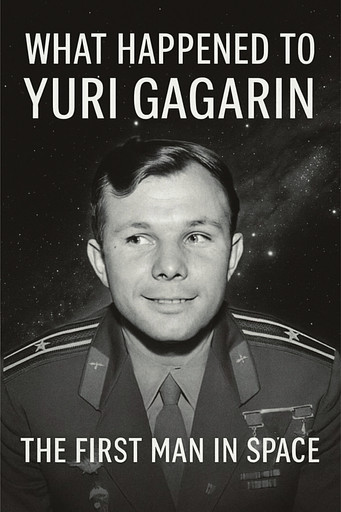
What Happened to Yuri Gagarin
The First Man in Space
Yuri Gagarin was a Soviet pilot and cosmonaut who became one of the most iconic figures of the 20th century when he became the first human to journey into outer space. Born on 9 March 1934 in the small village of Klushino, Russia, Gagarin grew up during a turbulent period marked by World War II and widespread hardship. Despite these challenges, he developed a strong interest in aviation, eventually joining a local flying club and later attending military flight school, where he excelled.
On 12 April 1961, Gagarin made history aboard the spacecraft Vostok 1. His mission lasted just 108 minutes, but it changed the world. During the flight, he completed one orbit of the Earth, reaching an altitude of about 327 kilometres. His famous words, “Poyekhali!” (“Let’s go!”), spoken at the moment of launch, became a symbol of human courage and exploration.
Gagarin’s achievement was a major victory for the Soviet Union during the Cold War and inspired generations across the globe. After his historic flight, he became an international hero, travelling widely as a goodwill ambassador. Despite his fame, Gagarin remained humble and continued to work within the Soviet space program.
Tragically, Yuri Gagarin died in a routine training flight on 27 March 1968 at the age of 34. His death shocked the world, but his legacy lives on. He is remembered not only as the first man in space, but as a symbol of human possibility, adventure, and the enduring drive to explore beyond the unknown.
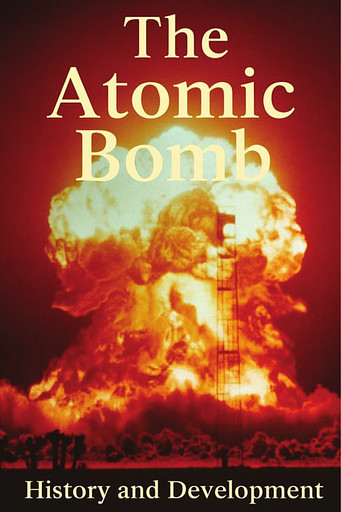
The Atomic Bomb
History and Development
The atomic bomb represents one of the most significant and unsettling turning points in modern history. Developed during World War II under the United States–led Manhattan Project, the bomb was the first weapon to use nuclear fission—the splitting of atomic nuclei—to unleash an enormous amount of energy. Scientists such as Robert Oppenheimer, Enrico Fermi, and many others played crucial roles in its creation, driven by fears that Nazi Germany might build such a weapon first.
The first successful test, known as the Trinity explosion in July 1945, demonstrated the bomb’s unprecedented destructive capability. Only weeks later, the atomic bombs “Little Boy” and “Fat Man” were dropped on Hiroshima and Nagasaki. These attacks caused catastrophic loss of life, widespread destruction, and long-term radiation effects, ultimately leading Japan to surrender and ending World War II. The immense devastation also sparked deep moral and ethical debates that continue today.
In the post-war years, the existence of atomic weapons reshaped global politics. Nations raced to develop their own nuclear arsenals, ushering in the Cold War and a strategic doctrine based on deterrence and mutually assured destruction. The bomb also accelerated research into nuclear energy, offering potential benefits but raising concerns about safety and waste.
The atomic bomb remains a powerful symbol of both human ingenuity and human vulnerability. It stands as a reminder of the devastating consequences of advanced warfare and the urgent need for global cooperation to prevent the spread and use of nuclear weapons in the future.

Wind Energy
Wind Turbines
A wind turbine is a device that converts the kinetic energy of wind into mechanical energy, which is then converted into electricity through a generator. There are two main types:
1. Horizontal-Axis Wind Turbines (HAWTs):
• Most common type.
• Blades rotate around a horizontal axis.
• Typically have three blades and resemble giant propellers.
• Require yaw mechanisms to turn toward the wind.
2. Vertical-Axis Wind Turbines (VAWTs):
• Blades rotate around a vertical axis.
• Can capture wind from any direction.
• Less efficient but more suitable for urban environments.
Key Components:
• Blades: Capture wind energy.
• Rotor: Includes blades and hub, spins to generate power.
• Nacelle: Houses gearbox, generator, and control systems.
• Tower: Elevates the turbine to reach stronger, steadier winds.
• Foundation: Anchors the turbine to the ground or sea floor (for offshore turbines).
________________________________________

The SDR Radio
What Is an SDR Radio
Software-Defined Radios (SDRs) represent a major evolution in radio technology, transforming how signals are received, processed, and transmitted. Unlike traditional radios, which rely heavily on fixed hardware components such as filters, mixers, and modulators, SDRs shift most of the signal-processing workload into software. This approach provides remarkable flexibility, allowing a single device to emulate many different types of radios simply by changing its programming.
At the core of an SDR is a high-performance analog-to-digital converter (ADC) that captures radio frequency signals and converts them into digital data. Once in digital form, powerful processors or field-programmable gate arrays (FPGAs) apply modulation, demodulation, filtering, and decoding algorithms. Because these operations are defined in software, users can upgrade capabilities, add new modes, or adapt to emerging standards without changing hardware.
SDRs are used in a wide range of applications. Amateur radio operators value them for their ability to cover wide frequency ranges, support advanced digital modes, and provide exceptional spectrum-analysis functions. In commercial and military environments, SDRs allow radios to operate across multiple bands and protocols, enabling interoperability and secure communications. They are also widely used in research, aviation monitoring, satellite tracking, and radio astronomy, where flexibility and precision are essential.
Another major advantage of SDRs is their accessibility. Affordable models such as RTL-SDR dongles allow newcomers to experiment with receiving aircraft ADS-B signals, weather satellites, or HF broadcasts. More advanced units from companies like FlexRadio and Icom deliver professional performance for demanding users.
Overall, SDR technology has revolutionized the radio world, offering unmatched adaptability, powerful digital features, and a platform for innovation across both hobbyist and professional fields.

The ALP
The Australian Labor Party
The Australian Labor Party (ALP):
Origins and Formation (Late 19th Century)
• Roots in Trade Unionism:
The ALP was born out of the trade union movement in the late 19th century, responding to worsening conditions for workers during the economic depression of the 1890s. Strikes like the Maritime Strike (1890) and Shearers’ Strike (1891), particularly in Queensland and New South Wales, were pivotal.
• First Political Successes:
In 1891, Labor candidates won seats in the New South Wales Legislative Assembly, and the first Labor government in the world was briefly formed in Queensland in 1899 under Premier Anderson Dawson, though it lasted just six days.
• Federation and Federal Politics (1901):
Labor contested the first federal election in 1901 after Australia's federation and won 14 of the 75 seats in the new House of Representatives.
________________________________________
Early 20th Century: Ascendancy and Challenges (1901–1929)
• 1904 – First Federal Government:
Chris Watson became the first federal Labor Prime Minister, leading a minority government for four months—the first national Labor government in the world.
• 1910 – Majority Government:
Under Andrew Fisher, Labor won the 1910 federal election, forming the first majority Labor government. This government introduced major reforms including old-age pensions, maternity allowances, and foundations of a national navy.
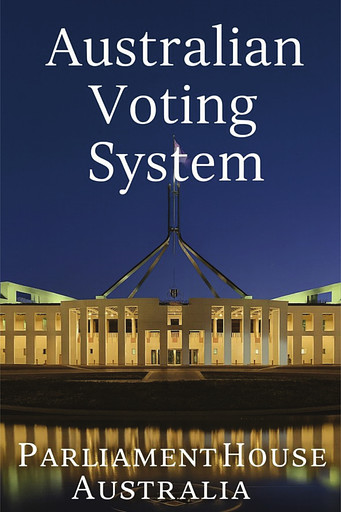
Australian Voting System
How it Works
Australia’s electoral system is democratic and relatively complex, designed to ensure fair representation across its federal, state, and local levels. Here's a clear breakdown of how it works, particularly focusing on the federal level (which elects the national government):
________________________________________
1. Structure of the Federal Parliament
Australia has a bicameral federal parliament:
• House of Representatives (Lower House) – 151 members
• Senate (Upper House) – 76 senators
Each plays a different role and uses a different voting system.
________________________________________
2. House of Representatives (Lower House)
Voting system: Preferential voting (also called Instant Runoff Voting)
• Voters rank candidates in order of preference (1, 2, 3, etc.)
• A candidate needs an absolute majority (50% +1) of votes to win.
• If no candidate gets a majority initially, the candidate with the fewest votes is eliminated, and their votes are redistributed based on the next preferences.
• This continues until one candidate has a majority.
Purpose: Elects the Prime Minister (leader of the majority party or coalition).
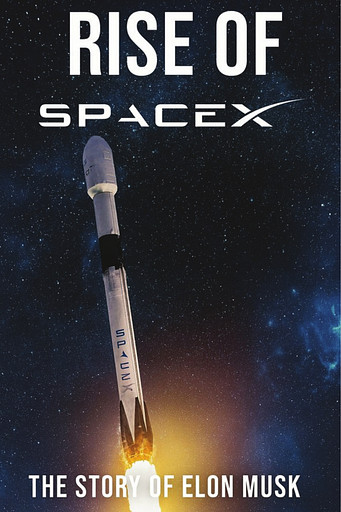
The Rise of Space X
The Elon Musk Story
SpaceX, officially known as Space Exploration Technologies Corp., is an American aerospace manufacturer and space transport services company founded in 2002 by entrepreneur Elon Musk. Its primary mission is to reduce the cost of space travel and ultimately make life multiplanetary, beginning with the ambitious goal of colonizing Mars. When SpaceX entered the aerospace industry, it faced skepticism due to the enormous financial demands and technical challenges associated with rocket development. However, through innovation, persistence, and rapid engineering cycles, the company became a major force in space exploration.
One of SpaceX’s greatest achievements is the development of the Falcon series of rockets, particularly the Falcon 9. This launch vehicle became famous for its reusable first stage, which can land vertically after delivering payloads to orbit. This breakthrough dramatically lowered launch costs and revolutionized modern rocketry. The Falcon Heavy, currently one of the most powerful operational rockets in the world, further expanded SpaceX’s capabilities, carrying large payloads into deep space.
SpaceX also created the Dragon spacecraft, the first commercial capsule to deliver cargo to the International Space Station (ISS). Later, the Crew Dragon variant made history by transporting NASA astronauts into orbit, marking the return of crewed launches from American soil after the Space Shuttle’s retirement.
Another ambitious project is Starship, a fully reusable spacecraft designed for missions to the Moon, Mars, and beyond. Combined with Starlink, a global satellite internet network, SpaceX continues to push technological boundaries, reshape commercial spaceflight, and inspire a new era of exploration.
The Druids
Key Aspects of the Druids:
1. Religious Role:
Druids were the priests of the Celtic peoples, responsible for conducting religious rituals, including sacrifices (sometimes human), festivals, and veneration of natural elements like trees (especially oaks), rivers, and celestial bodies.
2. Legal and Political Advisors:
They served as judges, lawmakers, and advisors to kings and tribal leaders. Their decisions were respected across tribal boundaries.
3. Keepers of Knowledge:
Druids were oral historians and scholars. They preserved myths, genealogies, and astronomical knowledge without writing anything down, possibly to safeguard their power or because they viewed writing as unsuitable for sacred knowledge.
4. Education and Training:
Becoming a Druid required long training—sometimes up to 20 years. This education involved memorizing a vast body of oral tradition, poetry, law, and philosophy.
5. Opposition to Rome:
Roman writers like Julius Caesar (in The Gallic Wars) described the Druids as powerful and influential, sometimes portraying them as barbaric due to practices like human sacrifice. The Romans sought to suppress the Druids during their conquest of Gaul and Britain, particularly under emperors like Claudius.
6. Spiritual Beliefs:
Druids believed in the immortality of the soul and reincarnation. They practiced animism and held sacred groves and natural places in deep reverence.
7. Legacy and Myth:
While historical records are fragmentary and often Roman or Christian in origin (and thus biased), later folklore and modern neo-Druidism have revived and reimagined Druidic traditions.
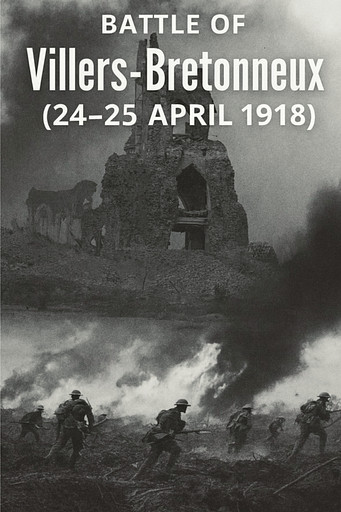
Battle of Villers-Bretonneux
24th - 25th April 1918
Battle of Villers-Bretonneux (24–25 April 1918) –
An Australian Perspective
Background and Strategic Importance
The Battle of Villers-Bretonneux took place during the German Spring Offensive (Operation Michael) in World War I. Villers-Bretonneux, a town in northern France, was strategically crucial as it overlooked Amiens, a key transport and logistical hub for the Allies. If Amiens fell, the German forces could potentially break through the Western Front.
On 24 April 1918, the Germans launched a significant attack on Villers-Bretonneux, utilizing tanks for the first time in warfare against enemy tanks. The British defenses crumbled under the pressure, and the town fell into German hands.
However, the Australians, renowned for their tenacity in battle, were called upon to counterattack and reclaim the town.
The Australian Counterattack (Night of 24–25 April 1918)
As night fell, two elite Australian brigades, the 13th Brigade (4th Division) and the 15th Brigade (5th Division), were ordered to retake Villers-Bretonneux.
Key Details of the Counterattack:
• The attack was conducted at night without artillery support, an extremely rare and daring maneuver.
• The 15th Brigade, led by Brigadier General Harold Elliott (nicknamed "Pompey" Elliott), attacked from the south.
• The 13th Brigade, commanded by General William Glasgow, attacked from the north.
• Their plan was to encircle the town and trap the German forces.

Australian Cricket
In Memory of Sir Donald Bradman
Australian cricket holds a proud and influential place in the nation’s sporting identity, celebrated for its rich history, competitive spirit, and remarkable achievements on the world stage. Since the late 19th century, cricket has been deeply woven into Australia’s cultural fabric, beginning with the famous 1877 Test match against England, which marked the birth of Test cricket. The Ashes series, born in 1882, remains one of the sport’s most iconic and fiercely contested rivalries.
Australia has long been recognised for producing exceptional talent across all eras. Legends such as Sir Donald Bradman—widely regarded as the greatest batsman of all time—set early foundations of excellence. In later decades, players like Shane Warne, Glenn McGrath, Ricky Ponting, Adam Gilchrist, and Steve Waugh embodied Australia’s competitive edge, consistently elevating the team to world dominance. Modern stars like Steve Smith, Pat Cummins, Mitchell Starc, and Ellyse Perry continue that strong legacy.
Australia’s success extends across cricket’s formats. The men’s team has claimed multiple Cricket World Cup titles, beginning in 1987 and dominating through the 1990s and early 2000s. The women’s team, equally impressive, stands as one of the most successful sides in sporting history, winning numerous World Cups and setting new standards for professionalism and skill.
Domestic cricket, through the Sheffield Shield and Big Bash League, has helped nurture young talent while keeping fans engaged with both tradition and innovation.
More than just a sport, cricket in Australia reflects national values of resilience, fairness, and teamwork—uniting communities and inspiring future generations.
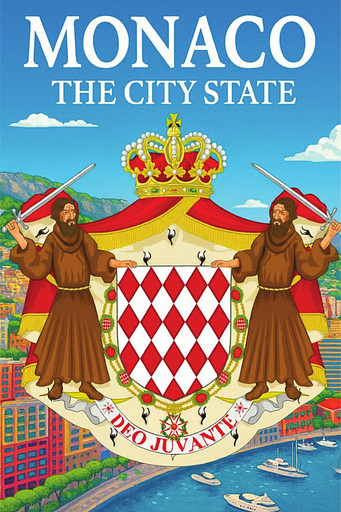
Monaco
The City State
Monaco, a tiny sovereign principality on the French Riviera, is one of the most famous and glamorous states in the world. Covering just over two square kilometres, it is the second-smallest country on Earth, yet it boasts a global influence far beyond its size. Ruled by the Grimaldi family since the 13th century, Monaco has developed into a symbol of luxury, wealth, and exclusivity, attracting celebrities, entrepreneurs, and tourists from around the world.
The capital, Monaco-Ville, sits on the Rock of Monaco, a dramatic promontory overlooking the Mediterranean. Here stands the Prince’s Palace, the official residence of the ruling monarch. Nearby districts, including Monte Carlo and La Condamine, are renowned for their sophistication. Monte Carlo, in particular, is home to the world-famous Monte Carlo Casino, an architectural masterpiece that has played a central role in Monaco’s economic and cultural history.
Despite its glamour, Monaco has a stable and diversified economy. While tourism is a major contributor, the principality is also a hub for finance, luxury services, international events, and high-end real estate. The Monaco Grand Prix, one of the most prestigious races in Formula One, turns the city’s streets into a high-speed circuit each year and attracts global attention.
Monaco is also known for its safety, clean environment, and high quality of life. With no personal income tax, it has long been a magnet for wealthy residents, though citizenship remains extremely exclusive. Blending history, elegance, and modernity, Monaco stands as a unique microstate where tradition meets opulence on the shores of the Mediterranean.

Ford Australia
The History
Ford Australia has a rich history that spans over a century, playing a significant role in the country's automotive industry. Here’s a detailed overview:
Early Years (1925–1940s): Establishment and Growth
• Ford Australia was established in 1925 as a subsidiary of the Ford Motor Company of Canada.
• The first factory was opened in Geelong, Victoria, assembling Model T Fords from imported knock-down kits.
• By the 1930s, Ford had introduced Australian-made vehicles tailored to local conditions.
• During World War II, the company shifted to producing military vehicles and equipment for the war effort.
Post-War Expansion (1950s–1960s): The Falcon Arrives
• In 1956, Ford opened a new manufacturing plant in Broadmeadows, Victoria, to expand production.
• The Ford Falcon (1960) was introduced, marking the beginning of an iconic Australian nameplate.
• Despite early durability issues, Ford refined the Falcon, making it a staple in the Australian market.
Dominance in the 1970s–1980s: Muscle Cars and Innovation
• Ford launched high-performance models, including the Falcon GT (1967), which became a legend in Australian motorsport.
• The Ford Fairlane and LTD targeted the luxury segment, competing with Holden and Chrysler.
• The Ford Falcon XB GT gained worldwide recognition after appearing in the movie Mad Max (1979).
Challenges and Adaptation (1990s–2000s)
• Competition intensified with the rise of Japanese and European imports.
• Ford introduced the Falcon XR6 and XR8, keeping performance enthusiasts engaged.
• The Ford Territory (2004) became Australia’s first locally designed SUV, proving a success.
The End of Local Manufacturing (2010s)
• The decline in demand for large sedans and rising costs led to Ford announcing the closure of Australian manufacturing in 2013.
• In October 2016, Ford shut down its Broadmeadows and Geelong plants, marking the end of local car production.
• Despite this, Ford Australia remained as a design and engineering hub, with models like the Ford Ranger developed locally for global markets.
Present and Future
• Ford Australia focuses on imported models, including the Ranger, Everest, and Mustang.
• The Ranger Raptor, developed by Ford Australia, has been a global success.
• Ford continues investing in electric and hybrid vehicles, adapting to the changing automotive landscape.
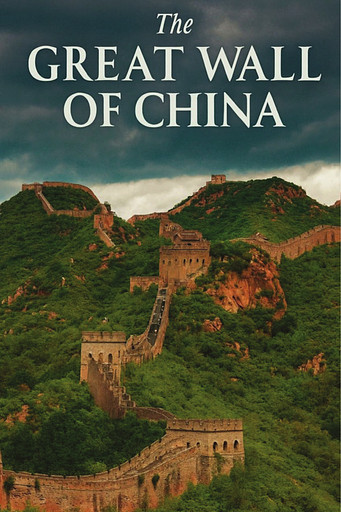
The Great Wall of China
The Great Wall of China is one of the most iconic and extensive architectural feats in human history. Built over centuries to protect Chinese states and empires from northern invasions, it stretches across northern China and embodies the ingenuity, labor, and strategic thinking of successive Chinese dynasties.
Key Facts:
• Length: The entire system of walls, trenches, and natural barriers extends about 21,000 kilometers (13,000 miles), though the most famous sections (like near Beijing) are much shorter.
• Construction Period: Building began as early as the 7th century BCE, but the most famous sections were constructed during the Ming Dynasty (1368–1644 CE).
• Materials: Early walls used rammed earth and wood; Ming-era walls used bricks, stone, and tiles, particularly in mountainous areas.
• Purpose:
o Defense against nomadic tribes like the Xiongnu, Mongols, and others.
o Signal towers and beacons allowed communication across great distances using smoke or fire.
o Helped regulate trade along the Silk Road and control immigration and emigration.
• Labor Force: Included soldiers, peasants, prisoners, and convicts. Conditions were harsh, and many laborers died during construction—some sources call it the “longest cemetery on Earth.”
Cultural and Historical Importance:
• It is often (falsely) said to be visible from the Moon; it cannot be seen with the naked eye from space.
• The wall symbolizes China’s historical strength, resilience, and capacity for massive state-led projects.
• In 1987, it was designated a UNESCO World Heritage Site.
• Today, it is a major tourist attraction, with sections like Badaling, Mutianyu, and Jinshanling near Beijing being the most visited.
Military Role of the Great Wall
The Great Wall was not just a passive barrier—it was a sophisticated military defense system that included:
• Watchtowers: Spaced regularly along the wall to allow for surveillance and signaling.
• Fortresses and Garrisons: Key points housed troops who could respond quickly to threats.
• Beacon Towers: Used smoke by day and fire by night to relay messages across vast distances rapidly.
• Barricades and Gates: These controlled movement through key passes and served as customs points.
Tactics: The Wall helped slow enemy movement, making it harder for c

Outback Australia
Outback Australia: A Vast and Untamed Wilderness
Outback Australia is one of the most iconic and awe-inspiring landscapes on Earth. Stretching across most of the country’s interior, the Outback is a vast, remote, and often harsh environment that embodies the true spirit of Australia. Characterized by its arid deserts, rugged mountain ranges, ancient rock formations, and sparse population, the Outback remains largely untouched by modern civilization. It is a land of breathtaking beauty, cultural significance, and remarkable wildlife.
Geography and Climate
The Outback covers around 70% of Australia’s landmass but is home to less than 5% of its population. It spans multiple states and territories, including Western Australia, South Australia, Queensland, New South Wales, and the Northern Territory. The landscape is incredibly diverse, featuring vast deserts like the Simpson Desert, the red sands of the Gibson and Great Victoria Deserts, and the rocky ranges of the MacDonnell and Flinders Ranges.
The climate of the Outback is extreme, with scorching summers where temperatures often exceed 45°C (113°F) and cold winters that can bring freezing nights. Rainfall is sporadic, and droughts are common, making life in this region challenging for both humans and animals. Despite its harsh conditions, the Outback supports a surprising array of plant and animal life, including eucalyptus trees, spinifex grass, kangaroos, dingoes, and a variety of reptiles.
Cultural Significance and Indigenous Heritage
The Outback holds deep cultural significance for Australia’s Indigenous peoples, who have lived in the region for over 60,000 years. Aboriginal groups such as the Anangu, Arrernte, and Pitjantjatjara have a profound connection to the land, with Dreamtime stories explaining the creation of natural landmarks.
One of the most famous Outback sites is Uluru (Ayers Rock), a massive sandstone monolith that is sacred to the Anangu people. Nearby, Kata Tjuta (the Olgas) is another significant geological and spiritual site. Rock art, found in places like Kakadu National Park and the Kimberley region, provides insight into ancient traditions and beliefs. The Outback remains a place where Aboriginal culture continues to thrive, despite the challenges of modernity.
Life in the Outback
Life in the Outback is unlike anywhere else in the world. Small towns and cattle stations are scattered across the region, with many residents relying on agriculture, mining, or tourism for their livelihood. Stations (ranches) in the Outback are among the largest in the world, with some covering areas larger than entire European countries.
Due to the remoteness of many communities, services such as healthcare and education are often delivered through innovative means. The Royal Flying Doctor Service provides medical care to those in isolated areas, while the School of the Air allows children to receive lessons via radio and internet.
Tourism and Adventure
The Outback attracts adventurers and travelers seeking an authentic Australian experience. Iconic destinations include Alice Springs, a gateway to Uluru and Kings Canyon, and Coober Pedy, an opal-mining town where people live underground to escape the extreme heat.
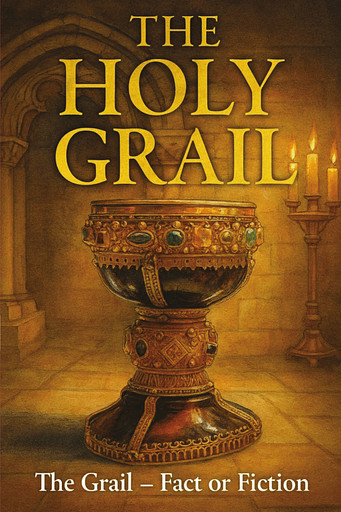
The Holy Grail
Fact or Fiction
What is the Holy Grail?
At its core, the Holy Grail is typically described as a sacred vessel—most commonly a cup or chalice—that is associated with Jesus Christ. In Christian tradition, it's believed to be the cup Jesus used at the Last Supper, and later, the one that Joseph of Arimathea used to collect Christ’s blood during or after the Crucifixion.
________________________________________
Origins in Literature and Myth
Celtic and Pagan Roots
Before the Grail entered Christian legend, there were Celtic cauldron myths—magical vessels that could heal, restore life, or grant endless sustenance. These motifs influenced later Grail tales.
Medieval Literature
• Chrétien de Troyes (c. 1180): The first writer to mention the Grail in literature. In "Perceval, le Conte du Graal", he introduces a mysterious, glowing object (not yet explicitly Christian) in a mystical procession.
• Robert de Boron (early 13th century): Explicitly Christianized the Grail legend in "Joseph d'Arimathie", linking it to Jesus and the Last Supper.
• Wolfram von Eschenbach’s Parzival: A German take where the Grail is a stone that provides nourishment and divine insight, guarded by a Grail brotherhood akin to the Templars.
________________________________________
Arthurian Connections
In the Arthurian romances, the Grail becomes the object of a holy quest undertaken by King Arthur's knights, especially:
• Sir Galahad (pure of heart, destined to succeed),
• Sir Percival (sometimes the central figure), and
• Sir Bors.
The quest becomes symbolic of a spiritual journey, where worthiness, not might, is key to success.
________________________________________
Symbolism and Interpretation
The Holy Grail has been interpreted in many ways:
• Christian Symbol: A relic of Christ's Passion, representing salvation, divine grace, or eternal life.
• Mystical Object: A symbol of spiritual enlightenment or esoteric knowledge.
• Alchemical Symbol: In later interpretations, linked to the Philosopher’s Stone or the pursuit of personal transformation.
________________________________________
Modern Fascination
• Grail conspiracies and Dan Brown-style mysteries tie the Grail to the Knights Templar, Mary Magdalene, and secret bloodlines.
• Popular culture—from Indiana Jones to Monty Python—has played with these themes.
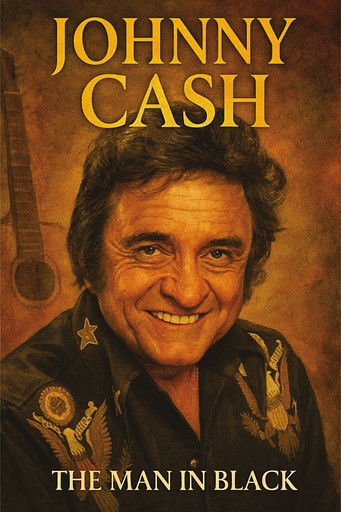
Johnny Cash
The Man in Black
The Man in Black: The Legend of Johnny Cash
Long ago, in the cotton fields of Arkansas, a boy was born with the weight of sorrow in his voice. His name was J.R. Cash, but the world would come to know him as Johnny Cash—The Man in Black.
He grew up hard and poor, hearing gospel in the church and the blues in the wind. When his brother Jack died in a sawmill accident, something changed in Johnny. He carried that pain like a shadow.
Later, he joined the Air Force and traveled far, but music was always calling. With his guitar and that thunder-deep voice, he sang about prisoners, drifters, outlaws, and broken hearts—people living on the edge of light.
He burst into fame with “I Walk the Line,” a song that sounded like a vow and a warning. But fame brought demons. Pills, booze, and wild living nearly destroyed him. The law chased him, his marriage fell apart, and darkness closed in.
Then came June Carter, a fiery woman with country roots and a heart strong enough to anchor him. She helped bring him back to the light, though he never stopped walking close to the edge.
He played Folsom Prison and sang to men society had forgotten. He wore black for the poor and the beaten down. He stood with the broken.
Even when Nashville turned its back on him, Johnny didn’t quit. In his final years, his voice cracked, his hands shook, but his spirit burned brighter than ever. With producer Rick Rubin, he recorded songs stripped down to their soul. When he sang Hurt near the end of his life, it felt like the final page of a long, hard prayer.
Johnny Cash died in 2003, just months after June. But the legend lives. Not just in songs, but in that raw, honest spirit that says:
“You can fall a hundred times—but if you keep walking the line, you haven’t lost.”

Big Ben
London's Big Ben
Big Ben is one of the most iconic symbols of London and the United Kingdom. Its history is rich and intertwined with Britain’s political and architectural heritage. Here’s a concise overview:
________________________________________
What is Big Ben?
Contrary to popular belief, Big Ben is not the name of the clock tower itself but the nickname for the Great Bell inside the tower at the Palace of Westminster. The tower was renamed the Elizabeth Tower in 2012 to mark Queen Elizabeth II's Diamond Jubilee.
________________________________________
Construction and Design
• 1834: A fire destroyed much of the old Palace of Westminster.
• 1844: Plans were made for a new clock tower as part of the new Houses of Parliament.
• 1846: The design of the clock and tower was approved. Architect Charles Barry led the rebuilding, with Augustus Pugin designing the Gothic Revival-style tower.
• 1856: The first bell was cast but cracked during testing.
• 1858: A second and larger bell (13.5 tons) was cast and installed. This bell became Big Ben.
• 1859: Big Ben first chimed in July.
________________________________________
Notable Features
• Height: 316 feet (96 meters).
• Clock faces: 4, each 23 feet (7 meters) in diameter.
• Accuracy: The clock mechanism was designed by Edmund Beckett Denison and Edward John Dent, and it's remarkably accurate thanks to a gravity escapement.
________________________________________
Historic Moments
• WWII: Despite heavy bombing during the Blitz, the tower and clock remained largely intact and continued functioning—a symbol of British resilience.
• 1976: The clock mechanism suffered a major breakdown and required extensive repairs.
• 2017–2021: Major renovation work was done on the tower and clock mechanism, during which the chimes were paused except for special occasions.
________________________________________
Origin of the Name “Big Ben”
The origin is debated:
• Possibly named after Sir Benjamin Hall, the Commissioner of Works.
• Another theory ties it to Ben Caunt, a popular heavyweight boxer of the time.

Robin Hood
Fact or Fiction
The Legend of Robin Hood: Overview
Robin Hood is a legendary outlaw known for:
• "Robbing from the rich and giving to the poor"
• Fighting against tyranny and injustice, especially under corrupt officials
• Living in Sherwood Forest with his band of loyal followers known as the Merry Men
________________________________________
Key Characters
• Robin Hood: The skilled archer and swordsman, often portrayed as a nobleman turned outlaw.
• Little John: His large and loyal second-in-command, ironically named.
• Friar Tuck: A jolly and rebellious monk who supports Robin's cause.
• Maid Marian: Robin’s love interest, often depicted as a noblewoman or someone who joins the Merry Men.
• Will Scarlet: A fiery and stylish member of the band.
• The Sheriff of Nottingham: The main villain, representing law and oppression. He enforces the rule of Prince John.
• Prince John: The usurper on the throne while King Richard the Lionheart is away on crusade.
________________________________________
Origins and Evolution
• The earliest written records of Robin Hood go back to the 14th century, in ballads like "A Gest of Robyn Hode".
• At first, Robin was more of a yeoman (commoner) than a noble, and he wasn’t always the noble hero we know today—some early versions depict him as more of a rough outlaw.
• Over time, especially during the Tudor period, Robin was gentrified—made into a dispossessed nobleman (like the Earl of Huntingdon) fighting injustice.
________________________________________
Historical Connections?
• There's no solid proof Robin Hood was a real person, but several historical figures may have inspired the tales. Candidates include:
o Robert Hood of Yorkshire
o Various "Robin Hoods" listed in medieval court records
o Possible ties to resistance against Prince John during the late 12th and early 13th centuries
________________________________________
Cultural Impact
• Robin Hood has appeared in hundreds of books, plays, films, and TV shows, from Errol Flynn’s swashbuckling adventures to gritty modern retellings.
• He remains a symbol of rebellion, social justice, and the fight for the common people.

Chevrolet Corvette
Stingray
The Chevrolet Corvette, often called "America’s Sports Car," has a rich history spanning over seven decades. Here’s a breakdown of its evolution from its inception in 1953 to today.
Early Development and First Generation (C1) – 1953-1962
• Origins: GM designer Harley Earl envisioned an American sports car to compete with Eu-ropean models.
• Debut: The first Corvette was unveiled as a concept car at the 1953 GM Motorama in New York.
• Production: Chevrolet produced 300 hand-built Corvettes in 1953, all in Polo White with a Blue interior and powered by a 3.9L "Blue Flame" inline-six engine with a two-speed au-tomatic transmission.
• Key Innovations: The first mass-produced car with a fiberglass body.
• Performance Growth: In 1955, the Corvette got its first V8 engine (4.3L, 265 cu in) and a manual transmission.
Second Generation (C2) – 1963-1967 ("Sting Ray")
• Major Redesign: The Corvette became more aggressive, featuring hidden headlights, an independent rear suspension, and the famous "Split-Window" coupe in 1963 (only for one year).
• Engine Power: The Corvette got powerful big-block V8 engines, including the 427 cu in (7.0L) L88, making over 500 hp.
• Racing Influence: Chevrolet introduced performance options like the Z06 package.
• End of C2: The 1967 Corvette is often considered one of the best classic Corvettes ever made.
Third Generation (C3) – 1968-1982
• Dramatic Styling: Inspired by the Mako Shark II concept, the C3 Corvette had a long, swooping body with T-top removable roof panels.
• Power and Performance:
• Early models (1968-1972) had high-horsepower big-block engines.
• Due to the 1973 oil crisis and emission regulations, power dropped significantly.
• C3 Milestones:
• 1978: 25th Anniversary Edition and the first Indy 500 Pace Car Corvette.
• 1981: Corvette production moved to Bowling Green, Kentucky, its current home.
• 1982: First use of fuel injection in years and the last model with the "Stingray" name until 2014.
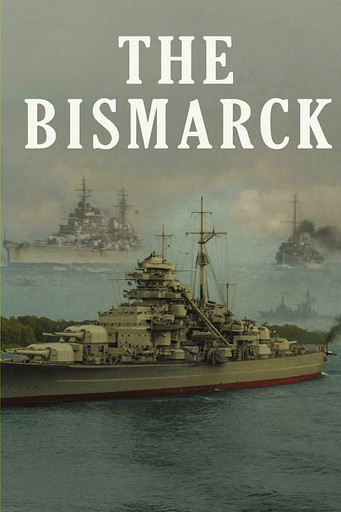
The Bismarck
Battleship
Overview of the Bismarck
• Type: Battleship
• Nation: Nazi Germany (Kriegsmarine)
• Class: Bismarck-class (lead ship; sister ship: Tirpitz)
• Launched: February 14, 1939
• Commissioned: August 24, 1940
• Sunk: May 27, 1941
________________________________________
Design and Specifications
The Bismarck was the most powerful battleship in the German navy and among the largest ever built by any European power.
Dimensions:
• Displacement: ~50,000 tons (fully loaded)
• Length: 251 meters (823 feet)
• Beam: 36 meters (118 feet)
• Draught: 9.3 meters (30.5 feet)
Armament:
• Main Guns: 8 × 38 cm (15-inch) SK C/34 guns (4 twin turrets)
• Secondary Guns: 12 × 15 cm (5.9-inch) SK C/28 guns
• Anti-Aircraft: A mix including 10.5 cm, 3.7 cm, and 2 cm guns
• Aircraft: 4 × Arado Ar 196 floatplanes (with catapults)
Armor:
• Belt Armor: Up to 320 mm (12.6 in)
• Deck Armor: 50–120 mm
• Turrets: 130–360 mm
• Conning Tower: 350 mm
Speed & Range:
• Top Speed: ~30.8 knots (57 km/h or 35 mph)
• Range: 8,870 nautical miles at 19 knots
________________________________________
Operational History
Mission: Operation Rheinübung (May 1941)
The Bismarck’s first and only mission was to break into the Atlantic and disrupt Allied shipping. She was accompanied by the heavy cruiser Prinz Eugen.
Battle of the Denmark Strait (May 24, 1941)
• Bismarck encountered British ships: HMS Hood and HMS Prince of Wales.
• In a devastating exchange:
o HMS Hood exploded and sank within minutes after a shell from Bismarck struck her magazine. Over 1,400 men died—only 3 survived.
o Bismarck was hit but remained operational.
Pursuit and Sinking
• The British Royal Navy launched a massive effort to find and destroy the Bismarck.
• After a torpedo hit by a Fairey Swordfish biplane from HMS Ark Royal damaged her rudder, the ship was disabled and unable to steer.
• On May 27, 1941, she was caught by British battleships HMS King George V and HMS Rodney and pummeled with shells.
• Bismarck was scuttled by her crew (German sources) and/or sunk by British fire (British sources); both likely contributed.
Casualties:
• Over 2,100 German sailors died.
• Around 114 survived.
________________________________________
Legacy and Significance
• The Bismarck became a symbol of Nazi naval power and its destruction was a huge moral victory for the Allies.
• The ship's sinking highlighted the vulnerability of even the most powerful battleships to air power and combined fleet operations.
• Robert Ballard discovered the wreck in 1989 in the Atlantic Ocean, 4,791 meters deep.
________________________________________
In Popular Culture
• The ship has inspired numerous books, documentaries, and the famous British song "Sink the Bismarck!" by Johnny Horton.
• It remains one of the most studied naval engagements of the 20th century.

Tasmanian Railways
A History
The History of Railways in Tasmania
Tasmania, Australia’s island state, has a rich railway history that reflects the region’s economic and social development. Railways played a crucial role in shaping Tasmania's industries, particularly mining, logging, and agriculture. Over the years, the railway system has evolved, with lines being built, extended, and ultimately closed in response to shifting economic circumstances. Today, only a small portion of Tasmania's railway infrastructure remains operational, primarily for freight services. This article explores the origins, expansion, decline, and modern legacy of Tasmania’s railway network.
Origins and Early Development
Railway development in Tasmania began in the 19th century, following the global trend of industrial advancement. The first railway proposal emerged in the 1850s, as Tasmania sought to improve transportation for its burgeoning industries. Before railways, goods and people moved via poor-quality roads or coastal shipping, both of which were slow and inefficient.
The first operational railway line in Tasmania was the Launceston and Western Railway (LWR), which opened in 1871. This railway connected Launceston to Deloraine, a critical route for transporting agricultural products and timber from the northern parts of the island. The LWR was built to the 5 ft 3 in (1,600 mm) broad gauge, differing from later railways which adopted the narrower 3 ft 6 in (1,067 mm) gauge for cost-effectiveness and adaptability to rugged terrain.
Another early railway was the Tasmanian Main Line Railway (TMLR), linking Hobart and Launceston. The TMLR began construction in 1872 and was completed by 1876. Its completion was a significant milestone, as it allowed for quicker travel and transport between Tasmania's two largest cities.

The Melbourne Cup
Race that stops a nation
History of the Melbourne Cup
The Melbourne Cup, known as "the race that stops a nation," is Australia’s most prestigious thoroughbred horse race. It has been held annually on the first Tuesday of November since 1861 at Flemington Racecourse in Melbourne, Victoria. The event is a 3,200-meter (2-mile) handicap race for three-year-olds and older horses, and it is one of the richest and most celebrated horse races in the world.
Origins and Early Years (1861–1900)
The idea for the Melbourne Cup was conceived by Frederick Standish, a committee member of the Victoria Turf Club (now the Victoria Racing Club). The inaugural race took place on November 7, 1861, with a prize of 710 gold sovereigns and a gold watch.
Notable Early Races:
• 1861 & 1862 – Archer’s Dominance: The first-ever winner, Archer, won the race twice in a row (1861 and 1862). Archer was walked over 800 kilometers (500 miles) from Sydney to Melbourne to compete!
• 1875 – The First Tuesday Tradition Begins: Before 1875, the race was held on a Thursday. Since then, it has been run on the first Tuesday of November every year.
• 1890 – Carbine’s Record: The champion horse Carbine won the Cup carrying a record weight of 66 kg (146 lbs), defeating 38 other horses, the largest field ever.
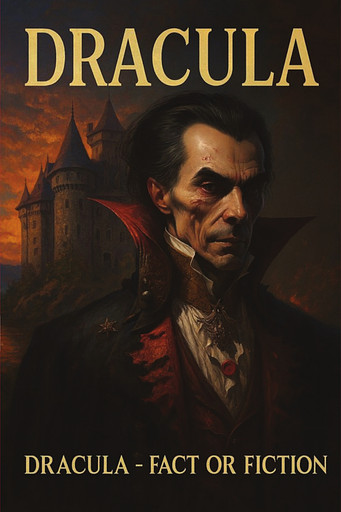
Dracula
Fact or Fiction
Dracula: The Legend
Most people associate Dracula with Bram Stoker’s 1897 novel, Dracula, which tells the story of a centuries-old vampire from Transylvania who moves to England to spread the undead curse. He’s charming, aristocratic, sleeps in a coffin, fears sunlight, and drinks human blood.
________________________________________
The Book’s Plot in a Nutshell:
• Count Dracula leaves Transylvania for England.
• Jonathan Harker, a solicitor, visits his castle and realizes he’s a prisoner.
• Dracula arrives in England and begins feeding on Lucy Westenra.
• A group of vampire hunters, led by Professor Van Helsing, fights to stop him.
• Spoiler alert: Dracula is ultimately hunted back to Transylvania and destroyed.
________________________________________
Bram Stoker’s Inspirations:
1. Vlad the Impaler (Vlad III Dracula)
• A 15th-century prince of Wallachia (now Romania).
• Nicknamed “Dracula,” meaning “Son of the Dragon” or “Son of the Devil.”
• Famous (and infamous) for impaling enemies on stakes — extremely brutal but seen as a national hero by some for resisting the Ottoman Empire.
• There’s no solid evidence Stoker based Dracula directly on Vlad, but the name and vague historical vibe definitely influenced him.
2. Eastern European Vampire Folklore
• The novel drew heavily on Slavic and Balkan vampire myths.
• In many of those legends, vampires are bloated, red-faced, and more monstrous than sexy.
• Common beliefs included: vampires being afraid of garlic, needing to be staked through the heart, and rising from the grave at night to feed on the living.
________________________________________
Vampire Symbolism
Dracula also works as a symbol:
• Sexual repression (very Victorian).
• Fear of foreign invasion (Dracula corrupting British blood).
• Immortality and damnation.
________________________________________
Legacy of the Dracula Legend
• Inspired countless films, from Nosferatu (1922) to Dracula (1931) with Bela Lugosi, to modern versions like Dracula Untold and Castlevania.
• Cemented the vampire as a horror staple.
• Led to everything from Buffy the Vampire Slayer to Twilight to Interview with the Vampire.
The Catholic Church
For Good or Evil
History of the Catholic Church
The history of the Catholic Church spans nearly two millennia and is deeply intertwined with the history of Western civilization. Below is a comprehensive overview of its key phases:
1. Origins (1st Century CE)
• Foundation by Jesus Christ: The Catholic Church traces its origins to the teachings of Jesus Christ, believed to be the Son of God, who lived in Judea around 4 BCE–30 CE.
• The Apostles: After Jesus' crucifixion and resurrection, His disciples, led by Saint Peter, spread His teachings. Peter is traditionally considered the first pope.
• Early Christian Communities: Initially a sect within Judaism, Christianity began to attract Gentile converts, particularly after the missionary work of Saint Paul.
2. Early Church and Persecutions (1st–4th Centuries)
• Roman Persecutions: Early Christians faced persecution from the Roman Empire, particularly under emperors like Nero and Diocletian.
• Development of Doctrine: Foundational doctrines were articulated during this time, and the New Testament canon began to take shape.
• Constantine and Legalization: In 313 CE, Emperor Constantine issued the Edict of Milan, legalizing Christianity. The First Council of Nicaea (325 CE) addressed key theological disputes, such as the nature of Christ.
3. The Church of the Roman Empire (4th–6th Centuries)
• Official Religion: Christianity became the official religion of the Roman Empire under Emperor Theodosius in 380 CE.
• Fall of Rome: After the fall of the Western Roman Empire in 476 CE, the Church played a central role in preserving knowledge and culture in Europe.
4. The Middle Ages (6th–15th Centuries)
• Monasticism: Monasteries became centers of learning, agriculture, and missionary activity.
• Schism of 1054: The Great Schism divided Christianity into the Roman Catholic Church (Western) and the Eastern Orthodox Church.
• Crusades: From the 11th to 13th centuries, the Church endorsed military campaigns to reclaim the Holy Land from Muslim control.
• Inquisition: Established to combat heresy, the Inquisition became infamous for its harsh methods.
• Scholasticism: Thinkers like Thomas Aquinas merged faith and reason, shaping Catholic theology.
5. The Reformation and Counter-Reformation (16th Century)
• Protestant Reformation: Figures like Martin Luther and John Calvin challenged Church authority, leading to the formation of Protestant denominations.
• Council of Trent (1545–1563): The Church clarified doctrines and reformed practices in response to Protestant criticisms, initiating the Counter-Reformation.
• Jesuits: Founded by Ignatius of Loyola, the Society of Jesus became a leading force in education and missionary work.
6. Modern Era (17th–20th Centuries)
• Enlightenment Challenges: The rise of secularism and scientific progress led to new challenges for the Church.
• Missionary Expansion: Catholic missionaries spread the faith to the Americas, Africa, and Asia.
• First Vatican Council (1869–1870): Defined the doctrine of papal infallibility.
• Second Vatican Council (1962–1965): Brought significant reforms, including changes to liturgy (Mass in vernacular languages) and increased engagement with the modern world.
7. Contemporary Catholic Church (21st Century)
• Social and Ethical Leadership: The Church remains influential on issues such as social justice, poverty, and human rights.
• Scandals and Reforms: Efforts to address clergy abuse scandals and improve transparency continue.
• Global Presence: With over 1.3 billion members, the Catholic Church is one of the largest and most diverse religious institutions in the world.
The Illuminati
Fact or Fiction
The Historical Illuminati:
• Name: The Bavarian Illuminati
• Founded: May 1, 1776
• Founder: Adam Weishaupt, a law professor at the University of Ingolstadt in Bavaria (now part of Germany).
• Purpose: The group aimed to promote Enlightenment ideals—reason, secularism, liberty, and opposition to religious and political oppression. They wanted to combat superstition and abuses of state power, sometimes working in secret to spread their views.
• Structure: It was structured similarly to Freemasonry (and some members were also Freemasons). It had ranks, secret rituals, and a selective recruitment process.
Why They Got Banned:
• Authorities in Bavaria didn’t like secret societies challenging the status quo.
• In the 1780s, the Bavarian government outlawed the Illuminati, along with other secret societies, and cracked down on members.
• By around 1787, the group was considered defunct.
The Conspiracy Stuff:
• Later writers and conspiracy theorists (starting in the late 1700s and into the 20th century) exaggerated the Illuminati’s influence, claiming they orchestrated revolutions, controlled world events, or secretly ran the world.
• These theories are not supported by solid historical evidence.
In short:
Yes, a real Illuminati existed in 18th-century Bavaria.
No, there's no credible evidence they continued beyond that or secretly control the world today.
Mars and Beyond
Space Travel
Mars and Beyond
Mars has captivated human imagination for centuries, appearing in ancient myths, early telescopes, and modern scientific research. Known as the Red Planet due to its iron-rich surface, Mars represents both a scientific frontier and a symbolic destination for humanity’s desire to explore. Over the past few decades, a fleet of robotic explorers—rovers, landers, and orbiters—has dramatically expanded our understanding of this distant world. Rovers like Spirit, Opportunity, Curiosity, and Perseverance have uncovered evidence of ancient riverbeds, minerals formed in water, and complex atmospheric patterns, all of which suggest that Mars once possessed conditions capable of supporting life.
Yet the story of Mars is only the beginning. “Beyond” signifies not just the physical space past Mars, but also the potential evolution of human exploration. Missions to Mars serve as stepping stones, teaching engineers and scientists how to build better spacecraft, more autonomous robots, and sustainable life-support systems. These advancements will eventually enable humans to live and work on other planets and moons.
Looking beyond Mars means considering the exploration of outer moons like Europa and Enceladus, where vast subsurface oceans may harbour life. It also opens the door to future missions toward the asteroid belt, the outer planets, and even interstellar probes that could one day journey beyond our solar system.
Mars teaches us resilience, innovation, and persistence. Each rover’s journey demonstrates that even in the harshest environments, curiosity drives discovery. The dream of going beyond—of expanding the horizon of human experience—reflects a deeper ambition: to understand who we are in the vastness of the universe. Mars is the next giant step, but what lies beyond it may define the future of humankind.

The Mole People of New York City
The Homeless
Homelessness in New York City remains one of the most visible and complex social challenges facing the nation’s largest metropolitan area. Every night, tens of thousands of people sleep in shelters, temporary housing, or on the streets, in subway stations, and beneath the city’s towering infrastructure. The causes of homelessness in New York are varied and deeply rooted—rising rent costs, a shortage of affordable housing, unemployment, mental health struggles, and untreated substance-use disorders all contribute to the ongoing crisis.
New York City has one of the most expensive housing markets in the world, and even modest apartments are often out of reach for people living on low or fixed incomes. When housing costs outpace wages, vulnerable individuals and families can quickly find themselves without a stable place to live. The shelter system attempts to offer relief, yet it is frequently overwhelmed, and many people avoid shelters due to safety concerns, overcrowding, or restrictive rules.
Street homelessness—those living outdoors or in public transit areas—represents the most visible form of this issue. Individuals living in tunnels, underpasses, or abandoned structures often do so to find protection from weather or to avoid the instability of shelters. Many face significant health challenges, including chronic illness, disabilities, and mental health issues that go untreated due to limited access to continuous care.
Battle of Hastings
1066
The Battle of Hastings, fought on October 14, 1066, was a pivotal moment in English history. It marked the Norman conquest of England and dramatically reshaped the country's culture, language, and ruling elite.
Key Players:
• William, Duke of Normandy (later known as William the Conqueror): Claimant to the English throne, leading the Norman-French forces.
• King Harold II of England: The last Anglo-Saxon king of England, recently crowned after the death of Edward the Confessor.
Background:
• Edward the Confessor died in January 1066 without a clear heir.
• Harold Godwinson was crowned king, but William of Normandy claimed Edward had promised him the throne.
• William prepared an invasion to assert his claim.
The Battle:
• Took place near Hastings, on the south coast of England.
• Harold's forces had just defeated another rival, Harald Hardrada of Norway, at the Battle of Stamford Bridge in late September—so his army was tired and had marched quickly south to meet William.
• Harold’s army was mostly infantry, forming a shield wall on Senlac Hill.
• William’s army included infantry, cavalry, and archers—a more flexible and professional force.
Tactics and Outcome:
• The Normans struggled initially against the English shield wall.
• A turning point came when the Normans feigned retreat, tricking parts of Harold’s army into breaking ranks.
• Late in the battle, Harold was killed—likely by an arrow to the eye, according to the Bayeux Tapestry (though this is debated).
• With their king dead, the English forces broke and fled.
Aftermath:
• William continued to advance, facing some resistance, but was crowned King of England on Christmas Day 1066.
• This ushered in Norman rule, replacing much of the Anglo-Saxon aristocracy.
• It also brought significant cultural changes, including the introduction of Norman French into the English language, changes in architecture (e.g., castles and cathedrals), and new administrative systems like the Domesday Book (1086).
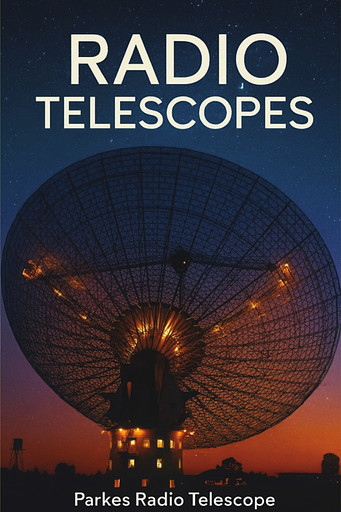
Radio Telescopes
Parkes
Radio Telescopes and How They Work
What is a Radio Telescope?
A radio telescope is a specialized type of telescope used to detect and study radio waves emitted by celestial objects such as stars, galaxies, black holes, and even remnants of the Big Bang. Unlike optical telescopes that collect visible light, radio telescopes are designed to pick up radio frequencies, which can pass through clouds, dust, and other obstructions in space.
________________________________________
How Radio Telescopes Work
Radio telescopes operate in several key stages:
1. Collection of Radio Waves (Antenna or Dish)
o The most recognizable part of a radio telescope is its large parabolic dish, which functions like a satellite dish to collect radio signals from space.
o Some radio telescopes use arrays of smaller dishes (like the Very Large Array in the U.S.) to achieve higher resolution.
2. Focusing the Signals
o The dish reflects the radio waves toward a receiver at the focal point.
o If it's an array of smaller dishes, the signals from all dishes are combined using a technique called interferometry, which increases resolution.
3. Detection & Amplification
o The weak radio waves are picked up by highly sensitive receivers.
o The signals are then amplified to strengthen them before further processing.
4. Signal Processing & Data Analysis
o Computers convert the signals into readable data, often in the form of images or frequency graphs.
o Scientists analyze these signals to understand cosmic objects, study the universe's structure, and detect phenomena like pulsars, quasars, and even potential extraterrestrial signals.
________________________________________
Types of Radio Telescopes
1. Single-Dish Telescopes – Large, single antennas (e.g., Arecibo Observatory, now collapsed).
2. Interferometers (Array Telescopes) – Multiple dishes working together (e.g., ALMA in Chile).
3. Space-Based Radio Telescopes – Launched into space to avoid atmospheric interference (e.g., the Russian Spektr-R).
________________________________________
What Do Radio Telescopes Detect?
• Pulsars (spinning neutron stars)
• Black hole jets
• Cosmic microwave background radiation (remnants of the Big Bang)
• Interstellar gas clouds
• Exoplanet atmospheres
• Potential extraterrestrial signals (e.g., the famous "Wow! signal")
________________________________________
Famous Radio Telescopes
• FAST (China) – The world’s largest single-dish radio telescope.
• ALMA (Chile) – A powerful array telescope for studying deep space.
• Green Bank Telescope (USA) – One of the most sensitive radio telescopes in the world.
________________________________________
Why Are Radio Telescopes Important?
• They allow us to study invisible parts of the universe, like gas clouds and galaxies hidden by dust.
• They help us understand the early universe and the formation of stars and planets.
• They are crucial for SETI (Search for Extraterrestrial Intelligence).
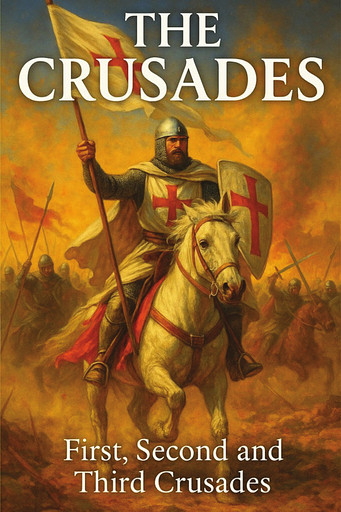
The Crusades
First to Eighth
The Crusades were a series of religious wars sanctioned by the Latin Church during the medieval period, mainly between the 11th and 13th centuries. The most well-known were the campaigns in the Eastern Mediterranean aimed at recovering the Holy Land from Muslim rule, but there were also Crusades in Europe. Below is a summary of the major Crusades and the key players involved:
________________________________________
1. First Crusade (1096–1099)
Goal: Capture Jerusalem from Muslim control.
Called by: Pope Urban II at the Council of Clermont in 1095.
Main participants:
• Christian side: Various European nobles including Raymond IV of Toulouse, Godfrey of Bouillon, Bohemond of Taranto.
• Muslim side: Seljuk Turks and Fatimid Caliphate (particularly in Jerusalem).
Outcome: Christians captured Jerusalem in 1099 and established several Crusader states like the Kingdom of Jerusalem.
________________________________________
2. Second Crusade (1147–1149)
Goal: Recapture the County of Edessa, a Crusader state that had fallen.
Called by: Pope Eugene III.
Main participants:
• Christian side: King Louis VII of France and Emperor Conrad III of Germany.
• Muslim side: Zengi (captor of Edessa), Nur ad-Din, and later Saladin.
Outcome: A failure for the Crusaders; Edessa remained lost.
________________________________________
3. Third Crusade (1189–1192) – "The Kings' Crusade"
Goal: Recapture Jerusalem, which had been taken by Saladin in 1187.
Main participants:
• Christian side: Richard I of England ("the Lionheart"), Philip II of France, Frederick I Barbarossa (Holy Roman Emperor).
• Muslim side: Saladin (Sultan of Egypt and Syria).
Outcome: Failed to recapture Jerusalem, but negotiated access for Christian pilgrims. Richard and Saladin signed a truce.
________________________________________
4. Fourth Crusade (1202–1204)
Goal: Originally to retake Jerusalem through Egypt.
Hijacked by: Venetian political manipulation.
Main participants:
• Christian side: Western European nobles and Venetian merchants.
• Target: Constantinople (Byzantine Empire), not Muslims.
Outcome: Crusaders sacked Constantinople in 1204; never reached the Holy Land. Established the Latin Empire of Constantinople.
________________________________________
5. Fifth Crusade (1217–1221)
Goal: Capture Egypt as a gateway to Jerusalem.
Main participants:
• Christian side: King Andrew II of Hungary, Duke Leopold VI of Austria, and later Cardinal Pelagius.
• Muslim side: Ayyubid dynasty in Egypt.
Outcome: Failed after a disastrous campaign in the Nile Delta.
________________________________________
6. Sixth Crusade (1228–1229)
Goal: Reclaim Jerusalem.
Main participants:
• Christian side: Emperor Frederick II.
• Muslim side: Ayyubid rulers.
Outcome: Frederick negotiated Jerusalem's peaceful handover via diplomacy, not warfare.
________________________________________
7. Seventh Crusade (1248–1254)
Goal: Again targeted Egypt.
Main participants:
• Christian side: King Louis IX of France.
• Muslim side: Ayyubids, then the Mamluks.
Outcome: Louis IX was captured in Egypt and ransomed. Major failure.
________________________________________
8. Eighth Crusade (1270)
Goal: Intended for the Holy Land, but diverted to Tunis.
Main participants:
• Christian side: King Louis IX of France.
• Muslim side: Hafsid dynasty in Tunis.
Outcome: Louis IX died of disease; Crusade collapsed.
________________________________________
9. Ninth Crusade (1271–1272) (often seen as part of the Eighth)
Goal: Support Crusader states under pressure.
Main participants:
• Christian side: Prince Edward of England (later Edward I).
• Muslim side: Mamluk Sultanate under Baibars.
Outcome: Limited success; marked the end of major Crusading efforts in the Holy Land.
________________________________________
Other Crusades
• Albigensian Crusade (1209–1229): Against Cathar heretics in southern France.
• Northern (Baltic) Crusades: Against pagan peoples in the Baltic region.
• Children’s Crusade (1212): Legendary, likely apocryphal or exaggerated attempt by children to peacefully convert Muslims or reach the Holy Land.
Immigrating to Australia
Travel
1. Skilled Migration
Australia runs a points-based immigration system for skilled workers. Key visa types include:
• Skilled Independent Visa (subclass 189) – For highly skilled individuals not sponsored by an employer or relative.
• Skilled Nominated Visa (subclass 190) – Requires nomination by an Australian state or territory.
• Skilled Work Regional Visa (subclass 491) – For skilled workers willing to live in regional Australia.
Points are awarded based on age, education, English proficiency, work experience, and other factors. You generally need 65+ points to be eligible.
________________________________________
2. Employer-Sponsored Visas
If you have a job offer from an Australian employer:
• Temporary Skill Shortage Visa (subclass 482) – Lets employers sponsor overseas workers.
• Employer Nomination Scheme (subclass 186) – For permanent residence if sponsored by an employer.
________________________________________
3. Family Visas
For people with close family members in Australia:
• Partner visas (subclass 820/801 or 309/100) – For spouses or de facto partners of Australian citizens or permanent residents.
• Parent visas – Long waiting times unless you apply under contributory categories (which require a large payment).
• Child and other relative visas – Available under certain conditions.
________________________________________
4. Business and Investment Visas
For individuals investing in or starting a business:
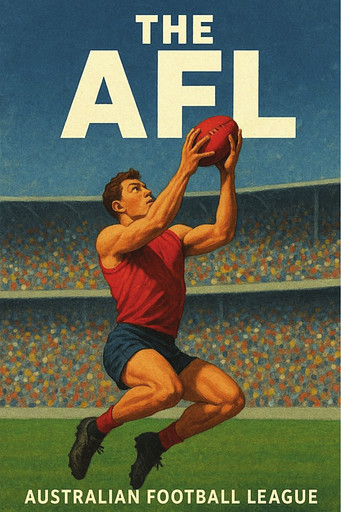
The AFL
Australian Football League
Australian Rules Football, commonly known as "Aussie Rules" or "footy," is a fast-paced, contact sport that originated in Melbourne, Victoria, in the late 1850s. It is played between two teams of 18 players on an oval-shaped field, typically a modified cricket ground. The primary objective is to score points by kicking an oval-shaped ball between a set of tall goalposts.
Key Features of the Game:
• Scoring: Players score six points by kicking the ball between the central goalposts. If the ball passes between a central and an outer post, known as a "behind," it scores one point.
• Gameplay: The game is known for its continuous play and requires a combination of speed, agility, and endurance. Players can use any part of their bodies to move the ball, employing methods such as kicking, handballing (a form of passing using the hands), and running with the ball.
• Field and Duration: Matches are played on large oval fields, and each game consists of four quarters, each lasting 20 minutes of playtime, with additional time added for stoppages.
The Australian Football League (AFL):
The AFL is the premier professional competition for Australian Rules Football. Established in 1896 as the Victorian Football League (VFL), it was renamed the AFL in 1990 to reflect its expansion beyond Victoria. The league currently comprises 18 teams from across Australia's five mainland states.
• Season Structure: The AFL season runs from March to September, featuring a 23-round regular season followed by a finals series involving the top eight teams. The season culminates in the AFL Grand Final, held annually at the Melbourne Cricket Ground, where the premiership team is crowned.
• Popularity: Australian Rules Football is the most popular spectator sport in Australia, with the AFL Grand Final being one of the most-watched events in the country's sporting calendar.

RAMADAN
What is Ramadan
Ramadan is the ninth month of the Islamic lunar calendar and is considered the holiest month for Muslims worldwide. It is a time of fasting, prayer, reflection, and community, observed by over a billion Muslims around the globe. The month holds deep religious significance as it is believed to be the time when the first verses of the Quran were revealed to the Prophet Muhammad (peace be upon him) by the Angel Jibril (Gabriel).
Significance of Ramadan
1. Spiritual Cleansing and Renewal – Ramadan is a time for Muslims to purify their hearts, seek forgiveness, and strengthen their relationship with Allah.
2. Commemoration of Quranic Revelation – The month is significant because it marks the period when the Quran began to be revealed to Prophet Muhammad.
3. Self-Discipline and Worship – Fasting is a means of developing self-control, patience, and gratitude, helping believers grow spiritually.
4. Increased Charity and Compassion – Muslims are encouraged to be more charitable, helping those in need and practicing kindness.
Fasting in Ramadan (Sawm)
One of the central aspects of Ramadan is Sawm (fasting), which is an obligatory act for all adult Muslims (with some exceptions). The fast lasts from dawn (Fajr) until sunset (Maghrib) and includes refraining from:
• Eating and drinking
• Smoking
• Engaging in sexual activity
• Negative behaviors such as lying, gossiping, or arguing
Fasting is not just a physical practice but also a spiritual one, meant to encourage self-reflection, discipline, and closeness to Allah.
Who is Exempt from Fasting?
Certain groups of people are exempt from fasting, including:
• The sick and those with medical conditions
• Pregnant, breastfeeding, or menstruating women
• Travelers
• Children who have not reached puberty
• The elderly or those who are physically unable to fast
Those who cannot fast due to temporary reasons are required to make up the missed fasts later. If someone cannot fast at all, they may give Fidya (feeding a poor person for each missed fast).
Daily Routine During Ramadan
1. Suhoor (Pre-dawn Meal) – Muslims wake up before dawn to eat a meal called Suhoor before the Fajr (dawn) prayer.
2. Fasting Period – Throughout the day, Muslims continue with their daily activities while abstaining from food, drink, and negative behaviors.
3. Iftar (Breaking the Fast) – At sunset, the fast is broken with dates and water, followed by the Maghrib (evening) prayer and a full meal.
4. Taraweeh Prayers – After the night prayer (Isha), special long prayers called Taraweeh are performed in mosques, where portions of the Quran are recited.
Acts of Worship and Good Deeds
During Ramadan, Muslims increase their acts of worship, including:
• Reading and reciting the Quran – Many Muslims try to complete the entire Quran during the month.
• Praying extra prayers (Taraweeh & Qiyam-ul-Layl) – These are performed at night.
• Giving charity (Zakat & Sadaqah) – Muslims are encouraged to give generously to those in need.
• Seeking forgiveness and making dua (supplication) – It is a time to repent and ask for blessings.
The Last 10 Nights & Laylat al-Qadr
The last 10 nights of Ramadan are the most sacred, as they include Laylat al-Qadr (The Night of Decree), which is believed to be the night the Quran was revealed. This night is considered better than a thousand months (Quran 97:3), and worship during this time brings immense rewards.
Eid al-Fitr (The Festival of Breaking the Fast)
At the end of Ramadan, Muslims celebrate Eid al-Fitr, a joyous festival marking the completion of fasting. It includes:
• A special prayer in congregation
• Giving Zakat al-Fitr (charity) to help the needy
• Feasting with family and friends
• Wearing new clothes and exchanging gifts
Conclusion
Ramadan is a deeply spiritual time for Muslims, promoting self-discipline, gratitude, and increased devotion to Allah. It is not just about refraining from food and drink but also about personal growth, kindness, and seeking a deeper connection with faith. Through fasting, prayer, and charity, Muslims aim to purify their hearts and attain Allah’s mercy and blessings.
Lord Lucan
What Happened to Lord Lucan
Lord Lucan (Richard John Bingham, 7th Earl of Lucan)
• Disappearance: 1974
• Background: Lord Lucan was a British peer and professional gambler. On the night of November 7, 1974, his children's nanny, Sandra Rivett, was bludgeoned to death in the basement of his family home in Belgravia, London. His wife, Veronica Lucan, was also attacked but managed to escape and identified her husband as the assailant.
• What Happened Next: Lord Lucan vanished that same night. His car was found abandoned and bloodstained in East Sussex, but he was never seen again.
• Theories: Over the years, theories have ranged from suicide to escape and exile. Despite numerous alleged sightings around the world, he was never conclusively found.
• Legal Status: He was officially declared dead in 1999, and a death certificate was issued in 2016.
________________________________________
Lord Lucan's disappearance sparked decades of speculation, books, documentaries, and investigations. His case is often cited as one of the most notorious unsolved mysteries in British criminal history.
Ancient Symbols
What do they mean
Ancient symbols are powerful visual representations used by cultures throughout history to convey complex ideas, beliefs, and values. They often appear in religious, political, magical, and artistic contexts and are frequently found in carvings, manuscripts, architecture, and artifacts. Here's a general overview of the subject:
________________________________________
What Are Ancient Symbols?
Ancient symbols are graphic signs used before widespread literacy to communicate, record, or express:
• Spiritual or religious meaning
• Cultural identity or authority
• Natural elements or cosmic forces
• Mystical or magical concepts
• Mathematical, calendrical, or astrological data
________________________________________
Types of Ancient Symbols by Culture
1. Egyptian Symbols
• Ankh (☥): Symbol of life and immortality.
• Eye of Horus: Protection, healing, and royal power.
• Scarab beetle: Rebirth and transformation.
2. Mesopotamian Symbols
• Cuneiform signs: The earliest writing system, often symbolic.
• Winged sun or god: Divine protection and kingship.
• The Tree of Life: Cosmic order and divine connection.
3. Greek Symbols
• Labyrinth: Symbol of the soul’s journey or a challenge.
• Omega (Ω): End or great completion (used more in later contexts).
• Rod of Asclepius: Healing and medicine.
4. Norse Symbols
• Yggdrasil: The World Tree connecting all realms.
• Valknut: Associated with Odin, death, and the afterlife.
• Runes: Alphabetic symbols used also for magic and divination.
5. Celtic Symbols
• Triskelion (☘️): Movement, cycles, and the triple nature of existence.
• Celtic knot: Eternity and the interconnectedness of life.
• Claddagh: Love, loyalty, and friendship.
6. Chinese Symbols
• Yin-Yang (☯): Balance of opposites.
• Dragon: Power, prosperity, and cosmic energy.
• Five Elements: Wood, Fire, Earth, Metal, Water – harmony of nature.
7. Native American Symbols
• Thunderbird: Divine power and storms.
• Spiral: Journey, growth, or the cycle of life.
• Four Directions (cross): Balance and spiritual guidance.
________________________________________
Common Symbol Themes Across Cultures
Theme Symbolic Representations
Life & Death Ankh, Skull, Spiral
Power & Protection Eye of Horus, Valknut, Amulets
Time & Eternity Ouroboros, Triskelion, Knot
Nature & Cosmos Tree of Life, Sun, Moon
Magic & Mystery Runes, Sigils, Pentagrams
________________________________________
Why Study Ancient Symbols?
• Understanding cultures: They give insight into how ancient peoples viewed life, death, gods, and the universe.
• Art and architecture: Symbols were foundational in design and religious construction.
• Language origins: Many writing systems evolved from symbolic pictographs (e.g., hieroglyphs, cuneiform).
• Modern influence: Many modern logos, spiritual systems, and esoteric traditions are rooted in ancient symbolism.
The Mary Celeste
What happened to her
The Mary Celeste: The Ghost Ship Legend
What was the Mary Celeste?
The Mary Celeste was an American merchant brigantine discovered adrift in the Atlantic Ocean on December 4, 1872, by the British ship Dei Gratia. She was found in seaworthy condition but completely abandoned, with no sign of her captain, crew, or passengers.
________________________________________
Key Facts:
• Ship: Mary Celeste (originally launched as Amazon in 1861)
• Discovered: December 4, 1872
• Location: Between the Azores and Portugal
• Discovered by: Dei Gratia, under Captain David Morehouse
• Cargo: 1,701 barrels of denatured alcohol
• Crew and Passengers: 10 people, including Captain Benjamin Briggs, his wife Sarah, and their 2-year-old daughter Sophia
• Condition: Intact hull, sails partially set, food and water supplies untouched, but lifeboat missing
________________________________________
Theories About the Disappearance:
1. Piracy or Mutiny:
Ruled unlikely — valuable cargo and personal belongings were untouched.
2. Alcohol Fumes Explosion:
A plausible theory is that fumes from the volatile cargo (industrial alcohol) caused a panic or minor explosion, prompting evacuation. No evidence of fire was found, though.
3. Waterspout or Seaquake:
Could have damaged the ship or given the illusion of imminent sinking, prompting a hasty abandonment.
4. Crew Illness or Madness:
Ergot poisoning from moldy food, carbon monoxide poisoning, or group hallucination — none proven.
5. Insurance Fraud or Foul Play:
Some suspected a conspiracy involving the Dei Gratia crew or others — but investigations found no hard evidence.
________________________________________
Legacy and Cultural Impact:
• The mystery of the Mary Celeste has inspired dozens of books, films, and television shows.
• Sir Arthur Conan Doyle (creator of Sherlock Holmes) wrote a fictionalized story in 1884 titled J. Habakuk Jephson's Statement, which popularized and distorted many of the facts.
• The term "Mary Celeste" has since become a byword for ghost ships and unexplained maritime disappearances.
Launceston Tasmania
An Overview
Launceston, Tasmania, is one of Australia’s oldest and most charming cities, known for its unique blend of natural beauty, colonial heritage, and vibrant modern culture. Located at the junction of the North Esk and South Esk rivers, which meet to form the Tamar River, the city is surrounded by rolling hills, fertile farmland, and dramatic river gorges. This picturesque setting has helped shape Launceston into a destination rich in scenery and character.
One of Launceston’s most iconic attractions is Cataract Gorge, a spectacular natural formation just a short walk from the city centre. With its winding river, steep rocky cliffs, lush vegetation, and historic pathways, the Gorge feels like a wilderness escape tucked within an urban environment. Visitors enjoy walking trails, picnics, suspension bridges, and panoramic lookouts that highlight the area’s rugged beauty. The Kings Bridge, built in the 1860s, and the historic cliffside house add to the region’s charm and architectural heritage.
Launceston is also known for its beautifully preserved colonial-era buildings. The city features many 19th-century structures, including grand Victorian homes, churches, and public buildings that reflect its status as one of Australia’s early settlements. This deep sense of history blends seamlessly with the city’s modern arts scene, boutique shops, cafes, and galleries.
Just outside the city lies the Tamar Valley, one of Tasmania’s premier wine regions. Known especially for cool-climate varieties such as Pinot Noir and Chardonnay, the valley offers scenic drives through vineyards, orchards, and peaceful country towns.
With its combination of natural wonders, cultural heritage, and warm local atmosphere, Launceston offers something for everyone. Whether exploring Cataract Gorge, discovering colonial architecture, or enjoying fine food and wine, visitors find Launceston a captivating gateway to northern Tasmania.
Putin
An Overview
Vladimir Putin's history:
Early Life
• Full Name: Vladimir Vladimirovich Putin
• Born: October 7, 1952, in Leningrad (now St. Petersburg), Soviet Union.
• Background: Putin grew up in a working-class family. His early interest in martial arts (judo and sambo) and academics eventually led him to pursue law at Leningrad State University, where he graduated in 1975.
Career in the KGB
• After graduation, Putin joined the KGB, the Soviet Union's main security agency, and worked in counterintelligence and foreign intelligence.
• He was stationed in Dresden, East Germany, from 1985 to 1990 during the Cold War.
• He resigned from the KGB in 1991, shortly before the dissolution of the Soviet Union.
Political Career
• 1990s: After returning to St. Petersburg, Putin worked as an advisor to Mayor Anatoly Sobchak. This marked his entry into politics.
• 1996-1999: Moved to Moscow and held several administrative positions in the Kremlin under President Boris Yeltsin.
• 1999: Appointed Prime Minister of Russia by Yeltsin. When Yeltsin unexpectedly resigned on December 31, 1999, Putin became Acting President.
Presidency and Leadership
• 2000-2008: Putin served two consecutive terms as President of Russia, focusing on economic reforms, restoring central authority, and rebuilding Russia's global influence.
• 2008-2012: Due to constitutional term limits, Putin became Prime Minister under President Dmitry Medvedev but remained the dominant political figure.
• 2012-Present: Returned as President in 2012 after constitutional amendments. His leadership has been marked by a focus on nationalism, military modernization, and controversial policies, including the annexation of Crimea in 2014 and increased tensions with Western nations.
Controversies
• Human Rights: Putin's tenure has been criticized for crackdowns on political dissent, restricted press freedoms, and alleged suppression of opposition figures.
• Foreign Policy: His administration has been accused of interfering in the politics of other countries, particularly through cyberattacks and disinformation campaigns.
• Russia-Ukraine War: In 2022, Putin launched a large-scale invasion of Ukraine, leading to significant international condemnation and widespread sanctions.
Zelenskyy
Of Ukraine
Volodymyr Zelensky is a Ukrainian politician, former actor, comedian, and the sixth president of Ukraine. He was born on January 25, 1978, in Kryvyi Rih, then part of the Ukrainian Soviet Socialist Republic within the Soviet Union.
Early Career
• Acting and Comedy: Zelensky gained national fame as a comedian and actor. He co-founded the comedy production company Kvartal 95 and starred in a number of television shows and movies.
• "Servant of the People": In 2015, he starred in the satirical TV series Servant of the People, where he portrayed a schoolteacher who unexpectedly becomes Ukraine's president. Ironically, this role foreshadowed his real-life political career.
Political Career
• Presidential Run: Zelensky announced his candidacy for president of Ukraine on December 31, 2018, leveraging his fame and his image as a political outsider. He ran under the banner of a newly created political party named after his TV show, Servant of the People.
• Election Victory: He won the presidential election in April 2019, defeating incumbent Petro Poroshenko with a landslide 73% of the vote in the second round.
Presidency
• Reform Agenda: Zelensky campaigned on a platform of anti-corruption, transparency, and reforms to modernize Ukraine’s economy and government.
• 2022 Russian Invasion of Ukraine: Zelensky became a globally recognized leader after Russia launched a full-scale invasion of Ukraine in February 2022. His leadership during the war earned widespread praise for his resilience, communication skills, and efforts to rally international support for Ukraine.
• Key Characteristics: Zelensky's presidency has been marked by his focus on Ukrainian sovereignty, his appeal to international leaders and organizations, and his ability to use social media and direct communication to maintain public support domestically and globally.
Personal Life
• Family: Zelensky is married to Olena Zelenska, an architect and writer. They have two children: a daughter, Oleksandra, and a son, Kyrylo.
• Education: He holds a law degree from Kryvyi Rih Economic Institute, though he never worked in the legal profession.
Zelensky is celebrated as a symbol of Ukrainian resistance and determination, particularly in the face of the ongoing war with Russia.
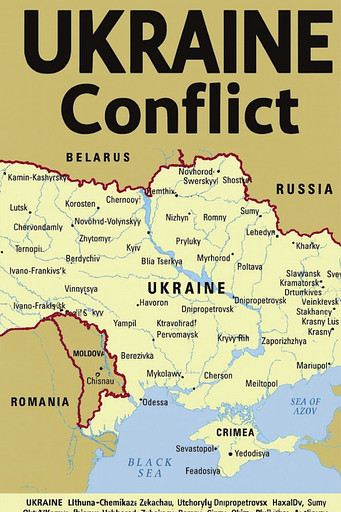
Ukraine
Conflict
The Ukraine conflict is a complex and ongoing war that began in 2014, with deep historical, politi-cal, and geopolitical roots. Below is a detailed breakdown of its causes, timeline, key players, and current status.
1. Background and Causes of the Conflict
1.1 Historical Context
• Soviet Era (1922–1991): Ukraine was part of the Soviet Union (USSR) until it gained inde-pendence in 1991 after the USSR collapsed.
• Post-Independence (1991–2013): Ukraine struggled between aligning with the West (Euro-pean Union, NATO) and maintaining ties with Russia. Pro-European and pro-Russian fac-tions emerged in Ukrainian politics.
1.2 Euromaidan Protests (2013–2014)
• Trigger: In November 2013, Ukraine’s pro-Russian President Viktor Yanukovych rejected an association agreement with the European Union (EU) under pressure from Russia.
• Protests: Mass protests erupted, known as Euromaidan, demanding closer ties with Europe and an end to corruption.
• Government Response: Violent crackdowns led to the deaths of protesters.
• Yanukovych’s Ouster: In February 2014, Yanukovych fled to Russia, and a pro-Western government took power.
2. Russian Annexation of Crimea (2014)
• Russian Military Intervention: In February–March 2014, Russian forces, disguised as local militias, took control of Crimea, a Ukrainian peninsula with a Russian-speaking majority.
• Crimean Referendum: A disputed referendum was held in March 2014, with Russia claiming that 97% of voters chose to join Russia.
• International Response: The annexation was condemned by Ukraine, the UN, the US, and the EU as illegal. Sanctions were imposed on Russia.
3. War in Donbas (2014–Present)
• Pro-Russian Separatist Movements: After Crimea, pro-Russian rebels in Donetsk and Luhansk (eastern Ukraine) declared independence.
• Russian Involvement: Russia provided weapons, fighters, and intelligence to the separatists while denying direct involvement.
• Key Battles (2014-2015): Ukrainian forces attempted to retake territory but faced stiff re-sistance.
• Minsk Agreements (2014, 2015): Peace agreements were brokered but repeatedly violated. Fighting continued in eastern Ukraine.
4. Russia's Full-Scale Invasion (2022–Present)
4.1 Build-Up (2021–Early 2022)
• Russia massed 150,000+ troops near Ukraine’s borders.
• The US and NATO warned of an impending invasion.
• Russia demanded that Ukraine never join NATO, which was rejected.
4.2 Invasion Begins (February 24, 2022)
• Russian missile strikes, air raids, and a ground invasion began across Ukraine.
• Russian troops advanced toward Kyiv (Ukraine’s capital) but faced fierce Ukrainian re-sistance.
• Ukrainian President Volodymyr Zelenskyy refused to flee and rallied international support.
4.3 Key Phases of the War
Phase 1: Battle for Kyiv (Feb–Apr 2022)
• Russian forces attacked from Belarus, aiming to seize Kyiv.
• Ukraine successfully defended Kyiv, forcing Russia to retreat.
Phase 2: Battle for Eastern & Southern Ukraine (Apr–Nov 2022)
• Russia shifted focus to Donbas and southern Ukraine.
• Captured Mariupol, a strategic port city, after months of siege.
• Ukrainian counteroffensive liberated Kherson (Nov 2022).
Phase 3: War of Attrition (2023–Present)
• Trench warfare, artillery duels, and drone attacks intensified.
• Ukraine launched a counteroffensive (2023) but made limited gains.
• Western military aid (weapons, tanks, missiles) helped Ukraine, but Russia continued of-fensive operations.
5. Key Players in the Conflict
5.1 Ukraine
• Leader: President Volodymyr Zelenskyy
• Goals: Defend sovereignty, regain occupied territories, join NATO/EU.
• Military Support: Heavily relies on Western weapons, including HIMARS, tanks, and air defense systems.
5.2 Russia
• Leader: President Vladimir Putin
• Goals: Prevent Ukraine from joining NATO, control strategic areas, weaken Western influ-ence.
• Military Tactics: Missile strikes, trench warfare, use of mercenaries (Wagner Group).
5.3 Western Support (US, NATO, EU)
• Military Aid: Billions in weapons, including Patriot missiles, tanks, and drones.
• Economic Sanctions: Targeting Russian banks, oil, and technology exports.
• NATO Expansion: Finland and Sweden applied to join NATO.
5.4 China, India, and Global South
• China & India: Avoided direct condemnation but benefited from cheap Russian oil.
• Global South: Some countries remain neutral due to economic ties with Russia.
6. Humanitarian & Economic Impact
6.1 Human Cost
• Casualties: Over 500,000 soldiers killed or wounded (both sides).
• Civilians Killed: 10,000+ confirmed, but actual numbers likely higher.
• Refugees: 8+ million Ukrainians displaced, many in Poland, Germany, and the US.
6.2 Economic Consequences
• Ukraine’s Economy: Shrunk by 30% in 2022, slowly recovering.
• Russia’s Economy: Hurt by sanctions but stabilized through trade with China and India.
• Global Impact: Food shortages (Ukraine is a top grain exporter), rising energy prices.
7. Current Status & Future Outlook (2024–2025)
7.1 Current Situation (2024)
• Frontlines remain contested, with slow progress for both sides.
• Ukraine seeks more Western weapons, including F-16 fighter jets.
• Russia expands missile strikes, targeting infrastructure.
7.2 Possible Future Scenarios
• Stalemate: War drags on with no decisive victory.
• Ukrainian Victory: Unlikely without massive Western military support.
• Russian Victory: Only possible if Ukraine’s defenses collapse.
• Negotiated Peace: Possible if both sides face exhaustion, but terms remain difficult.
8. Conclusion
The Ukraine conflict is one of the most significant wars in modern history, reshaping global politics, military strategy, and economies. The war remains unpredictable, with no clear end in sight. Dip-lomatic efforts continue, but military clashes, Western-Russian tensions, and humanitarian cri-ses persist.

Rocket Man
Kim Jong Un
North Korea’s president, officially referred to as the Supreme Leader, is Kim Jong Un, who has held power since 2011 following the death of his father, Kim Jong Il. Kim Jong Un is the third leader in the Kim dynasty, which has ruled North Korea (formally known as the Democratic People’s Republic of Korea, or DPRK) since its founding in 1948 by his grandfather, Kim Il Sung. Under Kim Jong Un, North Korea has continued its authoritarian governance, heavily centralized economy, and military-first policies.
Kim Jong Un’s leadership has focused on consolidating power and reinforcing his regime's control over the nation. Domestically, he rules through a combination of propaganda, strict surveillance, and the suppression of dissent. The North Korean government emphasizes the ideology of Juche (self-reliance), paired with Songun (military-first politics), to maintain control and justify its isolation from the international community. The country’s media operates as a propaganda tool, glorifying Kim Jong Un and the ruling family while tightly controlling information flow to prevent dissent.
Economically, Kim Jong Un has overseen minor reforms to increase limited market activity within North Korea’s tightly controlled socialist economy. However, these efforts have been undermined by international sanctions in response to the country’s nuclear weapons program. Food insecurity and poverty remain significant challenges, exacerbated by sanctions, natural disasters, and mismanagement. Despite these challenges, the regime prioritizes military and defense spending over civilian needs.
One of the defining features of Kim Jong Un’s rule is his aggressive pursuit of nuclear weapons and ballistic missile technology. Under his leadership, North Korea has conducted multiple nuclear tests and developed intercontinental ballistic missiles (ICBMs) capable of reaching the United States. These actions have drawn widespread condemnation and led to heightened tensions with the international community, particularly South Korea, the United States, and Japan. Despite global pressure, North Korea considers its nuclear program essential to its survival, framing it as a deterrent against perceived threats.
Kim Jong Un’s foreign policy has been marked by a mix of provocative actions and sporadic attempts at diplomacy. He made history by meeting U.S. President Donald Trump in 2018 and 2019 during unprecedented summits aimed at denuclearization. However, these talks ultimately failed to produce lasting agreements, and tensions have since escalated. Relations with South Korea have similarly fluctuated, with periods of dialogue interspersed with threats and military provocations.
Human rights abuses under Kim Jong Un’s regime are well-documented and severe. The United Nations and human rights organizations have reported widespread violations, including forced labor, political prison camps, and restrictions on freedom of movement, speech, and religion. These abuses reinforce the regime's grip on power, ensuring control over a population subjected to intense surveillance and fear.
Kim Jong Un remains an enigmatic and polarizing figure on the world stage. His leadership continues to shape North Korea's future, with a focus on maintaining the regime's survival, advancing its military capabilities, and preserving the dynastic rule of the Kim family, despite widespread condemnation and isolation.
NATO
What is NATO
What is NATO?
NATO (North Atlantic Treaty Organization) is a military alliance of 31 countries from North America and Europe. It was founded on April 4, 1949, with the signing of the North Atlantic Treaty (Washington Treaty). The organization was created to promote mutual defense and secu-rity among its members, primarily as a response to the growing influence of the Soviet Union af-ter World War II.
Key Facts About NATO
• Full Name: North Atlantic Treaty Organization
• Established: April 4, 1949
• Current Members: 31 countries (as of 2024)
• Headquarters: Brussels, Belgium
• Official Languages: English & French
• Secretary-General (2024): Jens Stoltenberg
Main Purpose of NATO
NATO is based on the principle of collective defense, which means that an attack on one member is considered an attack on all members. This is outlined in Article 5 of the NATO treaty, which has only been invoked once—after the September 11, 2001, terrorist attacks on the United States.
NATO's Core Tasks
1. Collective Defense – Protecting members against military threats.
2. Crisis Management – Addressing conflicts before they escalate.
3. Cooperative Security – Working with non-member countries to enhance global security.
Who Are NATO's Members?
NATO started with 12 founding members and has expanded over time. The current members in-clude:
🇺🇸 United States | 🇬🇧 United Kingdom | 🇨🇦 Canada | 🇫🇷 France | 🇩🇪 Germany | 🇮🇹 Italy | 🇪🇸 Spain | 🇵🇱 Poland | 🇹🇷 Turkey | 🇳🇴 Norway | 🇸🇪 Sweden (Joined in 2024) and others.
The most recent members:
• Finland (2023)
• Sweden (2024)
How NATO Works
• Political & Military Alliance: NATO makes decisions through discussions among all members, each having an equal say.
• Defense Spending: Members commit to spending at least 2% of their GDP on defense.
• Joint Military Operations: NATO conducts exercises, peacekeeping missions, and disas-ter response efforts worldwide.
Notable NATO Operations
• Kosovo (1999): NATO led airstrikes to stop ethnic cleansing.
• Afghanistan (2001-2021): NATO deployed troops after 9/11.
• Libya (2011): NATO enforced a no-fly zone during the civil war.
NATO vs. Russia
Since the Cold War, NATO has been seen as a counterbalance to Russia.
• Ukraine Conflict (2022-Present): NATO has supported Ukraine with weapons and train-ing but has not directly joined the war.
• Expansion Concerns: Russia strongly opposes NATO’s expansion, seeing it as a threat to its security.
Conclusion
NATO remains one of the most powerful and influential military alliances in the world. It contin-ues to evolve to address modern threats, including cyber warfare, terrorism, and geopolitical ten-sions with countries like Russia and China.

Climate Change
What can be done
Climate change refers to long-term shifts in temperatures and weather patterns, primarily caused by human activities, especially the burning of fossil fuels like coal, oil, and gas. These activities release greenhouse gases (such as carbon dioxide and methane) into the atmosphere, trapping heat and leading to global warming.
Causes of Climate Change:
1. Greenhouse Gas Emissions – Carbon dioxide (CO₂), methane (CH₄), and nitrous oxide (N₂O) trap heat in the Earth's atmosphere.
2. Deforestation – Cutting down forests reduces the Earth's ability to absorb CO₂.
3. Industrial Activities – Factories, transportation, and energy production contribute to greenhouse gas emissions.
4. Agriculture – Livestock farming releases methane, while fertilizers contribute to nitrous oxide emissions.
5. Urbanization – Expanding cities and infrastructure increase energy consumption and emissions.
Effects of Climate Change:
• Rising Temperatures – Global average temperatures have increased, leading to heat-waves.
• Extreme Weather – More frequent hurricanes, droughts, and heavy rainfall.
• Melting Ice & Rising Sea Levels – Polar ice caps and glaciers are melting, causing coastal flooding.
• Biodiversity Loss – Changing climates disrupt ecosystems, endangering wildlife.
• Food and Water Shortages – Droughts and unpredictable weather affect agriculture.
• Health Risks – Higher temperatures lead to heat-related illnesses and the spread of dis-eases.
Solutions to Climate Change:
• Renewable Energy – Using solar, wind, and hydroelectric power instead of fossil fuels.
• Energy Efficiency – Reducing waste through better technology and conservation.
• Reforestation – Planting trees to absorb CO₂.
• Sustainable Agriculture – Using eco-friendly farming methods.
• Reducing Waste – Recycling and minimizing plastic and food waste.
• Government Policies – Enforcing laws to reduce carbon emissions and encourage green practices.
Tunnels of London
The Underground
________________________________________
1. The London Underground (The Tube)
Not exactly a mystery, but the oldest metro system in the world (opened in 1863) has plenty of secrets:
• Abandoned Stations: Dozens of stations lie forgotten, like Down Street, which Churchill used as a WWII bunker, or Aldwych, sometimes used for filming or testing.
• Ghost Stories: Workers and passengers have reported strange sightings, especially in stations like Bethnal Green (site of a tragic WWII crush disaster).
________________________________________
2. Tower of London Tunnels
There are real and rumored tunnels beneath the Tower of London:
• Escape Routes: Legend tells of secret passages to the Thames for executions or covert movements of prisoners.
• Hauntings: Given its grim history, the Tower's underground is prime ghost story territory—Anne Boleyn’s spirit is said to roam, head tucked under her arm.
________________________________________
3. The River Fleet Tunnels
The River Fleet, once a major river, is now hidden in underground tunnels flowing beneath streets like Farringdon Road. It’s one of London’s “lost rivers,” buried in Victorian brickwork:
• Some say you can hear it flowing beneath grates.
• Occasional rumors claim it's haunted, or used by secret societies for midnight rituals.
________________________________________
4. Templar Tunnels
Yes, the Knights Templar left their mark in London too:
• Temple Church in central London was their base.
• Legends whisper of hidden passages beneath the church, possibly storing relics or connecting to secret sites.
• Some even suggest there are still undiscovered tunnels leading from Temple to the Thames or Westminster.
________________________________________
5. Plague Pits and Crypts
During the Great Plague of 1665, bodies were buried en masse in “plague pits”:
• Charterhouse Square and Aldgate are known sites.
• Some believe there are sealed passages beneath old cemeteries and churches where victims were moved or hidden.
• There’s urban folklore about “zombie rats” and cursed tunnels (bit far-fetched, but very London).
________________________________________
6. Mail Rail
One of London’s coolest hidden gems: the Post Office Railway, aka Mail Rail.
• A secret underground railway used from 1927 to 2003 to move mail under London.
• It ran from Paddington to Whitechapel.
• You can now ride part of it at the Postal Museum!
________________________________________
7. Urban Legends: The Government Bunkers
• Pindar Bunker under Whitehall is real and still secretive—it’s said to be connected by tunnels to 10 Downing Street and Buckingham Palace.
• Q-Whitehall Tunnels: WWII-era tunnels used as wartime shelters and command centers.
• Conspiracy theories abound about deep-level shelters and “shadow cities” below London.

Washington Sq. Park
The Ghosts Of
The Ghosts of Washington Square Park
Beneath the lively rhythm of street performers, dog walkers, and NYU students lounging on benches, Washington Square Park hides a much darker past — one of death, disease, and executions. While today it’s one of Greenwich Village’s most beloved green spaces, this iconic park sits atop what was once a potter’s field, where over 20,000 bodies were buried in mass, unmarked graves.
In the late 18th and early 19th centuries, yellow fever ravaged New York City multiple times. Fearing the contagious disease, city leaders moved the dead away from populated areas, turning the then-rural land into a pauper’s cemetery. The burials were hasty, the graves shallow. The sick, the poor, the forgotten — all laid to rest without ceremony or headstone.
As if that weren’t unsettling enough, the northwest corner of the park is home to the "Hanging Tree", a gnarled English elm believed to be over 300 years old. Folklore claims that the tree — still standing — was used for public executions in the early 1800s, when the park area was used as a public gallows. Though records are murky, some say the tree witnessed the hanging of traitors and criminals, and that the park's spectral energy is strongest beneath its branches.
Today, strange occurrences are still reported. People speak of sudden chills even on warm nights, the feeling of being watched, and faint, disembodied whispers carried on the wind. Some say they’ve seen shadowy figures moving just beyond the edges of their vision, or felt an inexplicable heaviness in their chest when walking near the Hanging Tree.
The city has tried to move on, covering the graves with paths and gardens, but every so often, the dead make themselves known. During renovations or maintenance, human bones have occasionally been unearthed, a grim reminder of what lies just a few feet below.
Columbian Drug Cartels
Drugs into The USA
Below is an overview of the topic:
1. Historical Context
• Colombia's drug trade emerged in the mid-20th century, fueled by the growing global demand for marijuana, and later cocaine.
• In the 1970s and 1980s, cocaine became the dominant drug, with Colombia emerging as the world's largest producer. The Medellín and Cali cartels dominated this era.
2. Major Cartels
Here’s a summary of the most notable cartels, past and present:
Medellín Cartel
• Founder: Pablo Escobar.
• Peak Influence: 1980s.
• Characteristics: Known for its violent tactics, including assassinations of politicians, judges, and police.
• Downfall: Escobar was killed in 1993, leading to the cartel's collapse.
Cali Cartel
• Founders: Gilberto and Miguel Rodríguez Orejuela.
• Peak Influence: 1990s.
• Characteristics: Operated more discreetly compared to the Medellín Cartel, focusing on corruption and bribery rather than violence.
• Downfall: Leaders were arrested in the mid-1990s.
North Valley Cartel
• Peak Influence: 1990s to early 2000s.
• Characteristics: Focused on cocaine trafficking, often working with paramilitary groups.
• Downfall: Disbanded after leadership arrests and killings.
Revolutionary Armed Forces of Colombia (FARC)
• While not a cartel, FARC financed its insurgency through cocaine production and trafficking.
• Following the 2016 peace deal, some dissident factions still participate in drug trade activities.
Clan del Golfo (Gulf Clan)
• Current Influence: The largest drug trafficking organization in Colombia.
• Characteristics: Engages in cocaine trafficking, illegal mining, and extortion.
• Leadership: Recent operations have targeted key leaders, such as Dairo Antonio Úsuga, a.k.a. "Otoniel," who was captured in 2021.
3. Cocaine Production
• Global Share: Colombia remains the world's largest producer of cocaine, accounting for over 60% of global production.
• Cultivation: Coca, the raw material for cocaine, is grown predominantly in regions like Nariño, Putumayo, and Norte de Santander.
4. Government Efforts
• Military Operations: The Colombian government has conducted numerous campaigns to combat cartels, often supported by U.S. initiatives like Plan Colombia (a military and development aid package).
• Extradition Agreements: Many cartel leaders have been extradited to the United States.
• Crop Eradication: Efforts to destroy coca crops, including aerial spraying, have met with limited success and have been criticized for their environmental and social impacts.
5. Current Dynamics
• Fragmentation: Major cartels have splintered into smaller, decentralized groups, often referred to as "bandas criminales" or BACRIM.
• Regional Control: Groups like the Gulf Clan and dissident FARC factions now dominate specific regions.
• International Networks: Colombian cartels collaborate with Mexican cartels like the Sinaloa and Jalisco New Generation cartels to distribute drugs worldwide.
6. Social and Economic Impact
• Violence: The drug trade has fueled decades of violence, with cartel-related murders and human rights abuses.
• Corruption: Drug money has infiltrated politics, law enforcement, and the judiciary.
• Economic Costs: While the drug trade generates immense profits for traffickers, it undermines legitimate economic development and stability.
7. International Involvement
• United States: Colombia is a key ally in the U.S.'s War on Drugs. The U.S. provides financial, military, and intelligence support.
• United Nations: The UN supports coca farmers in transitioning to alternative crops.
8. Challenges
• Inequality and Poverty: These issues fuel coca cultivation, as impoverished farmers often rely on the crop for income.
• Global Demand: As long as demand for cocaine persists, the drug trade will remain lucrative.
• Environmental Impact: Coca cultivation contributes to deforestation and pollution due to chemicals used in processing.
William Wallace
Braveheart ?
The story of Braveheart is a mix of history and legend, centered on the life of William Wallace, a Scottish knight and national hero who became one of the main leaders during the First War of Scottish Independence against England in the late 13th century.
Here's the real story behind Braveheart, with some historical clarity sprinkled in:
________________________________________
The Real William Wallace
William Wallace was born around 1270 in Elderslie, in Renfrewshire, Scotland (though some sources claim Ayrshire). Little is known of his early life, but he was likely from the lower nobility or a landowning family. He was educated, probably fluent in Latin, and trained in the arts of warfare.
________________________________________
Scotland Under English Rule
After the death of Alexander III of Scotland in 1286, and then his granddaughter Margaret, Maid of Norway in 1290, Scotland fell into a succession crisis. King Edward I of England (also known as "Longshanks") took advantage of the chaos, asserting his overlordship over Scotland.
He eventually placed John Balliol on the Scottish throne, but Balliol was a weak king, and Edward continued to exert power. In 1296, Edward invaded Scotland, deposed Balliol, and claimed direct control—sparking resentment and rebellion.
________________________________________
Wallace Rises
Wallace entered the historical record in 1297. After an incident where he reportedly killed an English sheriff (the story goes that English soldiers killed his wife or lover), Wallace began to attract followers and launched a guerrilla campaign against the English.
His most famous victory was the Battle of Stirling Bridge in September 1297. With a much smaller force, Wallace and fellow commander Andrew Moray defeated a much larger English army using clever tactics at the narrow bridge crossing.
After the battle, Wallace was knighted and became Guardian of Scotland.
________________________________________
Downfall and Capture
Wallace's triumph was short-lived. In 1298, Edward I returned with a massive army and defeated Wallace at the Battle of Falkirk. Wallace escaped but resigned as Guardian.
For several years he remained in hiding or abroad (he may have traveled to France and the Papacy seeking support), but was eventually betrayed and captured near Glasgow in 1305.
________________________________________
Trial and Execution
Wallace was taken to London and put on trial for treason. He famously declared: "I cannot be a traitor, for I owe him [Edward] no allegiance." He was brutally executed—hanged, drawn, and quartered—on August 23, 1305. His limbs were displayed across Britain as a warning.
________________________________________
Legacy
Wallace became a symbol of Scottish resistance and freedom. Though he didn’t live to see Scottish independence, his struggle paved the way. Robert the Bruce would later pick up the fight and secure independence after the Battle of Bannockburn in 1314.
________________________________________
The Movie “Braveheart” (1995)
Directed by and starring Mel Gibson, Braveheart popularized Wallace's story worldwide. However, it took major liberties with the facts:
• Wallace was never called "Braveheart"—that nickname is more associated with Robert the Bruce.
• He never had a romantic affair with Princess Isabella (she was a child in France at the time).
• Kilts and face paint? Very anachronistic.
• The Battle of Stirling Bridge… had no bridge in the movie, oddly.
Despite the inaccuracies, the film sparked a revival of interest in Scottish history and national pride.
Devils Island
A Penal Settlement
The Penal Colony of Cayenne, also known as French Guiana’s penal colony or Devil’s Island penal system, was one of the most notorious and brutal penal colonies in history. It operated under French rule in French Guiana, on the northeastern coast of South America, from 1852 until 1953.
Here’s a breakdown of its background, structure, and legacy:
________________________________________
Origins and Purpose
• Established by Napoleon III in 1852, the colony was intended to relieve the overcrowded French prison system and also help colonize French Guiana by using convicts as forced labor.
• It was thought that criminals could be reformed by hard work in an isolated environment. In practice, it became a place of suffering and death.
________________________________________
Structure of the Penal System
The Cayenne system was not a single prison but a network of penal sites, including:
1. Îles du Salut (Salvation Islands):
o A group of three islands off the coast near Kourou.
Devil’s Island (Île du Diable): Used primarily for political prisoners (e.g., Captain Alfred Dreyfus, falsely accused of treason in the 1890s).
Île Royale: Administrative center of the island prisons.
Île Saint-Joseph: A punishment island for solitary confinement.
2. Mainland Prisons:
o Including Saint-Laurent-du-Maroni, the reception center where new prisoners arrived.
o Camps in the jungle where prisoners were sent for logging, road building, and other harsh labor.
________________________________________
Conditions
• Horrific and deadly: Disease (especially malaria and yellow fever), malnutrition, abuse, and overwork were rampant.
• The mortality rate was extremely high—up to 75% of convicts died during their sentence.
• Prisoners were often shackled, subjected to hard labor, and suffered psychological and physical torture.
• Recidivists (repeat offenders) were required to stay in French Guiana for life, even after serving their sentence.
________________________________________
Famous Inmates
• Alfred Dreyfus: French Jewish army officer falsely accused of espionage in the Dreyfus Affair; imprisoned on Devil’s Island (1895–1899).
• Henri Charrière ("Papillon"): Claimed to have been unjustly imprisoned and wrote a famous memoir, Papillon (1969), which was adapted into films (1973, 2017). Though parts of his story are believed to be fictionalized or embellished, it brought global attention to the penal colony.
________________________________________
Closure and Legacy
• The penal colony began to decline in the early 20th century, especially after international criticism of its brutality.
• Officially closed in 1953, though operations had slowed well before then.
• Today, the Salvation Islands are a tourist site, with preserved ruins and museums commemorating the prisoners and the system’s dark history.
________________________________________
Cultural Impact
• The penal colony became a symbol of colonial cruelty, miscarriage of justice, and human endurance.
• Books, films, and studies have portrayed the life and horrors within the system.
• It also played a significant role in the political and military history of France, particularly with the Dreyfus Affair.
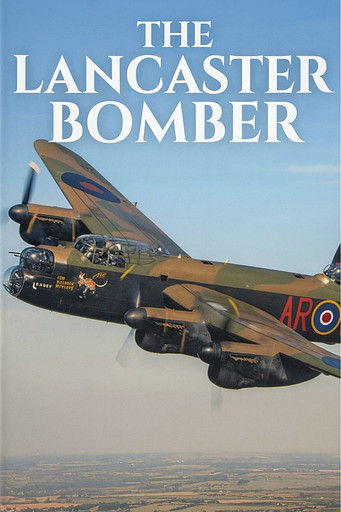
The Lancaster
WW2 Bomber
Avro Lancaster Bomber - World War II
The Avro Lancaster was one of the most famous heavy bombers used by the Royal Air Force (RAF) and Commonwealth forces during World War II. It became the backbone of RAF Bomber Command and was widely regarded for its effectiveness in night bombing raids over Germany.
Development and Design
Origins
• Developed by Avro (A.V. Roe and Company) in response to the failure of the Avro Manchester, a twin-engine bomber that suffered from unreliable Rolls-Royce Vulture en-gines.
• Chief designer Roy Chadwick redesigned the aircraft to use four Rolls-Royce Merlin en-gines, resulting in a much more capable and reliable aircraft.
• First flight: 9 January 1941.
• Entered service: February 1942.
Specifications
• Crew: 7 (Pilot, Flight Engineer, Navigator, Bomb Aimer/Nose Gunner, Wireless Operator, Mid-Upper Gunner, Rear Gunner)
• Length: 69 ft 6 in (21.18 m)
• Wingspan: 102 ft (31.09 m)
• Height: 20 ft 6 in (6.25 m)
• Engines: 4 × Rolls-Royce Merlin V12 piston engines (1,280–1,620 hp each)
• Maximum Speed: 287 mph (462 km/h)
• Range: 2,530 miles (4,073 km)
• Service Ceiling: 24,500 ft (7,470 m)
• Bomb Load: 14,000 lbs (6,356 kg) standard; Up to 22,000 lbs (9,980 kg) with modifica-tions (e.g., Grand Slam bomb)
Operational History
Introduction to Service
• The Lancaster became the primary heavy bomber of the RAF Bomber Command by 1942.
• Used extensively in night bombing raids over Germany as part of the strategic bombing campaign.
Famous Operations
Operation Chastise (Dambusters Raid) - May 16-17, 1943
• 617 Squadron, under Wing Commander Guy Gibson, used specially adapted Lancasters to drop the "bouncing bomb" developed by Barnes Wallis.
• Targeted German dams in the Ruhr Valley, causing significant flooding.
Operation Manna - April 1945
• Humanitarian mission to drop food supplies over the Netherlands to starving civilians under German occupation.
Operation Exodus - 1945
• Used to repatriate Allied prisoners of war.
Raids on German Cities
• Played a key role in firebombing raids, including:
• Hamburg (Operation Gomorrah, 1943)
• Berlin (1943-44)
• Dresden (1945) – controversial due to civilian casualties.
Special Bombs
• Used for carrying Tallboy (12,000 lb) and Grand Slam (22,000 lb) bombs to target heavily fortified structures like:
• German U-boat pens.
• The Tirpitz battleship (sunk in November 1944).
Armament
Defensive Guns
• Armed with .303 Browning machine guns in three turrets:
• Nose turret (2 guns)
• Dorsal turret (2 guns)
• Tail turret (4 guns) – primary defense against night fighters.
Weaknesses
• Lack of ventral (belly) turret, making it vulnerable to attacks from below (e.g., by German night fighters using Schräge Musik cannons).
• Despite being heavily armed, it had high crew casualties due to increasing effectiveness of German air defenses.
Production and Variants
• Total Built: 7,377 aircraft.
• Main production plants: UK, Canada (Victory Aircraft Ltd.).
• Key variants:
• Lancaster B I – Standard model.
• Lancaster B III – Identical to B I but used Packard-built Merlin engines.
• Lancaster B I (Special) – Modified to carry Tallboy and Grand Slam bombs.
• Lancaster B II – Used Bristol Hercules radial engines (fewer produced).
• Lancaster B VI – Experimental high-powered version.
• Avro Lincoln – Post-war successor.
Legacy and Post-War Use
• Continued service after WWII, used in the Berlin Airlift and modified for maritime re-connaissance and search-and-rescue roles.
• Final retirement: RAF phased it out by 1956.
• Surviving examples:
• Two remain airworthy:
• "Thumper" PA474 (Battle of Britain Memorial Flight, UK).
• "Vera" FM213 (Canadian Warplane Heritage Museum).
• Several displayed in museums worldwide.
Impact on WWII
• Considered one of the most successful bombers of WWII.
• Major contributor to the strategic bombing campaign, targeting German industry and in-frastructure.
• Iconic status due to its role in high-profile missions, particularly the Dambusters Raid.

History of Computing
Big Blue
The history of computers from UNIVAC to the personal computer is a fascinating journey of innovation and technological breakthroughs. Here’s a detailed look at the major milestones:
________________________________________
1. The UNIVAC and the Early Commercial Computers (1951-1960s)
UNIVAC (Universal Automatic Computer), developed by J. Presper Eckert and John Mauchly, was the first commercially produced computer in the U.S. It was introduced in 1951 and became famous for predicting the outcome of the 1952 U.S. presidential election.
Key Features of Early Computers (1950s-60s)
• Vacuum Tube Technology – Large, power-hungry, and unreliable.
• Punched Cards and Magnetic Tape – Used for input and storage.
• Batch Processing – No interactive user interface; programs were submitted on punched cards.
Other Early Computers:
• IBM 701 (1952) – IBM's first large-scale electronic computer.
• IBM 1401 (1959) – A very popular business computer that used transistors instead of vacuum tubes.
________________________________________
2. The Rise of the Mainframe and Minicomputers (1960s-1970s)
During the 1960s, computers became smaller, faster, and more powerful, largely thanks to the transistor (replacing vacuum tubes). This period saw the rise of mainframes and minicomputers.
Mainframes (1960s-1970s)
• Used by large organizations (banks, governments, corporations).
• IBM System/360 (1964) – A highly successful family of mainframes with different models for various needs.
Minicomputers (Mid-1960s to 1970s)
• Smaller and more affordable than mainframes.
• DEC PDP-8 (1965) – The first commercially successful minicomputer, widely used in research and industry.
• DEC PDP-11 (1970) – A more powerful and versatile minicomputer.
Key Innovations:
• Magnetic Core Memory – Faster and more reliable memory technology.
• Time-Sharing Systems – Allowed multiple users to use a computer simultaneously.
________________________________________
3. The Microprocessor Revolution and the Birth of the Personal Computer (1970s-1980s)
The development of the microprocessor led to the birth of the personal computer (PC).
Microprocessor Invention (1971)
• Intel 4004 (1971) – The first commercial microprocessor, developed by Intel.
• Intel 8080 (1974) – Used in many early personal computers.
The First Personal Computers (Mid-1970s)
1. Altair 8800 (1975) – The first widely known personal computer, sold as a kit.
2. Apple I (1976) – Built by Steve Jobs and Steve Wozniak in a garage.
3. Apple II (1977) – One of the first mass-produced PCs.
4. Commodore PET (1977) – Another early personal computer.
The Rise of the PC Industry (1980s)
• IBM PC (1981) – Standardized personal computing with MS-DOS (developed by Microsoft).
• Apple Macintosh (1984) – Introduced the first graphical user interface (GUI) for mass-market computers.
Key Innovations of the PC Era:
• Floppy Disks for storage.
• Graphical User Interface (GUI) (popularized by Apple and later Windows).
• Networking & Early Internet connections.
________________________________________
Conclusion: The Computer Becomes Personal
From the UNIVAC in 1951 to IBM PCs and Apple Macintoshes in the 1980s, the evolution of computers brought them from room-sized machines used by governments to compact, affordable machines for individuals. This transformation set the stage for the modern computing era, leading to the laptops, smartphones, and cloud computing we use today.

The Passover
Passover (Pesach) - The Jewish Festival of Freedom
Passover, known in Hebrew as Pesach (פֶּסַח), is one of the most significant and widely observed Jewish holidays. It commemorates the Exodus of the Israelites from slavery in Egypt, as described in the biblical Book of Exodus (Shemot).
________________________________________
1. Basic Overview
• When: Passover begins on the 15th of Nisan in the Hebrew calendar and lasts for seven days in Israel and eight days in the diaspora.
• Significance: Celebrates Jewish freedom from Egyptian slavery, the birth of the Jewish nation, and divine redemption.
• Themes: Slavery to freedom, faith, gratitude, divine intervention, and national identity.
• Key Practices: The Seder, eating matzah (unleavened bread), avoiding chametz (leavened food), storytelling, and special prayers.
________________________________________
2. The Biblical Story of Passover
The story of Passover comes from the Book of Exodus in the Torah.
1. Slavery in Egypt
o The Israelites, originally welcomed in Egypt due to Joseph, became enslaved under Pharaoh, who feared their growing numbers.
o They endured harsh labor and oppression.
2. Moses and the Plagues
o God commanded Moses to lead the Israelites out of Egypt.
o Pharaoh refused, so God sent Ten Plagues to punish Egypt:
1. Blood (Dam) – Nile River turned to blood.
2. Frogs (Tzefardea) – Infestation of frogs.
3. Lice (Kinim) – Swarm of lice.
4. Wild Beasts (Arov) – Attacks by wild animals.
5. Pestilence (Dever) – Livestock disease.
6. Boils (Shechin) – Painful skin sores.
7. Hail (Barad) – Fire and ice hailstorm.
8. Locusts (Arbeh) – Crops devoured.
9. Darkness (Choshech) – Three days of total darkness.
10. Death of the Firstborn (Makat Bechorot) – Every Egyptian firstborn was killed, but the Israelite homes were "passed over" if they marked their doorposts with lamb’s blood.
3. The Exodus
o Pharaoh finally let the Israelites go.
o They left Egypt in haste, with no time for their bread to rise (reason for eating matzah).
o Pharaoh changed his mind and pursued them.
o The Miracle of the Red Sea: God split the sea, allowing the Israelites to escape while drowning the Egyptian army.
4. The Journey to Freedom
o The Israelites traveled for 40 years in the desert, receiving the Torah at Mount Sinai before entering the Land of Israel.
________________________________________
3. Passover Traditions and Customs
A. The Passover Seder (סֵדֶר - "Order")
The most important ritual is the Seder night, held on the first two nights (only one night in Israel). It is a ceremonial meal filled with symbolic foods, prayers, and storytelling.
• Haggadah (הַגָּדָה) – The book that guides the Seder, telling the Exodus story.
• Four Questions (Ma Nishtana) – Traditionally asked by the youngest child.
• The Four Cups of Wine – Representing freedom, redemption, divine promise, and deliverance.
• Reclining – Symbolizes relaxation and freedom, as opposed to slavery.
B. The Seder Plate (Ke'ara - קְעָרָה)
A special plate containing symbolic foods:
1. Matzah – Unleavened bread, symbolizing haste of departure.
2. Maror (Bitter Herbs, e.g., horseradish) – Represents the bitterness of slavery.
3. Charoset (Sweet Paste of Nuts, Apples, Wine, and Cinnamon) – Symbolizes the mortar used in building for Pharaoh.
4. Karpas (Vegetable, often parsley or celery) – Represents spring and renewal, dipped in saltwater (tears of slavery).
5. Z'roa (Shank Bone) – Represents the Paschal Lamb sacrifice in the ancient Temple.
6. Beitzah (Roasted Egg) – Represents mourning over the destroyed Temple in Jerusalem.
C. Avoiding Chametz (Leavened Bread)
• Chametz includes anything made from wheat, barley, rye, oats, or spelt that has risen.
• Homes are cleaned thoroughly, and all chametz is removed, sold, or burned.
• Special Passover dishes and utensils are used.
D. Special Foods and Customs
• Matzah – Unleavened bread eaten throughout the holiday.
• Kosher-for-Passover foods – No chametz; some communities avoid kitniyot (legumes, rice, corn, etc.).
• Yachatz – Breaking the middle matzah, hiding part for the Afikoman, which children try to find.
• Elijah’s Cup – A cup of wine left for the Prophet Elijah, believed to visit every Seder.
• Miriam’s Cup – A newer tradition honoring Miriam’s role in the Exodus.
________________________________________
4. Passover in Jewish Communities Around the World
• Ashkenazi Jews – Avoid kitniyot (rice, corn, legumes, peanuts) in addition to chametz.
• Sephardic Jews – Often allow kitniyot, but avoid chametz.
• Ethiopian Jews (Beta Israel) – Have unique traditions, sometimes avoiding fermented foods entirely.
• Persian Jews – Some celebrate with a dramatic reenactment of the Exodus.
• Moroccan Jews – Celebrate Mimouna, a post-Passover feast welcoming back chametz.
________________________________________
5. Passover Prayers and Synagogue Services
• Hallel – Special psalms of praise.
• Torah Readings – Focus on the Exodus story and laws of Passover.
• Yizkor (Memorial Service) – On the last day of Passover, honoring deceased loved ones.
________________________________________
6. Historical and Modern Significance
• Spiritual Meaning: A reminder of faith, divine intervention, and freedom.
• Zionist Symbolism: The Exodus inspired many Jewish movements for freedom and return to the Land of Israel.
• Political and Social Parallels: Passover has been referenced in struggles for civil rights and liberation movements.
________________________________________
7. Conclusion
Passover is a celebration of freedom, faith, and Jewish identity. It connects Jews to their ancient past, unites families and communities, and serves as a reminder of the universal struggle for justice and redemption.

Terrorists
The World's Worst
1.Al-Qaeda
• Founded: 1988 by Osama bin Laden.
• Ideology: Salafi jihadism (Sunni extremist).
• Goals: Establish a global Islamic caliphate and expel Western influence from Muslim countries.
• Notable Attacks: 9/11 attacks in the U.S. (2001), embassy bombings in Kenya and Tanzania (1998).
• Regions Active: Middle East, North Africa, South Asia.
________________________________________
2. Islamic State (ISIS/ISIL/Daesh)
• Founded: 2013 (as a splinter from Al-Qaeda in Iraq).
• Ideology: Salafi jihadism.
• Goals: Create a global caliphate, beginning in Iraq and Syria.
• Notable Acts: Genocide against Yazidis, mass executions, global attacks (France, UK, etc.).
• Regions Active: Primarily Iraq and Syria; affiliates in Libya, West Africa, Afghanistan.
________________________________________
3.Boko Haram
• Founded: Early 2000s in Nigeria.
• Ideology: Islamist extremism.
• Goals: Establish an Islamic state in Nigeria; oppose Western education.
• Notable Acts: Chibok schoolgirl kidnappings (2014), bombings, mass killings.
• Regions Active: Nigeria, Chad, Niger, Cameroon.
________________________________________
4. Taliban
• Founded: 1994 in Afghanistan.
• Ideology: Deobandi Islamic fundamentalism.
• Goals: Implement Sharia law in Afghanistan.
• Notable Acts: Brutal regime (1996–2001), attacks on civilians, cooperation with Al-Qaeda.
• Note: Regained control of Afghanistan in 2021; international recognition remains controversial.
________________________________________
5. Haqqani Network
• Founded: 1970s by Jalaluddin Haqqani.
• Ideology: Sunni Islamist.
• Goals: Remove foreign influence from Afghanistan, support Taliban rule.
• Notable Acts: Attacks on U.S. and Afghan targets, Kabul hotel and embassy attacks.
• Regions Active: Afghanistan-Pakistan border.
________________________________________
6. Hezbollah
• Founded: 1982 in Lebanon.
• Ideology: Shia Islamist, backed by Iran.
• Goals: Resistance to Israel, promote Iranian interests in the region.
• Notable Acts: 1983 Beirut barracks bombings, conflict with Israel.
• Regions Active: Lebanon, Syria; global operations and funding networks.
________________________________________
7. Hamas
• Founded: 1987 in Palestine.
• Ideology: Sunni Islamist.
• Goals: Liberation of Palestine; establishment of an Islamic state.
• Notable Acts: Suicide bombings, rocket attacks on Israel.
• Regions Active: Gaza Strip.
________________________________________
8. Al-Shabaab
• Founded: Mid-2000s in Somalia.
• Ideology: Salafi jihadism.
• Goals: Establish Islamic rule in Somalia; part of Al-Qaeda.
• Notable Acts: Westgate Mall attack (Kenya, 2013), Mogadishu bombings.
• Regions Active: Somalia, Kenya.
________________________________________
9. Revolutionary Armed Forces of Colombia (FARC)
• Founded: 1964.
• Ideology: Marxist-Leninist.
• Goals: Land reform, anti-imperialism.
• Notable Acts: Kidnappings, bombings, drug trafficking.
• Note: Signed peace deal in 2016, but some factions continue armed struggle.
________________________________________
10. Kurdistan Workers' Party (PKK)
• Founded: 1978 in Turkey.
• Ideology: Kurdish nationalism, Marxism.
• Goals: Greater Kurdish autonomy or independence.
• Notable Acts: Insurgency in southeastern Turkey.
• Regions Active: Turkey, Iraq, Syria.
________________________________________
11. Lashkar-e-Taiba (LeT)
• Founded: 1987 in Pakistan.
• Ideology: Islamist extremism.
• Goals: Incorporate Kashmir into Pakistan.
• Notable Acts: 2008 Mumbai attacks.
• Regions Active: India, Pakistan.
________________________________________
12. Jaish-e-Mohammed (JeM)
• Founded: 2000 in Pakistan.
• Ideology: Islamist extremism.
• Goals: Integrate Kashmir with Pakistan, establish Islamic rule.
• Notable Acts: 2001 Indian Parliament attack, Pulwama attack (2019).
• Regions Active: India, Pakistan.
________________________________________
13. Irish Republican Army (IRA) (Primarily historical)
• Founded: Early 20th century.
• Ideology: Irish nationalism.
• Goals: End British rule in Northern Ireland.
• Notable Acts: Bombings in Britain and Northern Ireland.
• Note: Main group disarmed after Good Friday Agreement (1998); dissident factions still active.
________________________________________
14. Abu Sayyaf Group (ASG)
• Founded: 1991 in the Philippines.
• Ideology: Islamist extremism.
• Goals: Establish an independent Islamic province in southern Philippines.
• Notable Acts: Kidnappings, beheadings, bombings.
• Regions Active: Southern Philippines, maritime Southeast Asia.
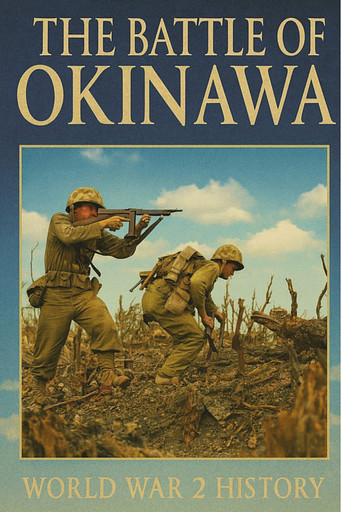
The Battle of Okinawa
WW2 History
What Was It?
The Battle of Okinawa (April 1 – June 22, 1945) was the last and bloodiest major battle of World War II.
It was fought between the United States (and Allied forces) and Imperial Japan over the island of Okinawa, part of the Ryukyu Islands, just 350 miles (560 km) from mainland Japan.
Okinawa was critical because it would serve as the staging area for a potential invasion of Japan.
________________________________________
Key Facts
• Operation name: Operation Iceberg
• US Commander: General Simon Bolivar Buckner Jr.
• Japanese Commander: General Mitsuru Ushijima
• US Forces: Around 180,000 soldiers and Marines
• Japanese Forces: Around 100,000 troops + thousands of armed civilians
• Casualties:
o U.S.: ~50,000 wounded, ~12,500 killed (including General Buckner himself)
o Japan: ~100,000 soldiers killed, plus tens of thousands of Okinawan civilians
o Civilians: Estimates suggest over 100,000 Okinawan civilians died
________________________________________
What Happened During the Battle
• April 1, 1945:
U.S. Marines and Army troops land — the beach landings are strangely easy (nicknamed "Love Day" for how smooth it was).
• Japanese Defensive Strategy:
Instead of fighting at the beaches, Japanese forces dug in deep inland — in caves, bunkers, and tunnels, creating a nightmare of heavily fortified positions.
• Fierce Combat:
Fighting became brutal, with torrential rain, mud, artillery, grenades, flame-throwers, and bayonets common.
• Kamikaze Attacks:
Over 1,500 Japanese kamikaze (suicidal airplane attacks) struck Allied ships. The U.S. Navy suffered heavy damage — more than 30 ships sunk, hundreds damaged.
• Notable Battles within Okinawa:
o Shuri Line: Main line of Japanese defenses — breaking through it took months.
o Sugar Loaf Hill: A key position — fought over with horrific casualties.
• June 22, 1945:
Organized Japanese resistance collapses. General Ushijima commits ritual suicide (seppuku).
________________________________________
Why It Mattered
• Huge Cost:
The horror and casualties made U.S. leaders realize a full-scale invasion of Japan would be catastrophic — millions could die.
• Impact on Atomic Bomb Decision:
The massive bloodshed directly influenced the U.S. decision to drop atomic bombs to end the war more quickly.
• Civilian Tragedy:
Okinawan civilians were caught in the crossfire — many were forced by the Japanese army to commit suicide rather than surrender, due to propaganda that Americans would torture them.
• First Major Use of Kamikazes:
Suicide tactics became a major threat, signaling Japan's desperation.
________________________________________
In Short:
Okinawa showed the world just how deadly and desperate the final phase of the Pacific War had become.
It set the stage for the final, tragic end of the conflict — Hiroshima, Nagasaki, and Japan’s surrender.
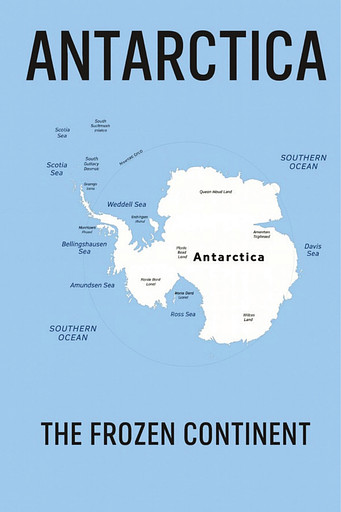
Antarctica
The Frozen Continent
Antarctica is the southernmost continent on Earth, covering an area of about 14 million square kilometers (5.4 million square miles), making it the fifth-largest continent. It is the coldest, driest, and windiest continent, almost entirely covered by ice. Below is a detailed breakdown of Antarcti-ca’s geography, climate, wildlife, history, research, and more.
Geography
• Location: Surrounding the South Pole, Antarctica is entirely within the Antarctic Circle.
• Size: ~14 million km² (5.4 million mi²), making it larger than Europe or Australia.
• Ice Cover: About 98% of Antarctica is covered by ice, which contains ~60% of the world’s freshwater.
• Elevation: Antarctica has the highest average elevation of any continent (~2,500 meters / 8,200 feet).
• Major Landforms:
• Transantarctic Mountains: Divide East and West Antarctica.
• Antarctic Peninsula: Extends towards South America.
• Mount Vinson: Highest peak at 4,892 meters (16,050 feet).
• Lake Vostok: A massive subglacial lake hidden beneath ice.
• Ross Ice Shelf & Ronne Ice Shelf: Large floating ice shelves.
2. Climate
• Coldest Temperature: -128.6°F (-89.2°C) recorded at Vostok Station in 1983 (coldest nat-ural temperature on Earth).
• Average Temperature:
• Coastal areas: -10°C to -30°C (14°F to -22°F).
• Interior: -40°C to -80°C (-40°F to -112°F).
• Wind: Katabatic winds can exceed 200 mph (322 km/h).
• Dryness: Considered a polar desert, with some areas receiving less than 20 mm (0.8 inches) of precipitation per year.
• Seasons:
• Summer (October–March): 24-hour daylight (Midnight Sun).
• Winter (April–September): 24-hour darkness (Polar Night).
3. Wildlife
Despite its extreme climate, Antarctica supports a variety of life, mostly in coastal regions.
Marine Life:
• Penguins:
• Emperor Penguin (largest species, only penguin that breeds in winter).
• Adélie, Chinstrap, Gentoo, Macaroni, and Rockhopper penguins.
• Seals:
• Weddell Seal, Crabeater Seal, Leopard Seal, Elephant Seal, and Ross Seal.
• Whales:
• Blue Whale (largest animal on Earth), Humpback Whale, Minke Whale, Orca (Killer Whale), and Fin Whale.
• Fish:
• Antarctic Toothfish (source of Chilean sea bass), Icefish (antifreeze proteins in blood).
Terrestrial Life:
• No native land mammals, reptiles, or amphibians.
• Only tiny invertebrates (e.g., Antarctic Midge, Tardigrades).
• Lichen, moss, algae, and hardy bacteria survive in some ice-free areas.
4. Human Exploration & History
• First Sightings (Early 19th Century):
• 1820: Fabian von Bellingshausen (Russia), Edward Bransfield (UK), Nathaniel Palmer (USA) sighted Antarctica.
• First Landing (1821): American seal hunter John Davis (disputed).
• Race to the South Pole:
• 1911: Roald Amundsen (Norway) reached the South Pole first.
• 1912: Robert Falcon Scott (UK) arrived but perished on return.
• Ernest Shackleton’s Endurance Expedition (1914-1916): Shipwrecked in ice, remarkable survival story.
• Permanent Research Stations: Began in the 1950s.
5. Scientific Research
Antarctic Treaty System (ATS)
• Signed in 1959, came into force in 1961.
• Prohibits military activity, nuclear testing, and mineral extraction.
• Promotes international scientific cooperation.
• Over 50 nations are signatories.
Research Stations
There are ~70 research stations operated by various countries.
• McMurdo Station (USA): Largest research base.
• Amundsen-Scott South Pole Station (USA): Located at the geographic South Pole.
• Vostok Station (Russia): Site of the coldest temperature recorded.
• Other notable stations: Halley (UK), Concordia (France/Italy), Rothera (UK), Davis (Aus-tralia), Zhongshan (China).
Key Research Areas
• Climate Change & Ice Studies: Antarctica’s ice sheets are crucial for studying global sea level rise.
• Ozone Hole: Discovered over Antarctica in the 1980s.
• Meteorites: Antarctica is an excellent place for meteorite recovery.
• Astrophysics: IceCube Neutrino Observatory studies cosmic particles.
6. Environmental Issues & Climate Change
• Warming: Some parts of Antarctica are warming rapidly, especially the Antarctic Peninsu-la.
• Melting Ice: West Antarctic Ice Sheet is losing mass, contributing to sea level rise.
• Threats to Wildlife: Climate change affects krill populations, impacting the food chain.
• Tourism Impact: Although regulated, increasing tourism can disrupt ecosystems.
7. Human Presence & Tourism
• Population: No native inhabitants; ~1,000 to 5,000 scientists and staff live there seasonally.
• Tourism: Controlled by the International Association of Antarctica Tour Operators (IAATO).
• ~50,000 tourists visit annually, mostly by cruise ships.
• Activities: Wildlife viewing, ice trekking, kayaking.
8. Interesting Facts
• Antarctica has no official time zone (research stations use their home country’s time).
• The largest iceberg ever recorded (B-15) was about 295 km long (183 miles).
• Blood Falls in Taylor Glacier is a red-colored outflow due to iron-rich water.
• The Dry Valleys have not seen rain for nearly 2 million years.
• The Antarctic ice sheet is so heavy it deforms the Earth's crust.
9. Future of Antarctica
• Climate models predict that if major ice sheets collapse, global sea levels could rise signif-icantly.
• Continued scientific cooperation and environmental protection efforts are crucial for pre-serving Antarctica’s unique ecosystem.

The WWW
World Wide Web
The World Wide Web (WWW) is a system of interconnected web pages and resources, accessible through the internet. It allows users to access and share information using web browsers like Chrome, Firefox, and Safari. The web was invented by Tim Berners-Lee in 1989 and is based on technologies like HTML (Hypertext Markup Language), URLs (Uniform Resource Locators), and HTTP (Hypertext Transfer Protocol).
Key Components of the Web:
1. Web Pages & Websites – Documents written in HTML, often containing text, images, and links.
2. Hyperlinks – Clickable elements that connect different web pages.
3. Web Browsers – Programs that allow users to view web pages (e.g., Chrome, Edge, Safari).
4. Servers & Clients – Servers store websites, and clients (users) access them through browsers.
5. Search Engines – Tools like Google and Bing that help users find web content.
The WWW is not the same as the Internet—the internet is the broader network that connects computers globally, while the web is just one of the services running on the internet.
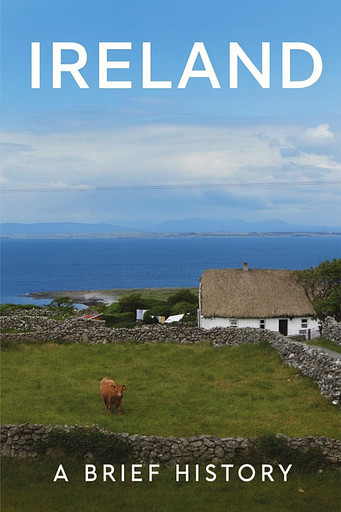
Ireland
A Short History
A Brief History of Ireland:
Ancient and Medieval Ireland
• Prehistoric Ireland was settled as early as 10,000 BCE. It later developed a rich Celtic culture.
• Christianity arrived in the 5th century, with St. Patrick playing a central role in its spread.
• Ireland was never conquered by the Romans, unlike Britain, but was eventually divided into small kingdoms.
• Viking invasions in the 8th–11th centuries led to the founding of cities like Dublin.
• The Norman invasion began in 1169, bringing Ireland under partial control of the English crown.
English Rule and Resistance
• Over the centuries, the English sought greater control, especially under Henry VIII and Elizabeth I.
• This led to plantations — confiscation of land from native Irish and settlement by English and Scottish Protestants, especially in Ulster (Northern Ireland).
• Ireland was formally annexed into the United Kingdom in 1801, creating the UK of Great Britain and Ireland.
The 19th Century
• The Great Famine (1845–1852), caused by potato blight and worsened by British policies, killed over a million and forced millions more to emigrate.
• This deepened resentment toward British rule and fueled calls for Home Rule (limited self-government).
Early 20th Century: Independence and Partition
• The Easter Rising of 1916, though initially unpopular, became a turning point for Irish independence sentiment.
• The Irish War of Independence (1919–1921) followed, led by the IRA against British forces.
• The Anglo-Irish Treaty (1921) led to the creation of the Irish Free State (now the Republic of Ireland) — but also to the partition of the island, with Northern Ireland remaining part of the UK.
________________________________________
The Troubles (Late 1960s–1998)
Background
• Northern Ireland was (and remains) part of the United Kingdom, but it had a Protestant majority and a large Catholic minority.
• Catholics often faced discrimination in housing, employment, and politics.
• In the 1960s, inspired by the U.S. civil rights movement, Catholics began campaigning for equal rights.
Outbreak of Violence
• Tensions escalated quickly between Nationalists/Republicans (mainly Catholic, wanted a united Ireland) and Unionists/Loyalists (mainly Protestant, wanted to remain in the UK).
• Violence broke out between communities, often involving paramilitary groups:
o IRA (Irish Republican Army) and splinter groups: Republican.
o UVF (Ulster Volunteer Force) and UDA (Ulster Defence Association): Loyalist.
British Involvement
• The British Army was deployed in 1969, initially to protect Catholics, but soon was seen by many as an occupying force.
• One of the worst incidents was Bloody Sunday (1972), when British soldiers shot 26 unarmed civil rights protesters in Derry, killing 14.
Casualties and Impact
• The Troubles lasted nearly 30 years, causing:
o Over 3,500 deaths and tens of thousands of injuries.
o Deep psychological scars and intense sectarian division.
• Bombings, shootings, and assassinations were common — in Northern Ireland, but also in Britain and even mainland Europe.
Peace Process
• Years of negotiations, involving the UK, Irish government, and US mediators, led to the Good Friday Agreement in 1998.
• This established:
o A power-sharing government in Northern Ireland.
o Decommissioning of weapons by paramilitary groups.
o A framework for future referenda on Irish unification (if supported by a majority in the North).
________________________________________
Today
• Northern Ireland still faces tensions, though nowhere near the levels of the Troubles.
• Brexit has added new strain, particularly concerning the border between Northern Ireland and the Republic (which is now an EU frontier).
• Cultural and political divides persist, but many younger people are increasingly moving beyond traditional sectarian identities.
The Indian
Indian Motor Cycle
The Indian Motorcycle Company is one of the most iconic and oldest motorcycle manufacturers in the world. Founded in 1901, Indian Motorcycles has had a long and fascinating history filled with innovation, racing success, and multiple revivals. Here’s a detailed look at its journey:
________________________________________
Early Years and Founding (1901–1953)
• Founded: 1901 in Springfield, Massachusetts, by George M. Hendee and Oscar Hedstrom.
• First Production Model: 1902 – a single-cylinder motorcycle with a 1.75-horsepower engine.
• Rapid Growth: By 1910, Indian became the world’s largest motorcycle manufacturer.
• First V-Twin Engine: Introduced in 1907, it became a signature of the brand.
• Racing Success: In 1911, Indian motorcycles dominated the Isle of Man Tourist Trophy (TT), taking the top three positions.
• WWI Contribution: Supplied thousands of motorcycles to the U.S. military.
________________________________________
Golden Era (1920s–1930s)
• Indian Scout (1920): One of the most famous models, known for durability and performance.
• Indian Chief (1922): Introduced as a larger, more powerful motorcycle.
• Merger and Expansion: Indian merged with DuPont Motors in 1930, bringing financial stability and a new color scheme (Indian Red).
• WWII Production: Like Harley-Davidson, Indian provided motorcycles for the military, including the Indian 741B.
Lassiter's Reef
The Story of Harold Lassiter
Who Was Harold Lasseter?
Lewis Harold Bell Lasseter was an Australian prospector and adventurer. In 1929, he claimed that, as a young man in 1897, he had discovered a rich gold reef—so rich, in fact, that it was described as having “gold in such quantities as to make men mad”—somewhere in central Australia, in a remote desert region between the MacDonnell Ranges and the Western Australian border.
________________________________________
The Legendary Claim
Lasseter said he stumbled upon the reef while traveling alone, but due to a lack of supplies, he had to leave and couldn’t find his way back. For years, he kept the discovery mostly to himself.
Then, during the Great Depression, with Australia desperate for wealth, Lasseter approached the government and private backers to fund an expedition to relocate the lost reef. He was persuasive—charismatic, confident, and mysterious.
________________________________________
The 1930 Expedition
A heavily funded expedition known as the Lasseter’s Reef Expedition set out in mid-1930, featuring camels, trucks, and even a plane. The team included surveyors, geologists, and local Aboriginal guides.
But things quickly went sideways:
• Lasseter clashed with the expedition leader and others.
• The terrain was harsh, with sweltering heat and no reliable maps.
• Supplies ran low, and morale fell apart.
Eventually, Lasseter split off alone, determined to find the reef without them.
________________________________________
The Tragic End
Lasseter wandered the desert with a few Aboriginal companions and was later found by a bushman named Bob Buck. Lasseter was starving, weakened, and sick, sheltering in a cave. He died soon after, in early 1931, at a place now called Lasseter's Cave, in the Petermann Ranges.
He reportedly kept a diary, detailing his final days and holding firm to his story. The diary deepened the mystery and has fueled speculation for generations.
________________________________________
Fact or Fiction?
Here’s where it gets weird and wild:
Supporters say:
• Lasseter was sincere and believed in what he found.
• Satellite imaging and mineral surveys have shown potential gold-bearing areas in central Australia.
• Aboriginal stories reference unusual mineral outcrops in the same region.
Skeptics argue:
• Lasseter was a conman or fantasist with no real evidence.
• His original story had inconsistencies, like vague locations and odd travel timelines.
• No gold has ever been found in the area he described.
________________________________________
The Legacy
• The “Lasseter’s Reef” legend has become a symbol of obsession, the harshness of the Outback, and the eternal lure of lost treasure.
• Books, documentaries, and even an opera have been made about it.
• Some modern treasure hunters still go looking—hoping the reef is real and just waiting to be found.

Diabetes
All about Diabetes
What is Diabetes?
Diabetes is a metabolic disorder where the body either doesn't produce enough insulin or can't effectively use the insulin it produces. Insulin is a hormone that helps regulate blood sugar levels. If left unmanaged, high blood sugar can lead to serious health complications.
Types of Diabetes
1. Type 1 Diabetes
o An autoimmune condition where the immune system attacks insulin-producing cells in the pancreas.
o Usually diagnosed in childhood or early adulthood.
o People with Type 1 diabetes need lifelong insulin therapy.
2. Type 2 Diabetes
o The body becomes resistant to insulin, and the pancreas can’t produce enough to keep blood sugar levels normal.
o Commonly linked to obesity, poor diet, and lack of exercise.
o Can be managed with lifestyle changes, medications, and sometimes insulin.
3. Gestational Diabetes
o Occurs during pregnancy when hormonal changes affect insulin function.
o Usually resolves after childbirth but increases the risk of developing Type 2 diabetes later in life.
4. Prediabetes
o Blood sugar levels are higher than normal but not high enough to be classified as diabetes.
o A warning sign that diabetes could develop without lifestyle changes.
Symptoms of Diabetes
• Increased thirst and frequent urination
• Extreme fatigue
• Blurred vision
• Unexplained weight loss (Type 1)
• Slow wound healing
• Tingling or numbness in hands/feet (Type 2)
Causes & Risk Factors
• Type 1: Genetic predisposition, autoimmune response, environmental triggers (like viruses).
• Type 2: Obesity, poor diet, sedentary lifestyle, family history, aging.
• Gestational Diabetes: Hormonal changes during pregnancy.
Complications of Uncontrolled Diabetes
• Heart disease and stroke
• Kidney damage (diabetic nephropathy)
• Eye problems (diabetic retinopathy, blindness)
• Nerve damage (neuropathy) leading to pain, numbness, or amputation
• Skin infections and slow wound healing
Treatment & Management
1. Type 1 Diabetes
o Requires insulin injections or insulin pumps.
o Monitoring blood sugar levels regularly.
o Healthy diet and exercise to maintain blood sugar balance.
2. Type 2 Diabetes
o Lifestyle changes: weight loss, healthy diet, regular physical activity.
o Oral medications (like Metformin) or insulin if necessary.
o Regular monitoring of blood glucose levels.
3. Gestational Diabetes
o Controlled with diet, exercise, and sometimes insulin.
Prevention (for Type 2 and Prediabetes)
• Maintain a healthy weight.
• Eat a balanced diet (low sugar, high fiber, whole foods).
• Exercise regularly.
• Reduce stress and avoid smoking.
Roman Catacombs
City of the Dead
The Roman Catacombs are an extensive network of underground burial sites outside the ancient city of Rome, used primarily by early Christians and Jews from the 2nd to the 5th century AD. They are among the most fascinating archaeological and historical sites in Italy.
Key Facts About the Roman Catacombs
1. Origins: Built between the 2nd and 5th centuries AD when Christians were often persecuted and needed hidden burial places.
2. Location: Spread throughout Rome, mainly along major roads like the Appian Way.
3. Structure: A vast underground labyrinth of tunnels and chambers, sometimes extending several levels deep.
4. Purpose: Served as burial sites and places for worship, with some catacombs containing chapels.
5. Symbolism: Rich in Christian art, including frescoes, inscriptions, and symbols like the fish (Ichthys), the Good Shepherd, and doves.
6. Not Just for Christians: Some catacombs, such as the Catacomb of Vigna Randanini, were used by Jewish communities.
7. Rediscovery: Many were forgotten for centuries and rediscovered in the 16th and 17th centuries.
Famous Roman Catacombs
• Catacombs of St. Callixtus: One of the largest and most important, containing the tombs of several popes.
• Catacombs of St. Sebastian: Named after the Christian martyr buried there.
• Catacombs of Domitilla: The oldest and only one still containing bones.
• Catacombs of Priscilla: Known for some of the earliest Christian art.
Myths & Legends
• Hiding from Persecution? While it's commonly believed that early Christians used catacombs to hide from Roman persecution, there’s little evidence to support this. They were primarily burial sites rather than secret refuges.
• Haunted Reputation: Their dark, eerie atmosphere has led to ghost stories and legends over the centuries.
Lost Cities
Worldwide
Lost cities are ancient settlements that were once thriving but have since been abandoned, buried, or forgotten due to natural disasters, war, climate change, or shifting trade routes. Here’s a look at some of the most fascinating lost cities around the world: These include.
________________________________________
Machu Picchu (Peru)
• Civilization: Inca Empire
• Founded: 15th century
• Lost & Rediscovered: Abandoned in the 16th century, rediscovered in 1911 by Hiram Bingham
• Reason for Abandonment: Theories suggest disease, Spanish conquest, or strategic retreat
• Interesting Fact: It was never discovered by Spanish conquistadors, which helped preserve its structures.
________________________________________
Petra (Jordan)
• Civilization: Nabataean Kingdom
• Founded: 4th century BCE
• Lost & Rediscovered: Abandoned around the 7th century CE, rediscovered in 1812
• Reason for Abandonment: Decline of trade routes and earthquakes
• Interesting Fact: Known as the “Rose City” due to the pink sandstone cliffs
________________________________________
3. Pompeii (Italy)
• Civilization: Roman Empire
• Founded: 6th-7th century BCE
• Lost & Rediscovered: Buried in 79 CE, rediscovered in 1748
• Reason for Abandonment: Destroyed by Mount Vesuvius' eruption
• Interesting Fact: Volcanic ash preserved people, buildings, and murals, providing a snapshot of daily Roman life.
________________________________________
4. Angkor (Cambodia)
• Civilization: Khmer Empire
• Founded: 9th century CE
• Lost & Rediscovered: Declined in the 15th century, rediscovered in the 19th century
• Reason for Abandonment: Wars, climate change, and decline of the Khmer Empire
• Interesting Fact: The Angkor Wat temple complex is the largest religious monument in the world.
________________________________________
5. Tikal (Guatemala)
• Civilization: Maya Civilization
• Founded: 4th century BCE
• Lost & Rediscovered: Abandoned in the 10th century, rediscovered in the 19th century
• Reason for Abandonment: Climate change, warfare, and deforestation
• Interesting Fact: It was one of the most powerful Maya city-states, with massive pyramids and temples.
________________________________________
6. Troy (Turkey)
• Civilization: Trojans (Bronze Age)
• Founded: Around 3000 BCE
• Lost & Rediscovered: Destroyed multiple times, rediscovered in the 19th century
• Reason for Abandonment: Wars and natural disasters
• Interesting Fact: The setting of Homer’s "Iliad," featuring the famous Trojan War.
________________________________________
7. El Dorado (Legendary, South America)
• Civilization: Unknown (Believed to be Indigenous tribes)
• Founded: Mythological origins
• Lost & Rediscovered: Never found
• Reason for Abandonment: Likely a myth, based on Spanish explorers' exaggerations
• Interesting Fact: Thought to be a city of gold, leading explorers on fruitless quests.
________________________________________
8. Atlantis (Legendary, Possibly Mediterranean)
• Civilization: Unknown (Possibly Minoan or another prehistoric culture)
• Founded: Unknown
• Lost & Rediscovered: Never confirmed
• Reason for Abandonment: Allegedly sunk due to a cataclysmic event
• Interesting Fact: First mentioned by Plato in 360 BCE as an advanced civilization that disappeared beneath the sea.
________________________________________
9. Cahokia (USA)
• Civilization: Mississippian Culture
• Founded: 1050 CE
• Lost & Rediscovered: Abandoned in the 14th century
• Reason for Abandonment: Climate change, resource depletion, and political instability
• Interesting Fact: It was the largest pre-Columbian city in North America, home to tens of thousands of people.
________________________________________
10. Mohenjo-Daro (Pakistan)
• Civilization: Indus Valley Civilization
• Founded: 2500 BCE
• Lost & Rediscovered: Declined around 1900 BCE, rediscovered in the 1920s
• Reason for Abandonment: Climate change, changing river courses, or invasion
• Interesting Fact: Featured one of the world’s earliest drainage and sewage systems.
:
________________________________________
1. Machu Picchu (Peru)
• Civilization: Inca Empire
• Founded: 15th century
• Lost & Rediscovered: Abandoned in the 16th century, rediscovered in 1911 by Hiram Bingham
• Reason for Abandonment: Theories suggest disease, Spanish conquest, or strategic retreat
• Interesting Fact: It was never discovered by Spanish conquistadors, which helped preserve its structures.
________________________________________
2. Petra (Jordan)
• Civilization: Nabataean Kingdom
• Founded: 4th century BCE
• Lost & Rediscovered: Abandoned around the 7th century CE, rediscovered in 1812
• Reason for Abandonment: Decline of trade routes and earthquakes
• Interesting Fact: Known as the “Rose City” due to the pink sandstone cliffs
________________________________________
3. Pompeii (Italy)
• Civilization: Roman Empire
• Founded: 6th-7th century BCE
• Lost & Rediscovered: Buried in 79 CE, rediscovered in 1748
• Reason for Abandonment: Destroyed by Mount Vesuvius' eruption
• Interesting Fact: Volcanic ash preserved people, buildings, and murals, providing a snapshot of daily Roman life.
________________________________________
4. Angkor (Cambodia)
• Civilization: Khmer Empire
• Founded: 9th century CE
• Lost & Rediscovered: Declined in the 15th century, rediscovered in the 19th century
• Reason for Abandonment: Wars, climate change, and decline of the Khmer Empire
• Interesting Fact: The Angkor Wat temple complex is the largest religious monument in the world.
________________________________________
5. Tikal (Guatemala)
• Civilization: Maya Civilization
• Founded: 4th century BCE
• Lost & Rediscovered: Abandoned in the 10th century, rediscovered in the 19th century
• Reason for Abandonment: Climate change, warfare, and deforestation
• Interesting Fact: It was one of the most powerful Maya city-states, with massive pyramids and temples.
________________________________________
6. Troy (Turkey)
• Civilization: Trojans (Bronze Age)
• Founded: Around 3000 BCE
• Lost & Rediscovered: Destroyed multiple times, rediscovered in the 19th century
• Reason for Abandonment: Wars and natural disasters
• Interesting Fact: The setting of Homer’s "Iliad," featuring the famous Trojan War.
________________________________________
7. El Dorado (Legendary, South America)
• Civilization: Unknown (Believed to be Indigenous tribes)
• Founded: Mythological origins
• Lost & Rediscovered: Never found
• Reason for Abandonment: Likely a myth, based on Spanish explorers' exaggerations
• Interesting Fact: Thought to be a city of gold, leading explorers on fruitless quests.
________________________________________
8. Atlantis (Legendary, Possibly Mediterranean)
• Civilization: Unknown (Possibly Minoan or another prehistoric culture)
• Founded: Unknown
• Lost & Rediscovered: Never confirmed
• Reason for Abandonment: Allegedly sunk due to a cataclysmic event
• Interesting Fact: First mentioned by Plato in 360 BCE as an advanced civilization that disappeared beneath the sea.
________________________________________
9. Cahokia (USA)
• Civilization: Mississippian Culture
• Founded: 1050 CE
• Lost & Rediscovered: Abandoned in the 14th century
• Reason for Abandonment: Climate change, resource depletion, and political instability
• Interesting Fact: It was the largest pre-Columbian city in North America, home to tens of thousands of people.
________________________________________
10. Mohenjo-Daro (Pakistan)
• Civilization: Indus Valley Civilization
• Founded: 2500 BCE
• Lost & Rediscovered: Declined around 1900 BCE, rediscovered in the 1920s
• Reason for Abandonment: Climate change, changing river courses, or invasion
• Interesting Fact: Featured one of the world’s earliest drainage and sewage systems.
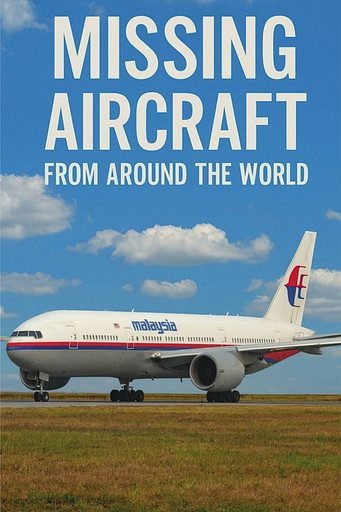
Missing Aircraft
Worldwide
Missing aircraft cases are some of the most intriguing mysteries in aviation history. Despite advances in technology, many aircraft have disappeared without a trace, leaving investigators and the public searching for answers. Below is a breakdown of notable missing aircraft incidents worldwide. These include:
________________________________________
Notable Missing Aircraft Cases
Malaysia Airlines Flight MH370 (2014)
• Aircraft: Boeing 777-200ER
• Date: March 8, 2014
• Passengers & Crew: 239 people
• Route: Kuala Lumpur, Malaysia → Beijing, China
• Last Contact: Over the South China Sea
• Theories:
o Possible pilot involvement in a deliberate act.
o Mechanical failure or depressurization.
o Hacked navigation system.
o Shot down (conspiracy theories).
• Current Status: Some debris confirmed from the plane has washed up in the Indian Ocean, but the main wreckage remains missing.
Amelia Earhart & Fred Noonan (1937)
• Aircraft: Lockheed Electra 10E
• Date: July 2, 1937
• Passengers & Crew: Amelia Earhart (pilot), Fred Noonan (navigator)
• Route: Lae, Papua New Guinea → Howland Island (Pacific Ocean)
• Last Contact: Near Howland Island
• Theories:
o Crashed and sank into the Pacific.
o Landed on Nikumaroro Island and perished.
o Captured by the Japanese.
• Current Status: Wreckage has never been found, though artifacts on Nikumaroro suggest they may have survived for a time.
3. Flying Tiger Line Flight 739 (1962)
• Aircraft: Lockheed L-1049 Super Constellation
• Date: March 16, 1962
• Passengers & Crew: 107 people
• Route: Guam → Philippines
• Last Contact: Western Pacific Ocean
• Theories:
o Mid-air explosion.
o Sabotage or attack.
• Current Status: No debris ever found.
4. Air France Flight 447 (2009) – Found After 2 Years
• Aircraft: Airbus A330-203
• Date: June 1, 2009
• Passengers & Crew: 228 people
• Route: Rio de Janeiro, Brazil → Paris, France
• Last Contact: Over the Atlantic Ocean
• Discovery:
o Initial debris was found within days.
o The black boxes were located in 2011.
• Cause:
o Ice crystals blocked the pitot tubes, leading to erroneous airspeed readings.
o Pilots failed to recover from a stall.
5. Star Dust (1947)
• Aircraft: Avro Lancastrian
• Date: August 2, 1947
• Passengers & Crew: 11 people
• Route: Buenos Aires, Argentina → Santiago, Chile
• Last Contact: Andes Mountains
• Theories:
o Crashed into a glacier due to navigation error.
• Discovery: Some wreckage was found in 1998, but the mystery of its cryptic last message—“STENDEC”—remains unsolved.
________________________________________
Common Causes & Theories for Aircraft Disappearances
1. Mechanical Failures
o Engine failures, decompression, or fuel exhaustion.
2. Weather Conditions
o Severe storms, turbulence, or icing can cause crashes.
3. Pilot Error
o Misjudgments or disorientation can lead to accidents.
4. Hijackings or Sabotage
o Aircraft may be taken over or bombed mid-flight.
5. Controlled Flight Into Terrain (CFIT)
o Pilots may accidentally fly into mountains or water.
6. Electromagnetic & Mystery Theories
o The Bermuda Triangle, alien abductions, or secret government cover-ups.
________________________________________
Other Notable Missing Aircraft
• British South American Airways (BSAA) Star Tiger (1948) – Lost in the Bermuda Triangle.
• BSAA Star Ariel (1949) – Also vanished in the Bermuda Triangle.
• Varig Flight 967 (1979) – A Boeing 707 carrying valuable paintings disappeared over the Pacific.
• Helios Airways Flight 522 (2005) – Found – Crew lost consciousness due to depressurization; autopilot kept the plane flying until it crashed.
________________________________________
Why Are Some Aircraft Never Found?
• Vast, Remote Areas – Oceans and jungles make searches difficult.
• Deep Ocean Floors – Wreckage may be too deep to locate.
• Disintegration Upon Impact – Some aircraft may break into small, scattered debris.
• Lack of Transponder Signals – Some aircraft lose all communication, making them hard to track.
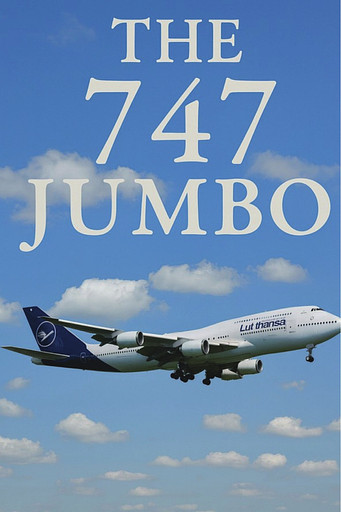
The 747
Jumbo Jet
The Boeing 747, often called the Jumbo Jet, is one of the most iconic aircraft in aviation history. Here’s a breakdown of its history:
Origins and Development (1960s)
• In the early 1960s, air travel was booming, and airlines needed larger planes to handle increasing passenger demand.
• Juan Trippe, the head of Pan Am, asked Boeing to build an aircraft that could carry twice as many passengers as the Boeing 707.
• In 1966, Boeing began designing the 747, with a unique humpbacked fuselage to allow for a cargo version and a distinctive two-deck design.
• The project was led by Joe Sutter, often called the "father of the 747."
First Flight and Introduction (1969–1970)
• The first 747 prototype was rolled out on September 30, 1968, in Everett, Washington.
• It took its first flight on February 9, 1969.
• Pan Am launched the first commercial 747 flight on January 22, 1970, from New York to London.
Expansion and Popularity (1970s–1990s)
• The 747 revolutionized air travel by reducing ticket prices and making long-haul flights more accessible.
• Variants like the 747-200 (1971), 747-300 (1983), and 747-400 (1989) improved fuel efficiency, range, and passenger capacity.
• Airlines worldwide adopted the 747, making it the backbone of long-haul travel.
• It also became a key cargo aircraft and was modified for specialty uses (e.g., Air Force One, NASA’s Space Shuttle Carrier).
Challenges and Decline (2000s–2020s)
• In the 2000s, twin-engine jets like the Boeing 777 and Airbus A350 became more fuel-efficient, reducing demand for the four-engine 747.
• Boeing introduced the 747-8 in 2012, with an improved design and more efficiency, but it struggled with sales.
• The COVID-19 pandemic further accelerated the retirement of 747 passenger planes.
End of an Era (2023)
• Boeing delivered its final 747 on January 31, 2023, to Atlas Air, marking the end of over 50 years of production.
• Many airlines have retired their passenger 747s, but cargo versions remain in operation.
Legacy
• The 747 changed aviation by making international travel more accessible.
• It remains a symbol of innovation, with its iconic hump and massive size.
• Even though newer jets have replaced it, the 747 will always be remembered as the "Queen of the Skies."
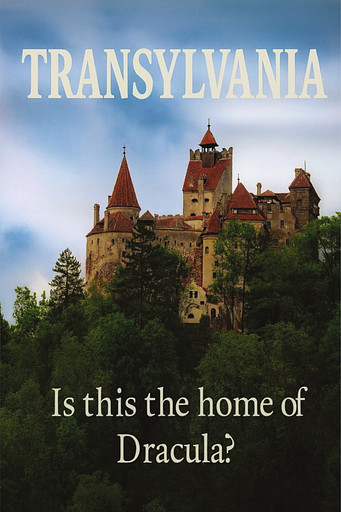
Transylvania
An Overview
Transylvania is a historical region in central Romania, surrounded by the Carpathian Mountains on three sides. It is the most famous region of Romania, known for its forests, mountains, medieval towns, and association with Dracula.
• Borders:
o East & South: Carpathian Mountains
o West: Apuseni Mountains and the Pannonian Plain
• Major cities: Cluj-Napoca (the largest), Brașov, Sibiu, Târgu Mureș, Alba Iulia
• Rivers: Mureș, Someș, Olt
Historical Background
Ancient Times
• Inhabited by the Dacians, an ancient Indo-European people.
• Conquered by the Roman Empire in 106 CE under Emperor Trajan. Roman rule lasted until ~271 CE.
• Remains of Roman cities and forts (e.g., Sarmizegetusa) still exist.
Medieval Period
• After the Romans withdrew, the region was invaded by Goths, Huns, Slavs, and Avars.
• From the 9th century onward, it was influenced and eventually integrated into the Kingdom of Hungary.
• Saxons (German settlers) and Szeklers (Hungarian-speaking people) were invited to defend and develop the region.
• By the 12th–14th centuries, Transylvania had a unique, multi-ethnic character with Romanians, Hungarians, Saxons, and Roma.
Early Modern Period
• Became the Principality of Transylvania in the 16th century, often under Ottoman suzerainty, but with significant autonomy.
• A hub for Protestant Reformation and religious tolerance (very progressive for its time).
18th–19th Centuries
• Absorbed by the Habsburg Empire after the Ottomans weakened.
• Later part of the Austro-Hungarian Empire until the end of World War I (1918).
20th Century–Present
• After WWI, Transylvania became part of Greater Romania (Treaty of Trianon, 1920).
• WWII brought territorial changes: Northern Transylvania was temporarily given to Hungary (1940–1944) but returned to Romania afterward.
• Today, it is an integral part of modern Romania, divided administratively into several counties.
________________________________________
Demographics & Ethnic Groups
• Historically multi-ethnic: Romanians, Hungarians (Magyars), Germans (Transylvanian Saxons), and Roma.
• Today:
o Majority: Romanians (~70–75%)
o Minority: Hungarians (~20%), especially in Székely Land (Harghita and Covasna)
o Very small communities: Roma, Germans, Jews (much diminished post-WWII)
________________________________________
Culture & Architecture
Transylvania has a rich blend of Eastern and Western European influences.
Key Features:
• Medieval towns: Sibiu, Brașov, Sighișoara (birthplace of Vlad the Impaler)
• Fortified churches: Unique to Saxon villages (UNESCO-listed)
• Castles:
o Bran Castle (marketed as Dracula’s Castle)
o Corvin Castle (Gothic-Renaissance, dramatic fortress)
o Râșnov Fortress
Traditions:
• Folk music and dance, colorful festivals (e.g., Junii Brașovului)
• Handicrafts: Wood carving, weaving, pottery
________________________________________
The Dracula Connection
• Inspired by Vlad III Dracula, aka Vlad the Impaler, a 15th-century Wallachian prince known for his brutal rule.
• Bram Stoker’s Dracula (1897) set parts of the novel in Transylvania, though he never visited.
• Today, "Dracula tourism" draws many visitors, especially to Bran Castle and Sighișoara.
________________________________________
Nature & Landscape
• Carpathian Mountains: Hiking, skiing, and wildlife (bears, wolves, lynx)
• Forests & Meadows: Biodiverse and mostly untouched
• Caves & Gorges: Scărișoara Ice Cave, Turda Gorge
• Countryside: Rolling hills, picturesque villages, haystacks, horse carts
________________________________________
Science & Education
• Transylvania is home to major universities, especially in Cluj-Napoca, which is a cultural and tech hub.
• Historically known for academic institutions under Austro-Hungarian influence (Latin, German, and Hungarian education systems).
________________________________________ Key Takeaways
• Transylvania is more than just Dracula—it's a richly layered region with a diverse history, vibrant culture, and breathtaking nature.
• It bridges East and West, both geographically and culturally.
• Its unique mix of ethnicities and traditions makes it one of Europe’s most intriguing historical regions.

AI
Artifical Intelligence
Artificial Intelligence (AI) is a broad field of computer science focused on building systems or machines that can perform tasks that would typically require human intelligence. These tasks include reasoning, learning, problem-solving, perception, language understanding, and decision-making. AI systems are often designed to simulate human-like cognition or augment human abilities in various domains.
Here are some key areas and concepts within AI:
Types of AI
AI is often categorized based on its capabilities and functionality:
• Narrow AI (Weak AI):
This is AI designed and trained for a specific task, such as image recognition, language translation, or playing chess. Narrow AI is the most common form in use today.
• General AI (Strong AI):
This refers to AI that can perform any intellectual task that a human can do. It has the ability to understand, learn, and apply knowledge across a wide range of tasks. General AI is still largely theoretical and is a goal for the future.
• Superintelligent AI:
This is a hypothetical AI that surpasses human intelligence across all fields. It could potentially outperform humans in every task, from creative work to scientific research.
2. Subfields of AI
• Machine Learning (ML):
A subset of AI that enables machines to learn from data and improve over time without being explicitly programmed. Machine learning involves algorithms that find patterns in data and use these patterns to make predictions or decisions. It includes:
o Supervised learning: The model is trained on labeled data (input-output pairs).
o Unsupervised learning: The model identifies patterns in data without labels.
o Reinforcement learning: The model learns by interacting with an environment and receiving feedback (rewards or penalties).
• Natural Language Processing (NLP):
This is the branch of AI focused on enabling machines to understand, interpret, and respond to human language. It includes tasks like translation, sentiment analysis, chatbots, and speech recognition.
• Computer Vision:
AI techniques that allow machines to interpret and make decisions based on visual data (images or videos). It's used in facial recognition, object detection, autonomous vehicles, and medical imaging.
• Robotics:
Combines AI with mechanical engineering to create robots that can interact with the physical world. AI-powered robots can perform tasks autonomously, such as in manufacturing or healthcare.
• Expert Systems:
These are AI systems designed to mimic the decision-making ability of a human expert in a specific field. They use predefined rules and knowledge bases to make decisions.
3. Key Technologies in AI
• Deep Learning:
A subset of machine learning, deep learning uses artificial neural networks with many layers (hence "deep") to process complex patterns in large amounts of data. Deep learning is behind many breakthroughs in fields like image and speech recognition.
• Neural Networks:
These are computational models inspired by the human brain. They consist of layers of interconnected "neurons" that process information and learn patterns through training.
• Generative Models:
These models, such as GANs (Generative Adversarial Networks), can generate new data that mimics real-world data. They are used in image generation, style transfer, and text creation.
4. Applications of AI
AI is already making an impact in numerous industries:
• Healthcare: AI is used in medical diagnostics, drug discovery, personalized treatment plans, and robotic surgeries.
• Finance: AI helps with fraud detection, algorithmic trading, and customer service through chatbots.
• Autonomous Vehicles: AI systems enable self-driving cars to perceive their environment, make decisions, and navigate safely.
• Entertainment: AI powers recommendation systems in platforms like Netflix and YouTube, and is also used in gaming.
• Customer Service: AI chatbots and virtual assistants like Siri, Alexa, and Google Assistant provide automated customer support.
5. Ethics and Challenges
While AI offers many benefits, it also raises important ethical and societal concerns:
• Bias: AI systems can inherit and amplify biases present in training data, leading to unfair or discriminatory outcomes.
• Privacy: AI can be used to analyze personal data, raising concerns about surveillance and privacy violations.
• Job Displacement: Automation and AI-driven systems may replace jobs in certain sectors, creating the need for reskilling and social adaptation.
• Accountability: As AI systems become more autonomous, it becomes harder to attribute responsibility for decisions made by machines, especially in high-stakes areas like healthcare or law enforcement.
• Safety: In the case of superintelligent AI, there is concern about ensuring that its goals align with human values and safety.
6. Future of AI
AI continues to evolve rapidly, with researchers exploring new models, algorithms, and technologies. Some exciting areas for the future include:
• Explainable AI (XAI):
Making AI's decisions and reasoning processes more transparent and understandable to humans.
• AI and Creativity:
AI is being used to create art, music, and literature, blurring the lines between human and machine creativity.
• Human-AI Collaboration:
Instead of replacing humans, AI is increasingly seen as a tool to augment human capabilities, leading to more productive and innovative work environments.
AI holds immense promise but also requires careful regulation and consideration to ensure it is developed and used responsibly.
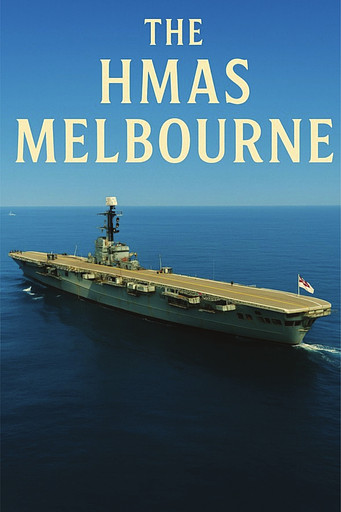
The HMAS Melbourne
HMAS Melbourne
Date: 10 February 1964
Location: Off Jervis Bay, New South Wales, Australia
Event:
HMAS Melbourne was conducting night time exercises with the destroyer HMAS Voyager. Voyager’s role was to act as a plane guard — positioned behind the carrier to rescue any airmen who might crash during takeoff or landing.
During a maneuver to reposition, Voyager unexpectedly turned across Melbourne’s bow. Despite efforts to avoid a collision, Melbourne struck Voyager at high speed. The massive carrier sliced the smaller destroyer in two.
Casualties:
82 men aboard Voyager were killed.
Aftermath:
The disaster shocked Australia. A Royal Commission was held, which eventually found that Voyager’s officers had made serious navigational errors and that the ship’s leadership was compromised — notably, its captain was reportedly unwell and possibly unfit for command.
This event triggered widespread reforms in the Royal Australian Navy (RAN).
2. The Collision between HMAS Melbourne and USS Frank E. Evans (1969)
Date: 3 June 1969
Location: South China Sea, during a Southeast Asia Treaty Organization (SEATO) naval exercise
Event:
Again acting as an aircraft carrier during exercises, HMAS Melbourne was coordinating with several destroyers. The American destroyer USS Frank E. Evans was maneuvering to take up plane guard station when it made a fatal navigational mistake.
Instead of passing safely behind Melbourne, Evans turned toward the carrier’s bow. Before either ship could take evasive action, Melbourne struck Evans amidships.
Casualties:
74 American sailors were killed, many of them sleeping in the forward compartments of Evans that were sheared off by the collision.
Aftermath:
Once again, Melbourne was exonerated after inquiries, but the event led to tension between the U.S. and Australia.
The commanding officers of Evans were found to be at fault for improper maneuvering.
HMAS Melbourne gained an unfortunate reputation — some sailors nicknamed her "the ship that kills destroyers."
Final Note on HMAS Melbourne
Interestingly, despite her tragic history, HMAS Melbourne never saw active combat. She served mainly during peacetime before being decommissioned in 1982.
She was eventually sold for scrap and broken up in China — but parts of her, including radar systems, reportedly helped in the development of China's first aircraft carrier technologi

The Childrens Crusade
In the Year 1212
The Children’s Crusade of 1212 was a religious movement during the Middle Ages in which thousands of European children, mostly from France and Germany, set out to peacefully reclaim the Holy Land (Jerusalem) from Muslim control. The crusade is often described as a tragic and misguided event, though details about it are unclear, and the historical accounts vary.
Here's a summary of what is believed to have happened:
1. Origins: The movement began after a belief spread that Christian children could succeed where adult crusaders had failed. It was also tied to religious fervor, and some reports suggested that a French shepherd boy named Stephen had a vision in which he was instructed by God to lead children to Jerusalem. Other accounts suggest that the children were motivated by dreams of peaceful conquest and divine intervention.
2. The Crusade: The children, possibly as many as 30,000, began their journey across Europe, hoping to reach the Holy Land and peacefully reclaim it from Muslim rule. Their path took them through France and Italy. They were led by young leaders, though they were mostly unarmed and without formal military training.
3. The Tragic Outcome: The crusade ended in disaster. Many children were sold into slavery when they reached the Mediterranean Sea. A group of Italian merchants, who had promised to help transport the children to the Holy Land, instead tricked them by selling them into slavery. Others never made it to their destination, dying from hunger, disease, or exposure during the journey.
4. Aftermath: The Children’s Crusade is generally seen as a tragic event, and its historical accuracy is debated. Some historians suggest that the story might have been exaggerated or mythologized over time. What remains certain, however, is that it was a powerful example of medieval religious zeal, child exploitation, and the dangers of large-scale, ill-prepared expeditions.
In short, the Children's Crusade was a misguided and tragic attempt by young people to reclaim Jerusalem, driven by a mixture of religious fervor, misunderstanding, and exploitation.
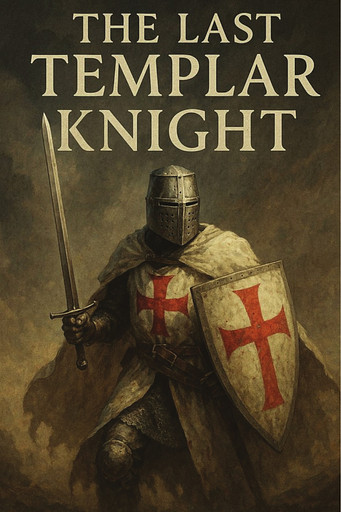
The Last Templer Knight
Knights Templer
The Legend of Sir Alaric de Vaux: The Last Templar
Birth and Early Life
Born in 1258 in Northumbria, England, to a noble Norman family with Crusader blood, Alaric de Vaux was the youngest son of Lord Godfrey de Vaux, a veteran of the Third Crusade. Raised in the borderlands between England and Scotland, Alaric was trained in warfare, Latin, and scripture. At 17, he took the vow of the Poor Fellow-Soldiers of Christ and of the Temple of Solomon — the Knights Templar.
________________________________________
The Crusades and the Scroll of Antioch
Alaric fought valiantly in the Eighth Crusade and later in minor campaigns defending Christian holdings in the Levant. During a retreat through the ruins of Antioch, he recovered a mysterious scroll hidden within a collapsed church crypt. It bore a sigil linked to the Temple of Solomon and a ciphered map pointing to “the Ark that Sees but is Not Seen.”
________________________________________
The Fall of the Order
When King Philip IV of France moved against the Templars in 1307, Alaric was stationed at a commandery in southern France near Montségur. He received secret word from Grand Master Jacques de Molay to go underground with the scroll and other sacred relics, including a fragment of the Ark of the Covenant — the so-called "Heartwood of Sinai."
________________________________________
The Flight Across Europe
Disguised as a wandering monk, Alaric fled through the Pyrenees into Spain, then sailed to England. In 1312, as the Pope officially dissolved the Order, Alaric vanished. Some say he founded a secret brotherhood — the Red Path — made of surviving Templars sworn to protect the relic and the scroll. Others believe he sought refuge with Cistercian monks in Cumbria, where strange carvings remain in the abbey ruins.
________________________________________
The Legend's End — or Beginning?
The last known mention of Alaric appears in a 14th-century chronicle from a Templar sympathizer in Scotland, who wrote:
“A knight in white with a red cross rode west alone, bearing the Word and the Wood, past the edges of the world.”
Local lore in the Isle of Skye speaks of a “white knight” who came from the east, left a buried chest beneath the standing stones of Callanish, and vanished into the mist.
The French Foreign Legion
Fighting Men
The French Foreign Legion (in French: Légion étrangère) is one of the most legendary and storied military units in the world. Founded in 1831, it has earned a reputation for toughness, loyalty, and mystery. Here's a deep dive into what makes it unique:
________________________________________
What Is the French Foreign Legion?
The French Foreign Legion is a military unit of the French Army that allows foreign nationals to enlist and serve France. While it is a part of the regular French Armed Forces, it maintains a separate and distinctive identity.
________________________________________
Key Features
Foreign Recruitment
• Originally created to incorporate foreign soldiers into the French military without affecting national politics.
• Open to men from any nationality; many legionnaires have no prior military experience.
• Some join for adventure, escape, a second chance, or to disappear.
Reputation for Toughness
• Famous for its brutal training and discipline.
• Known for a “no-questions-asked” enlistment policy (although this is now more myth than reality—modern vetting does exist).
• Emphasis on teamwork, brotherhood, and discipline over individual identity.
Anonymity and New Identity
• Recruits can enlist under a declared (new) name, though in recent years, true anonymity is less common due to stricter identification protocols.
• After serving honorably, legionnaires can request to reclaim their real identity.
________________________________________
Structure & Service
Length of Service
• Standard contract is 5 years, though other durations are available.
• After 3 years of honorable service, one can apply for French citizenship.
Regiments
The Legion has several regiments, including:
• 1er Régiment Étranger (1st RE) – Admin and training.
• 2e REI – Infantry.
• 1er REC – Cavalry.
• 2e REP – Paratroopers.
• 13e DBLE – Light armored brigade.
• 1er REG and 2e REG – Engineers.
________________________________________
Combat History
The Legion has fought in nearly every French military conflict since 1831:
• 19th century: Algeria, Crimea, Mexico (Battle of Camarón – April 30, now Legion Day).
• World Wars I & II: Played critical roles, with heavy casualties.
• Indochina War: Including the disastrous Battle of Dien Bien Phu.
• Algerian War of Independence.
• Modern deployments: Africa (Mali, Chad), Middle East, peacekeeping, and counterterrorism.
________________________________________
Culture & Traditions
Esprit de Corps
• Fierce loyalty to the Legion, sometimes even above France itself.
• Emphasizes "honor and fidelity" (Honneur et Fidélité).
• Marches slower than the rest of the French army (88 steps/min vs. 120).
• Iconic uniform includes the white képi (kepi blanc).
Songs and Symbols
• Legionnaires sing chant de marche (marching songs), such as "Le Boudin"—the official anthem.
• Regimental insignias and medals are sacred and symbolic.
________________________________________
Modern-Day Legion
• Recruits today must pass background checks, health screening, physical tests, and interviews.
• Still considered an elite force, frequently deployed in dangerous international missions.
• Approx. 8,000–9,000 legionnaires from over 140 countries.
________________________________________
Why Join?
Some motivations:
• A fresh start in life.
• A sense of adventure and challenge.
• A path to French citizenship and integration.
• Camaraderie and a strong brotherhood ethos.
________________________________________
Did You Know?
• Over 35,000 legionnaires have died in service to France.
• The Legion has its own code of honor, followed strictly by members.
• There’s a Legion-run museum in Aubagne, near Marseille (also the Legion’s HQ).
The Flying Boat
Story of The Catalina
The Story of the PBY Catalina
The PBY Catalina was an American flying boat used extensively during World War II and beyond. Designed by Consolidated Aircraft, it was one of the most versatile aircraft of the war, serving roles in maritime patrol, search and rescue, anti-submarine warfare, and transport.
Development and Design
• First flown in 1935, the PBY Catalina was designed as a long-range patrol bomber for the U.S. Navy.
• It had a twin-engine design, high wings, and retractable wingtip floats that improved water performance.
• Some versions were amphibious, equipped with retractable landing gear for ground operations.
World War II Service
• Anti-Submarine Warfare: Catalinas were instrumental in hunting down German U-boats in the Atlantic.
• Reconnaissance & Patrol: They were used in the Pacific and Atlantic to track enemy fleet movements.
• Rescue Missions: The PBY was famous for rescuing downed airmen, earning the nickname “Dumbo” for its life-saving role.
• Night Raiders: The "Black Cat" squadrons used specially painted Catalinas for stealthy night operations.
Tuvalu
A Pacific Island Nation
Tuvalu – A Profile
General Overview
• Official Name: Tuvalu
• Location: Polynesia, in the central Pacific Ocean, about halfway between Hawaii and Australia
• Area: ~26 square kilometers (10 square miles)
• Population: ~11,000
• Capital: Funafuti (also the main atoll and administrative center)
• Official Languages: Tuvaluan and English
• Currency: Australian Dollar (AUD)
• Government: Parliamentary democracy under a constitutional monarchy (King Charles III is the monarch)
• Time Zone: UTC +12
________________________________________
Geography
• Tuvalu is composed of 9 low-lying coral atolls and reef islands.
• Funafuti is the most populous atoll and hosts most government buildings and services.
• The highest point is only about 4.5 meters (15 feet) above sea level, making the country extremely vulnerable to climate change and sea level rise.
________________________________________
People & Culture
• Ethnicity: Almost entirely Polynesian
• Religion: Predominantly Christian (Church of Tuvalu)
• Culture: Rich in oral traditions, song, and dance.
• Extended family and community ties are strong, with communal living and mutual support being cultural norms.
________________________________________
History
• Pre-colonial: Inhabited by Polynesians for over 1,000 years.
• European Contact: First sighted by Europeans in the 16th and 17th centuries.
• Became part of the British colony of the Gilbert and Ellice Islands in the 19th century.
• In 1975, Tuvalu separated from the Gilbert Islands (now Kiribati).
• Independence: Achieved full independence within the Commonwealth on October 1, 1978.
________________________________________
Economy
• GDP: Extremely small; Tuvalu is one of the world's least developed economies.
• Key Sectors:
o Fishing (tuna licenses bring in revenue)
o Remittances (mainly from Tuvaluans working abroad, especially in shipping)
o Foreign aid (especially from Australia, New Zealand, and the EU)
o DotTV domain leasing: The country earns millions from leasing its .tv internet domain, popular with streaming platforms.
• Agriculture is minimal due to poor soil; copra (dried coconut) is a main export.
________________________________________
Politics
• Parliamentary system with a unicameral legislature (House of Assembly)
• The Prime Minister is elected by members of parliament.
• Tuvalu is part of the Commonwealth of Nations, and King Charles III is the head of state, represented by a Governor-General.
________________________________________
Infrastructure
• Transportation: Only one international airport (Funafuti International), few paved roads.
• Communication: Internet is limited but improving.
• Electricity: Primarily diesel-generated, though there are efforts to increase solar power capacity.
• Water Supply: Rainwater collection is essential; fresh water is scarce.
________________________________________
Climate Change and Rising Seas
• Tuvalu is often cited as a symbol of the climate crisis.
• The government has been vocal at international forums (like the UN) urging for stronger action on global warming.
• There have been discussions about relocating the entire population in the worst-case scenario of submersion.
________________________________________
International Relations
• Member of the United Nations since 2000.
• Also a member of the Pacific Islands Forum, Commonwealth, and other regional bodies.
• Has close ties with Australia, New Zealand, and Taiwan (Tuvalu is one of the few countries to officially recognize Taiwan instead of China).
________________________________________
Fun Facts
• One of the least-visited countries in the world—due to its remoteness and limited transport.
• Its .tv domain generates significantly more income than tourism or agriculture.
• Traditional dance (fatele) is a central part of community celebrations.

The Harley
Harley Davidson Motorcycles
Harley-Davidson is one of the most iconic motorcycle manufacturers in the world, with a rich history dating back over a century. Here’s a brief history of the company and its legendary motorcycles:
Founding and Early Years (1903-1919)
• 1903: Harley-Davidson was founded in Milwaukee, Wisconsin, by William S. Harley, Arthur Davidson, Walter Davidson, and William A. Davidson. They built their first prototype motorcycle in a small wooden shed.
• 1904: The first Harley-Davidson dealer, C.H. Lang of Chicago, sold one of their early bikes.
• 1907: The company was officially incorporated, and they began producing motorcycles on a larger scale.
• 1909: Harley-Davidson introduced its first V-Twin engine, which would become a signature feature of the brand.
• 1917-1919 (World War I): The U.S. military ordered thousands of Harley-Davidson motorcycles for wartime use.
Expansion and the Golden Age (1920-1945)
• 1920: Harley-Davidson became the largest motorcycle manufacturer in the world, selling bikes in over 67 countries.
• 1929: Introduced the Flathead engine, which became popular for its reliability.
• 1936: Launched the Knucklehead engine, setting the stage for modern Harley-Davidson designs.
• 1941-1945 (World War II): Harley-Davidson supplied motorcycles to the U.S. military, producing the famous WLA model, nicknamed the "Liberator."
Post-War Boom and the Rise of Biker Culture (1946-1969)
• 1948: Introduced the Panhead engine, which improved performance.
• 1957: Released the Sportster, one of the most iconic and long-running Harley-Davidson models.
• 1969: Harley-Davidson merged with American Machine and Foundry (AMF), leading to increased production but also quality control issues.
Struggles and Revival (1970s-1980s)
• 1970s: Faced competition from Japanese manufacturers like Honda, Yamaha, and Kawasaki.
• 1981: A group of Harley-Davidson executives led by Willie G. Davidson bought the company back from AMF.
• 1984: Launched the Evolution (Evo) engine, significantly improving performance and reliability.
Modern Era and Continued Legacy (1990s-Present)
• 1990s: Introduced models like the Fat Boy and Road King, which became instant classics.
• 2000s: Harley-Davidson expanded its lineup with more touring and cruiser bikes.
• 2014: Released the Street 500 and Street 750, aiming at a younger audience.
• 2019: Entered the electric motorcycle market with the LiveWire.
• 2021: Launched Pan America 1250, Harley-Davidson's first adventure touring motorcycle.
Harley-Davidson's Legacy
Harley-Davidson is known for its V-Twin engines, loud exhausts, and strong biker culture. The brand has built a loyal following, with clubs like the Harley Owners Group (HOG) and a reputation for producing some of the most iconic motorcycles in history.
Long Tan
The Battle Of
The Battle of Long Tan was a significant engagement during the Vietnam War, fought on August 18, 1966, between the 1st Australian Task Force (1ATF) and the Viet Cong (VC) and North Vietnamese Army (NVA) in a rubber plantation near Long Tan, Phuoc Tuy Province, South Vietnam.
Background
• The Australians had established their base at Nui Dat in Phuoc Tuy Province in May 1966.
• In early August, the Viet Cong launched mortar attacks on the base, prompting patrols to locate the enemy forces.
• On August 18, D Company, 6th Battalion, Royal Australian Regiment (6RAR), consisting of 108 men, was sent on patrol to investigate VC movements in the area.
The Battle
• Around 3:40 PM, D Company encountered a large force of Viet Cong fighters (later estimated to be around 2,000 soldiers).
• The Australians, despite being vastly outnumbered, formed defensive positions and held off waves of enemy attacks in heavy rain.
• With limited ammunition and casualties mounting, the situation grew dire.
• Australian artillery support from Nui Dat played a crucial role in breaking up enemy assaults.
• Reinforcements from A Company and armored personnel carriers (APCs) arrived in the evening, helping to push back the Viet Cong.
• The enemy forces withdrew by 7 PM, ending the battle.
Aftermath
• Australian casualties: 18 killed, 24 wounded.
• Viet Cong casualties: Over 245 confirmed dead, with estimates suggesting up to 500 total casualties.
• The Australians successfully defended their position despite being heavily outnumbered.
• The battle was a major strategic victory for Australia, demonstrating their military effectiveness in Vietnam.
• It solidified Australia's reputation among its allies and enemies in the Vietnam War.
Legacy
• Long Tan Cross: A memorial was erected on the battlefield in 1969.
• Long Tan Day (Vietnam Veterans’ Day in Australia) is observed annually on August 18.
• The battle remains one of the most celebrated Australian military actions of the Vietnam War.
Ned Kelly
The Ultimate Aussie Outlaw
Ned Kelly: Australia’s Most Famous Outlaw
Ned Kelly remains one of the most iconic and controversial figures in Australian history. Born Edward Kelly in June 1854 at Beveridge in Victoria, he was the son of Irish immigrants who struggled within a rigid and often discriminatory colonial society. From a young age, Ned was shaped by hardship and conflict with the authorities. His father, John “Red” Kelly, had been transported to Australia as a convict, and the Kelly family’s clashes with police fueled a deep resentment that would define Ned’s life.
Kelly grew up in the rough rural district of northeastern Victoria, where tensions simmered between small landholders and the powerful Squatter class who controlled vast territories. Many Irish families like the Kellys felt targeted by the colonial justice system. At age 14, Ned had his first run-in with the law, accused of assaulting a Chinese hawker. He later became involved with bushranger Harry Power, learning the skills and daring that would shape his future notoriety.
The Kelly family’s conflict with police escalated through the mid-1870s. Authorities repeatedly harassed the family over allegations of cattle and horse theft. In April 1878, a violent confrontation at the Kelly homestead between Ned’s brother Dan and constable Alexander Fitzpatrick became the spark that ignited the Kelly rebellion. Ned and Dan fled into the bush, becoming outlaws. Their mother, Ellen Kelly, was sentenced to prison—an act that deepened Ned’s fury and resolve.
The Kelly Gang—Ned, Dan Kelly, Joe Byrne, and Steve Hart—began a series of bold bank robberies at Euroa and Jerilderie, which captured public attention. During the Jerilderie raid in 1879, Ned famously dictated the "Jerilderie Letter," a passionate and lengthy manifesto defending his actions and condemning police corruption and the mistreatment of the Irish poor. In it, Kelly portrayed himself not as a criminal but as a protector against injustice.
The gang evaded capture for nearly two years, aided by a network of sympathizers who viewed them as folk heroes standing up to an oppressive system. However, the deadly confrontation at Stringybark Creek in October 1878—where three policemen were killed—ensured that the gang would never be forgiven by authorities. Ned defended his actions as self-preservation, but the colonial government declared him a murderer and placed a massive reward on his capture.

The Vatican
The Vatican City
Vatican City: The Smallest Country in the World
Vatican City is an independent city-state and the spiritual and administrative headquarters of the Roman Catholic Church. It is the world's smallest country, both in area (44 hectares or 110 acres) and population (around 800 residents). Despite its size, it has significant religious, cultural, and political influence.
________________________________________
1. Historical Background
• Ancient Rome & Early Christianity:
Vatican City is built on what is believed to be the burial site of Saint Peter, one of Jesus' apostles and the first pope. During the early Christian period, many Christians were persecuted in Rome, including Peter, who was crucified upside down. Emperor Constantine the Great later built St. Peter’s Basilica in the 4th century CE over his tomb.
• Papal States (8th–19th Century):
For centuries, popes ruled over a vast region in central Italy called the Papal States. These territories were politically and militarily significant but were eventually absorbed into Italy during its unification in the 19th century.
• Creation of Vatican City (1929):
In 1870, Italian troops took control of Rome, and the Pope lost political authority over the Papal States. This led to tensions between the Catholic Church and the Italian government. The dispute was finally resolved with the Lateran Treaty (1929), signed by Pope Pius XI and Italy's leader Benito Mussolini, officially establishing Vatican City as an independent state.
________________________________________
2. Key Features of Vatican City
• St. Peter’s Basilica: One of the holiest Catholic churches, home to Michelangelo’s Pietà and the tomb of St. Peter.
• Sistine Chapel: Famous for Michelangelo’s frescoes, including The Creation of Adam and The Last Judgment.
• Apostolic Palace: The Pope’s official residence and administrative center.
• Swiss Guard: The Vatican’s official military force, known for their colorful Renaissance-style uniforms.
• Vatican Museums: Houses one of the world's greatest art collections, including works by Raphael, Leonardo da Vinci, and Caravaggio.
________________________________________
3. Political & Religious Role
• The Pope: The Vatican is the residence of the Pope, the leader of the Catholic Church, who holds both spiritual and political authority.
• Diplomatic Influence: Though tiny, Vatican City has diplomatic relations with over 180 countries and plays a key role in global issues, including peace efforts and humanitarian aid.
• Catholic Church Headquarters: Over 1.3 billion Catholics worldwide look to the Vatican for religious guidance.
________________________________________
4. Interesting Facts
• Vatican City has its own postal system, bank, radio station, and newspaper.
• It has no permanent citizens; residency is granted only to those who work there.
• The Vatican has the highest crime rate per capita—mostly due to pickpocketing by tourists!
Ghosts Of Truk Lagoon
Or The Battle of
The Battle of Truk Lagoon (also known as Operation Hailstone) took place between February 16 and 17, 1944, during World War II. It was a significant naval air attack conducted by the United States against the Japanese naval base at Truk Lagoon, which was one of the most im-portant and heavily fortified Japanese strongholds in the Pacific.
Key Points about the Battle of Truk Lagoon:
• Location: Truk Lagoon (now known as Chuuk Lagoon) is located in the Caroline Islands in Micronesia. It was a major Japanese naval base that supported the Imperial Japanese Navy in its operations throughout the Pacific.
• Japanese Defenses: Truk Lagoon was a heavily fortified base that housed a significant portion of Japan’s naval fleet, including aircraft carriers, battleships, cruisers, and de-stroyers. The Japanese also had aircraft stationed on the island and had built strong de-fenses, making it a formidable target.
• U.S. Strategy: The U.S. Navy, under the command of Admiral Chester W. Nimitz, planned the attack as part of its island-hopping strategy, aiming to neutralize Japan's fortified bases and eliminate their ability to use the area as a staging point for further military operations. The attack was designed to weaken Japanese naval and air power in the Pacific.
• The Attack: The U.S. Navy launched the attack with aircraft from Task Force 58 (a carri-er task force). American planes, including B-24 Liberators, P-38 Lightnings, and TBF Avengers, bombed and strafed Japanese ships, aircraft, and installations in the lagoon and on the island of Truk.
The attack was carried out in two waves over two days, with American forces hitting the harbor and its infrastructure, targeting both ships and aircraft. The Japanese were caught off-guard, and many of their ships were sunk or heavily damaged, including destroyers, cruisers, and cargo ships.
• Aftermath: The U.S. struck a devastating blow to the Japanese fleet. Over 50 ships (in-cluding 8 warships) were either sunk or severely damaged, and over 275 aircraft were de-stroyed. The lagoon became a massive graveyard of wrecked ships and planes, severely weakening Japanese naval capabilities in the Pacific.
• Significance: The battle was a key turning point in the Pacific War. It crippled Japanese maritime and air power in the region and disrupted their ability to stage operations in the Central Pacific. Truk Lagoon remained an important objective for the U.S. to neutralize in the effort to push the Japanese back.
Today, Truk Lagoon is known for being one of the best wreck diving sites in the world, where numerous shipwrecks from the battle can still be explored.
Key Points about the Battle of Truk Lagoon:
• Location: Truk Lagoon (now known as Chuuk Lagoon) is located in the Caroline Islands in Micronesia. It was a major Japanese naval base that supported the Imperial Japanese Navy in its operations throughout the Pacific.
• Japanese Defenses: Truk Lagoon was a heavily fortified base that housed a significant portion of Japan’s naval fleet, including aircraft carriers, battleships, cruisers, and de-stroyers. The Japanese also had aircraft stationed on the island and had built strong de-fenses, making it a formidable target.
• U.S. Strategy: The U.S. Navy, under the command of Admiral Chester W. Nimitz, planned the attack as part of its island-hopping strategy, aiming to neutralize Japan's fortified bases and eliminate their ability to use the area as a staging point for further military operations. The attack was designed to weaken Japanese naval and air power in the Pacific.
• The Attack: The U.S. Navy launched the attack with aircraft from Task Force 58 (a carri-er task force). American planes, including B-24 Liberators, P-38 Lightnings, and TBF Avengers, bombed and strafed Japanese ships, aircraft, and installations in the lagoon and on the island of Truk.
The attack was carried out in two waves over two days, with American forces hitting the harbor and its infrastructure, targeting both ships and aircraft. The Japanese were caught off-guard, and many of their ships were sunk or heavily damaged, including destroyers, cruisers, and cargo ships.
• Aftermath: The U.S. struck a devastating blow to the Japanese fleet. Over 50 ships (in-cluding 8 warships) were either sunk or severely damaged, and over 275 aircraft were de-stroyed. The lagoon became a massive graveyard of wrecked ships and planes, severely weakening Japanese naval capabilities in the Pacific.
• Significance: The battle was a key turning point in the Pacific War. It crippled Japanese maritime and air power in the region and disrupted their ability to stage operations in the Central Pacific. Truk Lagoon remained an important objective for the U.S. to neutralize in the effort to push the Japanese back.
Today, Truk Lagoon is known for being one of the best wreck diving sites in the world, where numerous shipwrecks from the battle can still be explored.
John Randall
A First Fleeter to Australia
John Randall was one of the remarkable individuals who arrived in Australia with the First Fleet in 1788, helping to lay the foundations of the future nation. Born around 1764, details of his early life are sparse, though it is believed he was of African descent—making him one of the earliest known people of colour to settle permanently in Australia. Randall served in the British Army before encountering legal trouble. In 1785, he was convicted of theft and sentenced to transportation to the penal colony of New South Wales.
He embarked aboard the transport ship Alexander, one of the eleven vessels of the First Fleet led by Captain Arthur Phillip. The long and arduous 8-month voyage across the world concluded when the fleet reached Botany Bay, before relocating to Port Jackson, where Sydney was established.
Randall’s military experience made him a valuable asset in the struggling colony. He was assigned to work as a gamekeeper and hunter, helping to provide food at a time when survival was uncertain. His skills with firearms earned him respect and trust from colonial authorities.
In 1790, Randall’s partner, an Aboriginal woman named Mary or “Mary Randall,” gave birth to their daughter, Amelia—often considered one of the first children born of both Indigenous and convict heritage within the colony. Randall later received a land grant at Parramatta, demonstrating his growing role as a free settler.
Despite these achievements, records suggest his later years were marked by hardship. Randall eventually left his land, and the exact circumstances of his death remain unknown. Yet his legacy endures as a pioneering figure—an early soldier, survivor, and settler whose story reflects the diversity and complexity of Australia’s beginnings.
Kalahari
The Lost City
The Lost City of the Kalahari is one of Africa’s most intriguing mysteries—a supposed ancient ruin hidden somewhere in the vast Kalahari Desert. Many explorers have searched for it, but no confirmed evidence of such a city has ever been found.
Origins of the Legend
The story dates back to 1885, when Canadian explorer Guillermo Farini (real name: William Leonard Hunt) claimed to have discovered massive stone ruins while crossing the Kalahari Desert. He presented sketches and descriptions of what he believed to be a long-lost city, buried under the sand. His book, Through the Kalahari Desert (1886), fueled interest in the legend.
Theories About the Lost City
Over the years, many theories have emerged about what Farini actually saw:
1. Natural Rock Formations – Some geologists believe that Farini’s "ruins" were just natural weathered rock formations, which can resemble walls or buildings.
2. Ancient Civilizations – Some speculate that an unknown civilization once lived in the Kalahari, but there is no strong archaeological evidence.
3. San People (Bushmen) Legends – The indigenous San people have oral stories about lost places in the desert, but these are often spiritual rather than historical.
4. Remnants of an Early African Kingdom – Some link the story to the Great Zimbabwe civilization, which flourished between the 11th and 15th centuries, though it is far from the Kalahari.
Expeditions and Searches
Numerous explorers have searched for the Lost City, but none have found conclusive proof:
• 1930s: A British prospector, G.A. Farini (possibly inspired by the original Farini), claimed to have seen ruins but never located them again.
• 1960s: Aerial surveys found some unusual formations, but they turned out to be natural rock structures.
• Modern Searches: In recent years, some researchers have used satellite images, but no clear evidence of an ancient city has surfaced.
Could the Lost City Be Real?
While many believe the story is just a myth or misinterpretation, others think there could still be undiscovered ruins in the vast, largely unexplored Kalahari Desert.
The Battle Tank
History
The History of Tanks in Battles
The history of the tank as a battlefield weapon began during the First World War, a conflict dominated by trench warfare, barbed wire, and machine-guns. Traditional cavalry assaults had become suicidal, so military thinkers searched for a new way to break the stalemate. The answer came in 1916 with the introduction of the first tanks by the British—armoured, tracked vehicles designed to cross trenches, crush obstacles, and carry firepower safely across the battlefield. Their first major use at the Battle of Cambrai in 1917 demonstrated the potential of a revolutionary new weapon, even though many broke down or were difficult to control.
By the Second World War, tank design and tactics had advanced rapidly. Nations recognised that tanks could be decisive offensive weapons when used in large numbers. Germany perfected Blitzkrieg, a style of lightning warfare that combined fast-moving tanks, infantry, artillery, and air support to punch through enemy lines. Iconic battles such as the German invasion of France in 1940 and Operation Barbarossa in 1941 showcased the striking power of armoured forces. The Soviet Union responded with huge numbers of T-34 tanks, contributing to monumental clashes like the Battle of Kursk in 1943—the largest tank battle in history. Meanwhile, in North Africa, the British and Germans fought vast manoeuvre battles across the desert, testing tank crews in harsh conditions.
During the Cold War, tanks continued to evolve with improved armour and firepower. The development of composite and reactive armour, smoothbore guns, and advanced aiming systems solidified the tank’s role as the main fighting vehicle of ground forces. Tanks appeared in conflicts such as the Korean War, Arab-Israeli Wars, and Vietnam, though rising anti-tank weapons, including guided missiles, highlighted new vulnerabilities. The 1991 Gulf War demonstrated a new era of armoured warfare, as coalition tanks like the American M1 Abrams used thermal sights and precision weapons to outmatch Iraqi forces with overwhelming speed and accuracy.
In the 21st century, tanks remain a symbol of battlefield dominance, though their roles have adapted. Urban warfare in Iraq and Syria showed that tanks must work closely with infantry and support systems to counter ambushes and improvised explosive devices. Modern conflicts, including the war in Ukraine, continue to prove tanks are vital for gaining ground and supporting troops, while also revealing the increasing danger posed by drones and advanced anti-tank missiles.
From the muddy trenches of World War I to high-tech battlefields of today, tanks have continually evolved. Their combination of mobility, protection, and firepower ensures they remain a critical force in warfare—adaptable to new threats and central to combat for over a century.
ANZAC
Lest We Forget
ANZAC Day is one of the most important national commemorations in Australia and New Zealand. It’s observed annually on April 25th to honor the members of the Australian and New Zealand Army Corps (ANZAC) who served and died in all wars, conflicts, and peacekeeping operations.
Here’s a full rundown of ANZAC Day:
________________________________________
The Spitfire
British WW2 Fighter Aircraft
The Supermarine Spitfire
stands as one of the most iconic fighter aircraft of the Second World War, remembered not only for its elegant design but also for its critical role in defending Britain during its darkest hours. Designed by the legendary aeronautical engineer R.J. Mitchell, the Spitfire first took to the skies in 1936. It was developed to meet the Royal Air Force’s need for a fast, manoeuvrable interceptor capable of countering rapidly advancing enemy aircraft technology. With its sleek elliptical wings, lightweight frame, and powerful Rolls-Royce engines, the Spitfire quickly earned a reputation as a formidable air superiority fighter.
During the Battle of Britain in 1940, the Spitfire became a symbol of national resistance. Although the more numerous Hawker Hurricane was responsible for most of the RAF’s victories during the battle, the Spitfire was often the aircraft the public and the enemy noticed most. It was assigned to engage the higher-flying and more dangerous German Messerschmitt Bf 109 fighters, leaving the Hurricanes to focus on German bombers. This tactical teaming contributed greatly to Britain’s eventual victory, and the sight of Spitfires patrolling the skies remains deeply embedded in Britain’s wartime identity.
Bomber Command
British WW2 History
RAF Bomber Command was the aerial bombing force of the Royal Air Force (RAF) during World War II. It played a crucial role in the strategic bombing campaign against Germany, targeting in-dustrial, military, and civilian infrastructure. The command operated from 1936 to 1968, with its most intense operations occurring between 1940 and 1945.
Key Aspects of Bomber Command in WWII
1. Formation and Leadership
• Bomber Command was established in 1936 as part of the RAF’s reorganization.
• Air Chief Marshal Sir Arthur Harris became its most famous commander in 1942 and pushed for a strategy of area bombing to break German morale and industry.
2. Early Years & Challenges (1939–1941)
• At the start of the war, Bomber Command had outdated aircraft and limited accuracy in night bombing.
• Initial missions targeted German naval facilities and infrastructure.
• The 1940 Battle of the Ruhr campaign began efforts to weaken German industry.
• Early raids were ineffective due to poor navigation and bombing accuracy.
3. The Strategic Bombing Campaign (1942–1945)
• The adoption of "area bombing" tactics led to large-scale destruction of German cities.
• Introduction of new aircraft like the Avro Lancaster improved bombing effectiveness.
• 1,000 Bomber Raids (starting May 1942) demonstrated Bomber Command's growing power.
• Major operations included:
• The Battle of the Ruhr (1943) – targeted industrial heartlands.
• The Hamburg Firestorm (1943, Operation Gomorrah) – massive destruction of the city.
• The Berlin Raids (1943-1944) – heavy losses but high damage to the German cap-ital.
• The Dresden Bombing (February 1945) – one of the most controversial opera-tions, causing tens of thousands of civilian deaths.
4. Tactics and Technology
• Used pathfinder aircraft (e.g., Mosquito bombers) to improve targeting.
• Developed advanced navigational aids like Gee, Oboe, and H2S radar.
• Worked with the USAAF in the Combined Bomber Offensive, where the RAF bombed at night, and the Americans bombed by day.
5. Casualties & Legacy
• Bomber Command suffered 55,573 aircrew fatalities – one of the highest loss rates of any Allied force.
• Around 125,000 men served in Bomber Command during the war.
• Carried out more than 380,000 sorties, dropping over 1 million tons of bombs.
• Played a key role in disrupting German war production but remains controversial due to civilian casualties.
• A memorial to Bomber Command was finally unveiled in London in 2012, recognizing the sacrifices of its crews.

Windows
The History of the Microsoft Operating System
Windows is one of the most widely used operating systems (OS) in the world, developed by Microsoft. It provides a graphical user interface (GUI) that allows users to interact with their computers using a mouse, keyboard, and touchscreen (on supported devices). Below is a dive into its history, features, versions, and impact.
________________________________________
1. History of Windows
Microsoft introduced Windows as an extension of its MS-DOS operating system to provide a graphical interface. The journey of Windows has evolved over several decades:
• Windows 1.0 (1985) – The first version introduced a GUI over MS-DOS.
• Windows 3.0/3.1 (1990-1992) – Improved graphics and performance; became popular in businesses.
• Windows 95 (1995) – Introduced the Start Menu, taskbar, and plug-and-play support.
• Windows 98 (1998) – Enhanced internet integration, better USB support.
• Windows XP (2001) – One of the most popular versions, known for stability and ease of use.
• Windows Vista (2006) – Focused on security but was criticized for performance issues.
• Windows 7 (2009) – Well-received due to improved speed, UI refinements, and stability.
• Windows 8 (2012) – Introduced the Metro UI, but removed the traditional Start Menu, which users disliked.
• Windows 10 (2015) – Brought back the Start Menu, integrated Cortana, and introduced continuous updates.
• Windows 11 (2021) – A modernized UI, improved multitasking, and better gaming support.
________________________________________
2. Key Features of Windows
User Interface (UI)
• Uses a graphical interface with windows, icons, and a Start Menu.
• Taskbar for quick access to apps, time, and notifications.
• File Explorer for managing files and directories.
Software Compatibility
• Supports thousands of applications, from Microsoft Office to Adobe Photoshop and gaming platforms.
• Backward compatibility allows older software to run on newer versions.
Security Features
• Windows Defender (now Microsoft Defender) offers built-in antivirus protection.
• BitLocker encryption secures data on storage drives.
• User Account Control (UAC) prevents unauthorized changes to system settings.
Gaming and DirectX
• DirectX enhances gaming performance with improved graphics rendering.
• Xbox Game Bar for screen recording, performance monitoring, and social gaming features.
Windows Updates
• Delivers regular security patches and feature updates.
• Windows Update automatically installs critical fixes to improve stability.
Virtual Desktops & Multitasking
• Task View allows users to create multiple desktops.
• Snap Assist helps in organizing open windows efficiently.
Integration with Cloud and AI
• OneDrive provides cloud storage for seamless file access across devices.
• Copilot AI (Windows 11) offers AI-powered assistance.
________________________________________
3. Popular Windows Editions
Consumer Editions
• Windows Home – Basic features for general users.
• Windows Pro – Includes extra security and business tools.
• Windows Education – Tailored for students and teachers.
Enterprise Editions
• Windows Enterprise – Advanced security and IT management features.
• Windows Server – A version optimized for running servers.
________________________________________
The Chevy
The Story of Chevrolet
Chevrolet, commonly known as Chevy, is one of the most iconic American automobile brands. It was founded in 1911 and has played a major role in shaping the automotive industry. Here’s a breakdown of its history:
________________________________________
Early Years (1911–1918)
• Founded by Louis Chevrolet & William C. Durant: Louis Chevrolet was a Swiss race car driver and engineer, and William C. Durant was the co-founder of General Motors (GM). They started Chevrolet Motor Company in Detroit, Michigan, on November 3, 1911.
• First car: The 1913 Chevrolet Series C Classic Six – It was a premium car competing with Cadillac and other luxury brands.
• Durant's Strategy: Chevrolet introduced affordable models like the Chevrolet 490 (1915) to compete with the Ford Model T.
• Acquisition by GM (1918): Durant used Chevrolet’s success to buy back control of General Motors, making Chevy a GM division.
________________________________________
Growth & Innovation (1920s–1930s)
• Introduced the Chevrolet Series D (1918), its first V8 engine car.
• Became a direct competitor to Ford with affordable cars like the Chevrolet Superior (1923) and Chevrolet Capitol (1927).
• In 1929, Chevrolet launched the “Stovebolt” inline-six engine, known for its reliability.
________________________________________
The Post-War Boom (1940s–1950s)
• Chevrolet halted civilian production during WWII to support the war effort.
• In 1950, Chevy introduced its first automatic transmission, the Powerglide.
• 1953: Chevrolet debuted the Corvette, America’s first mass-produced sports car.
• 1955: The launch of the small-block V8 engine revolutionized performance cars.
________________________________________
The Muscle Car & Performance Era (1960s–1970s)
• 1960: The rear-engine Chevrolet Corvair was introduced.
• 1963: The Corvette Sting Ray debuted, becoming an American classic.
• 1967: The legendary Chevrolet Camaro was introduced to compete with the Ford Mustang.
• 1970: The Chevelle SS 454 became one of the most powerful muscle cars of its time.
However, the 1973 Oil Crisis led to declining muscle car sales, pushing Chevy to develop more fuel-efficient models.
________________________________________
Modernization & Expansion (1980s–2000s)
• Focused on economy cars like the Chevrolet Cavalier (1982) and compact SUVs.
• 1997: The C5 Corvette was released, bringing back the brand’s performance reputation.
• 2007–2009 Financial Crisis: GM declared bankruptcy in 2009, but Chevrolet rebounded with successful models like the Chevrolet Cruze and Chevrolet Volt (2010), a plug-in hybrid.
________________________________________
Chevrolet Today (2010s–Present)
• Introduced electric vehicles like the Chevrolet Bolt EV (2016).
• Continues to lead in trucks and SUVs, with models like the Silverado and Tahoe.
• 2020: The Mid-Engine C8 Corvette revolutionized American supercars.
________________________________________
Legacy & Impact
• One of America’s best-selling brands for over a century.
• Created iconic models such as the Corvette, Camaro, Impala, and Silverado.
• A key player in NASCAR, drag racing, and motorsports.
The US Marines
A Proud Legacy
The United States Marine Corps (USMC) has a long and storied history, dating back to the American Revolution. Here’s an overview of its development and major milestones:
________________________________________
Founding and Early Years (1775–1800)
• The USMC was founded on November 10, 1775, when the Continental Congress authorized the creation of two battalions of Marines.
• Captain Samuel Nicholas is recognized as the first commandant of the Marine Corps.
• The first Marines were recruited at Tun Tavern in Philadelphia.
• During the American Revolution, Marines served in naval battles and conducted amphibious raids, such as the 1776 attack on Nassau in the Bahamas.
________________________________________
19th Century: Growth and Expansion
• The Marines fought in the Quasi-War (1798–1800) against France.
• They gained fame during the First Barbary War (1801–1805), particularly the Battle of Derna (1805), where they played a key role in capturing Tripoli.
• In the War of 1812, the Marines defended Washington, D.C., and fought in the Battle of New Orleans.
• They also participated in conflicts such as the Mexican-American War (1846–1848), where they helped capture Mexico City.
________________________________________
Civil War and Late 19th Century
• During the American Civil War (1861–1865), Marines served in naval engagements and land battles, though the Army played a larger role.
• After the war, the Corps focused on small-scale conflicts, including interventions in Latin America and the Spanish-American War (1898).
________________________________________
20th Century: World Wars and Modernization
World War I (1917–1918)
• Marines gained international recognition in battles like Belleau Wood in France, earning the nickname "Devil Dogs" (Teufel Hunden) from German troops.
Interwar Years
• The Marine Corps developed amphibious warfare tactics, which would later prove crucial in World War II.
• Marines were involved in the Banana Wars, a series of interventions in Central and South America.
World War II (1941–1945)
• The Marines played a critical role in the Pacific Theater, executing island-hopping campaigns against Japan.
• Major battles included Guadalcanal (1942), Tarawa (1943), Iwo Jima (1945), and Okinawa (1945).
• The iconic raising of the flag on Iwo Jima symbolized Marine Corps bravery and sacrifice.
Korean War (1950–1953)
• The USMC played a decisive role in the Inchon Landing (1950), led by General Douglas MacArthur.
• Marines also fought in the brutal Chosin Reservoir Campaign, where they withstood freezing temperatures and overwhelming enemy forces.
Vietnam War (1955–1975)
• Marines were heavily involved in combat operations, including Da Nang (1965), Khe Sanh (1968), and the Tet Offensive (1968).
• They developed counterinsurgency tactics but suffered heavy casualties.
________________________________________
Modern Conflicts and Global Role
• Persian Gulf War (1991): Marines led the invasion of Kuwait, using rapid ground assaults.
• War in Afghanistan (2001–2021): After 9/11, the Marines played a major role in fighting the Taliban and Al-Qaeda.
• Iraq War (2003–2011): Marines were involved in the Battle of Fallujah (2004) and counterinsurgency operations.
• Present Day: The USMC remains a rapid-response force, conducting operations worldwide, including humanitarian missions and counterterrorism.
________________________________________
USMC Today
• The Marine Corps continues to evolve, focusing on amphibious warfare, expeditionary operations, and global security.
• It remains one of the most elite military forces in the world, upholding its motto: "Semper Fidelis" (Always Faithful).

Batteries
Different Types - Different Uses
1. Wet Cell Battery
• Definition: A wet cell battery contains a liquid electrolyte (usually sulfuric acid) that facilitates the flow of electricity.
• Examples: Lead-acid car batteries, marine batteries.
• Advantages:
o Can supply high current
o Rechargeable (in the case of lead-acid batteries)
• Disadvantages:
o Requires maintenance (checking and refilling electrolyte)
o Can leak or spill if not handled properly
________________________________________
2. Dry Cell Battery
• Definition: A dry cell battery contains a paste-like electrolyte, making it spill-proof and more portable.
• Examples: AA, AAA, C, D, and 9V alkaline batteries.
• Advantages:
o Compact and portable
o Leak-resistant compared to wet cell batteries
o No need for maintenance
• Disadvantages:
o Usually non-rechargeable (except some NiMH and NiCd versions)
o Lower energy storage compared to rechargeable battery types
________________________________________
3. Lithium Battery
• Definition: A lithium battery uses lithium metal as the anode and is usually non-rechargeable.
• Examples: Button cell batteries (used in watches, calculators), some camera batteries.
• Advantages:
o Long shelf life
o Lightweight
o High energy density (more power in a small size)
• Disadvantages:
o Expensive compared to alkaline batteries
o Not rechargeable
________________________________________
4. Lithium-Ion (Li-Ion) Battery
• Definition: A rechargeable battery that uses lithium ions moving between the cathode and anode to store and release energy.
• Examples: Smartphone batteries, laptop batteries, power banks, electric vehicle batteries.
• Advantages:
o Rechargeable and long-lasting
o High energy density (stores more power than other types of rechargeable batteries)
o Lightweight compared to lead-acid batteries
• Disadvantages:
o Can degrade over time (loses capacity after many charge cycles)
o Expensive compared to traditional rechargeable batteries
o Risk of overheating or catching fire if damaged
Conclusion:
• Wet cell: Liquid electrolyte, used in cars and heavy-duty applications.
• Dry cell: Paste electrolyte, used in household batteries (AA, AAA, 9V).
• Lithium: Lightweight, long-lasting, but non-rechargeable.
• Lithium-Ion: Rechargeable, high energy density, used in modern electronics.
The Grenadier Guards
A History
The Grenadier Guards are one of the oldest and most iconic regiments in the British Army, with a rich history and a prominent ceremonial role. Here's a detailed overview across multiple areas:
________________________________________
Overview
• Full Title: The First or Grenadier Regiment of Foot Guards
• Founded: 1656 (in Bruges, Flanders, by King Charles II while in exile)
• Motto: Honi soit qui mal y pense (Same as the Order of the Garter: “Shame on him who thinks evil of it”)
• Regimental March: The British Grenadiers
• Nicknames: The "Grenadiers", or informally, "The Grens"
________________________________________
History
Origins
• Raised by King Charles II during his exile and later became part of the restored monarchy’s army in 1660.
• Originally known as the Royal Regiment of Guards.
• Earned the title Grenadier Guards in 1815, after defeating Napoleon’s Grenadiers at the Battle of Waterloo.
Key Conflicts
The regiment has served in virtually every major British conflict since its formation:
• 17th Century: English Civil War, Anglo-Dutch Wars
• 18th Century: War of Spanish Succession, American War of Independence
• 19th Century: Napoleonic Wars (notably Waterloo), Crimean War
• 20th Century: Both World Wars – saw significant action in WWI trenches and WWII campaigns (North Africa, Italy, Northwest Europe)
• 21st Century: Modern deployments include Iraq, Afghanistan, and peacekeeping roles.
________________________________________
Ceremonial Duties
The Grenadier Guards are perhaps best known for their ceremonial roles, which are visible worldwide:
• Changing of the Guard at Buckingham Palace, Windsor Castle, and the Tower of London.
• Trooping the Colour (official birthday of the British Sovereign).
• They wear the famous scarlet tunic and bearskin cap.
Uniform Trivia
• Grenadier Guards are distinguished by a single white plume on the left side of their bearskin and buttons in singles down the front of the tunic.
• They are the most senior regiment of Foot Guards.
________________________________________
Structure & Organization
• Part of the Household Division – which includes 5 regiments of Foot Guards and 2 regiments of Household Cavalry.
• Regimental Headquarters: Wellington Barracks, London.
• 1st Battalion is operational, while ceremonial companies like the Nijmegen Company fulfill public duties.
• The regiment maintains a strong reserve element as well.
________________________________________
Regimental Identity
• Colonel-in-Chief: The King (Currently King Charles III)
• Regimental Colour: Their colours are emblazoned with battle honours – Waterloo, Alma, Ypres, etc.
• The Grenadiers have a deep regimental pride and a lifelong association among former and serving members.
________________________________________
Modern Role
Today, the Grenadier Guards are a dual-role regiment:
1. Ceremonial – Public duties, state events.
2. Operational – Fully deployable light infantry for modern warfare, involved in overseas operations and NATO commitments.
________________________________________
Regimental Museum
• Grenadier Guards Regimental Headquarters and Archive is at Wellington Barracks.
• A display can also be found at the Guards Museum in London, adjacent to Buckingham Palace.
________________________________________
Notable Traditions & Facts
• The regiment celebrates Waterloo Day (June 18) each year.
• Famous for strict discipline, immaculate turnout, and elite standards.
• Recruit training takes place at Catterick Garrison (Infantry Training Centre).
• They’re part of The Guards Parachute Platoon (Guards Para) – a select airborne-trained subunit.
________________________________________
Recommended Reading & Media
• The Grenadier Guards by Michael Glover – comprehensive regimental history.
• Bearskins, Bayonets & Beyond by Melvyn Roffe – a modern look at the Guards.
• The BBC and British Army YouTube channels often feature ceremonial duties and interviews.

Clocks
Measuring Time
The history of clocks is a fascinating journey that reflects humanity’s quest to measure time accurately. From ancient sundials to modern atomic clocks, the evolution of timekeeping devices has shaped science, industry, and daily life. Here’s an overview of the major milestones in clock history:
________________________________________
Ancient Timekeeping (Before Mechanical Clocks)
1. Sundials (c. 3500 BCE)
o The earliest timekeeping devices, sundials, were used by the Egyptians and Babylonians.
o They worked by casting shadows based on the position of the sun.
2. Water Clocks (Clepsydra) (c. 1500 BCE)
o Used by the Egyptians and Greeks, water clocks measured time based on the steady flow of water from a container.
o More advanced versions were developed by the Chinese and Persians with gears and mechanisms.
3. Candle Clocks and Incense Clocks (c. 600 CE)
o Used in China and Japan, these clocks burned at a steady rate and marked time increments.
o They were popular in monasteries and homes for keeping track of time in darkness.
________________________________________
Medieval and Early Mechanical Clocks
4. First Mechanical Clocks (c. 13th Century)
o Large mechanical clocks appeared in European monasteries.
o These clocks used weights and gears to move hands or ring bells.
o The Salisbury Cathedral clock (c. 1386) is one of the oldest still-functioning mechanical clocks.
5. Pendulum Clocks (1656)
o Invented by Christiaan Huygens, the pendulum dramatically improved accuracy.
o These clocks remained the standard for precise timekeeping for nearly 300 years.
6. Pocket Watches (16th Century)
o With the development of coiled springs, watches became portable.
o The first pocket watches were created in Germany.
________________________________________
Industrial Revolution and Modern Clocks
7. Chronometers (1735)
o Invented by John Harrison, marine chronometers allowed sailors to determine longitude accurately.
o These played a crucial role in navigation and exploration.
8. Railway Time and Standardization (19th Century)
o As trains became widespread, standard time zones were created to avoid scheduling confusion.
o The first time zone system was introduced in 1884.
9. Quartz Clocks (1927)
o Developed by Warren Marrison, quartz clocks used vibrations in a quartz crystal for precise timekeeping.
o Quartz technology paved the way for modern wristwatches.
________________________________________
Modern and Atomic Timekeeping
10. Atomic Clocks (1949-Present)
o The first atomic clock was developed in 1949, and later refined using cesium atoms.
o Today’s atomic clocks are accurate to billionths of a second and define the international standard of time (UTC).
11. Smartwatches and Digital Timekeeping (21st Century)
o Digital and smartwatch technology now integrates clocks with communication, fitness tracking, and AI.
o Modern GPS and internet-based clocks synchronize with atomic time.
________________________________________
Conclusion
From ancient sundials to cutting-edge atomic clocks, the quest to measure time has shaped civilizations, industry, and technology. Today, accurate timekeeping is essential for everything from GPS navigation to scientific research.

The Amazon
An Overview
The Amazon is a vast and diverse region that encompasses the Amazon Rainforest, the Amazon River, and the surrounding ecosystems. It spans multiple countries in South America and plays a crucial role in global biodiversity, climate regulation, and indigenous cultures. Below is a breakdown of key aspects of the Amazon:
________________________________________
1. The Amazon Rainforest
The Amazon Rainforest is the largest tropical rainforest on Earth, covering approximately 5.5 million square kilometers (2.1 million square miles). It is often referred to as the "lungs of the planet" because it produces about 20% of the world's oxygen and acts as a major carbon sink.
Geographical Coverage
The Amazon spans nine countries:
• 🇧🇷 Brazil (about 60% of the rainforest is here)
• 🇵🇪 Peru
• 🇨🇴 Colombia
• 🇻🇪 Venezuela
• 🇪🇨 Ecuador
• 🇧🇴 Bolivia
• 🇬🇾 Guyana
• 🇸🇷 Suriname
• 🇫🇷 French Guiana (territory of France)
Biodiversity
The Amazon is home to about 10% of all known species on Earth!
• Plants: Over 40,000 plant species
• Animals: More than 2.5 million insect species, 2,200 fish species, 1,300 bird species, and 400+ mammals
• Notable animals: Jaguars, sloths, pink river dolphins, anacondas, piranhas, and poison dart frogs
Flora & Fauna Specialties
• Kapok Tree: One of the tallest trees in the rainforest, reaching over 60 meters (200 feet).
• Victoria Amazonica: The world’s largest water lily, with leaves over 3 meters (10 feet) in diameter.
• Brazil Nut Tree: Produces nuts that are only harvested from the wild, as they require a specific ecosystem to reproduce.
________________________________________
2. The Amazon River
The Amazon River is one of the longest and largest rivers in the world.
Key Facts
• Length: About 6,992 km (4,345 miles) (some argue it could be the longest river in the world, competing with the Nile).
• Discharge: Carries more water than the next 7 largest rivers combined.
• Basin: The Amazon Basin covers 7 million km² (2.7 million mi²).
• Tributaries: Over 1,100 tributaries, with 17 being over 1,500 km (932 mi) long.
Notable Aquatic Life
• Pink River Dolphin (Boto)
• Piranhas (not as dangerous as often portrayed in movies)
• Arapaima (Pirarucu): One of the largest freshwater fish in the world, growing up to 4.5 meters (15 feet).
________________________________________
3. Indigenous Peoples & Culture
The Amazon has been home to indigenous peoples for over 11,000 years, with over 400 indigenous groups living in the forest. Some tribes have never had contact with modern civilization.
Indigenous Tribes
• Yanomami (Brazil, Venezuela)
• Kayapo (Brazil)
• Matsés (Peru, Brazil)
• Uncontacted Tribes: Many live in isolation deep within the jungle.
Culture & Knowledge
• Many tribes use traditional medicine based on plants, some of which have been the basis for modern pharmaceuticals.
• Language diversity is immense, with over 300 languages spoken.
________________________________________
4. Environmental Threats
Despite its importance, the Amazon is under serious threat due to human activities.
Deforestation & Climate Change
• The Amazon has lost 17% of its forest cover in the last 50 years.
• Causes: Cattle ranching, soy farming, illegal logging, mining, and road construction.
• Amazon Dieback Theory: If deforestation reaches 25%, the rainforest could collapse into a savanna-like ecosystem.
Illegal Mining & Pollution
• Gold mining causes mercury pollution, which affects rivers and local wildlife.
• Oil drilling leads to deforestation and contamination of water sources.
Impact on Global Climate
• The Amazon absorbs massive amounts of CO₂ but is now emitting more carbon than it absorbs due to deforestation and wildfires.
• Loss of the Amazon could accelerate climate change worldwide.
________________________________________
5. Conservation Efforts & Future Outlook
Efforts to Protect the Amazon
• Protected Areas & National Parks: Large sections of the Amazon are under conservation.
• Reforestation Projects: Efforts to regrow damaged parts of the rainforest.
• International Agreements: The Amazon is a topic in global climate change discussions.
🚀 Future Challenges & Hope
• Stronger conservation laws are needed to reduce illegal deforestation.
• Sustainable alternatives for locals, such as eco-tourism and sustainable agriculture, could help.
• Technological solutions, like satellite monitoring, can track deforestation in real time.
Pope Joan
Fact or Fiction
The Legend of Pope Joan
According to the legend, Joan was highly educated and excelled in theology. Disguising herself as a man, she rose through the church ranks and eventually became pope. Her identity was supposedly revealed when she gave birth during a public procession. Following this event, the story claims she was either killed by the crowd or quietly removed from history.
Historical Accuracy
Modern historians widely dismiss the tale of Pope Joan as a myth. The story likely originated as anti-papal satire or a cautionary tale during a time of significant political and religious tension. There is no reliable historical evidence to support the existence of Pope Joan, and the papal records show no gap or anomaly that aligns with the legend.
Why the Myth Persisted
The legend was used by critics of the Church during the Reformation and the Enlightenment to challenge its authority. It also tapped into broader societal anxieties about gender roles and power. Despite its debunking, the story of Pope Joan remains a fascinating part of folklore and has inspired books, films, and discussions about women’s roles in religion.
Tasmania
40 Degrees South
Tasmania, a relatively small island state off the southern coast of Australia, possesses a remarkable concentration of natural beauty, cultural richness, and historical significance.
This fact book endeavors to capture the essence of this
captivating land, providing a comprehensive overview for a broad readership – from intrepid travelers planning their next adventure to academics researching Tasmania’s unique
complexities. The challenge lies in balancing rigorous
factual accuracy with engaging storytelling. This book seeks to illuminate Tasmania's multifaceted identity; the pristine wilderness, the unique wildlife, the evocative history
interwoven with Indigenous narratives and colonial legacies, the modern art scene, the burgeoning culinary industry, and the compelling blend of natural marvels and adventurous pursuits. It aims to be both a practical guide for visitors and a scholarly resource for those delving deeper into Tasmania's history, ecology, and culture. We strive for clarity and
precision in conveying factual information, while also
incorporating evocative descriptions to capture the spirit of the island, weaving together different narrative styles to cater to diverse readers. The inclusion of stunning visuals (though not present in this text format) will further immerse the reader in the Tasmanian experience. This book is intended to be more than just a collection of facts and figures; it aspires to inspire and to encourage responsible exploration and appreciation for this extraordinary island. The meticulous research that underpins this work has involved combing through historical archives, scientific publications, and
contemporary sources, complemented by firsthand
experiences to bring authenticity and immediacy to the
narrative.
Kings and Queens of England
An Overview
The Kings and Queens of England: A Brief History
The monarchy of England is one of the oldest continuous hereditary institutions in the world, with a lineage spanning over a thousand years. From the early Anglo-Saxon rulers to the modern constitutional monarchy, England’s kings and queens have shaped not only their nation’s history but also the course of global events.
The story begins with the Anglo-Saxon period, where notable rulers like Alfred the Great (871–899) defended England against Viking invasions and laid the foundations for a unified kingdom. His descendants continued to consolidate territory until Æthelstan, crowned in 927, became widely regarded as the first King of all England. The last Anglo-Saxon king, Harold II, famously fell at the Battle of Hastings in 1066, ushering in a new era.
The victor of Hastings, William the Conqueror, founded the Norman dynasty. The Normans introduced feudalism and built iconic stone castles across the land. His successors, including William II and Henry I, expanded royal authority, though the reign of King Stephen saw a civil war known as The Anarchy.
The Plantagenet dynasty began with Henry II in 1154. His rule and marriage to Eleanor of Aquitaine created a vast empire stretching into France. Yet family conflict marked his reign, particularly with his son Richard the Lionheart, famed for his role in the Third Crusade. After Richard, King John became notorious for disputes with the barons, leading to the sealing of the Magna Carta in 1215—a cornerstone of English law and liberty.
The Middle Ages saw powerful monarchs like Edward I, who subdued Wales and battled Scotland, and Edward III, under whom the Hundred Years’ War with France began. Political turmoil during this period, including the rise of Parliament, weakened royal power at times. The era ended with the bloody civil conflict known as the Wars of the Roses, fought between rival royal branches: the Lancastrians and Yorkists.
Victory ultimately went to Henry VII, founder of the Tudor dynasty. His son, Henry VIII, is one of England’s most famous kings, noted for his six marriages and for breaking from the Roman Catholic Church to establish the Church of England. His children—Edward VI, Mary I, and Elizabeth I—each shaped religion and national identity. Elizabeth I’s long reign brought stability and the flourishing of culture, including the works of Shakespeare.
With Elizabeth I dying childless in 1603, the Crown passed to the Stuarts. James I united the crowns of England and Scotland, beginning the United Kingdom’s foundations. However, rising tensions between monarchy and Parliament culminated in the execution of Charles I and a brief republican period under Oliver Cromwell. The monarchy was restored with Charles II, but conflict once again arose, resulting in the Glorious Revolution of 1688 and the constitutional rule of William III and Mary II.
Subsequent dynasties—the Hanoverians and House of Windsor—oversaw the expansion of the British Empire, industrial revolution, and modernization of the monarchy. Today’s royal family, led in recent times by Queen Elizabeth II and now King Charles III, serves largely as a constitutional and ceremonial institution, symbolizing centuries of continuity, tradition, and national unity.
The Indian Kumbh Mela
Worlds Biggest Religious Festival
The Kumbh Mela is one of the largest religious gatherings on Earth, bringing together tens of millions of Hindu devotees in a spectacular celebration of faith, tradition, and spirituality. Held every three years at one of four sacred locations—Prayagraj (Allahabad), Haridwar, Nashik, and Ujjain—the festival follows a precise astrological cycle that determines where and when the next Mela will take place. A complete cycle, known as the Purna Kumbh, returns to each city every twelve years. An even more significant event, the Maha Kumbh Mela, occurs only once every 144 years at Prayagraj, making it one of the rarest and most revered celebrations in Hinduism.
The origins of the Kumbh Mela are rooted in ancient Hindu mythology. According to legend, the gods and demons once churned the cosmic ocean in search of amrita, the nectar of immortality. When the nectar was finally obtained, a great battle erupted, lasting twelve days and twelve nights of the gods—equivalent to twelve human years. During the struggle, drops of the sacred nectar fell upon the four earthly locations where the Kumbh Mela is now held. These sites are believed to possess powerful spiritual energy, capable of cleansing sins and liberating the soul from the cycle of rebirth.
The central ritual of the Kumbh Mela is the Shahi Snan, or Royal Bath, when millions of pilgrims immerse themselves in the holy rivers—such as the Ganges at Haridwar and Prayagraj, the Godavari at Nashik, and the Shipra at Ujjain. Hindus believe that bathing in these waters during the auspicious planetary alignments washes away past karmic debts and allows one to begin life anew with purity and divine blessings. The bathing days, determined by astrologers, are considered sacred and often attract the largest crowds.
Among the most prominent participants in the Kumbh Mela are the sadhus—Hindu holy men who have renounced worldly life to pursue spiritual enlightenment. The most iconic of these ascetics are the Naga Sadhus, who are known for their ash-covered bodies and minimal clothing, symbolizing their detachment from all material desires. They lead grand processions to the riverbanks, accompanied by drums, chants, and vibrant displays of devotion, creating a truly unforgettable spectacle.
History of the Motorcycle
An Overview
The history of the motorcycle dates back to the second half of the 19th century, evolving from bicycles into high-speed, powerful machines that revolutionized transportation and leisure. Here’s a breakdown of its development:
1. The Birth of Motorcycles (1860s–1900s)
• The first motorcycle-like vehicle was developed in 1867 by Pierre Michaux and his son Ernest in France. It was a steam-powered bicycle.
• In 1885, German inventors Gottlieb Daimler and Wilhelm Maybach created the Daimler Reitwagen, the first internal combustion-powered motorcycle.
• By the late 1890s, multiple inventors in the U.S. and Europe were experimenting with motorized bicycles.
2. The Rise of Motorcycle Companies (1900s–1930s)
• The early 20th century saw the formation of some of the most iconic motorcycle brands:
o 1901: Indian Motorcycle Company (USA)
o 1903: Harley-Davidson (USA)
o 1902: Triumph (UK)
o 1904: Royal Enfield (UK)
• Motorcycles were used in World War I (1914-1918) for reconnaissance and dispatching messages.
3. Innovation and Racing (1920s–1950s)
• Improvements in engine power, speed, and reliability made motorcycles more practical and popular.
• BMW introduced the shaft-driven motorcycle in the 1920s.
• After World War II, motorcycles became an affordable transportation option for many.
4. The Rise of Japanese Manufacturers (1950s–1970s)
• The 1950s and 1960s saw the dominance of Japanese manufacturers like:
o Honda
o Yamaha
o Kawasaki
o Suzuki
• Honda's Super Cub (1958) became one of the best-selling motorcycles ever.
• Japanese motorcycles gained a reputation for reliability and affordability, pushing many Western brands out of business.
5. Modern Superbike Era (1980s–2000s)
• The 1970s and 1980s saw the birth of the modern superbike, with high-performance models like:
o Honda CB750 (1969)
o Kawasaki Z1 (1972)
o Ducati 916 (1994)
• Motorcycle racing, including MotoGP and Superbike Championships, grew in popularity.
6. Today’s Motorcycle Industry (2010s–Present)
• Electric motorcycles from companies like Zero Motorcycles, Harley-Davidson (LiveWire), and Tesla-concept models are gaining traction.
• Autonomous and AI-powered motorcycles are being developed.
• Adventure, touring, and cruiser motorcycles remain popular, with brands like BMW, KTM, and Triumph leading in their respective categories.
Conclusion
From early steam-powered bicycles to high-tech, electric superbikes, motorcycles have come a long way. They remain an essential mode of transportation, a symbol of freedom, and an adrenaline-fueled sport worldwide.

The Electric Car
The History
The Modern Electric Car:
The modern electric car has rapidly evolved from a niche experiment to a major force reshaping global transportation. At the heart of this transformation is the shift from traditional internal combustion engines powered by petrol or diesel toward clean, efficient electric motors driven by rechargeable batteries. This movement has been fueled by a growing demand for environmentally friendly mobility, technological innovation, and supportive government policies aimed at reducing carbon emissions and improving air quality.
Electric cars operate using large lithium-ion battery packs that supply energy to one or more electric motors. This design offers significant advantages. Electric motors provide instant torque, which allows for quick acceleration and smooth, quiet operation without the noise and vibration of fuel-powered engines. Additionally, electric vehicles (EVs) have far fewer moving parts, reducing maintenance needs and improving long-term reliability. Charging can be done at home, at public stations, or increasingly at high-speed fast-charging locations that make long-distance travel far more practical than in earlier years.
Tesla, founded by Elon Musk and a small team of engineers in 2003, has played a leading role in the modern EV revolution. The company’s first major success, the Tesla Model S, demonstrated that electric cars could not only match but exceed the performance and luxury of premium petrol vehicles. With impressive range, advanced battery management, and high-tech features such as over-the-air software updates, Tesla changed consumer expectations forever.
Following the Model S, Tesla expanded its lineup with the Model X SUV, the more affordable Model 3 sedan, and the popular Model Y crossover. Together, these vehicles have helped push EVs into the mainstream market. Tesla has also invested heavily in charging infrastructure through its Supercharger network, which now spans thousands of locations worldwide and enables fast, convenient travel over long distances. This infrastructure remains one of the company’s greatest competitive advantages.
Other major automakers are now following suit. Companies like BMW, Nissan, Ford, and Volkswagen have committed billions to electric technology, promising to replace most or all of their combustion-engine models within the next decade. Vehicles such as the Nissan Leaf, Ford Mustang Mach-E, and Volkswagen ID.4 show how widespread adoption has become. China has emerged as the largest electric vehicle market in the world, with domestic brands like BYD and NIO growing rapidly and exporting internationally.
Battery technology continues to advance as well. New chemistries with higher energy density, faster charging, and longer lifespans are under development. Solid-state batteries, which promise greater safety and range, are expected to reach commercial production in the coming years. Renewable energy integration—charging cars with solar or wind power—further enhances the environmental benefits of EVs.
Despite rapid progress, challenges remain. Charging infrastructure must continue to expand, especially in rural regions. Some drivers are still concerned about range and charging times, although these issues are steadily improving. Battery recycling and resource sustainability—ensuring ethical mining of lithium, cobalt, and nickel—are also growing priorities.
Nevertheless, momentum is strong, and the future of transportation is clearly electric. With companies like Tesla continuing to innovate and governments promoting green mobility, the modern electric car is poised to dominate roads worldwide, delivering cleaner air, quieter streets, and a more sustainable planet for generations to come.

Software Development
What is Software
What is Software?
Software refers to a collection of instructions, data, or programs that tell a computer how to perform specific tasks. It includes:
• System Software: Operating systems (Windows, Linux, macOS), utilities, and drivers.
• Application Software: Programs designed for users, such as web browsers, office suites, and games.
• Programming Software: Tools for developers like compilers, debuggers, and Integrated Development Environments (IDEs).
________________________________________
What is Programming?
Programming is the process of designing, writing, testing, and maintaining code that enables software to function. It involves:
• Algorithms: Step-by-step procedures to solve problems.
• Code: Written instructions using programming languages.
• Debugging: Fixing errors in the code.
Programming Paradigms
1. Procedural Programming (e.g., C, COBOL, FORTRAN)
o Code is structured as sequences of instructions (procedures).
o Uses loops, conditionals, and functions.
2. Object-Oriented Programming (OOP) (e.g., Java, C++, Python)
o Uses objects and classes to model real-world entities.
o Principles: Encapsulation, Inheritance, Polymorphism, and Abstraction.
3. Functional Programming (e.g., Lisp, Haskell, Scala)
o Emphasizes functions as first-class citizens.
o Avoids changing states and mutable data.
4. Scripting Languages (e.g., Python, JavaScript, Ruby)
o Used for automation, web development, and quick tasks.
o Often interpreted rather than compiled.
________________________________________
Popular & Classic Programming Languages
Here’s a mix of modern and historical languages, including the ones you mentioned:
1. COBOL (Common Business-Oriented Language)
• Year Created: 1959
• Purpose: Business, finance, and administrative systems.
• Key Features:
o Designed for readability (English-like syntax).
o Used in legacy banking and government systems.
o Highly structured and procedural.
o Still in use today for maintaining old systems.
2. FORTRAN (Formula Translation)
• Year Created: 1957
• Purpose: Scientific, engineering, and numerical computing.
• Key Features:
o The first high-level programming language.
o Optimized for mathematical calculations and performance.
o Still widely used in scientific computing, aerospace, and simulations.
3. Visual Basic (VB)
• Year Created: 1991 (Derived from BASIC)
• Purpose: Rapid application development (RAD) for Windows.
• Key Features:
o Event-driven and easy-to-learn.
o Uses a graphical user interface (GUI) builder.
o Replaced by VB.NET in the .NET framework.
4. C (1972)
• Purpose: Systems programming, embedded systems.
• Key Features:
o Low-level access to memory.
o Portable across different systems.
o Foundation for C++, Java, and many other languages.
5. C++ (1983)
• Purpose: General-purpose, OOP programming.
• Key Features:
o Extends C with object-oriented features.
o Used in game development, system software, and performance-critical applications.
6. Java (1995)
• Purpose: Cross-platform applications (Write Once, Run Anywhere).
• Key Features:
o Uses the Java Virtual Machine (JVM).
o Strongly typed and OOP-focused.
o Widely used in enterprise applications, Android development, and web apps.
7. Python (1991)
• Purpose: General-purpose, scripting, AI/ML.
• Key Features:
o Simple, readable syntax.
o Large libraries for scientific computing, web development, and AI.
o Interpreted, dynamically typed.
8. JavaScript (1995)
• Purpose: Web development, interactive websites.
• Key Features:
o Runs in web browsers.
o Used for front-end and back-end (Node.js).
o Event-driven and asynchronous.
9. Assembly Language
• Purpose: Low-level programming, close to machine code.
• Key Features:
o Used for hardware control, firmware, and performance-critical applications.
o Requires knowledge of CPU architecture.
10. Lisp (1958)
• Purpose: AI, symbolic computing.
• Key Features:
o One of the oldest high-level languages.
o Used in early AI research.
11. SQL (Structured Query Language)
• Purpose: Database management.
• Key Features:
o Used for querying and managing relational databases.
o Common in web applications and enterprise systems.
________________________________________
Modern Trends in Programming
1. Artificial Intelligence & Machine Learning: Python (TensorFlow, PyTorch).
2. Cloud Computing & Web Development: JavaScript (React, Node.js), Python (Django, Flask).
3. Cybersecurity: C, Python, Assembly for ethical hacking.
4. Game Development: C++, C# (Unity), Python (Pygame).
5. Mobile Development: Swift (iOS), Kotlin (Android).
6. Blockchain & Cryptography: Solidity (Ethereum), Rust.
________________________________________
Future of Programming
• Low-Code/No-Code Platforms (e.g., Microsoft PowerApps)
• Quantum Computing Languages (e.g., Q# from Microsoft)
• AI-Assisted Development
Arthur and Merlin
Fact or Fiction
King Arthur
King Arthur is the legendary king of the Britons, often depicted as a noble ruler who defended Britain from Saxon invaders in the late 5th and early 6th centuries. Whether he was a real person is still debated, but his legend became central to medieval British identity.
Key elements of Arthur's legend:
• Excalibur: His magical sword, sometimes given to him by the Lady of the Lake.
• The Round Table: Symbol of equality among his knights—no head of the table meant no one was more important.
• Camelot: His grand castle and court.
• The Quest for the Holy Grail: One of the major stories, where Arthur’s knights, like Lancelot and Galahad, go on a spiritual journey.
• Guinevere: Arthur’s queen, whose love affair with Sir Lancelot leads to the downfall of Camelot.
• Mordred: Arthur’s traitorous nephew (or sometimes son), who ultimately brings about Arthur’s death in battle.
________________________________________
Merlin
Merlin is the mysterious and powerful wizard who acts as Arthur’s advisor, mentor, and sometimes protector. His origins are a mix of Celtic bard traditions and Christian influences.
Highlights of Merlin’s character:
• Prophet & Magician: Known for his foresight and magic; he often guides events through cryptic visions or spells.
• Advisor to Uther Pendragon: Arthur’s father. Merlin is said to have orchestrated Arthur’s conception through magic.
• Arthur’s Mentor: He helps raise Arthur in secret and arranges the sword-in-the-stone test to reveal him as king.
• The Lady of the Lake/Nimue: In some versions, Merlin falls in love with a woman who ultimately traps or kills him (or seals him in a magical prison).
________________________________________
The Legend’s Origins
• Early Sources: Arthur first appears in early Welsh poetry and in the 9th-century Historia Brittonum by Nennius. Merlin has his roots in the 6th-century figure Myrddin Wyllt, a wild prophet of the woods.
• Geoffrey of Monmouth: His Historia Regum Britanniae (c. 1136) really fuses Arthur and Merlin into a cohesive story.
• Later Romances: The French writers like Chrétien de Troyes added the Holy Grail, Lancelot, and chivalric ideals. Then Sir Thomas Malory’s Le Morte d’Arthur (1485) tied everything together into the classic version we know today.
The Desert Rats
Who were they ?
The Desert Rats were a famous British Army unit officially known as the 7th Armoured Division, active during World War II. They earned their nickname during the North African Campaign (1940–1943), where they fought against German and Italian forces in the harsh desert terrain.
Here’s a quick breakdown:
Origins of the Name:
• The name "Desert Rats" came from their time fighting in the Western Desert of Egypt and Libya.
• They adopted the jerboa (a small desert rodent) as their mascot, which was featured on their insignia.
Key Campaigns:
• North Africa (1940–1943): The Desert Rats played a crucial role in battles such as:
o Operation Compass
o Battle of Gazala
o Battle of El Alamein
• Italy (1943–1944): After North Africa, they fought in the Italian campaign.
• North-West Europe (1944–1945): They landed in Normandy shortly after D-Day and fought through France, Belgium, and into Germany.
Notable Commanders:
• Major General Richard O'Connor
• Field Marshal Bernard Montgomery (briefly associated as commander during North Africa)
Legacy:
• The 7th Armoured Division became one of the most celebrated British units of WWII.
• Known for their toughness, mobility, and resilience in desert warfare.
Mobile Phones
A History
The development of mobile phones has been a fascinating journey, evolving from bulky, expensive devices with limited functionality to the sleek, powerful smartphones we use today. Here’s a detailed look at this evolution:
________________________________________
Early Mobile Phones (1970s–1980s)
The First Mobile Phone – Motorola DynaTAC 8000X (1983)
• The world's first commercially available mobile phone.
• Developed by Motorola, led by engineer Martin Cooper.
• Weighed 1.1 kg (2.5 lbs) and was 25 cm (10 inches) tall.
• Provided 30 minutes of talk time after a 10-hour charge.
• Priced at $3,995 (equivalent to over $10,000 today).
• Used 1G (First Generation) analog networks.
________________________________________
The Rise of Feature Phones (1990s–Early 2000s)
Introduction of Digital Networks (2G)
• The 1990s saw the shift from analog 1G networks to digital 2G (GSM, CDMA).
• Allowed text messaging (SMS) for the first time.
• Smaller, more affordable phones entered the market.
Key Phones from this Era
• Motorola MicroTAC (1989): First flip phone.
• Nokia 1011 (1992): One of the first GSM phones.
• Nokia 3310 (2000): Famous for durability and Snake game.
• Motorola StarTAC (1996): First clamshell (flip) phone.
Key Innovations
• Lithium-ion batteries replaced older, bulkier batteries.
• Introduction of monochrome LCD screens.
• Basic internet access via WAP (Wireless Application Protocol).
________________________________________
The Camera Phone and Early Smartphones (2000s)
3G Networks & Multimedia Features
• Introduction of 3G (Third Generation) enabled faster internet, email, and video calls.
• Mobile phones started incorporating cameras, music players, and color screens.
Key Phones & Milestones
• Nokia 7650 (2002): One of the first phones with a built-in camera.
• BlackBerry 5810 (2002): Pioneered email on mobile phones.
• Motorola RAZR V3 (2004): Ultra-thin flip phone, highly popular.
• Sony Ericsson Walkman W800 (2005): First music-centric phone.
Operating Systems (OS) Introduced
• Symbian OS (Nokia, Sony Ericsson)
• BlackBerry OS (Research in Motion - RIM)
• Windows Mobile (Microsoft)
________________________________________
The Smartphone Revolution (2007–2010s)
The iPhone & the Touchscreen Era
• Apple iPhone (2007):
o Introduced by Steve Jobs.
o Multi-touch capacitive touchscreen (replaced physical keyboards).
o First full-fledged mobile web experience with Safari browser.
o Launched the App Store (2008), revolutionizing mobile apps.
• Android Emerges (2008)
o HTC Dream (T-Mobile G1) was the first Android phone.
o Google Play Store (originally Android Market) launched.
4G Networks & Faster Connectivity (2010s)
• 4G LTE (Long Term Evolution) introduced high-speed internet, enabling:
o HD video streaming, gaming, mobile payments (Google Pay, Apple Pay).
o Social media explosion (Instagram, Snapchat, TikTok).
Key Smartphones of the 2010s
• iPhone 4 (2010): First Retina Display.
• Samsung Galaxy S Series (2010–present): Android flagship phones.
• Google Nexus & Pixel Series (2016–present): Stock Android experience.
________________________________________
Modern Smartphones (2020s–Today)
5G Networks & AI Integration
• 5G (Fifth Generation) networks offer:
o Ultra-fast speeds (up to 10 Gbps).
o Lower latency, improving gaming, streaming, and IoT.
o Better connectivity for smart cities and autonomous vehicles.
Key Innovations in Today’s Smartphones
• Foldable Phones (Samsung Galaxy Z Fold, Z Flip, Motorola Razr).
• AI-powered cameras & computational photography (Google Pixel, iPhone).
• 120Hz–240Hz refresh rate screens for smoother UI.
• Under-display fingerprint scanners & facial recognition.
• Sustainable materials & eSIM technology.
Key Devices
• iPhone 15 Pro (2023) – Titanium build, A17 Pro chip, Dynamic Island.
• Samsung Galaxy S24 Ultra (2024) – AI features, 200MP camera.
• Google Pixel 8 Pro (2023) – Best AI-driven camera phone.
________________________________________
Future of Mobile Phones (Beyond 2025)
• 6G networks with holographic communication.
• Augmented Reality (AR) & Virtual Reality (VR) integration.
• Brain-Computer Interfaces (Neuralink, AI-powered assistants).
• Fully foldable & rollable displays.
• Sustainable & self-charging solar phones.
________________________________________
Conclusion
From the massive Motorola DynaTAC to today’s AI-powered smartphones, mobile phones have transformed the way we communicate, work, and entertain ourselves. With 5G, AI, and AR shaping the next phase, the future looks even more exciting!
The Romani Exodus
From the India
The Romani Exodus from India refers to the migration of the Romani people from the Indian subcontinent to various parts of the world, particularly Europe, over a period spanning centuries. Here’s an in-depth look at their origins, migration, and diaspora.
________________________________________
Origins in India
• Linguistic and genetic studies indicate that the Romani people originated from the northwestern regions of India, particularly Rajasthan, Punjab, and Haryana.
• The Romani language is closely related to Sanskrit and shares similarities with modern Indo-Aryan languages like Hindi, Punjabi, and Rajasthani.
• Genetic evidence suggests a strong link between the Romani people and groups like the Domba, Banjara, and Gujjar communities in India.
________________________________________
Why Did the Romani Leave India?
The reasons for the Romani exodus from India are not fully documented, but historians believe the following factors played a role:
1. Military Service: Some theories suggest that they were part of Indian armies that traveled westward, possibly as camp followers of military expeditions.
2. Persecution and Social Hierarchy: The caste system may have pushed marginalized communities, like the Domba (a nomadic group of musicians and metalworkers), to migrate.
3. Invasions and Wars: The Ghaznavid and other invasions in the 10th-11th centuries could have forced many people to flee westward.
________________________________________
The Migration Route
• The Romani migration likely began around 1000 CE.
• They traveled westward through Persia (Iran), the Middle East, and into the Byzantine Empire.
• Some groups remained in the Middle East, contributing to various local cultures.
• By the 14th century, they had reached Eastern and Central Europe.
• Over time, they spread across Europe, North Africa, and later, the Americas.
________________________________________
The Romani in Europe
• The first recorded presence of the Romani in Europe dates back to the 14th-15th centuries.
• Initially, they were mistaken for Egyptians, leading to the misnomer "Gypsies".
• They faced discrimination, enslavement (especially in Romania), and persecution throughout history, including during the Holocaust, when Nazis killed hundreds of thousands of Romani people.
________________________________________
Modern Romani Communities
• Today, the Romani population is estimated at 10-12 million worldwide, with the largest populations in:
o Romania, Hungary, Bulgaria, Spain, and France.
o Some communities are also present in Turkey, the Middle East, and the Americas.
• Despite historical hardships, the Romani have maintained their language, music, and cultural traditions.
________________________________________
Romani Culture and Influence
• Music and Dance: Flamenco in Spain and various forms of folk music across Europe have Romani influences.
• Language: The Romani language, though influenced by local tongues, retains its Indo-Aryan roots.
• Traditional Professions: Historically, many Romani were blacksmiths, musicians, fortune-tellers, and traders.
World Currency
How it all works
Global Currencies: A World of Money
Across the world, nearly every nation uses its own unique currency — a symbol of economic strength, cultural identity, and national sovereignty. Global currencies serve as the backbone of international trade, finance, and everyday life, enabling people to exchange goods and services within and across borders. Understanding how currencies function offers insight into the global economy, the balance of power between nations, and how individuals experience the flow of money in their daily activities.
Today, there are approximately 180 recognized national currencies in circulation. Some currencies are used exclusively within their own borders, while others extend across several countries. The most widely traded currency is the United States Dollar (USD), which acts as the world’s primary reserve currency. Many countries hold dollars in their central banks to stabilize their own financial systems. Commodities such as gold, oil, and global investments are often priced in USD, making it essential for international transactions.
Another strong global currency is the Euro (EUR), the official currency of 20 European Union member states. Introduced in 1999, the Euro simplifies trade and travel across the Eurozone by eliminating exchange barriers between its members. It represents one of the world’s greatest experiments in economic cooperation and political unity, proving that shared financial systems can strengthen regional markets.
In Asia, the Japanese Yen (JPY) and Chinese Yuan Renminbi (CNY) play critical economic roles. Japan’s Yen is one of the most traded currencies due to the country’s history of industrial and technological strength. China’s Yuan, increasingly promoted for global use, reflects China’s rise as an economic superpower. The Chinese government has been working to internationalize the Yuan, encouraging its adoption in global trade and finance.
Other notable currencies include the British Pound Sterling (GBP), the oldest currency still in use, and the Swiss Franc (CHF), known for stability and trusted during global financial uncertainty. Meanwhile, emerging markets such as India’s Rupee (INR) and Brazil’s Real (BRL) represent the growing influence of developing economies.
Exchange rates determine how currencies convert into one another. These rates constantly change due to supply and demand dynamics influenced by trade balances, interest rates, inflation, and political stability. For example, a strong economy with low inflation often has a stronger currency, while political turmoil or high debt can weaken it. In some countries experiencing extreme inflation, like Zimbabwe or Venezuela, currency values can collapse, leading people to rely on foreign currencies for savings and transactions.
Not all currency systems rely on independent national control. Some countries adopt another nation’s currency, like Ecuador using the US Dollar, to stabilize their economy. Others peg their currency to a stronger global currency to maintain steady value. The world also watches the rise of digital and virtual currencies such as Bitcoin, which challenge traditional banking systems by offering decentralized and borderless financial exchange.
As technology continues to transform the global economy, the future of currency may involve further integration, increased digitalization, and new forms of electronic money. Yet, no matter how the systems evolve, currencies remain essential — representing trust, value, and connection in an increasingly interconnected world.
War in The Kashmir
India and Pakistan
The war issues between India and Pakistan are deeply rooted in history, primarily revolving around territorial disputes, especially over Kashmir, but they also involve ideological, political, and security concerns. Here are the main points:
________________________________________
The Kashmir Conflict
• Primary Cause of Wars: Kashmir is the central issue and the main cause of three of the four wars fought between the two countries (1947, 1965, 1999).
• Background: At Partition in 1947, the princely state of Jammu and Kashmir, with a Muslim majority but a Hindu ruler, was given the option to join India or Pakistan. The ruler chose India, leading to conflict.
• Current Status: India controls about two-thirds of Kashmir (Jammu and Kashmir, and Ladakh), while Pakistan controls the remaining one-third (Azad Jammu and Kashmir and Gilgit-Baltistan). Both claim the region in full.
________________________________________
2. Major Wars
• 1947-48 (First Kashmir War): Ended with the Line of Control (LoC) being established but not internationally recognized as a permanent border.
• 1965 War: Initiated by Pakistan in Kashmir; ended in a stalemate and a ceasefire brokered by the Soviet Union (Tashkent Agreement).
• 1971 War: Primarily over East Pakistan (now Bangladesh), resulted in a decisive Indian victory and creation of Bangladesh.
• 1999 (Kargil War): Pakistani soldiers and militants infiltrated Indian positions in Kargil (Indian Kashmir); India repelled the incursion.
________________________________________
3. Terrorism and Cross-Border Attacks
• India accuses Pakistan of supporting terrorist groups like Lashkar-e-Taiba and Jaish-e-Mohammed, which have carried out deadly attacks, including:
o 2001 Indian Parliament attack
o 2008 Mumbai attacks
o 2016 Pathankot attack
o 2019 Pulwama bombing
• Pakistan denies official involvement but acknowledges the presence of militant groups.
________________________________________
4. Nuclear Rivalry
• Both countries are nuclear-armed, conducting tests in 1998.
• This makes any future conflict potentially catastrophic and adds a layer of strategic deterrence but also instability.
________________________________________
Tidal Power Generation
Electricity from Tides
Tidal Power Overview
Tidal power, or tidal energy, is a form of renewable energy that harnesses the movement of ocean tides to generate electricity. It is one of the most predictable and consistent sources of renewable energy, owing to the gravitational forces of the moon and the sun and the Earth's rotation.
________________________________________
How Tidal Power Works
There are three main methods of capturing tidal energy:
1. Tidal Barrages
o Large dams built across tidal estuaries.
o Water flows through turbines in the barrage as tides rise and fall, generating electricity.
o Example: La Rance Tidal Power Station in France.
2. Tidal Stream Generators
o Underwater turbines placed in fast-moving tidal currents.
o Operate like underwater wind turbines.
o Less environmental impact than barrages.
3. Dynamic Tidal Power (DTP)
o A theoretical method involving long dams built perpendicular to the coast.
o Exploits the phase difference in tidal waves to generate power.
o Not yet implemented at scale.
________________________________________
Advantages
• Predictable and reliable—unlike solar or wind, tidal cycles are regular.
• Renewable and sustainable.
• Low visual impact (especially underwater systems).
• Long-lasting infrastructure.
________________________________________
Challenges
• High upfront costs for infrastructure and installation.
• Limited suitable locations with strong tidal ranges or currents.
• Potential environmental impact on marine ecosystems and sediment movement.
• Maintenance in harsh marine environments can be difficult and costly.
________________________________________
Current Use and Future Potential
• Still a nascent technology compared to wind or solar.
• Countries like the UK, South Korea, and Canada are exploring large-scale deployment.
• Ongoing innovations are improving efficiency and reducing costs.
Battle of Trafalgar
An Overview
The Battle of Trafalgar, fought on 21 October 1805, was one of the most decisive naval battles in history. It took place off the southwest coast of Spain, near Cape Trafalgar, during the Napoleonic Wars. Here’s a full breakdown:
________________________________________
Background
• The Napoleonic Wars (1803–1815) pitted Napoleon Bonaparte’s French Empire, allied with Spain, against the British Royal Navy.
• Napoleon had ambitions to invade Britain, but to do so, he needed control over the English Channel.
• The Franco-Spanish fleet, under Vice-Admiral Pierre-Charles Villeneuve, was meant to draw the British fleet away from the Channel and unite with other French naval forces.
• The British fleet, under Vice-Admiral Horatio Nelson, sought to stop this at all costs.
________________________________________
Forces Involved
• British Fleet
o Commander: Vice-Admiral Horatio Nelson
o Strength: 27 ships of the line (total 33 vessels)
• Franco-Spanish Fleet
o Commander: Vice-Admiral Villeneuve
o Strength: 33 ships of the line (total 41 vessels)
Despite being outnumbered, the British had better training, more experienced crews, and superior naval tactics.
________________________________________
The Battle Itself
• Nelson employed a bold and unconventional tactic: he split his fleet into two columns, attacking perpendicularly into the enemy's line rather than engaging in parallel.
• This “breaking the line” tactic was risky but aimed to shatter the cohesion of the Franco-Spanish fleet.
• Nelson’s flagship, HMS Victory, led one column and engaged Villeneuve’s Bucentaure.
• Fierce fighting ensued, with many ships locked in close combat and boarding actions.
________________________________________
Outcome
• British Victory: 22 of the Franco-Spanish ships were captured or destroyed; no British ships were lost.
• Casualties:
o British: ~1,500 killed or wounded
o Franco-Spanish: ~13,000 killed, wounded, or captured
But the victory came at a heavy price — Admiral Nelson was fatally shot by a French sniper aboard the Redoutable. He died a few hours later but lived long enough to hear that victory was certain.
________________________________________
Significance
• Ended Napoleon’s hopes of invading Britain. The Royal Navy retained unchallenged dominance of the seas for over a century.
• Elevated Nelson to legendary status in British history — his column in Trafalgar Square, London, commemorates him.
• Demonstrated the importance of innovative tactics, leadership, and seamanship over sheer numbers.
________________________________________
Fun Facts
• Nelson’s last words are famously recorded as "Thank God I have done my duty."
• After his death, his body was preserved in a cask of brandy for the journey home.
• The word "Trafalgar" became a symbol of British naval might — many ships, squares, and streets across the British Empire were named after it.

Loch Ness Monster
Nessie - Fact or Fiction
The Loch Ness Monster, affectionately known as "Nessie," is one of the most famous cryptids (mystery creatures) in the world, said to inhabit Loch Ness, a large, deep freshwater lake in the Scottish Highlands near Inverness.
Origins of the Legend
• First mention: The earliest known report dates back to 565 AD, when the Irish monk Saint Columba supposedly encountered a "water beast" in the River Ness.
• Modern sightings: The legend truly exploded in the 1930s, particularly after a local couple claimed to see a massive creature rolling in the loch. Then came the famous “Surgeon’s Photograph” of 1934, which appeared to show a long neck and small head rising from the water.
Sightings and Theories
There have been hundreds of reported sightings over the decades. Descriptions vary, but common traits include:
• A large, long-bodied creature (20–30 feet)
• Humped back(s)
• Long neck, sometimes compared to a plesiosaur, a type of extinct marine reptile
Various theories have been proposed:
• Misidentifications (logs, waves, birds, seals)
• Hoaxes (some famous photos were later admitted to be fakes)
• Seismic activity or gas bubbles from the lakebed
• Surviving prehistoric animal (widely considered scientifically implausible)
Scientific Investigations
Many scientific expeditions have tried to find Nessie:
• Sonar scans, underwater photography, and satellite imaging have shown no definitive proof.
• A 2018 DNA survey of Loch Ness revealed no signs of large unknown animals but did find a lot of eel DNA, reviving the idea that Nessie could be a giant eel.
Cultural Icon
Whether real or not, Nessie is:
• A beloved part of Scottish folklore
• A huge driver of tourism around Loch Ness
• The subject of books, documentaries, movies, and endless debate

The Magna Carta
How its Important
The Magna Carta, also known as the Great Charter, is a historic document signed in 1215 by King John of England at Runnymede, near the River Thames. It’s one of the most important legal documents in history because it established the principle that everyone, including the king, is subject to the law.
Key Points About the Magna Carta:
• Date: June 15, 1215
• Location: Runnymede, England
• Signed by: King John of England
• Forced by: Rebel barons who were angry at King John’s abuses of power, heavy taxation, and military failures.
Why It Matters:
• Limited the king’s power: For the first time, it made clear that the monarch must obey the law.
• Protection of rights: It granted certain legal rights to nobles, such as protection from illegal imprisonment and access to swift justice.
• Foundation for future legal systems: Although it was originally about barons’ rights, it inspired later democratic ideas, including:
o Habeas corpus (protection against unlawful detention)
o Rule of law
o Due process
Long-Term Impact:
• Though it was annulled shortly after being signed, later kings reissued it with changes.
• It heavily influenced English common law, the U.S. Constitution, and the Universal Declaration of Human Rights.
MONA Tasmania
MUSEUM of OLD and NEW ART
The MONA (Museum of Old and New Art) is an extraordinary and renowned art museum located in Hobart, Tasmania, Australia. It was founded by David Walsh, a Tasmanian art collector and professional gambler, and opened to the public in January 2011. MONA has gained international acclaim for its bold, provocative, and unconventional approach to art and curation.
Key Features of MONA:
1. Unique Architecture:
The museum is built into a sandstone cliff on the Berriedale Peninsula. Its subterranean design gives visitors a sense of descending into an entirely different world. The architecture is striking and immersive.
2. Eclectic Collection:
MONA houses a diverse collection of antiquities, modern, and contemporary art. The works range from ancient Egyptian artifacts to cutting-edge contemporary installations, often juxtaposing old and new art in thought-provoking ways.
3. Provocative Exhibitions:
MONA is known for challenging conventions. Some works in its collection are controversial or confrontational, dealing with themes like mortality, sexuality, and human existence.
4. The "O" Device:
Instead of traditional labels, MONA offers visitors an iPod-like device called "The O," which provides information about the artwork, including essays, interviews, and audio recordings. This approach enhances the museum's interactive experience.
5. Events and Festivals:
MONA organizes regular events, including the Mona Foma (Festival of Music and Art) and Dark Mofo, a winter solstice festival featuring music, art installations, performances, and rituals.
6. Food, Wine, and Scenic Views:
MONA features several dining options, including the acclaimed Source Restaurant, as well as a vineyard and winery on-site. Visitors can enjoy breathtaking views of the Derwent River.
Accessibility:
Visitors can reach MONA by ferry from Hobart’s waterfront, which itself is part of the experience, as the ferries are adorned with quirky designs. Alternatively, you can drive or cycle to the museum.
MONA has become a cultural landmark in Australia, drawing art enthusiasts, tourists, and curious visitors from around the globe. Whether you're an art lover or simply looking for an extraordinary experience, MONA is a must-visit destination!
The Panama Canal
History
The Panama Canal is one of the most significant engineering achievements in human history, a marvel that reshaped global trade and transformed maritime navigation.
Located in Central America, the canal cuts across the Isthmus of Panama, connecting the Atlantic Ocean (via the Caribbean Sea) with the Pacific Ocean. Its construction drastically reduced the time needed for ships to travel between the two oceans, eliminating the treacherous and lengthy route around the southern tip of South America, specifically Cape Horn.
Today, the canal remains an essential artery for international commerce, handling a substantial percentage of the world’s maritime trade.
The idea of a canal across Panama stretches back centuries. Early explorers recognized the strategic importance of the narrow land bridge, and various plans were proposed by different nations. However, it wasn’t until the late 19th century that France, under Ferdinand de Lesseps—the engineer behind the Suez Canal—attempted to build a sea-level canal. This ambitious French effort, begun in 1881, faced monumental challenges, including tropical diseases such as malaria and yellow fever, harsh terrain, and financial chaos. After years of struggle, the French project collapsed in 1889, leaving behind massive equipment, excavation works, and thousands of lives lost.
The United States revived the effort in the early 20th century after supporting Panama’s independence from Colombia in 1903. Determined to succeed, the U.S. took a different engineering approach. Rather than constructing a sea-level canal like the French attempted, American engineers designed a lock-based system to lift ships over the continental divide and through Gatun Lake, a massive artificial lake created for the project. This innovation reduced excavation needs and solved many geographical challenges.
Who or What is GOD
Fact or Fiction
The concept of God is vast and complex, and it varies significantly across cultures, religions, philosophies, and individual beliefs. Below are some perspectives on God:
1. Religious Perspectives
• Monotheistic Religions (e.g., Christianity, Islam, Judaism): God is typically seen as the supreme, omnipotent, omniscient, and omnipresent creator of the universe. God is often described as personal, loving, and just, as well as transcendent and beyond hu-man comprehension.
• Christianity: God is often understood as a Trinity—Father, Son (Jesus Christ), and Holy Spirit.
• Islam: Allah is the one, indivisible God, who is merciful and just.
• Judaism: God (YHWH) is the creator and sustainer of the world, emphasizing a covenantal relationship with humanity.
• Polytheistic Religions (e.g., Hinduism, ancient Greek or Roman religions): God or gods are often seen as multiple deities, each with specific roles, attributes, or domains (e.g., gods of love, war, nature).
• Non-theistic or Pantheistic Beliefs (e.g., Buddhism, some forms of Hinduism, or Ta-oism): God may be understood as a universal force, principle, or essence that pervades all things, rather than as a personal being.
2. Philosophical Perspectives
• Deism: God is viewed as the creator of the universe who does not intervene in the world or human affairs.
• Pantheism: God is synonymous with the universe itself; everything is a part of God.
• Panentheism: God transcends the universe but also includes it within divine exist-ence.
• Agnosticism: The existence or nature of God is unknown or unknowable.
• Atheism: Denial or disbelief in the existence of any deity or God.
3. Personal and Mystical Perspectives
For many individuals, God is experienced personally through prayer, meditation, or mystical experiences. God can represent:
• A source of love, hope, and guidance.
• A metaphor for the highest ideals or values (e.g., truth, beauty, justice).
4. Scientific or Secular Interpretations
From a secular or scientific standpoint, the idea of God is often viewed as a human con-struct—developed to explain the unknown, foster community, or provide moral frameworks.
5. Cultural Interpretations
In literature, art, and music, God often symbolizes the search for meaning, the sublime, or the ultimate mystery of existence.
Ultimately, the question of who or what God is can be deeply personal and depends on one’s cultural, religious, and philosophical context.

Aged Care in Australia
A Complete Guide
Aged care in Australia is a comprehensive system that provides support and services to older Australians who need assistance with daily living, health care, or accommodation. The system is regulated by the Australian Government and includes a mix of government-funded services, private providers, and community-based support.
________________________________________
Overview of Aged Care in Australia
Aged care in Australia is designed to help older individuals maintain their independence while receiving the necessary support. It includes various services such as in-home care, residential aged care (nursing homes), respite care, and palliative care.
The system is primarily funded and regulated by the Australian Government under the Aged Care Act 1997. Additional funding comes from user contributions, state and territory governments, and private providers.
________________________________________
2. Types of Aged Care Services
Aged care services in Australia are categorized into three main types:
A. Home Care (In-Home Support)
Designed for older Australians who wish to remain in their own homes but need support with daily tasks. Services include:
• Domestic assistance (cleaning, cooking)
• Personal care (bathing, dressing)
• Nursing and allied health services
• Social support
• Transport services
Two key programs under home care:
1. Commonwealth Home Support Programme (CHSP) – Basic support for those needing low-level assistance.
2. Home Care Packages (HCP) – Four levels of funding based on individual needs (Level 1: basic care, Level 4: high-level care).
B. Residential Aged Care (Nursing Homes)
For individuals who need full-time care in a specialized facility. Services include:
• 24/7 nursing and personal care
• Meals and laundry services
• Social and recreational activities
• Dementia-specific care
• Palliative care
C. Respite Care
Temporary care for older people to provide relief for primary caregivers. Available as:
• In-home respite – Support provided at home.
• Centre-based respite – Day programs and activities.
• Residential respite – Short stays in aged care facilities.
D. Palliative Care
Focused on comfort and quality of life for individuals with life-limiting illnesses. It can be provided at home, in a hospice, or in an aged care facility.
________________________________________
3. How to Access Aged Care Services
A. Eligibility Assessment (My Aged Care)
Older Australians must be assessed to determine eligibility for government-funded aged care services. The process involves:
1. Contacting My Aged Care (via website or phone: 1800 200 422).
2. Assessment by the Aged Care Assessment Team (ACAT) or Regional Assessment Service (RAS).
3. Approval for Services – Based on needs, the individual is approved for CHSP, HCP, or residential aged care.
B. Choosing a Service Provider
After assessment, individuals can:
• Choose an aged care provider.
• Compare services and costs.
• Apply for financial assistance.
________________________________________
4. Costs and Funding
Aged care services in Australia are subsidized by the government, but individuals may need to contribute to costs based on income and assets.
A. Home Care Costs
• CHSP services require small co-payments.
• HCPs require:
o Basic daily fee (optional for most)
o Income-tested care fee (for higher-income individuals)
o Government subsidy (varies based on package level)
B. Residential Aged Care Costs
• Basic daily fee (85% of the full pension)
• Means-tested care fee (based on income and assets)
• Accommodation costs (can be paid as a lump sum, daily payment, or combination)
• Extra service fees (for additional comforts)
C. Government Subsidies
• The government covers a significant portion of aged care costs through subsidies.
• Financial hardship assistance is available for those unable to pay.
________________________________________
5. Key Regulations and Quality Standards
Aged care providers must meet Aged Care Quality Standards, which include:
1. Consumer dignity and choice
2. Ongoing assessment and planning
3. Personal care and clinical care
4. Services and support for daily living
5. Organisation’s service environment
6. Feedback and complaints
7. Human resources
8. Organizational governance
Regulatory Bodies:
• Aged Care Quality and Safety Commission – Oversees standards, investigates complaints, and ensures compliance.
• Department of Health and Aged Care – Manages policies and funding.
________________________________________
6. Challenges in the Aged Care Sector
Despite significant investment, the aged care system faces challenges such as:
• Workforce shortages – Demand for skilled aged care workers is increasing.
• Funding constraints – Costs are rising due to an aging population.
• Quality of care issues – Concerns about neglect, abuse, and understaffing.
• Aged Care Royal Commission findings (2018–2021) – Highlighted systemic failures, leading to reforms.
________________________________________
7. Future Reforms and Initiatives
• Aged Care Royal Commission Recommendations – Focus on increasing funding, staffing, and care quality.
• Support at Home Program (2025) – Will replace CHSP and HCP with a streamlined home care system.
• More funding for dementia care and palliative care.
• Increased pay and training for aged care workers.
________________________________________
8. Useful Resources
• My Aged Care – www.myagedcare.gov.au (Information, assessments, and services)
• Aged Care Quality and Safety Commission – www.agedcarequality.gov.au (Regulations and complaints)
• Department of Health and Aged Care – www.health.gov.au (Policies and funding)
Battle of The Coral Sea
A WW2 Story
Battle of the Coral Sea (May 4–8, 1942)
The Battle of the Coral Sea was a major naval battle during World War II, fought between the Imperial Japanese Navy (IJN) and the United States Navy (USN) and Royal Australian Navy (RAN). It was the first aircraft carrier battle in history and the first naval battle where opposing ships never directly fired at each other. Instead, aircraft launched from carriers carried out the attacks.
________________________________________
Background and Causes
• After the attack on Pearl Harbor (December 7, 1941), Japan expanded rapidly across the Pacific.
• Japan aimed to capture Port Moresby in New Guinea, which would have threatened Australia and strengthened Japan’s defensive perimeter.
• The United States and Australia, having cracked some Japanese communication codes, learned about the operation and moved to intercept the Japanese fleet.
________________________________________
Forces Involved
Allied Forces:
• United States Navy & Royal Australian Navy
• Aircraft carriers: USS Lexington (CV-2) and USS Yorktown (CV-5)
• Supported by cruisers, destroyers, and other vessels.
Japanese Forces:
• Aircraft carriers: Shōkaku and Zuikaku, along with the light carrier Shōhō.
• Supported by heavy cruisers, destroyers, and troop transport ships.
________________________________________
Key Events of the Battle
1. May 3-4, 1942 – Japanese forces occupied Tulagi in the Solomon Islands. U.S. aircraft from USS Yorktown launched a surprise attack, sinking several Japanese ships.
2. May 6, 1942 – Both fleets searched for each other in the Coral Sea.
3. May 7, 1942 – The U.S. forces located and sank the light carrier Shōhō in a massive aerial assault. This led to the famous phrase:
"Scratch one flattop!" – U.S. pilot Robert E. Dixon
4. May 8, 1942 – Both sides launched full-scale airstrikes:
o USS Lexington was heavily damaged and later scuttled.
o USS Yorktown was badly damaged but survived.
o Shōkaku suffered major damage, while Zuikaku avoided destruction.
o Both sides withdrew, with Japan abandoning its plan to invade Port Moresby.
________________________________________
Outcome & Significance
• Tactical victory for Japan: The U.S. lost USS Lexington, a valuable aircraft carrier.
• Strategic victory for the Allies: Japan failed to capture Port Moresby, halting their advance toward Australia.
• Weakened Japanese Carriers: Shōkaku was badly damaged, and Zuikaku lost many planes and pilots. This directly affected Japan’s ability to fight in the Battle of Midway (June 1942), where the U.S. won a decisive victory.
________________________________________
Legacy
• First Carrier vs. Carrier Battle: This battle changed naval warfare forever.
• Boosted Allied Morale: Stopped Japanese expansion in the South Pacific.
• Set the Stage for Midway: Japan’s weakened carrier force was a major disadvantage in the next critical battle.
ISLAM
The Faith of the Muslim
1. Belief in One God (Allah)
Muslims believe in a single, all-powerful, merciful God (Allah), who created and sustains the universe.
2. Belief in Prophets
Muslims believe that God sent many prophets to guide humanity, including Adam, Noah, Abraham, Moses, and Jesus. Muhammad is considered the final prophet.
3. Belief in the Quran
The Quran is believed to be the literal word of God, revealed to Muhammad. It serves as a guide for all aspects of life.
4. Belief in Angels
Angels are considered God's messengers who carry out His commands. Muslims believe in angels like Jibril (Gabriel), who delivered the Quran to Muhammad.
5. Belief in the Day of Judgment
Muslims believe in an afterlife where everyone will be judged based on their deeds. The righteous will go to Paradise, and sinners may be punished.
6. Belief in Divine Decree (Qadar)
Muslims believe in God's complete knowledge and control over everything, but humans still have free will.
Practices (Five Pillars of Islam)
• Muslims follow five core practices:
• Shahada (Faith): Declaring belief in one God and Muhammad as His messenger.
• Salah (Prayer): Praying five times a day.
• Zakat (Charity): Giving to the needy.
• Sawm (Fasting): Fasting during Ramadan.
• Hajj (Pilgrimage): A pilgrimage to Mecca at least once if able.

TROY
A History
THE CITY OF TROY
Location
• Modern Site: Hisarlik, northwestern Turkey
• Geographic Position: Near the entrance to the Dardanelles Strait, a critical trade route between the Aegean and the Black Sea.
________________________________________
MYTHOLOGICAL TROY
Source Texts
• The Iliad and The Odyssey by Homer (~8th century BCE)
• Later Roman writings like Virgil’s Aeneid
The Trojan War (Myth Version)
• Conflict between Trojans and a coalition of Greek city-states.
• Sparked by the abduction of Helen, wife of King Menelaus of Sparta, by Paris of Troy.
• Key figures: Achilles, Hector, Agamemnon, Odysseus, Priam, Patroclus
• Famous episodes:
o The quarrel between Achilles and Agamemnon
o Achilles slays Hector
o The Trojan Horse and the sack of Troy
________________________________________
HISTORICAL & ARCHAEOLOGICAL TROY
Discovery
• Site: Hisarlik (excavated from 1870s onward)
• Pioneering archaeologist: Heinrich Schliemann
• Later work by Wilhelm Dörpfeld, Carl Blegen, and Manfred Korfmann
Troy VIIa Details
• Thick defensive walls, towers
• Houses packed closely (may suggest siege conditions)
• Destroyed by fire around 1180 BCE
• Correlates with regional collapse at end of Bronze Age
________________________________________
DEBATES & CONTROVERSIES
Did the Trojan War really happen?
• No direct evidence for the events in Homer’s epics
• But:
o Troy VIIa was destroyed during the correct timeframe
o Other Near Eastern texts refer to conflicts in the area
Was Troy a major power?
• Some scholars believe it was a regional hub, maybe wealthy due to its trade position
• Others argue it was not a superpower as Homer describes
What about the Trojan Horse?
• No evidence for it archaeologically
• Possibly a metaphor or later literary invention
________________________________________
CONTEXT IN THE ANCIENT WORLD Late Bronze Age (~1600–1200 BCE)
• Mycenaean Greece, Hittite Empire, Egypt, and others dominated
• Hittite texts refer to a place called Wilusa — likely Ilion (Troy)
o Also mention a prince named Alaksandu, possibly Alexander/Paris
Regional Wars
• Mycenaeans and Hittites were in conflict with western Anatolian cities
• Troy could have been caught in these larger power struggles
________________________________________
TROY IN LATER AGES
• Became known as Ilion in Classical Greek times
• Revered by Alexander the Great, who visited the site
• Romans claimed descent from Trojans via Aeneas (Aeneid by Virgil)
• Roman Emperor Augustus restored the city as a symbolic gesture
________________________________________
MODERN STUDY
Key Figures:
• Heinrich Schliemann (19th century) — Found Troy, but used destructive methods
• Manfred Korfmann (1990s–2000s) — Used modern methods, mapped the lower city, emphasized Troy’s size and importance
Technology Used:
• Ground-penetrating radar
• Magnetometry
• 3D reconstructions of city walls, gates, and defensive systems
________________________________________
FUN FACTS
• The term “Trojan” lives on in computing (Trojan horse malware).
• The story has inspired countless books, films, games, and retellings.
• In Turkey, the Troy site is a UNESCO World Heritage Site.
• A giant replica Trojan Horse stands near the site (used in the 2004 Troy movie).

Buddhism
An Overview
Buddhism: An Overview
Buddhism is a spiritual tradition, philosophy, and religion that originated in ancient India around the 5th to 4th century BCE. It is based on the teachings of Siddhartha Gautama, known as the Buddha (meaning "the Enlightened One"). Today, Buddhism has hundreds of millions of followers worldwide, particularly in East and Southeast Asia.
________________________________________
Core Teachings of Buddhism
1. The Four Noble Truths
The foundation of Buddhism is built upon the Four Noble Truths, which describe the nature of suffering and the path to liberation:
1. Dukkha (Suffering Exists) – Life is filled with suffering, including physical pain, aging, loss, and dissatisfaction.
2. Samudaya (Cause of Suffering) – The root cause of suffering is craving (tanha), attachment, and ignorance.
3. Nirodha (End of Suffering) – Liberation from suffering is possible by eliminating craving and attachment.
4. Magga (The Path to End Suffering) – The way to end suffering is through the Eightfold Path.
________________________________________
2. The Eightfold Path
The Eightfold Path provides ethical and mental guidance for a meaningful life and enlightenment. It is divided into three categories:
A. Wisdom (Prajna)
1. Right View – Understanding the Four Noble Truths and seeing reality as it is.
2. Right Intention – Cultivating good thoughts, compassion, and non-harmful intentions.
B. Ethical Conduct (Sila)
3. Right Speech – Speaking truthfully and kindly, avoiding lies, gossip, and harmful words.
4. Right Action – Acting in ways that do not harm others (e.g., no killing, stealing, or unethical behavior).
5. Right Livelihood – Earning a living in a way that is ethical and does not harm living beings.
C. Mental Discipline (Samadhi)
6. Right Effort – Making an effort to cultivate good thoughts and eliminate negative ones.
7. Right Mindfulness – Being fully present and aware of one’s body, emotions, and thoughts.
8. Right Concentration – Developing deep focus through meditation to achieve mental clarity.
________________________________________
3. The Three Marks of Existence
According to Buddhism, all existence shares three fundamental characteristics:
• Anicca (Impermanence) – Everything is constantly changing and nothing is permanent.
• Dukkha (Suffering) – Life inherently involves suffering due to attachment and craving.
• Anatta (Non-Self) – There is no permanent, unchanging self or soul; the self is a collection of changing processes.
________________________________________
4. Karma and Rebirth
• Karma refers to the moral law of cause and effect—good actions lead to positive results, while bad actions lead to suffering.
• Rebirth (Samsara) is the cycle of birth, death, and rebirth, influenced by one's karma.
• The ultimate goal is to escape Samsara and attain Nirvana, a state of enlightenment, peace, and liberation from suffering.
________________________________________
Major Schools of Buddhism
Over time, Buddhism evolved into different traditions with unique interpretations and practices. The three main schools are:
1. Theravāda ("The Way of the Elders")
o The oldest form of Buddhism, mainly found in Sri Lanka, Thailand, Myanmar, Laos, and Cambodia.
o Emphasizes monastic life, meditation, and individual enlightenment.
o The scriptures are in Pali (the Pali Canon or Tipitaka).
2. Mahayāna ("The Great Vehicle")
o Practiced in China, Japan, Korea, Vietnam, and Tibet.
o Focuses on compassion and helping others achieve enlightenment (Bodhisattva path).
o Includes Zen, Pure Land, and Nichiren Buddhism.
3. Vajrayāna ("The Diamond Vehicle")
o A more esoteric and ritualistic form of Buddhism found in Tibet, Bhutan, and Mongolia.
o Uses meditation, mantras, and visualizations.
o Tibetan Buddhism is a well-known form, led by figures like the Dalai Lama.
________________________________________
Buddhist Practices
Buddhism encourages various spiritual practices to cultivate wisdom, compassion, and mindfulness:
1. Meditation (Bhavana)
• Mindfulness Meditation (Vipassana) – Observing thoughts, emotions, and sensations to develop insight.
• Loving-Kindness Meditation (Metta) – Cultivating compassion and love for oneself and others.
• Samadhi (Concentration Meditation) – Focusing the mind on a single object to achieve tranquility.
2. Chanting and Mantras
• Reciting Buddhist scriptures or mantras (sacred sounds) to focus the mind and invoke spiritual power.
• Example: "Om Mani Padme Hum" (Tibetan Buddhist mantra for compassion).
3. Ethical Living (Sila)
• Following the Five Precepts, which guide moral conduct:
1. No killing
2. No stealing
3. No sexual misconduct
4. No lying
5. No intoxicants
________________________________________
Buddhism’s Influence and Spread
• Buddhism spread from India across Asia, influencing cultures, art, and philosophies.
• It declined in India but remains strong in countries like China, Japan, Thailand, and Tibet.
• Today, Buddhism is practiced worldwide, including in the West, where it has influenced mindfulness and meditation movements.
________________________________________
The Battleship
History of The Battleship
The History of the Battleship
Battleships were once the most powerful warships on the seas, dominating naval warfare from the late 19th century until World War II. Their history can be divided into key eras:
________________________________________
1. Early Battleships (16th-18th Century) – The Age of Sail
• Before battleships, "ships of the line" ruled naval warfare.
• These wooden warships had multiple gun decks and fought in line-of-battle formations (hence the term "battleship").
• Famous examples: HMS Victory (1765, UK).
________________________________________
2. Ironclads & Pre-Dreadnoughts (19th Century)
• The Industrial Revolution brought ironclad warships, replacing wood with iron armor.
• The first true ironclad: France’s Gloire (1859), followed by USS Monitor and CSS Virginia in the American Civil War (1862).
• By the late 19th century, pre-dreadnought battleships emerged with steel hulls, large-caliber guns, and steam engines.
________________________________________
3. The Dreadnought Revolution (1906-World War I)
• The British HMS Dreadnought (1906) changed naval warfare with:
o All-big-gun armament (multiple large-caliber guns).
o Turbine engines, making it faster.
o Heavy armor for protection.
• This started an arms race, with nations like Germany, Japan, and the U.S. building similar ships.
• Major Battle: Battle of Jutland (1916) – the largest dreadnought battle between Britain and Germany.
________________________________________
4. Battleships in World War II (1939-1945)
• Battleships reached their peak in WWII, but aircraft carriers started to take over.
• Notable battleships:
o Bismarck (Germany) – sank HMS Hood in 1941 before being destroyed.
o Yamato (Japan) – the biggest battleship ever, but was sunk by U.S. aircraft.
o USS Missouri (USA) – where Japan surrendered in 1945.
Key Battles:
• Pearl Harbor (1941) – Japanese aircraft sank U.S. battleships, proving air power was superior.
• Battle of Leyte Gulf (1944) – the last major battleship battle.
________________________________________
5. The End of the Battleship Era (Cold War & Beyond)
• Aircraft carriers replaced battleships as the dominant warships.
• The last battleships, USS Iowa-class, served in the U.S. Navy until the 1990s.
• Today, no nation operates battleships—modern navies focus on aircraft carriers, submarines, and missile ships.
________________________________________
Legacy of the Battleship
• Battleships are now museum ships, like USS Missouri and HMS Victory.
• Their design and firepower influenced modern naval destroyers and cruisers.
• They remain a symbol of naval power, but their era is over.

languages of The World
A full Overview
Languages are a fascinating reflection of human culture, history, and identity. There are around 7,000 languages spoken worldwide, though some are spoken by only a handful of people. These languages belong to different language families and vary in terms of writing systems, sounds, grammar, and structure.
Major Language Families
Most languages belong to a specific language family, which means they share a common ancestor. Here are some of the largest and most significant families:
1. Indo-European
• The world's most widely spoken language family.
• Includes languages spoken across Europe, South Asia, and parts of the Americas.
• Examples:
o Germanic: English, German, Dutch, Swedish
o Romance: Spanish, French, Italian, Portuguese, Romanian
o Slavic: Russian, Polish, Czech, Serbian
o Indo-Aryan: Hindi, Bengali, Punjabi, Persian
2. Sino-Tibetan 🏯
• Mostly spoken in East and Southeast Asia.
• Examples:
o Sinitic: Mandarin, Cantonese, Wu (Shanghainese)
o Tibeto-Burman: Burmese, Tibetan
3. Afro-Asiatic 🌍
• Spoken in North Africa, the Middle East, and parts of the Horn of Africa.
• Examples:
o Semitic: Arabic, Hebrew, Amharic
o Berber: Tamazight
o Chadic: Hausa
4. Dravidian 🇮🇳
• Mainly spoken in southern India and parts of Sri Lanka.
• Examples: Tamil, Telugu, Kannada, Malayalam
5. Turkic 🏜️
• Found across Turkey, Central Asia, and parts of Russia.
• Examples: Turkish, Uzbek, Kazakh, Uighur
6. Austroasiatic 🌿
• Spoken in Southeast Asia and parts of India.
• Examples: Khmer (Cambodian), Vietnamese
7. Austronesian 🏝️
• Found across the Pacific and Indian Oceans.
• Examples: Tagalog (Filipino), Malay, Hawaiian, Māori
8. Niger-Congo 🌍
• The largest family in Africa, with over 1,500 languages.
• Examples: Swahili, Yoruba, Zulu
9. Uralic ❄️
• Spoken in northern Eurasia.
• Examples: Finnish, Hungarian, Estonian
________________________________________
📝 Language Characteristics
Different languages vary in:
• Grammar: Some have complex cases (e.g., Russian), while others have strict word order (e.g., English).
• Writing System:
o Latin script (English, Spanish)
o Cyrillic script (Russian, Serbian)
o Arabic script (Arabic, Persian)
o Chinese characters (Mandarin, Japanese Kanji)
• Tonal vs. Non-Tonal:
o Tonal languages (e.g., Mandarin) use pitch changes to distinguish meaning.
o Non-tonal languages (e.g., English) rely on word order and context.
________________________________________
🔥 Most Spoken Languages (Native Speakers)
1. Mandarin Chinese (~900 million)
2. Spanish (~500 million)
3. English (~380 million)
4. Hindi (~345 million)
5. Bengali (~230 million)
6. Portuguese (~230 million)
7. Russian (~150 million)
8. Japanese (~125 million)