
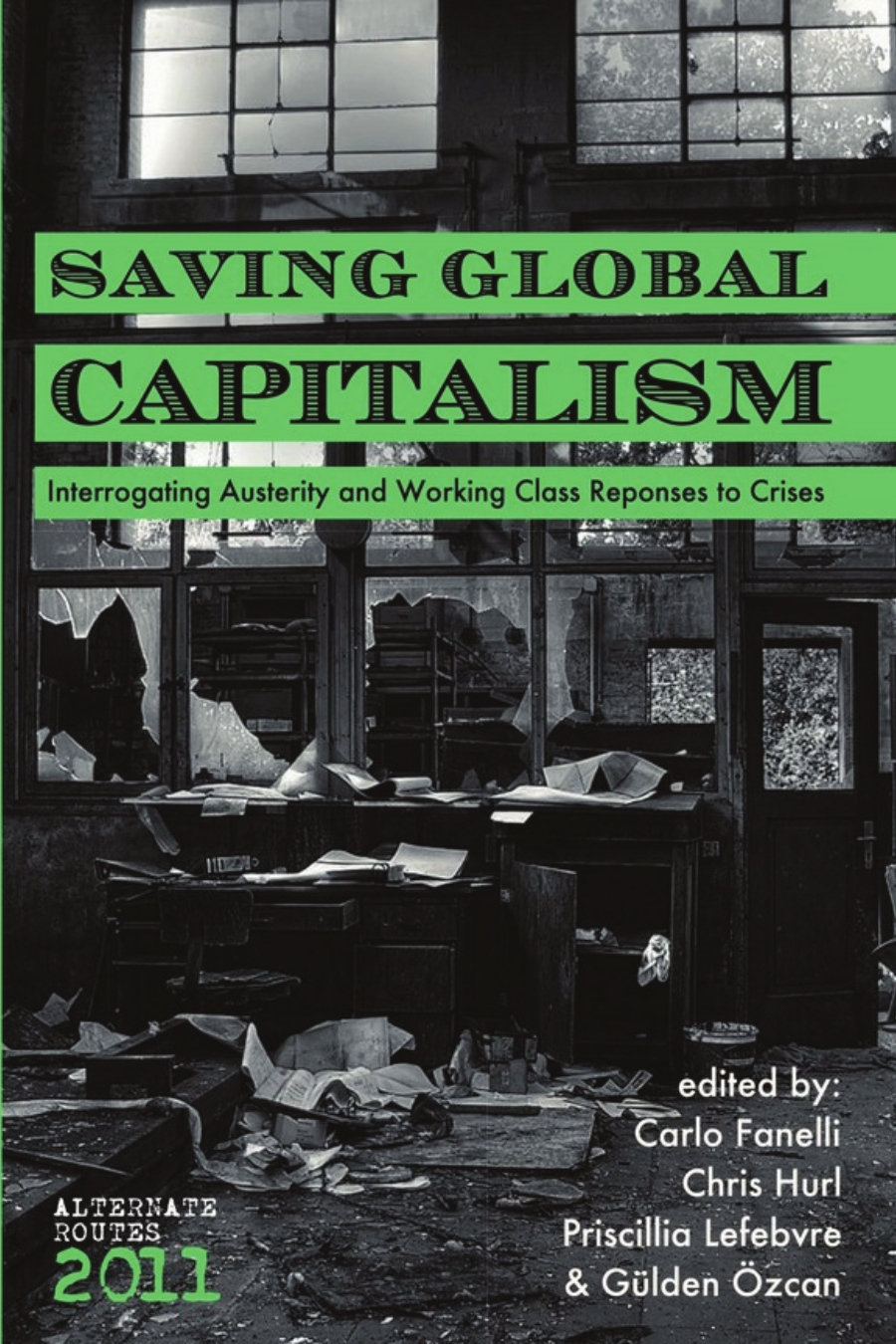
Saving Global Capitalism
by Red Quill Books
What began as an unprecedented housing meltdown centered in the United States in the summer of 2007, quickly turned into a global insolvency crisis throughout 2008, and later the most significant economic crisis since the Great Depression. Despite monumental bailouts and extraordinary coordination by all major capitalist countries led by the U.S. Treasury, the public purse that salvaged the making of global capitalism is now being undermined by the very financial markets that were rescued.
A new wave of austerity is sweeping the globe. The articles in this issue scrutinize the austerity responses of governments around the world designed to kick-start capital accumulation and recreate a suitable environment for business investment. The contributors to this collection provide a vivid portrait of working class discontent in an era of increasing capitalist militancy.
Edited by Carlo Fanelli; Chris Hurl; Priscillia Lefebvre; Gulden Ozcan.
Red Quill Books, 2010. 195 pages.
What readers are saying
“Making the dynamics of global capitalism accessible without compromising on the complexities.”
— Sam Gindin, author of The Canadian Auto Workers and Global Capitalism
“Particularly timely.”
— Bryan D. Palmer, author of Working-Class Experience
More books by Red Quill Books
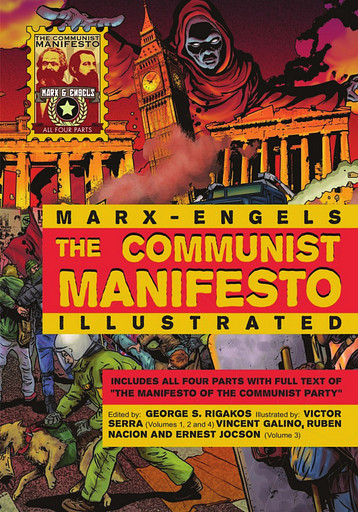
The Communist Manifesto1-4 Illustrated
All Four Parts
This comic book is the combined volume of Red Quill Book's signature four-part Communist Manifesto Illustrated series. It also includes the full text of the original "Manifesto of the Communist Party" along with a new Preface and explanatory notes on the prologues ""Reckoning at Highgate Cemetery," "Breadline Babooshka," "The Agricultural Treadmill," and "After Occupy."
The Communist Manifesto has been described as "the most important political text of the 19th century" yet it remains a profoundly important political text even today. Crisis after crisis breathes new life into the idea of communism and Marxist thought in general. Anti-capitalist sentiment is renewing itself and it is hoped that this illustrated work helps facilitate a rediscovery of Marx and adds fuel to the imagination for another world.
Edited by George S. Rigakos (Editor); Various (Illustrator).
Red Quill Books, 2016. 172 pages.
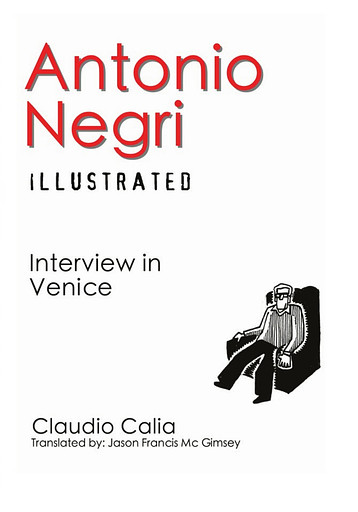
Antonio Negri Illustrated
Interview in Venice
Revolutionary, philosopher, best-selling author, political prisoner and one-time exile, Antonio Negri is today considered one of the world's most influential radicals. His long-standing participation in political struggle and his contemporary analysis of social movements have reshaped the way we view resistance and the potential for revolution in an age of globalization. Claudio Calia takes us on an intimate visit to Negri's Venice home as we sit amidst busts of Lenin, communist propaganda, and the ghosts of 1968. A truly insightful book that traces the connections between Negri's revolutionary experiences and his most recent thinking on "multitudes". Beautifully illustrated and elegantly narrated, the book is both indispensible to the beginner yet a must-have for readers already familiar with Negri's works.
By Claudio Calia; Jason Francis Mc Gimsey (Translator).
Red Quill Books, 2011. 156 pages.
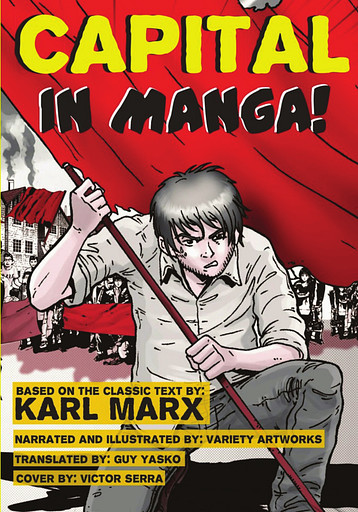
Capital - In Manga!
As the gap between rich and poor continues to widen, a new generation is reflecting on the insights of Karl Marx. Marx not only stood against the global economic system but he also helped us understand it. He explained how wealth was created on the backs of workers, how ""surplus value"" is realized and how accumulation is achieved through unpaid labour-time, the intensification of work and the tyranny of credit.
""Capital - In Manga!"" is the English translation of the Japanese bestseller. It's a story of a cheese-maker turned capitalist and how greed, exploitation and its social consequences destroys lives and remakes workers into commodities.
It is hoped that this manga may act as a bridge to Marx's original work.
By Variety Artworks (Narrator, Illustrator); Karl Marx (Original Author); Guy Yasko (Translator).
Red Quill Books, 2012. 200 pages.

A General Police System
Political Economy and Security in the Age of Enlightenment
While contemporary inquiries into theoretical linkages between political economy and security are rare, the exploration of these connections formed the cornerstone of political, social and economic philosophy during the upheavals of post-feudal Europe. "A General Police System", a term borrowed from the late eighteenth century thinker Patrick Colquhoun, examines the overlapping genealogies of commerce, security, surveillance and the problem of poverty in the works of foundational English and Continental thinkers of the 17th to early 19th centuries. The authors thus revive the epic project of police and critically re-examine its drive to classify, regulate and control populations, providing a renewed materialist contribution toward a contemporary critique of security.
Edited by George S. Rigakos, John L. McMullan, Joshua Johnson and Gulden Ozcan.
Red Quill Books, 2009. 312 pages.

Anti-Security
Security has reached an analytic blockage. The more security seems post-political, post-social, or even post-modern the more it escapes analytic scrutiny. The more security attaches itself to innumerable social relationships the more it becomes the very glue that binds social reality. Social problems become security problems while projects of pacification continue to be legitimized under the rubric of security. To be against security today is to stand against the entire global economic system. If security has become the dominant, perhaps impenetrable concept of our times, then we must start entertaining the impossible. We must begin asking: what would doing anti-security look like?
Also contains "Anti-Security: A Declaration" (by Neocleous & Rigakos).
Edited by Mark Neocleous; George S. Rigakos.
Red Quill Books, 2011. 272 pages.

Bastille Nation
French Penal Politics and the Punitive Turn
Bastille Nation tells the story of an attempt to reform the French prison system, resulting in the passing of a penitentiary law at the end of 2009. This law had been ten years in the making, and was presented as the culmination of the modernization and humanization of the French prison system. The law was challenged by political parties, unions, associations and human rights groups. Yet, despite this opposition, the prison administration went about recovering its position of expertise in the face of this vocal criticism.
Unresolved points of conflict still exist and continue to shift. The persistence of activist groups, official authorities and opposition parties has allowed prisoners to continue to challenge the system. By contributing to the study of the various means by which prisoners make demands and subjectify themselves, this book also recounts the history of prisons on the outside as well as on the inside, casting light on both the juxtaposition of voices and their unequal power relationship.
By Jean Berard; Gilles Chantraine; Matthew Cunningham (Translator).
Red Quill Books, 2013. 202 pages.
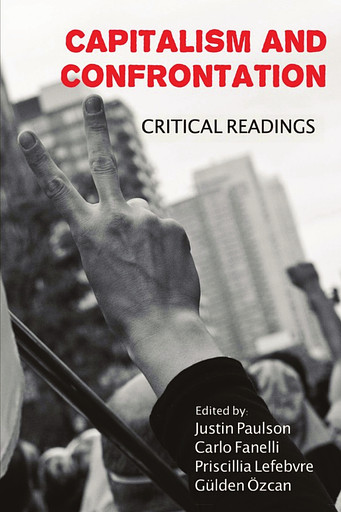
Capitalism and Confrontation
Critical Readings
Capitalism and Confrontation offers current, original analyses of the crisis in its financial, ecological, and political dimensions and the ways people are fighting back. The contributors, from a variety of scholarly, political, and activist perspectives, challenge the dominant narratives of the crisis and its history. As financiers and politicians today insist on greater austerity, the case studies collected in this anthology provide a glimpse of the confrontation and resistance that is indeed occurring throughout the globe.
Edited by Justin Paulson; Carlo Fanelli; Priscillia Lefebvre; Gulden Ozcan.
Red Quill Books, 2012. 214 pages.
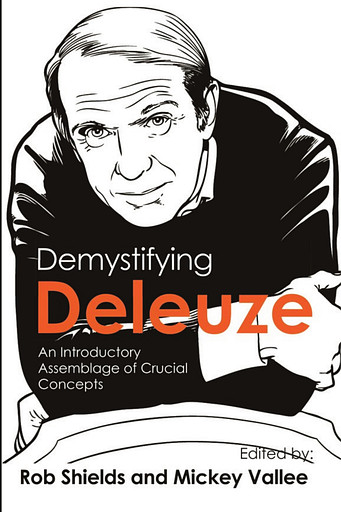
Demystifying Deleuze
An Introductory Assemblage of Crucial Concepts
The theoretical work of Gilles Deleuze has transformed cultural studies and has made a significant impact on disciplines as diverse as sociology, queer theory, feminist studies, film, music, and philosophy. Until recently his books were notorious for their density and eccentric flair. While there are a wide array of introductions that complement and clarify his work, this assemblage stands apart by shedding his concepts of jargon and stressing the crucial, radical core of his philosophical ideas. Demystifying Deleuze is a timely and approachable primer for students, scholars and critically-minded readers.
Edited by Rob Shields; Mickey Vallee.
Red Quill Books, 2012. 202 pages.

Destroy, Build, Secure
Readings on Pacification
Pacification is often thought of as a military strategy or a metaphor for social control. Destroy, Build, Secure goes beyond this common usage of the word and instead focuses on pacification as a category of analysis. The contributors demonstrate how pacification is simultaneously a repressive and productive strategy, mobilizing the concept to problematize the liberal boundaries of war and peace, military and civil spheres, as well as police and military operations across time and geography. From the nineteenth century to our current conjuncture, from North America to Europe, North Africa and on to Turkey, the contributors show how through mobilizing violence pacification is fundamental to strategies of securing relations of accumulation and domination both at home and abroad.
Edited by Tyler Wall; Parastou Saberi; Will Jackson.
Red Quill Books, 2017. 240 pages.
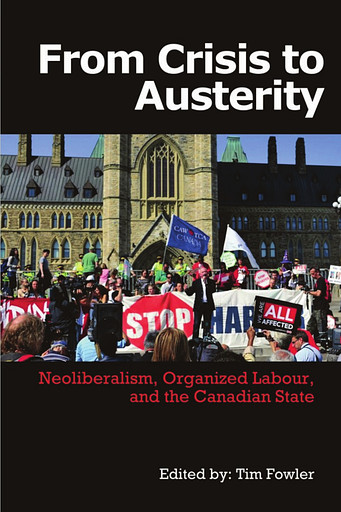
From Crisis to Austerity
Neoliberalism, Organized Labour and the Canadian State
The Great Recession was the largest crisis of capitalism since the Great Depression and the largest crisis in neoliberalism to date, sending shockwaves throughout the global economy. States scrambled to right the sinking capitalist ship in order to maintain high levels of accumulation. In Canada, as in so many other countries, the state introduced austerity measures aimed at organized labour and the broader working class. This volume explores the political economy of The Great Recession in Canada, and focuses on how labour has responded to the crisis, neoliberalism, and austerity measures.
Edited by Tim Fowler.
Red Quill Books, 2013. 226 pages.
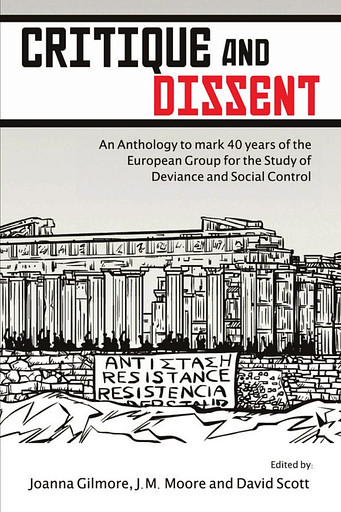
Critique and Dissent
An Anthology to Mark 40 Years of the European Group for the Study of Deviance and Social Control
Critique and Dissent brings together for the first time in one volume a collection of papers spanning forty years of annual conferences of the European Group for the Study of Deviance and Social Control."Critique and Dissent brings together for the first time in one volume a collection of papers spanning forty years of annual conferences of the European Group for the Study of Deviance and Social Control. The European Group is one of the largest international forums for the study of 'crime', social harm and mechanisms of control and has been at the forefront of debates and creative developments in the emergence and consolidation of critical criminologies in Europe and beyond.
This edited collection showcases some of the most exciting and innovative contributions since its first conference in 1973, illustrating the theoretical depth and contrasting interpretive frames deployed in the critical analysis of deviancy and social control.
Edited by Joanna Gilmore; J.M. Moore; David Scott.
Red Quill Books, 2013. 388 pages.

Great Recession-Proof?
Shattering the Myth of Canadian Exceptionalism
The articles and interviews collected here problematize prevailing characterizations of recession and recovery. Rather than focusing on narrowly economistic measures, the contributors challenge standard explanations of the Great Recession drawing attention to the classed, ethno-racial and gendered dimensions of austerity and retrenchment. Collectively, the book debunks the myth of Canadian exceptionalism by demonstrating that the aftershocks of the recession are far from over.
Edited by Carlo Fanelli; Bryan Evans.
Red Quill Books, 2012. 281 pages.
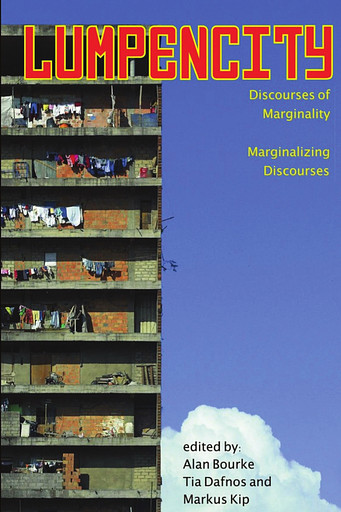
Lumpencity
Discourses of Marginality | Marginalizing Discourses
While it has been fashionable to think that academic research benefits marginalized groups, representational and methodological choices have often served to produce and legitimize marginalizing practices. The contributions to Lumpencity reveal how authors have sought to engage with and transform their scholarly repertoires into tools of analysis useful for political action. We hope to encourage scholars, activists, and activist-scholars to reflect upon the complementarity of their academic and activist praxis, and to remain committed to unsettling both disciplinary norms and institutional boundaries.
Edited by Alan Bourke; Tia Dafnos; Markus Kip.
Red Quill Books, 2012. 444 pages.
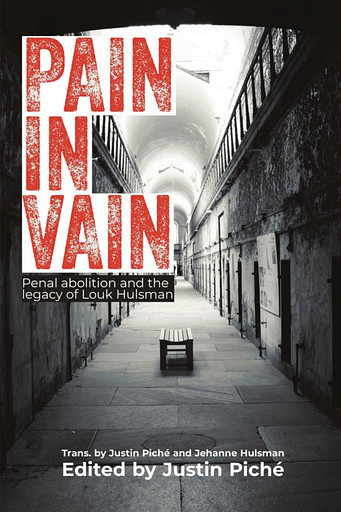
Pain in Vain
Penal Abolition and the Legacy of Louk Hulsman
In the 1960s-70s, the abolition of prisons was considered a desirable and viable policy option among a growing number of critical prison scholars and organizers. Penal system bureaucrats and their political masters in several western liberal democracies also sought a significant reduction in the use of incarceration. Yet, despite this rhetoric and the growth of alternatives to incarceration that ensued, prison populations in many parts of the world instead began to soar.
It is in this context that Louk Hulsman, a founder of prison abolitionism, suggested that the abolition of prisons depended not on the creation of community-based sanctions, but on the abolition of criminalization and punishment as a way of thinking about and responding to 'crime'.
While Hulsman's call for penal abolition became influential amongst scholars and activists, the complexity of his analysis and its origins have often been overlooked. In part, this is due to the fact that he unpacked his ideas in the greatest depth during a course of interviews with Jacqueline Bernat de Celis in Peines perdues: le systeme penal en question (Le centurion, 1982).
This edited anthology seeks to address this gap by providing the de Celis interviews in English for the first time and including reflections by academics, activists, politicians, policymakers, and practitioners analyzing the global impact of Louk Hulsman's life and work.
Edited by Justin Piche (Editor, Translator); Jehanne Hulsman (Translator).
Red Quill Books, 2023. 290 pages.
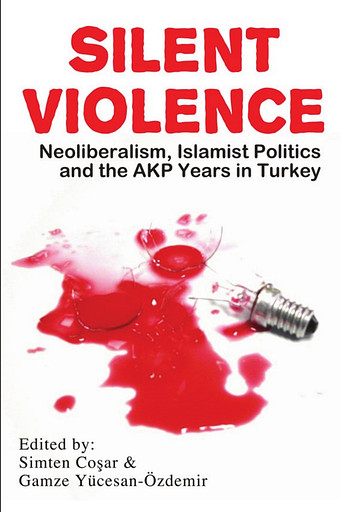
Silent Violence
Neoliberalism, Islamist Politics and the AKP Years in Turkey
This anthology offers an alternative, critical reading of contemporary Turkish politics by problematizing the synthetic articulation of Islamist politics with neoliberal capitalism during the AKP party's decade-long rule. The contributors offer a detailed analysis of the seemingly contradictory policies of the AKP regime, from social to cultural to foreign policy, with a view to understanding changes in Turkey's neoliberal order.
The editors contend that the AKP party's rule should be read on the basis of transformations within capitalism in neoliberal times involving different forms of suppression and exploitation along axes of class, race and gender.
Edited by Simten Cosar; Gamze Yucesan-Ozdemir.
Red Quill Books, 2012. 331 pages
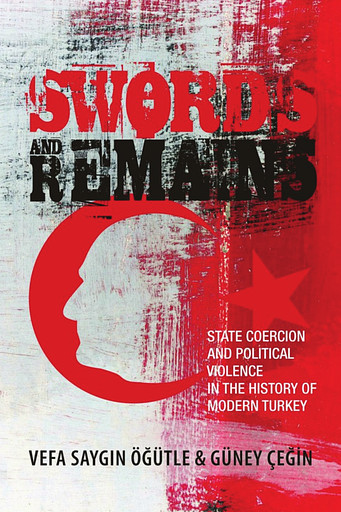
Swords and Remains
State Coercion and Political Violence in the History of Modern Turkey
Now more than ever, political violence must be understood as a key concept for understanding the history of Turkey. By considering the political history of the Ottoman Empire through repertoires of political violence, Swords and Remains provides an alternative perspective of the history of modern Turkey based on the close relation between coercive actions in the transition from empire coupled with the economy of violence that has occurred as a result of a national identity established by the Republic.
The authors analyze the coercion that has enabled the ruling class through historical events such as the Kurdish revolts since the '20s, youth and workers' movements in the '60s, the violence akin to a civil war within the '70s, and the revolt of PKK after the '80s amid the balance of state capacity and democratization and the civil violence that was built up against this coercion.
Swords and Remains may thus be read as a narrative of the Turkish state both generating and transforming a Schmittian political vision.
By Vefa Saygin Ogutle; Guney Cegin.
Red Quill Books, 2017. 180 pages.

The Ideology of Fascism and the Far Right in Britain
This book examines the precise nature of fascism as both a system of ideas and a mode of political practice and it looks at the history of organizations and parties loyal to this particular creed in Britain. It is a critical examination of the relative utility of the various theories that have attempted to explain the fascist phenomenon, identifying weaknesses in conventional interpretations. Hayes re-asserts the value of Marxism as an analytic mechanism capable of evaluating the experience of fascism and seeks to identify how, and under what circumstances fascism might re-emerge. Written in a concise and accessible style by an academic who played an active role in anti-fascist politics in Britain, The Ideology of Fascism and the Far Right in Britain will be of considerable value to anyone seeking a clearer understanding of fascism and/or, crucially, how best to resist it.
By Mark Hayes.
Red Quill Books, 2014. 474 pages.
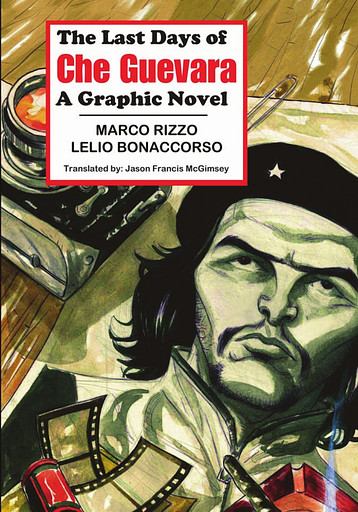
The Last Days of Che Guevara
A Graphic Novel
Che Guevara still inspires resistance against capitalism throughout the globe. His image has become an iconic international symbol of the struggle against economic exploitation. Guevara was a physician, a key revolutionary figure within Fidel Castro's 26th of July Movement, and an international guerilla leader and theorist. His memoires became international bestsellers. Guevara was eventually captured and executed by CIA-backed Bolivian forces.
This illustrated biography begins with his capture in October 1967, tracing the power of his legacy through his engagements with central figures of that tumultuous period.
By Marco Rizzo; Lelio Bonaccorso (Illustrator); Jason Francis McGimsey (Translator).
Red Quill Books, 2013. 124 pages.

The New Social Control
The Institutional Web, Normativity and the Social Bond
Freedom and control are usually understood as opposites but what if they merged? Consumption, management and administration are everywhere. We are no longer supposed to depend on one other. Instead, institutions and organizations form a dense web that radically transform our past relations into ready-made, fragmented norms.
Thus, we are increasingly controlled not by coercion but by competition and efficiency, aspiration and fear, to the point where a new era in human sociality is starting. Moving beyond existing critiques, Lianos argues that capitalism does not show itself as a conspiracy of the powerful but rather manifests as the lowest common denominator of our collective weaknesses. Control, therefore, lies in practice and freedom lies in consciousness.
By Michalis Lianos; Richard Nice (Translator).
Red Quill Books, 2012. 217 pages.
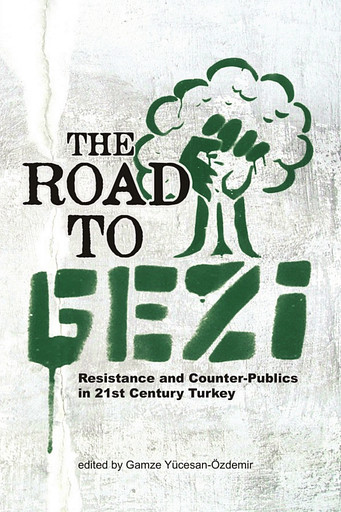
The Road to Gezi
Resistance and Counter-Publics in 21st Century Turkey
The Road to Gezi sheds light on the resistance and political construction of counterpublics in 21st century Turkey by analyzing the 'No' protests and the social upheavals of 'We have a Dream' across different domains and actors in the lead up to the Gezi Park protest. The contributors to this anthology offer an alternative, critical reading of Gezi collectively arguing that the resistance practices of various factions and strata of the working class across a wide social terrain created the uprising. These included: student movements, anti-Hydroelectric Power Plant (HES) resistance, movements against urban renewal, social upheavals of white collar workers, protests of blue collar workers, women's movements, social media activism, new forms of journalism, and direct democracy practices of revolutionary-popular local governments.
Edited by Gamze Yucesan-Ozdemir.
Red Quill Books, 2016. 248 pages.
The Security Abolition Manifesto
Security is the monstrous idea that we are alone and locked into competition over scarce resources, that private property is a natural right, that we need to protect our island of private life against the threat of others, and that we must submit to authority to do so.
Security encourages us to believe that the state exists to protect us from an ever-growing list of internal and external threats, from criminals to terrorists, insurgents to drug cartels, from migrants to refugees, and on it goes.
Security demands we look up and submit to the Leviathan, rather than look across in solidarity to our fellow beings on this planet, human and otherwise. Security tells us that we are obstacles to each other's freedom, rather than the realization of it.
By The Anti-Security Collective.
Red Quill Books, 2024. 128 pages.
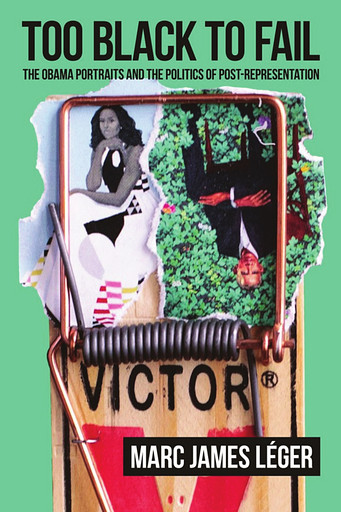
Too Black to Fail
The Obama Portraits and the Politics of Post-Representation
In the past several decades, progressive leftists have gradually replaced socialism with populist criticism of elites and single-issue coalitions. As global economic crisis deepens, the spectre of both the radical left and the extreme right have re-emerged. Max Horkheimer famously stated that whoever does not criticize capitalism has nothing to say about fascism. With a focus on the American scene, Too Black to Fail adds to this the argument that whoever does not criticize identity politics has nothing to say about capitalism. Taking the official portraits of Barack and Michelle Obama as a touchstone for the contradictions of our era, Leger questions the Obama legacy in relation to the neoliberalization of society and culture. Arguing for the renewal of emancipatory universalism, Too Black to Fail makes an unsparing critique of woke aesthetics and black capitalism, drawing the connections between today's racialist agenda and the ideology of post-representation.
By Marc James Leger.
Red Quill Books, 2022. 390 pages.
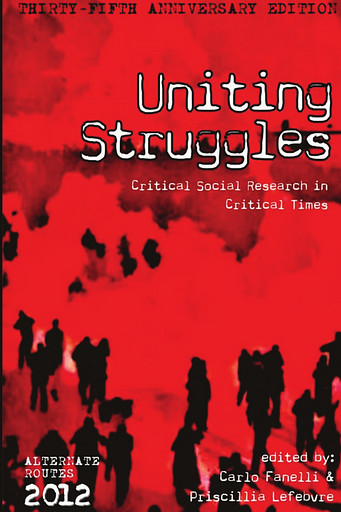
Uniting Struggles
Critical Social Research in Critical Times
With the reverberations of the Great Recession still wreaking havoc throughout much of the world, this issue of Alternate Routes brings together articles based on their dedication to critical social research in critical times. Articles range from an examination of post-9/11 Hollywood cinema to climate-induced migration, neoliberalism and the global economic crisis, labour struggles, left political regroupment, knowledge production in social movements and re-thinking socialism. Included, as well, are short analytical pieces, editorials and interviews with noted activists and academics, and a number of contemporary book reviews.
Edited by Carlo Fanelli; Priscillia Lefebvre.
Red Quill Books, 2011. 307 pages.
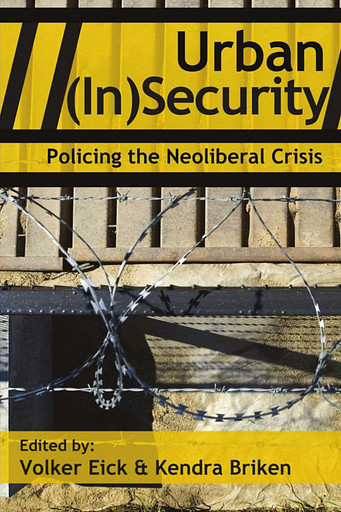
Urban (In)Security
Policing the Neoliberal Crisis
The neoliberalization of policing and the policing of neoliberalization are worldwide phenomena. While the first trend effects the organization of policing, the second trend brings about new policing strategies executed by state police, commercial security contractors and by nonprofit police forces. This volume for the first time brings together empirical studies comparing policing strategies from Australia, Britain, France, Germany, India, Lithuania, Sweden and the United States.
Edited by Volker Eick; Kendra Briken.
Red Quill Books, 2014. 406 pages.
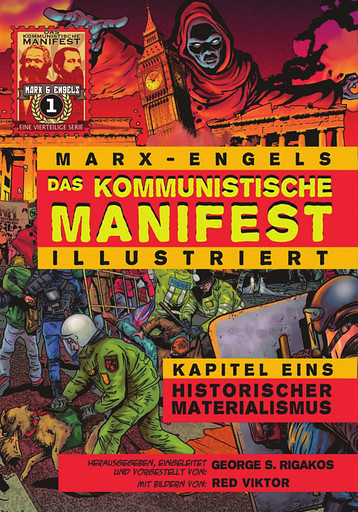
Das Kommunistische Manifest1 (Illustriert)
Kapitel Eins: Historischer Materialismus
Ein Gespenst geht um in Europa - das Gespenst des Kommunismus. Alle Machte des alten Europa haben sich zu einer heiligen Hetzjagd gegen dies Gespenst verbundet, der Papst und der Zar, Metternich und Guizot, franzosische Radikale und deutsche Polizisten...""
Edited by George S. Rigakos (Editor); Red Viktor (Illustrator); Karl Marx (Original Author).
Red Quill Books, 2010. 32 pages.
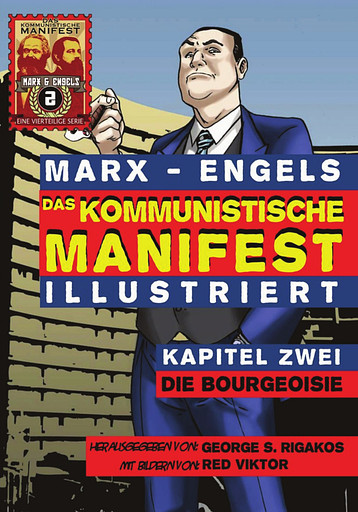
Das Kommunistische Manifest2 (Illustriert)
Kapitel Zwei: Die Bourgeoisie
Die Bourgeoisie... Sie zwingt alle Nationen, die Produktionsweise der Bourgeoisie sich anzueignen, wenn sie nicht zugrunde gehn wollen; sie zwingt sie, die sogenannte Zivilisation bei sich selbst einzufuhren, d.h. Bourgeois zu werden. Mit einem Worte, sie schafft sich eine Welt nach ihrem eigenen Bilde.
Edited by George S. Rigakos (Editor); Red Viktor (Illustrator); Karl Marx (Original Author).
Red Quill Books, 2011. 34 pages.
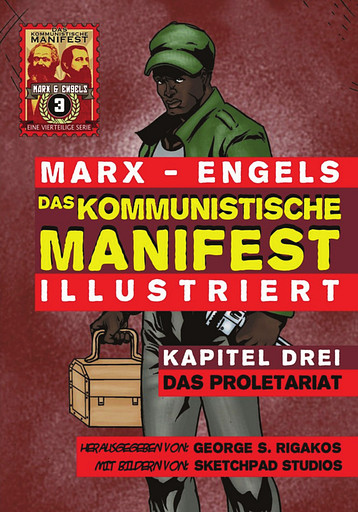
Das Kommunistische Manifest3 (Illustriert)
Kapitel Drei: Das Proletariat
Die Arbeit der Proletarier hat durch die Ausdehnung der Maschinerie und die Teilung der Arbeit allen selbstandigen Charakter und damit allen Reiz fur die Arbeiter verloren. Er wird ein blosses Zubehor der Maschine, von dem nur der einfachste, eintonigste, am leichtesten erlernbare Handgriff verlangt wird.
In demselben Masse, in dem die Widerwartigkeit der Arbeit wachst, nimmt daher der Lohn ab. Noch mehr, in demselben Masse, wie Maschinerie und Teilung der Arbeit zunehmen, in demselben Masse nimmt auch die Masse der Arbeit zu...
Edited by George S. Rigakos (Editor); Vincent Galino (Illustrator); Karl Marx (Original Author).
Red Quill Books, 2012. 36 pages.
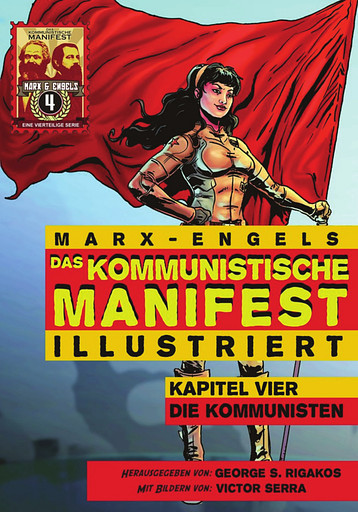
Das Kommunistische Manifest4 (Illustriert)
Kapitel Vier: Die Kommunisten
Die Kommunisten... Die gemeinsamen, von der Nationalitat unabhangigen Interessen des gesamten Proletariats hervorheben und zur Geltung bringen... Stets das Interesse der Gesamtbewegung vertreten.
Edited by George S. Rigakos (Editor); Red Viktor (Illustrator); Karl Marx (Original Author).
Red Quill Books, 2015. 34 pages.
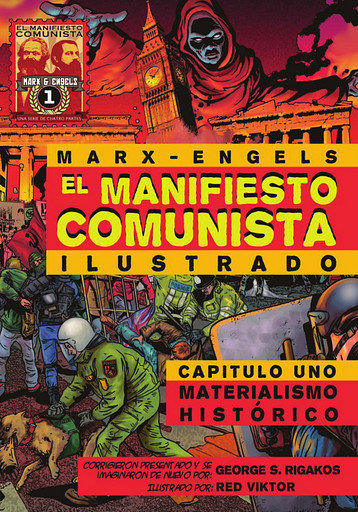
El Manifiesto Comunista1 (Ilustrado)
Capitulo Uno: Materialismo Historico
La burguesia... obliga a todas las naciones a abrazar el regimen de produccion de la burguesia o perecer; las obliga a implantar en su propio seno la llamada civilizacion, es decir, a hacerse burguesas. Crea un mundo hecho a su imagen y semejanza.
Edited by George S. Rigakos (Editor); Red Viktor (Illustrator); Karl Marx (Original Author).
Red Quill Books, 2010. 32 pages.
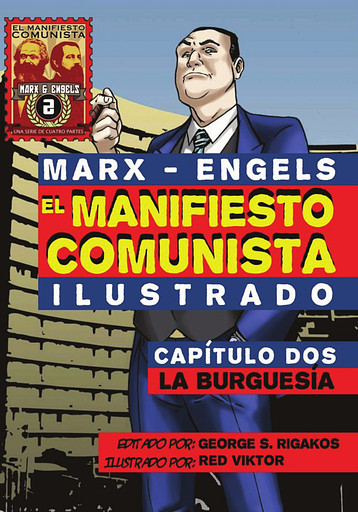
El Manifiesto Comunista2 (Ilustrado)
Capitulo Dos: La Burguesia
La burguesia, con el rapido perfeccionamiento de todos los medios de produccion, con las facilidades increibles de su red de comunicaciones, lleva la civilizacion hasta a las naciones mas salvajes. El bajo precio de sus mercancias es la artilleria pesada con la que derrumba todas las murallas de la China, con la que obliga a capitular a las tribus barbaras mas ariscas en su odio contra el extranjero. Obliga a todas las naciones a abrazar el regimen de produccion de la burguesia o perecer; las obliga a implantar en su propio seno la llamada civilizacion, es decir, a hacerse burguesas. Crea un mundo hecho a su imagen y semejanza.
Edited by George S. Rigakos (Editor); Red Viktor (Illustrator); Karl Marx (Original Author).
Red Quill Books, 2011. 34 pages.
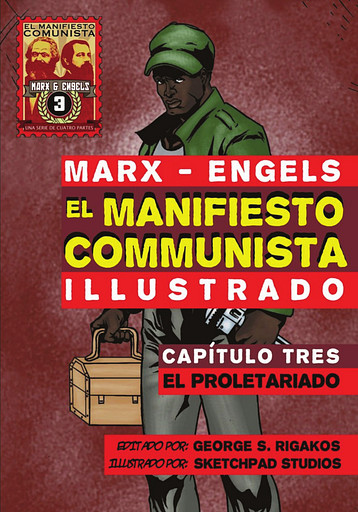
El Manifiesto Comunista3 (Ilustrado)
Capitulo Tres: El Proletariado
La extension de la maquinaria y la division del trabajo quitan a este, en el regimen proletario actual, todo caracter autonomo, toda libre iniciativa y todo encanto para el obrero. El trabajador se convierte en un simple resorte de la maquina, del que solo se exige una operacion mecanica, monotona, de facil aprendizaje.
Cuanto mas repelente es el trabajo, tanto mas disminuye el salario pagado al obrero. Mas aun: cuanto mas aumentan la maquinaria y la division del trabajo, tanto mas aumenta tambien este.
Edited by George S. Rigakos (Editor); Sketchpad Studios (Illustrator); Karl Marx (Original Author).
Red Quill Books, 2012. 36 pages.
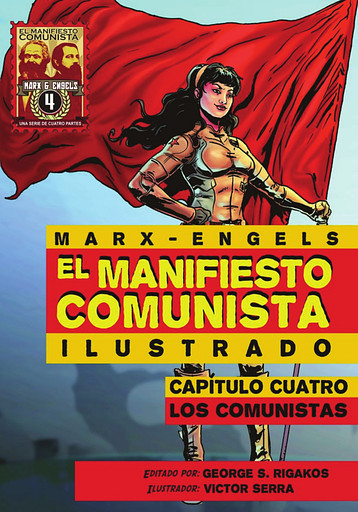
El Manifiesto Comunista4 (Ilustrado)
Capitulo Cuatro: Los Comunistas
Los comunistas... Destacan y reivindican siempre, en todas y cada una de las acciones nacionales proletarias, los intereses comunes y peculiares de todo el proletariado, independientes de su nacionalidad... Mantienen siempre el interes del movimiento enfocado en su conjunto.
Edited by George S. Rigakos (Editor); Red Viktor (Illustrator); Karl Marx (Original Author).
Red Quill Books, 2015. 34 pages.
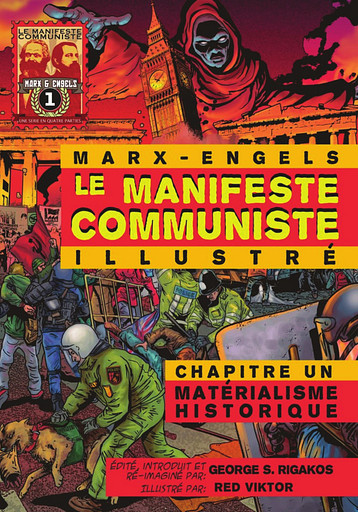
Le Manifeste Communiste1 (Illustre)
Chapitre Un: Materialisme Historique
Un spectre peine silencieusement dans les champs brules par le soleil. Il parcourt des villages dont les places sont poussiereuses. Il trime dur a des corvees sur les planchers crasseux des usines. Il fouille les ordures dans les ruelles des bidonvilles. Il flotte au-dessus des cubicules dresses en rangs serres dans les tours a bureaux. Ou le capitalisme parade, notre spectre le suit sans faire de bruit. Il s'arrete aupres des alienes, des pauvres et des exploites. Il est temoin de millions de hurlements silencieux. Et de plus en plus, nous apercevons ce fantome.
Mais pourquoi une version illustree? Simplement pour revivifier le texte. Pour le rendre accessible a une nouvelle audience. Pour nous aider a mieux comprendre notre soif innee pour la promesse de meilleurs lendemains, et pour rencontrer a nouveau un pamphlet politique qui aura forge les fondations ideologiques d'une des epoques la plus idealiste - mais aussi la plus repressive - de l'histoire humaine.
Edited by George S. Rigakos (Editor); Red Viktor (Illustrator); Karl Marx (Original Author).
Red Quill Books, 2010. 32 pages.
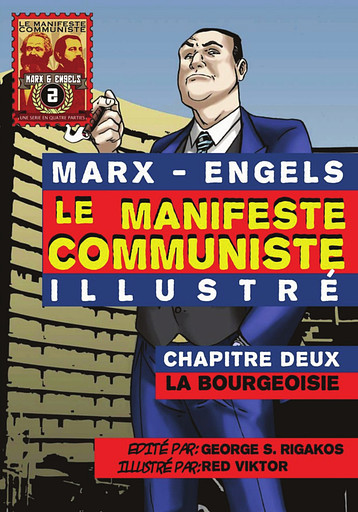
Le Manifeste Communiste2 (Illustre)
Chapitre Deux: La Bourgeoisie
Par le rapide perfectionnement des instruments de production et l'amelioration infinie des moyens de communication, la bourgeoisie entraine dans le courant de la civilisation jusqu'aux nations les plus barbares. Le bon marche de ses produits est la grosse artillerie qui bat en breche toutes les murailles de Chine et contraint a la capitulation les barbares les plus opiniatrement hostiles aux etrangers. Sous peine de mort, elle force toutes les nations a adopter le mode bourgeois de production; elle les force a introduire chez elle la pretendue civilisation, c'est-a-dire a devenir bourgeoises. En un mot, elle se faconne un monde a son image.
Edited by George S. Rigakos (Editor); Red Viktor (Illustrator); Karl Marx (Original Author).
Red Quill Books, 2011. 34 pages.
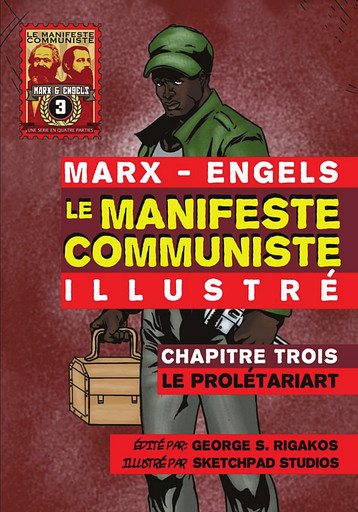
Le Manifeste Communiste3 (Illustre)
Chapitre Trois: Le Proletariat
Le developpement du machinisme et la division du travail, en faisant perdre au travail de l'ouvrier tout caractere d'autonomie, lui ont fait perdre tout attrait. Le producteur devient un simple accessoire de la machine, on n'exige de lui que l'operation la plus simple, la plus monotone, la plus vite apprise.
Donc, plus le travail devient repugnant, plus les salaires baissent. Bien plus, la somme de labeur s'accroit avec le developpement du machinisme et de la division du travail...
Edited by George S. Rigakos (Editor); Red Viktor (Illustrator); Karl Marx (Original Author).
Red Quill Books, 2012. 36 pages.
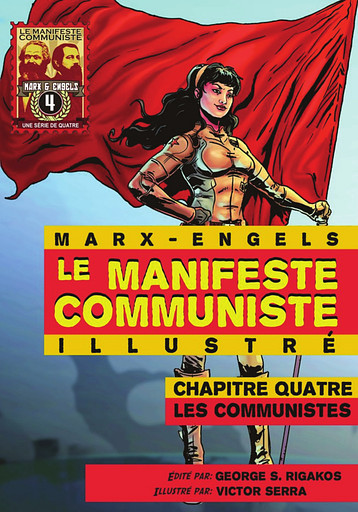
Le Manifeste Communiste4 (Illustre)
Chapitre Quatre: Les Communistes
Les communistes... Ils mettent en avant et font valoir les interets independants de la nationalite et communs a tout le proletariat... Ils representent toujours les interets du mouvement dans sa totalite.
Edited by George S. Rigakos (Editor); Red Viktor (Illustrator); Karl Marx (Original Author).
Red Quill Books, 2015. 34 pages.
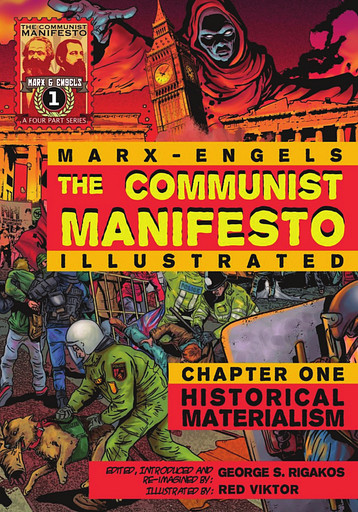
The Communist Manifesto1 Illustrated
Chapter One: Historical Materialism
"A spectre is haunting Europe - the spectre of communism. All the powers of old Europe have entered into a holy alliance to exorcise this spectre: Pope and Tsar, Metternich and Guizot, French Radicals and German police-spies..."
A spectre toils silently in sun-baked fields. It shuffles through dusty village squares. It slaves amidst the grime and drudgery of factory floors. It picks through the garbage of shanty-town alleys. It floats over office-tower cubicles row upon row. Wherever capitalism has had its parade our spectre follows quietly. It settles amongst the alienated, the impoverished, the exploited. It bears witness to millions of silent screams. More and more, we glimpse that ghost.
But why a graphic edition? Put simply, in order to reanimate the text. To make it available to a new audience. To help us better understand our innate yearning for the promise of a better tomorrow and to re-acquaint us with a political pamphlet that forged the ideological foundations for one of the most idealistic yet repressive eras of human history.
Edited by George S. Rigakos (Editor); Red Viktor (Illustrator); Karl Marx (Original Author).
Red Quill Books, 2010. 32 pages.
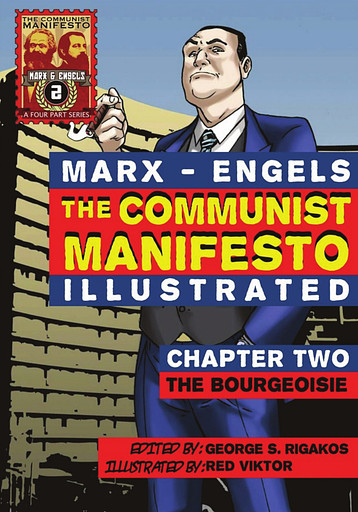
The Communist Manifesto2 Illustrated
Chapter Two: The Bourgeoisie
"The bourgeoisie, by the rapid improvement of all instruments of production, by the immensely facilitated means of communication, draws all, even the most barbarian, nations into civilisation... It compels all nations, on pain of extinction, to adopt the bourgeois mode of production; it compels them to introduce what it calls civilisation into their midst, i.e., to become bourgeois themselves. In one word, it creates a world after its own image.""
Edited by George S. Rigakos (Editor); Red Viktor (Illustrator); Karl Marx (Original Author).
Red Quill Books, 2011. 34 pages.
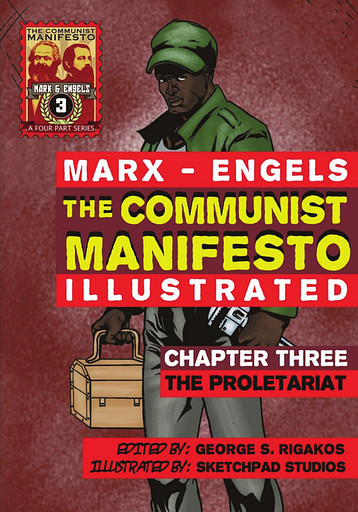
The Communist Manifesto3 Illustrated
Chapter Three: The Proletariat
"Owing to the extensive use of machinery, and to the division of labour, the work of the proletarians has lost all individual character, and, consequently, all charm for the workman. He becomes an appendage of the machine, and it is only the most simple, most monotonous, and most easily acquired knack, that is required of him.
As the repulsiveness of the work increases, the wage decreases. Nay more, in proportion as the use of machinery and division of labour increases, in the same proportion the burden of toil also increases..."
Edited by George S. Rigakos (Editor); Red Viktor (Illustrator); Karl Marx (Original Author).
Red Quill Books, 2012. 36 pages.
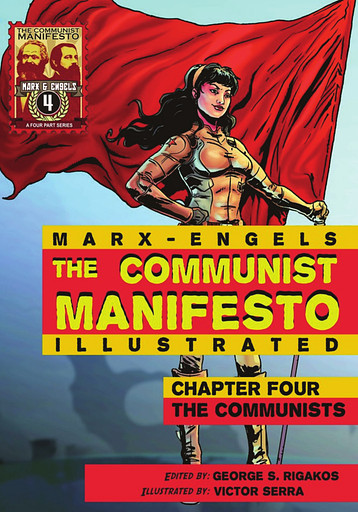
The Communist Manifesto4 Illustrated
Chapter Four: The Communists
The Communists... Bring to the front the common interests of the entire proletariat, independently of all nationality... Always and everywhere represent the interests of the movement as a whole.
Edited by George S. Rigakos (Editor); Red Viktor (Illustrator); Karl Marx (Original Author).
Red Quill Books, 2015. 34 pages.