
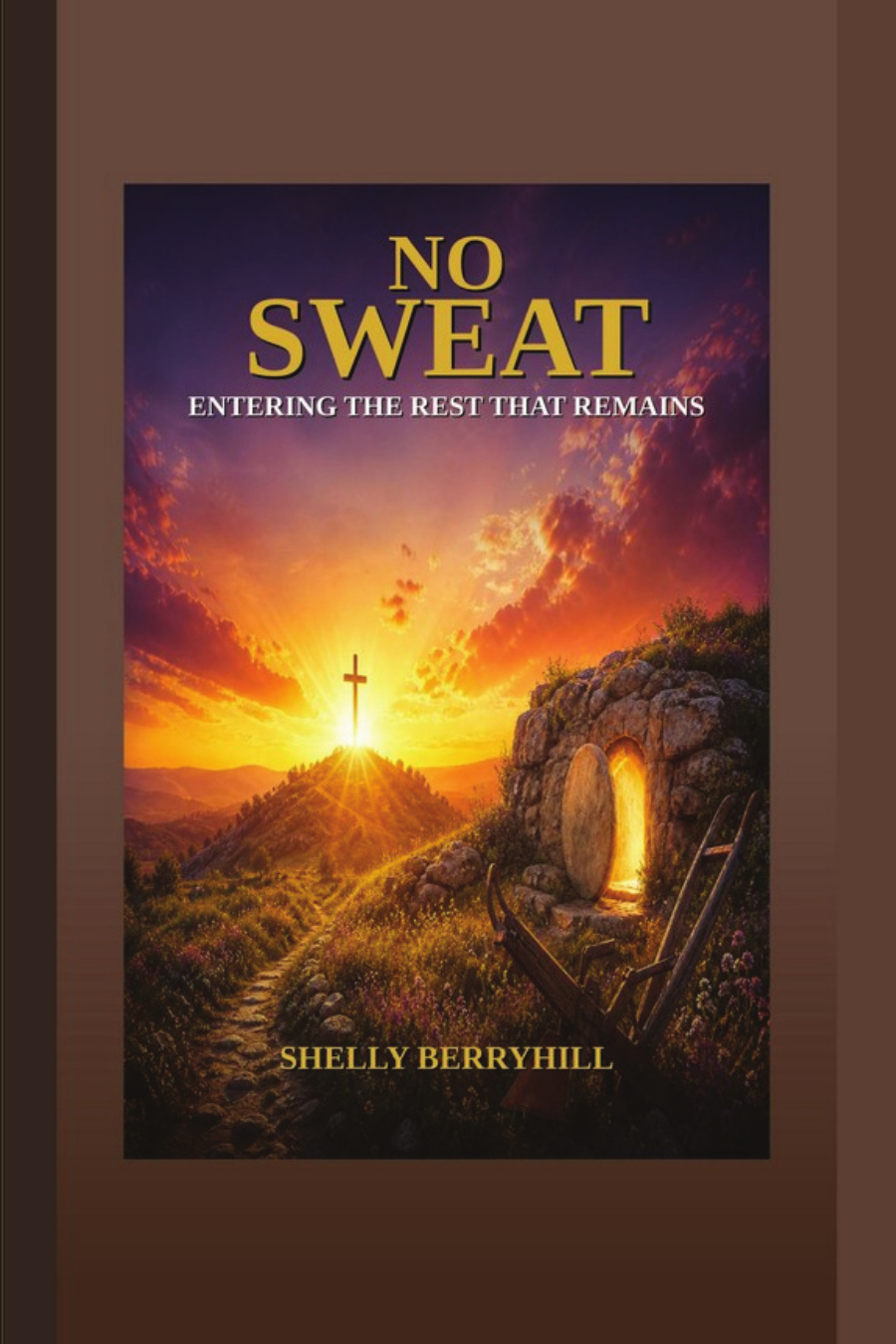
No Sweat
by Shelly’s Books
No Sweat: Entering the Rest That Remains
Sweat entered the world as a curse, not a virtue — and Jesus reversed it. In this book Shelly Berryhill traces that story from Adam’s first drop of labor, through linen priests who must not sweat in God’s house, to three drops of blood that finished the work on a Friday afternoon. Along the way he walks through the Sabbath rhythm written into the first week of creation, the rest Israel turned down at the border of the land, and the rest that still remains because a greater Joshua said, “It is finished.” Written for the weary — caregivers, retirees still chasing a quota, anyone still making bricks for a Pharaoh who was fired two thousand years ago — No Sweat is an invitation to stop performing and sit down in the rest God already prepared.
More books by Shelly’s Books
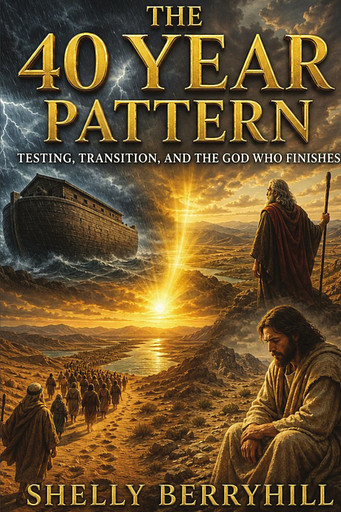
The 40 Year Pattern
Testing, Transition and theGod who Finishes.
The 40 Year Pattern: Testing, Transition, and the God Who Finishes
Why does God keep writing forty over a story before He turns the page? Rain for forty days. A nation walking forty years until a generation is ready. A giant shouting for forty days. The Spirit driving the Son into the wilderness for forty days. In this sequel to The Third Day Pattern, Shelly Berryhill follows that longer stamp through Scripture — not as a secret code, but as a rhythm of testing, transition, and finishing work. Where the third day is a short, violent reversal, forty is the long middle: manna, desert, a people being remade, a God who does not rush and does not quit. The forty will finish.

The Prayer Pattern
How to Pray a Prayer That Is Accepted
"Lord, teach us to pray." — Luke 11:1
Most of us start prayer with the problem. Scripture starts with the Person.
Be careful for nothing; but in every thing by prayer and supplication with thanksgiving let your requests be made known unto God. — Philippians 4:6
Acknowledge. Appreciate. Align. Accept. Abide. Five A's that turn a shopping-list prayer into a conversation heaven recognizes — who God is before what we need, thanks before the answer, His purpose before our preference.
This pattern began in a Sunday School class at Broad Street Baptist Church. Ordinary believers. Open Bibles. Real requests. Learning that the door is not locked — we just have been knocking on the wrong side of it.
Monday morning still needs prayer. Now you have a pattern that holds.
About the Author
Shelly J. Berryhill is a Sunday school teacher and deacon at Broad Street Baptist Church in Hawkinsville, Georgia. He is the author of The Third Day Pattern, The 40 Year Pattern, No Sweat, and other Christian books that dig into Scripture with a teacher's patience and a Southern cadence.
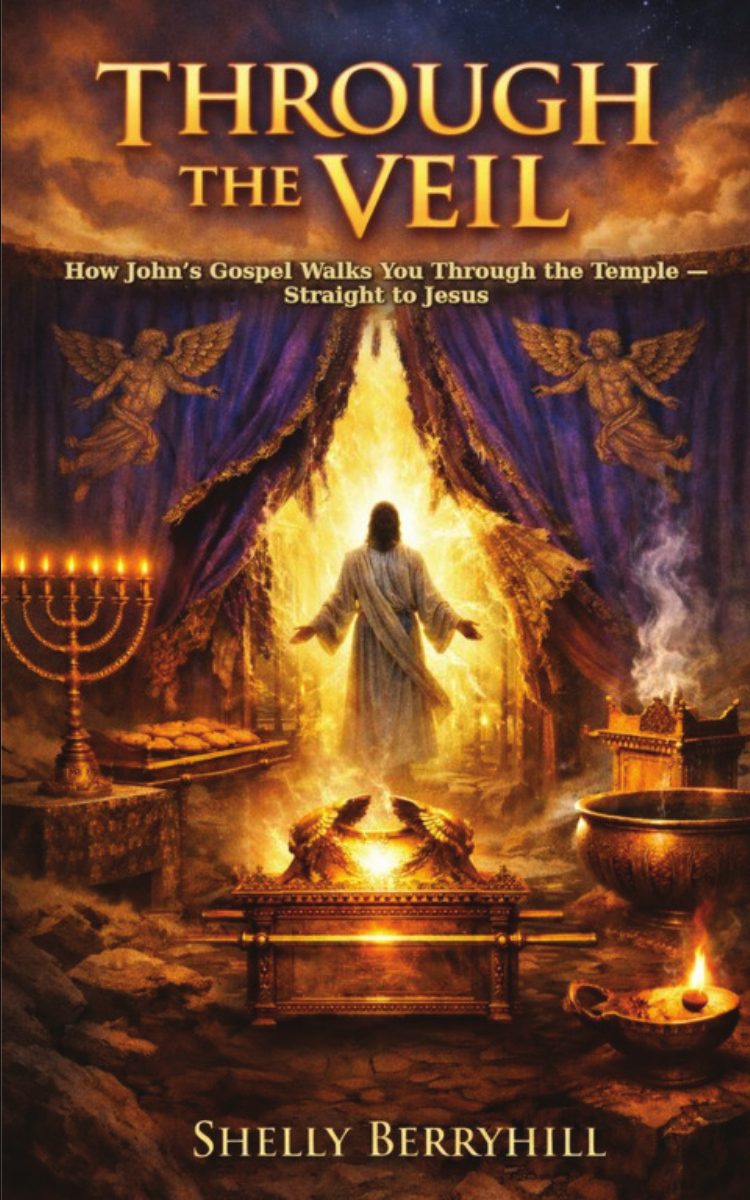
Through the Veil
How John's Gospel Walks You Through the Temple - Straight to Jesus
What if the most familiar Gospel in the Bible has been hiding something extraordinary in plain sight?
The Gospel of John is not just a collection of stories about Jesus. It is a carefully constructed journey through the Tabernacle—the ancient worship space where God’s presence dwelt among His people. And every piece of sacred furniture inside it points to Christ.
In Through the Veil, Shelly traces the stunning structural thread that runs from John chapter 1 to chapter 20, showing how the beloved disciple organized his Gospel as a walk through every room of the Tabernacle:
The Lamb — John the Baptist identifies Jesus as the sacrifice that ends all sacrifices.
The Altar — Jesus tells Nicodemus He must be “lifted up”—the language of the brazen altar.
The Laver — A broken woman at a well receives living water that never runs dry.
The Showbread — Five thousand are fed, and twelve baskets remain—one for each tribe.
The Menorah — A blind man’s eyes are opened seven times, lighting the seven-branched lampstand.
The Incense — Jesus prays for every person who will ever believe—including you.
The Veil — His flesh is torn on the cross, and God rips the curtain from top to bottom.
The Mercy Seat — Mary Magdalene sees two angels in the tomb, one at the head, one at the feet—and the risen Christ calls her by name.
Written for everyday Christians and curious seekers—not seminary professors—Through the Veil combines pastoral warmth with careful biblical scholarship to reveal the Gospel of John as you’ve never seen it before. Each chapter grounds its claims in Scripture, explains theological terms in plain English, and connects ancient worship to your life today.
If you’ve ever sensed that the Bible is saying more than what you’ve caught on the surface, this book will open your eyes. The Tabernacle walk leads to a garden, to an empty tomb, and to a Savior who knows your name.
The door is open. Come and see.
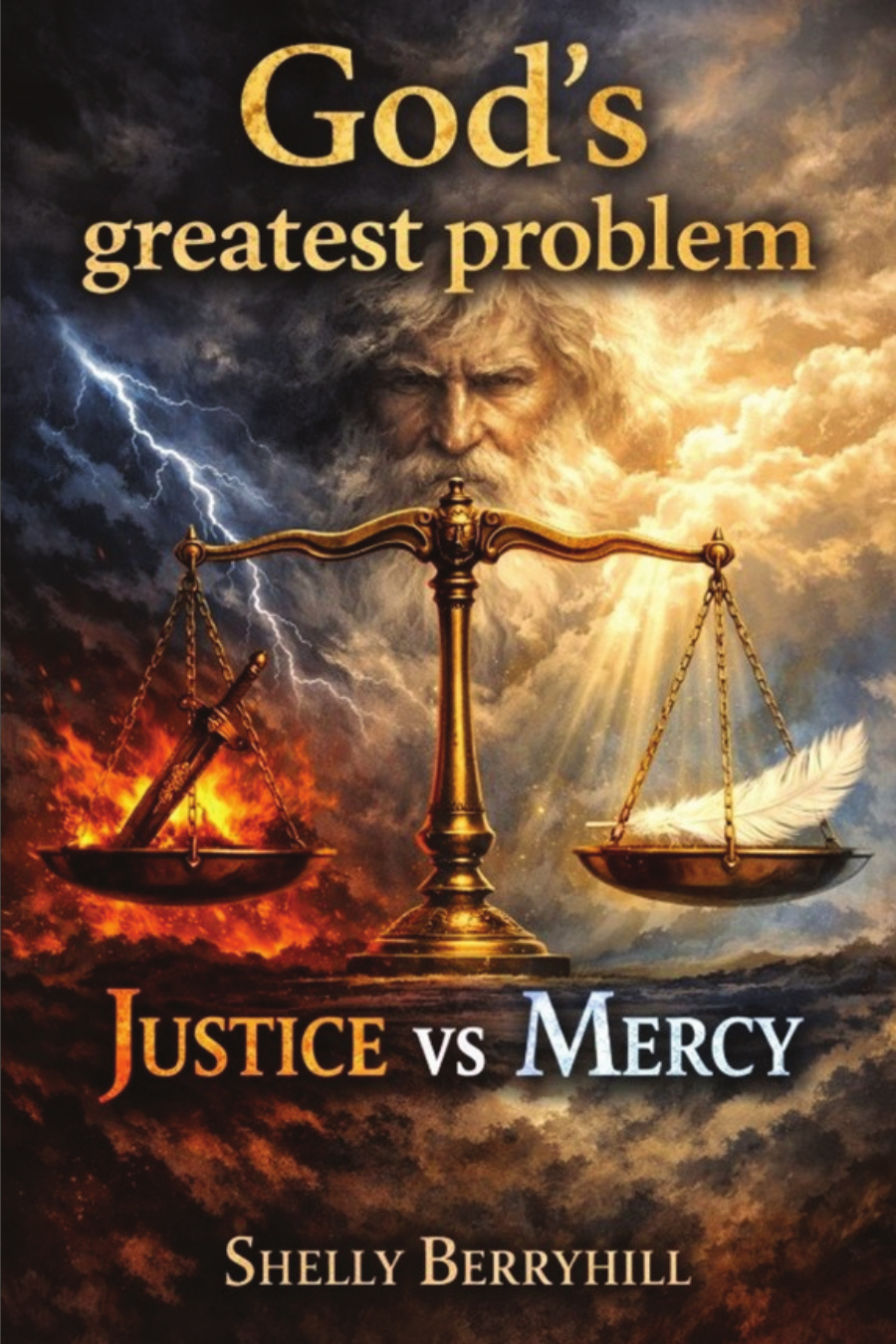
God's Greatest Problem
Justice vs Mercy
Why did God have to become a man?
It's the question every honest person eventually asks. If God is all-powerful, why couldn't He just forgive us and move on? Why the manger, the suffering, the Cross? Why did it have to be this way?
The answer is simpler than most people think — and more stunning than most people realize.
When Adam sinned against an infinite God, he didn't create a small problem. He created an infinite debt. No human being could ever repay it. Justice demanded a real human death. But a finite death could never cover an infinite obligation. The math doesn't work. Humanity was, in a word, without remedy.
Unless God Himself entered the equation.
God's Greatest Problem traces the Bible's answer to the deepest dilemma in the universe: How can a holy God forgive guilty people without ceasing to be just? From the gardens of Eden to the garden tomb, from the first Adam to the last, this book reveals why Jesus had to be fully God and fully man — not as a mystery to accept on autopilot, but as the only solution that holds together.
You'll discover why both of Jesus' favorite titles — Son of Man and Son of God — are not decorative. They're job descriptions. And they change everything about how you understand the Cross, your salvation, and the God who paid your debt Himself.
Written by a Sunday school teacher for everyday Christians and honest seekers. No seminary degree required. Just a willingness to see why the Cross had to happen — and why it changes everything.

Trump Derangement Syndrome
A History of the Accusation that changed American Politics
In December 2003, Charles Krauthammer — a psychiatrist turned political columnist — coined the phrase "Bush Derangement Syndrome" in a Washington Post column. It was meant as a wry observation. It became a weapon.
Two decades later, its descendant — Trump Derangement Syndrome — has been typed in all caps by the president of the United States, introduced as a recognized mental illness in state legislation, proposed as a subject of federally funded research, and deployed by millions of Americans to dismiss their fellow citizens not as wrong but as sick. It has never appeared in a single peer-reviewed study. It has never been listed in any clinical manual. And the one empirical investigation that came closest to testing its premise found the bias it describes not among Trump's critics but among his supporters.
Trump Derangement Syndrome: A History of the Accusation That Changed American Politics traces the life of a phrase — from a clever bit of punditry through its weaponization by the political right, its attempted codification into law, its inversion by the political left, and its ultimate failure as a framework for understanding anything at all. Drawing on affective polarization research, clinical testimony, legislative records, media analysis, and polling data, this book examines what happens when a nation stops arguing about ideas and starts diagnosing each other instead — and asks whether the space between stimulus and response, the space where democratic life is supposed to happen, can still be reclaimed.
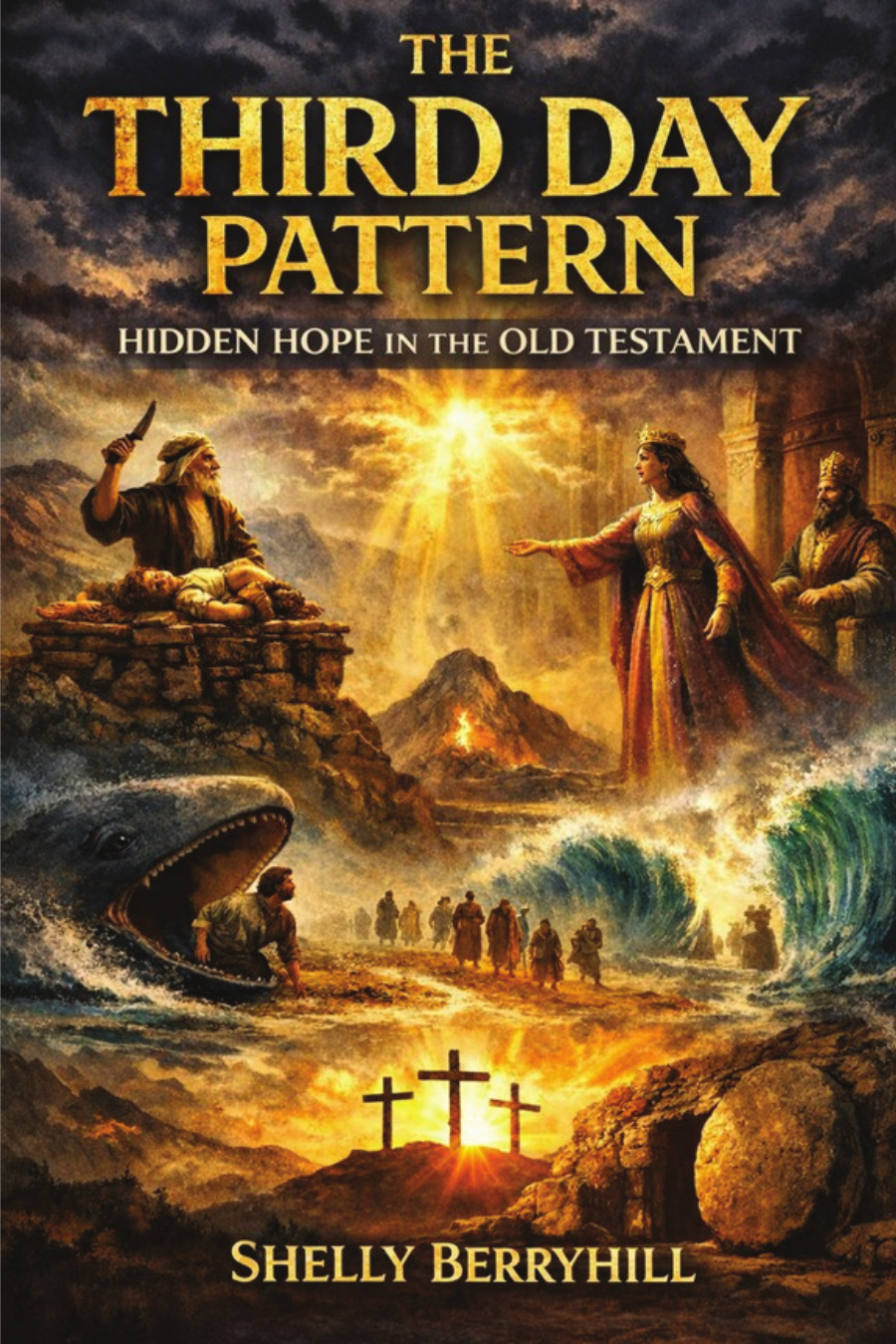
The Third Day Pattern
Hidden Hope in the Old Testament
In the biblical narrative, the "Third Day" is never just a chronological marker; it is a moment of divine intervention. From the heights of Mount Sinai to the empty tomb in Jerusalem, the third day represents the point where human limitation meets God’s power.
In The Third Day Pattern, Shelly J. Berryhill explores the spiritual rhythm of trial, endurance, and ultimate restoration. We often find ourselves stuck in the "Second Day"—the space between a promise given and a promise fulfilled. By examining the patterns found in Scripture and the lives of modern believers, Berryhill reveals how to recognize God's hand at work even when He seems silent.
Whether you are seeking deeper insight into the Word or navigating a season of waiting, this book provides a roadmap for identifying the patterns of grace that lead to your own "Third Day" breakthrough.
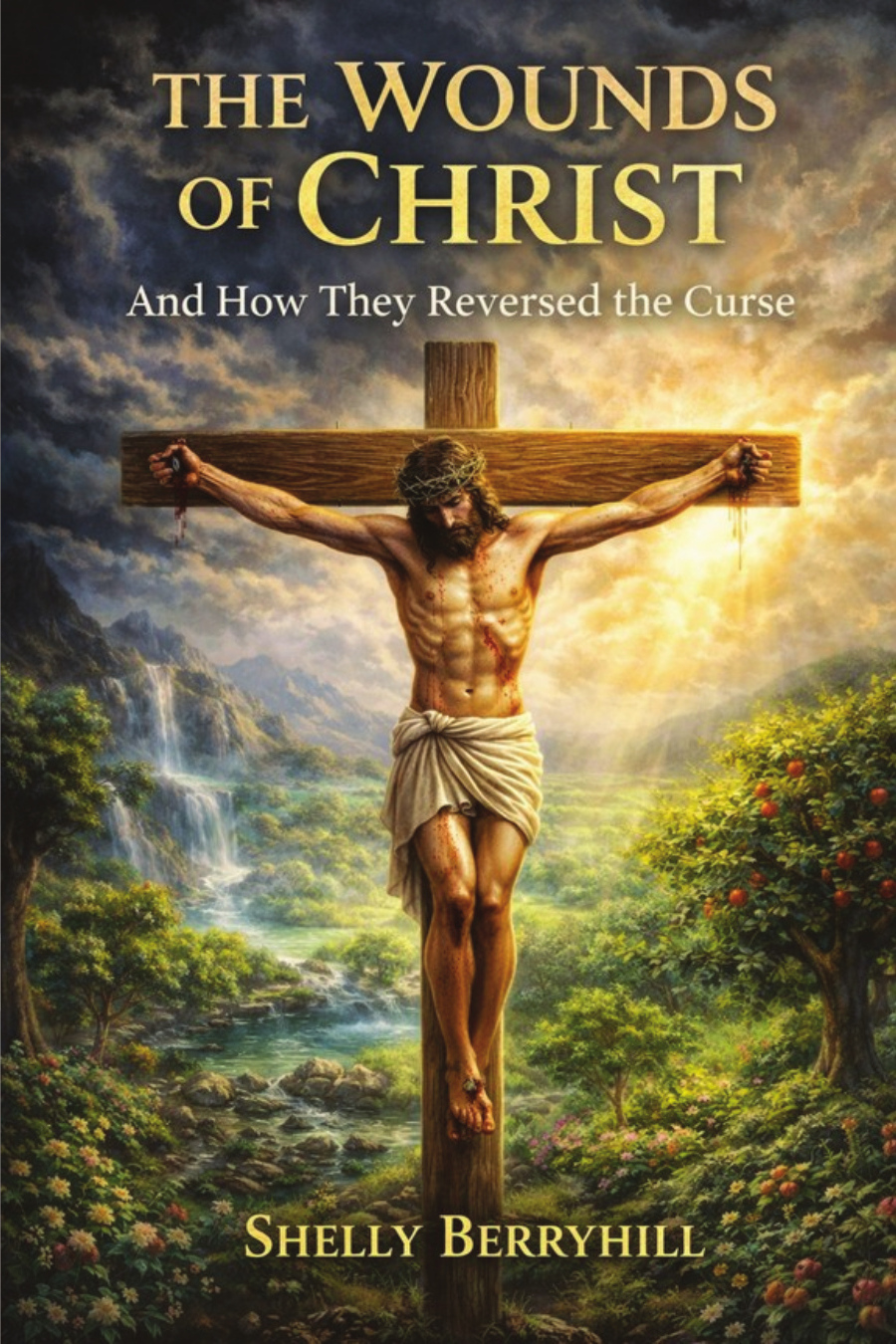
The Wounds of Christ
And How They Reversed the Curse
Every wound was deliberate.
The thorns pressed into Christ's brow. The nails driven through His hands. The spear thrust into His side. These were not random acts of violence — they were the precise reversal of everything that went wrong in Eden.
Where Adam sweated under the curse, Christ sweat blood to break it. Where Adam grasped from the tree, Christ's hands were nailed open upon one. Where Adam's side was opened to bring forth a bride, Christ's side was pierced to birth the Church.
The Wounds of Christ traces five wound-groupings of Jesus back to their origins in Genesis 3, revealing a stunning biblical pattern: the Passion didn't just pay for sin — it systematically undid the Fall, wound by wound.
What Adam broke, Christ came to fix. And what He did for Adam, He can do for you.