

In the Control Room
by Spirit & Spine Books
Every year, commercial divers die in one of the world’s most heavily regulated industries. The procedures are comprehensive. The standards are world-class. The training is rigorous.
So why are the outcomes still so fragile?
In the Control Room asks the question nobody wants to answer: if the system is supposed to be so strong, why do good people competent, trained, experienced end up in situations where someone doesn’t come home?
This isn’t a book about how to dive better. It’s about everything that happens beneath the paperwork. The quiet calculations supervisors make when schedules slip. The pressure clients apply without saying it out loud. The shortcuts teams normalise without deciding to. The fatigue everyone pretends they can handle.
It’s about what actually separates safe operations from ones where the risk has just become invisible.
Written for supervisors carrying impossible loads, divers who know when something feels wrong but aren’t sure they can say it, and organisations who claim safety is first whilst structuring work to ensure schedule wins. This book illuminates the gap between what we say about safety and what we’ve actually designed. And what it might look like to finally bridge it.
More books by Spirit & Spine Books
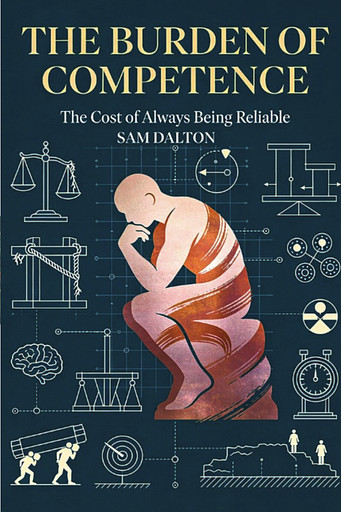
The Burden of Competance
You’re the one everyone turns to. The person who can handle anything. The person they trust because you never falter, never admit doubt, never ask for help.
From the outside, it looks like strength. From the inside, it feels like slow drowning.
The Burden of Competence explores the quiet devastation of building your entire identity around being reliable, capable, and strong. It’s about what happens when being good at your job becomes the central way you prove your worth. About the relationships that quietly collapse because you’re never fully present. About the health that declines whilst you pretend it’s not. About the joy that slowly disappears under the weight of constant performance.
But it’s also about what comes after. About the breakdown that some people survive. About the recovery that seems impossible, then slowly becomes real. About the possibility of rebuilding yourself differently not more optimised, not more resilient, but actually alive.
This isn’t a self-help book. There are no steps to follow, no guarantee that change will fix everything. It’s something more honest than that. A map of the terrain, drawn by someone who’s been through it. A permission slip to question whether the burden you’re carrying is actually necessary.
For everyone who wondered, quietly, whether the price of being competent is too high.
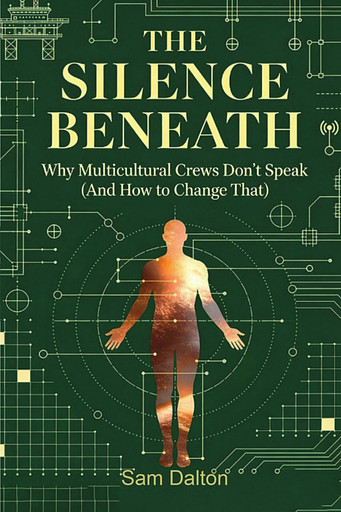
The Silence Beneath
Why Multicultural Crews Don't Speak (And How to Change That)
Everyone’s trained. The forms are signed. The procedures are followed. The system looks fine from a distance.
Then someone dies, and the investigation reveals what it always reveals: people saw the warning signs but said nothing.
The Silence Beneath exposes the dangerous gap between Western safety systems and the workers they’re meant to protect. After four decades working with offshore crews across Asia, the Middle East, and South America, the pattern is unmistakable. We export frameworks designed for people comfortable challenging authority, confident speaking up in groups, treating procedures as negotiable tools—and expect them to work with people shaped by completely different values.
People who’ve learned that hierarchy is legitimate. That protecting dignity isn’t optional. That group harmony matters more than individual voice.
When those worlds collide, we don’t get the safety culture we designed for. We get compliance that masks silence. Workers managing two contradictory sets of rules simultaneously. Near-misses that go unreported because raising them costs more than staying quiet.
This isn’t about blaming workers or dismissing culture. It’s about redesigning systems so they work with how people from hierarchical, collectivist cultures actually experience authority, risk, obligation, and dignity.
For anyone whose safety system depends on people feeling safe enough to speak.
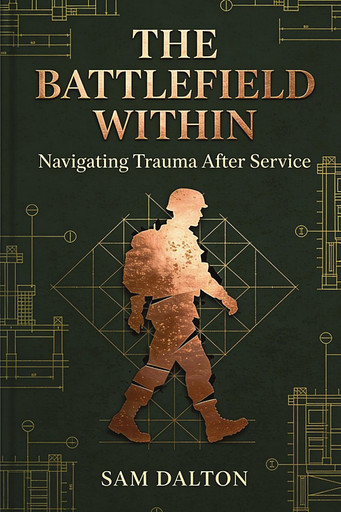
The Battlefield Within
Navigating Trauma After Service
You're home. But home doesn't feel like home anymore.
Everything works on the surface. You have a job, a roof, maybe a family. You're functional. People see you and don't see the damage. They see someone who made it back.
The Battlefield Within is for the ones who made it back but left part of themselves behind. The ones who lie awake because their brain still thinks they're under fire. The ones who feel contempt for civilians who haven't earned their understanding. The ones carrying guilt that whispers you shouldn't have survived when others didn't.
This isn't a cheerful recovery manual. It's something harder and more honest a map drawn by someone who has walked the terrain after service and lived to tell the tale. It explores the neurobiology of trauma, the identity crisis that strikes when the uniform comes off, and the moral wounds that don't appear on medical reports.
But it also offers tools. Real ones. Writing exercises, art therapy, and established psychological approaches are adapted for military trauma. And it argues something most people won't: you're not broken. You're adapted to a place you're not in anymore.
For everyone who came home changed and spent months wondering if there's a version of life still worth living.
You're not alone. And it's not too late.
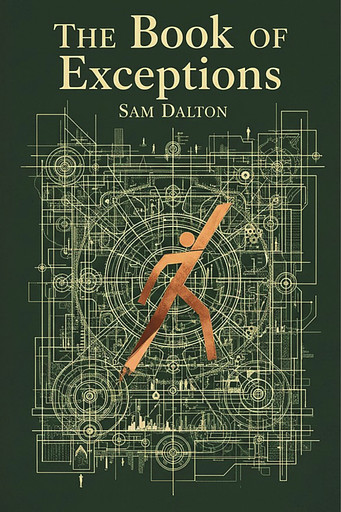
The Book of Exceptions
The Book of Exceptions
You're brilliant at navigating broken systems.
You've gotten good at the impossible finding ethical solutions inside structural problems. You understand the systems so well that you've become indispensable. Your excellence has made you valuable. But somewhere along the way, you noticed something unsettling: your competence is making the system harder to change, not easier.
The Book of Exceptions explores this paradox through eighteen stories that show how it happens.
First, through myth and fantasy an empire, doctrine, and individuals trying to reform systems from within, discovering that their mercy becomes a mechanism of control. Then through contemporary reality the whistleblower whose transparency makes injustice harder to challenge, the architect whose beautiful buildings trigger gentrification, the researcher whose algorithms make discrimination more efficient, the teacher whose critical thinking becomes the state's perfect surveillance tool.
Finally, through refusal stories of people who stopped trying to win at excellence inside broken systems and started building something else. Something smaller. Something that doesn't require becoming exceptional at your own oppression.
This book asks the question no one wants to hear: What if the system can't be fixed from inside? What if trying to reform it makes it worse? And what becomes possible when you simply refuse to play?
For anyone beginning to recognise the trap.
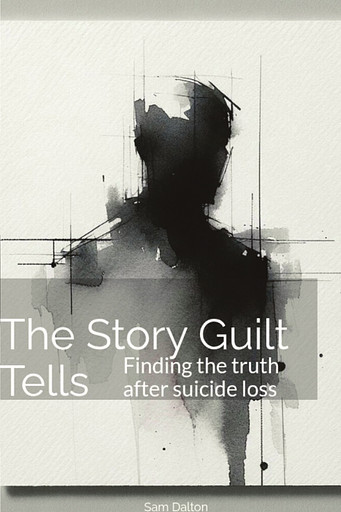
The Story Guilt Tells
Finding the truth after suicide loss
You’re convinced it’s your fault.
Not maybe. Not sometimes. You wake up at three in the morning certain you should have known, certain you should have done something, certain that if you’d just made a different choice, they’d still be alive.
The Story Guilt Tells is for anyone carrying false blame after losing someone to suicide the guilt that arrives before the grief, the questions that won’t stop, the “what ifs” on endless repeat. This book won’t tell you it wasn’t painful. It won’t erase the loss. But it will help you separate what actually happened from the story your guilt is telling you about it.
Because here’s the hardest truth: guilt after suicide is real. But the story guilt tells you about your responsibility often isn’t.
This book explores the neurobiology of suicidal brains why love can’t fix what was broken at a neurochemical level, why you couldn’t have seen warning signs that were designed to stay hidden, why one conversation wouldn’t have changed biology and illness and circumstance stacked against survival.
More than anything, it’s permission. Permission to stop carrying blame that belongs to mental illness, not to you. Permission to grieve without also punishing yourself. Permission to survive this and, eventually, to heal.
For everyone convinced they failed, when they couldn’t have prevented what was never theirs to control.
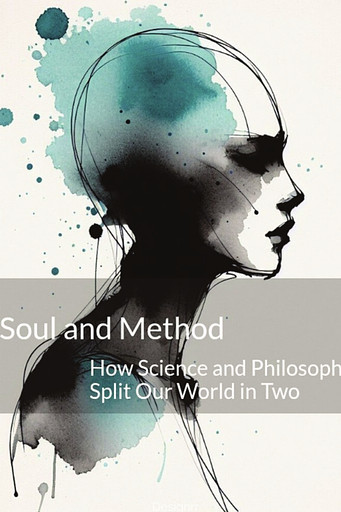
Soul and Method
You can explain the chemistry of falling in love. You can measure the neural correlates of grief. You can optimise productivity, track wellbeing, quantify success. And yet you might find yourself wondering: is this all there is? Have we lost something in our devotion to measurement?
Soul and Method argues we’ve split our minds in two. One half measures everything brilliantly. The other half asks what matters, what’s good, how to live. For two thousand years, these halves talked to each other. Now they don’t.
This book isn’t against science. It’s for what science was never meant to answer. It’s an invitation to think differently about your life, your choices, what you actually believe. To recover the permission to ask questions that data can’t settle.
The work begins in your own days. Small acts of rebellion. Conversations that go nowhere. Learning just because you’re curious. Protecting space for what you can’t measure but can’t live without.
Ready to remember that wholeness is possible?
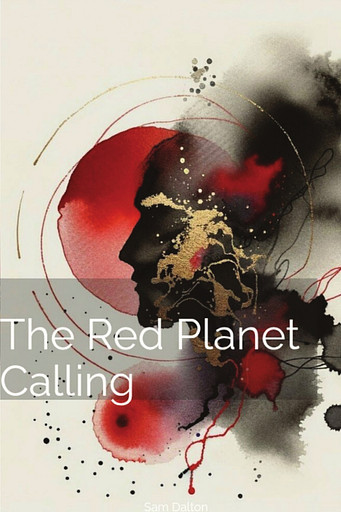
The Red Planet Calling
A Human Journey to Mars
Seven people leave Earth knowing they might never return.
This is their story the nine-month crossing through silent vacuum, the unrelenting weight of confinement, the moment when bravery collides with fear. In a spacecraft no bigger than a house, they navigate not just the physics of getting to Mars, but the fragile human dynamics that could break them before they ever arrive.
Sam Dalton draws on real isolation research, space psychology, and the hard choices explorers face when volunteering for something that demands everything. Between the technical precision of a Mars mission and the raw vulnerability of people pushed to their limits, this book asks the question that matters most: what are we willing to sacrifice to reach another world?
For anyone who’s ever wondered what it takes not just to explore, but to become someone brave enough to try.
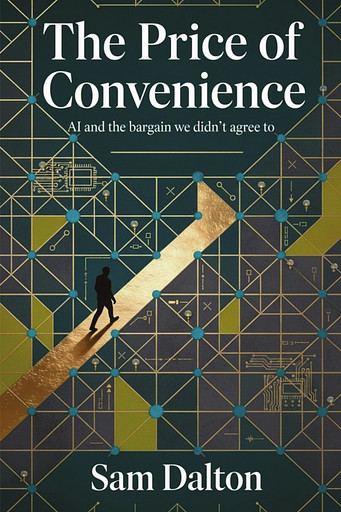
The Price of Convenience
AI and the bargain we didn’t agree to
You trade away tiny pieces of agency every day. A click here. A shortcut there. A system you do not understand making a decision you do not quite agree with, but accept because it is fast and everyone else seems fine.
The Price of Convenience is about that quiet bargain. It is not a prediction or a manifesto. It is a guided unease. It asks why we are rushing to outsource judgment to AI systems built and deployed inside race dynamics, corporate incentives, and tired institutions that struggle to say no. It follows the people in the room when someone says we could pause and someone else says we cant, and shows how responsibility gets diluted until nobody feels they chose the risk.
If you have ever felt that small internal flinch reading about the next breakthrough, this book gives you language, questions, and a stance so you do not have to ignore it.
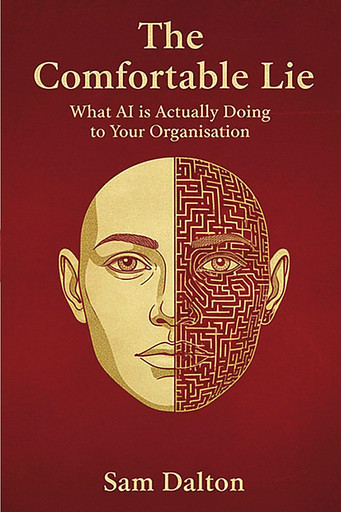
The Comfortable Lie
What AI is Actually Doing to Your Organisation
There's a story we tell about AI. Machines will handle the dull work. Humans will be freed for something more meaningful. Progress will be smooth, opportunity abundant, and the transition manageable.
It's a lie. A comfortable one but a lie nonetheless.
The Comfortable Lie cuts through the reassuring headlines to examine what AI is actually doing inside organisations: eroding trust, diffusing accountability, displacing identity, and quietly dismantling the psychological contract between employer and employee.
Drawing on psychology, sociology, and hard organisational reality, Sam Dalton explores why AI anxiety isn't irrational — it's a proportionate response to genuine structural disruption. Why compliance frameworks can become permission structures that make ethical thinking obsolete. Why displaced workers don't just lose jobs they lose purpose, identity, and faith in the institutions that shaped their lives.
This book is not anti-technology. It's a call for deliberate choice. For leaders who want to implement AI without destroying the human elements that make organisations work. For managers who sense something is wrong and have the courage to ask why.
The comfortable lie will keep being told. You don't have to believe it.
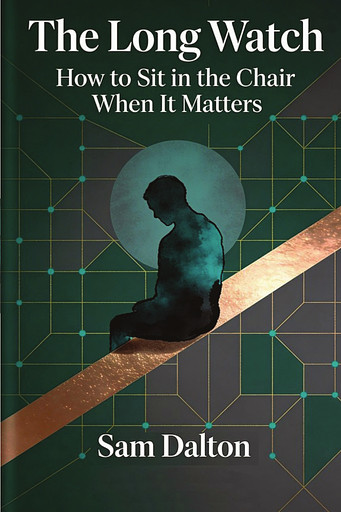
The Long Watch
How to Sit in the Chair When It Matters
Most leadership books start in the boardroom. This one starts in the control room at 03:15.
The Long Watch is a field manual for supervisors in high-risk work: diving, construction, energy, heavy industry, anywhere a bad call on an ordinary day can change somebody’s life. Drawing on years offshore and onshore, Sam Dalton goes past procedures and slogans to the real questions of the chair: how do you keep people speaking when fear and ego push them to stay quiet? How do you say no to an impossible schedule? How do you deal with the brilliant, toxic operator? What do you owe your team after something goes badly wrong?
Each chapter combines blunt stories, clear analysis, and simple “on Monday” practices: scripts for hard conversations, ways to spot drift before it becomes normal, habits that build honest rooms where problems surface early. No heroics, no jargon, no pretending you can remove risk by filling in another form.
If you run a shift, a deck, a crew, or a control room, this book is about you. It will not make the work easier. It will make you better able to do it without losing sight of the people, including yourself, who live with your decisions.
The Honest Room
How High-Risk Teams See Clearly, Speak Early, and Act in Time
Every high-risk operation has two versions of itself. There's the paper room, where the risk assessment is signed, the certificates are current and the plan looks complete. And there's the real room, where the weather has changed, the supervisor hasn't slept properly, and a junior technician has noticed something that doesn't quite fit but isn't sure it's worth stopping the job for.
The Honest Room is about what happens in that second room, and about the small, unglamorous practices that let people see clearly, speak early and act before a manageable concern hardens into an incident. Drawing on years spent in commercial diving, drilling and marine construction, Sam Dalton moves through silence, pressure, competence, drift, capacity and the ordinary courage it takes to say a hard thing out loud, whether or not you carry the title that's supposed to let you.
This isn't a management programme, and it doesn't promise a room free of hierarchy or commercial pressure. It's written for supervisors, engineers, technicians, planners and anyone who carries responsibility, formal or not, in work where the consequences can't be delegated away. Its aim is a simple, harder question: what truth is available where you work, and what would make it easier for that truth to travel in time?
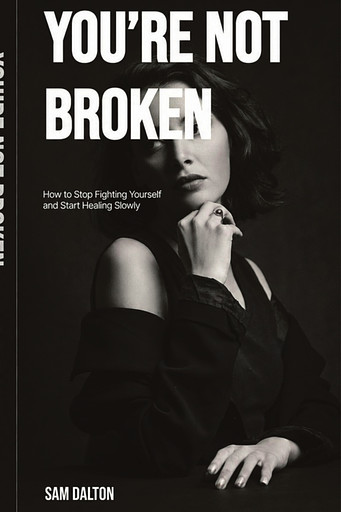
You're Not Broken
How to Stop Fighting Yourself and Start Healing Slowly
What if the voice in your head is not telling the truth.
For many people, self-criticism has become so familiar it feels like personality. The constant second-guessing. The guilt that never quite lifts. The feeling that everyone else seems to cope better. Over time, it can start to feel as though the problem is you.
You're Not Broken challenges that idea.
This book explores the real mechanics behind harsh self-judgement, shame, emotional overwhelm, and the stories people carry about who they are. It shows how old patterns often begin as forms of protection, then outlive their usefulness and start shaping everyday life in ways that feel exhausting, isolating, and hard to explain.
With a grounded, practical approach, this book helps readers:
Understand why the inner critic exists
Recognise the difference between guilt and shame
See how stress and the body can keep old patterns alive
Practise self-compassion without drifting into false comfort
Regulate before overthinking
Rework damaging self-stories
Approach healing as a slow, uneven, but possible process
This is not a book about becoming perfect. It is about becoming more honest, more steady, and less cruel to yourself. If you are tired of treating your pain as proof that you have failed, perhaps this is where something kinder begins.
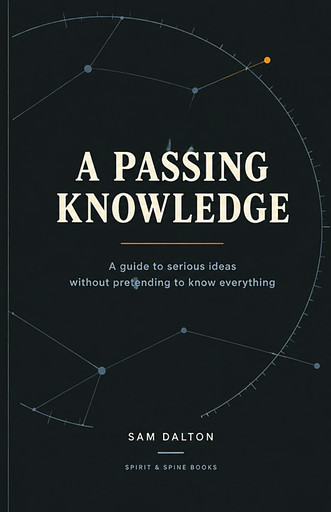
A Passing Knowledge
A Guide to Sounding Clever at Dinner Parties (Without Faking It)
the load-bearing idea behind each subject, the one usually skipped in the rush to quote the famous bit, so a claim about free will means something once you've met memory, and a painting stops looking silly once you've considered what attention actually does.
Written by someone who studied psychology with the Open University for eight years and spent time in diving, risk supervision and the military, this is a book about honest not-knowing as much as knowing. Some chapters will hand you a name, a date and a question worth asking. Some will leave you less certain than you started. That's often the better result."