The Master In You
by Sri Nerode Archive
"New Thought" books there are galore. They may be said to be good, better, and best. Sri Nerode’s new book, "THE MASTER IN YOU", is one of the best.
Life is more vital than any literature but sometimes its vibrance and beauty are manifested through the written word. This manifestation shines in "THE MASTER IN YOU."
The author achieves something which few writers in this line of thought have been able to accomplish. He makes his reader thrill to the power of the "Word" almost without consciousness of the humble interpreter of the word. He does not obliterate nor seek to destroy the personal "I" but he subjugates the ego to the higher selfhood in a manner that inspires the truth seeker to recognize and realize that selfhood, that "Master" of love, power, and intelligence within himself. He introduces the soul to itself. This is the essence of art, philosophy, psychology, and religion, "THE MASTER IN YOU" is not an involved metaphysical work. It is not calculated to mystify the reader or to challenge his reasoning faculties. There are books of occult and mystical terms which to the average reader are merely empty abstractions. It is a series of statements concerning the power and peace to be found through contemplation and loving service, I do not doubt that the perusal of this book will bless others as it has blessed me.
JAMES WARNACK, Church Editor [Deceased], Editorial Department Los Angeles Times
More books by Sri Nerode Archive
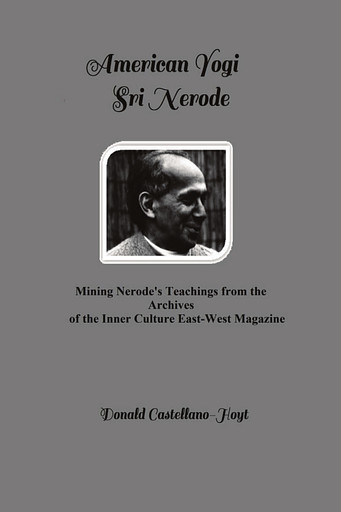
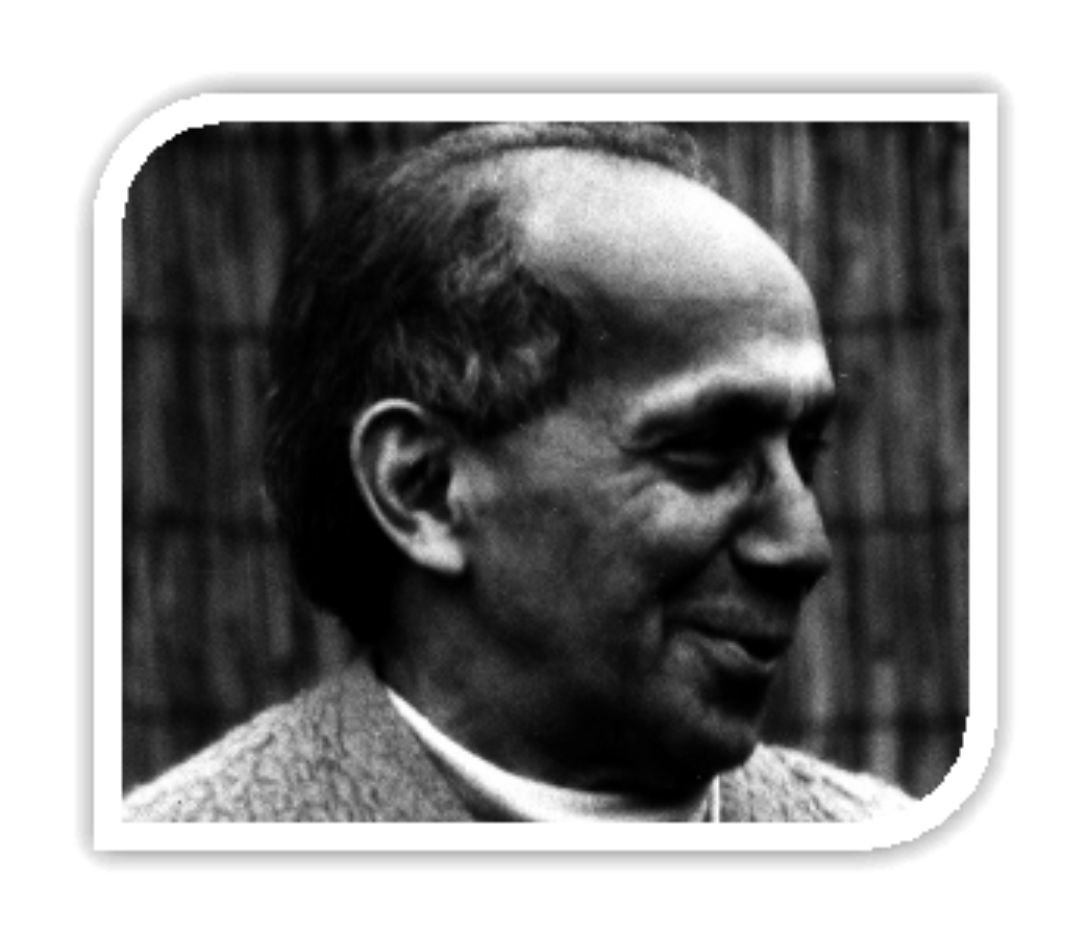
AMERICAN YOGI SRI NERODE
Mining Nerode's Teachings from the Archives of the Inner Culture East-West Magazine as well as the Sri Nerode religious studies archive soon to be hosted at The University of California at Riverside in its Special Collections of the Rivera Library.
The East-West World-Wide Inner Culture Magazine continues to be a wondrous source of spiritual depth and mystic experience.
This book (derived from that archive) would have been the third edition of "American Yogi-Christ Sri Nerode: Restoring His Long-Lost Teachings of Inner Culture East-West Magazine" previously published elsewhere. Likewise it includes six new articles discovered in the East-West magazine archives (and not previously published elsewhere). In the last of these six talks Nerode discusses his spiritual relationship with Yoganandaji ("Convocation Talk,"March 1938).
However this new first edition volume omits inclusion of Nerode's daily meditation contributions, in favor of a future volume that will include both meditations and poetry.
This new American Yogi Sri Nerode volume removes the 'christ' designation from the title to avoid controversy with those who know him and don't see him as a christ.
Self-Realization Magazine Research Guide
1925-1975, Color Edition
This book is intended as a resource for historians of the Self-Realization Magazine from its start in 1925 to 1975 (the year of completion of Yogananda’s Spiritual Interpretation of the Bhagavad-Gita). As a teaser about history, “AI” (artificial intelligence), cannot explain why Swami Yogananda is listed as S.G.Yogananda at the bottom of the October, 1932 TOC, nor as SGY on p. 14 (poem, “I Want Thee”) in that same issue. The "Giri" designation is a title for swamis (monks) belonging to one of the ten subdivisions of the Daśanāmi Sampradaya, a major Hindu monastic tradition. Usually it is placed at the end of the swami's spiritual name. The name translates to "mountain" in Sanskrit and signifies a renunciant's harmony with the vastness of nature.
The Table of Contents alone is invaluable with copious notes of various historic decisions made by SR magazine editors and the Fellowship throughout the 46 volumes published through these initial 50 years of publishing history. Those notes are emphasized in red color.
Occasionally in this guide the acronym SRM will be employed for Self-Realization Magazine. From its start by Swami Yogananda in 1925 the SRM has had different names, starting with East-West World Wide magazine (as discussed by Yoganandaji, “World Wide“ was suggested by Luther Burbank), then in 1932 Inner Culture replaced World Wide, so the magazine was titled East-West Inner Culture Magazine through April, 1934. The name then was reversed in May 1934 to Inner Culture East-West Magazine through late 1937. At that time it became Inner Culture the Magazine of India until April 1934 when the title changed to Inner Culture For Self-Realization. Then in the quarterly issue of July-September 1944 editor L.
V. Pratt announced that the name would revert permanently to its original East-West name. Even so in September 1948 East-West took a new name because, as it was announced, “the name East-West has not expressed fully the character of [the magazine‘s] purpose. . . we have found one that is suitable; that is Self-Realization.” The Self-Realization Magazine has been its name since then.
In 1963 (Index to Volume 34, 1962—63) the SRM started publishing an Index in the final issue of each Volume and these are herein included. This fifth edition adds notations of published but untabulated articles, quotations, poems, prayers, etc. in the original Table of Content material from the start of the magazine up to that 1963 Volume 34.
The SRM was published variously, whether monthly, bimonthly, quarterly, depending on finances. The Fall 1975 edition of the Self-Realization Magazine is the final issue included in this fifth edition; in that 1975 edition is the conclusion of Yogananda‘s Spiritual Interpretation of the Bhagavad-Gita.
In this book each magazine issue is represented by a photographic image of its Table of Contents (aka TOC). Several of the volumes referenced are ocr’d into document style (rather than an image TOC) by a Gujarati devotee of Yoganandaji; they have neither page numbers nor pictures. None-the-less the TOCs are employed here to compensate for those SRM issues where a full edition of the magazine is not available to the editor.
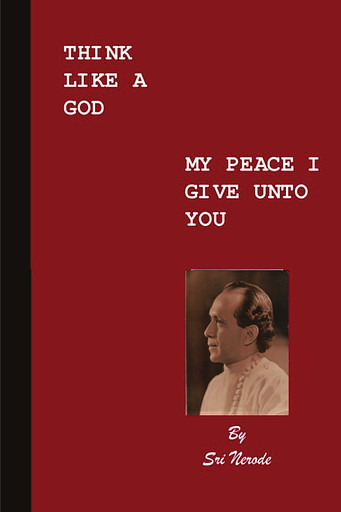
Two Nerode Classics
Think Like a God -- My Peace I Give Unto You
These two classics have been out of print since the early 1940's. They are unique in Sri Nerode's writing because he gives more "how to" techniques in spirituality than in most of his books.
Evolution of the Theory of Distribution of Wealth
This book is provided unedited to demonstrate the expanse of Sri Nerode's thinking. Most of his writing has to do with specific spiritual topics. This dissertation goes beyond that.
The date of this exposition is unknown, but it appears to reflect (in the use of his family Choudhury name) that it occurred before Sri Nerode's interlude with Yogananda, i.e., during or right after his classical studies at Calcutta University, University of California, and/or Harvard University.

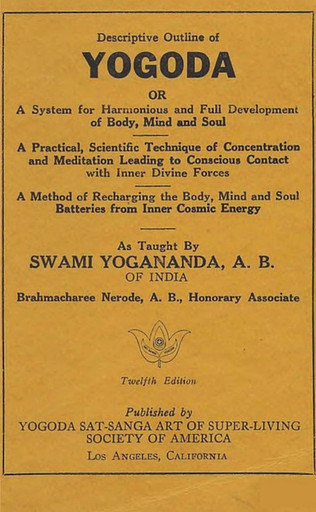
Descriptive Outline of Yogoda
This is an historic statement of the meaning of Yogananda's teachings. The booklet itself is important for those who are interested in the history of the movement that culminated in the formation of the organization "Self-Realization Fellowship."
This 12th edition is co-written by Yogananda's new assistant whom Yogananda called Brahmacharee Nerode. Several years later at Nerode's request Yogananda agreed to call him simply Sri Nerode. This was a way for Sri to point out that he had a guru in India; the 'brahmacharee' designation had implied the inaccuracy that Yogananda was his guru.
A Spiritual Interpretation of the Bhagavad-Gita
Extracted from the Self-Realization Magazine 1932-1975
Yogananda's translation and interpretation were subject to scheduling difficulties. Hence the Self-Realization Magazine published most of his writings except for verses 21 through 42 of Chapter 10 (ten) and occasional verses missing from other locations in the manuscript(s).
For the sake of completeness the missing verses in this particular rendition of the SRM essays are filled in with the 1944 Bhagavad-Gita translation of his long-time SRF associate and friend, Sri Nerode. Sri Nerode was a ten-year associate of Yogananda and his Self-Realization Fellowship organization, initiating, by Yogananda’s account, over 10,000 students into kriya practice. He remained a friend of Yogananda through the remainder of his life.
A new archive of the Nerodes’ literary legacy is now being made public at the Rivera Library of the Riverside campus of the University of California. Documents related to the history of these three public figures (including Sri Nerode's wife Agnes "Srimati") will soon be available there for further study.
Of Srimati Nerode the SRF saint Gyanamata had written in an April 9th 1936 letter to her, "You are among those of whom the world is not worthy."