New York City. 1865. A war no one will ever officially acknowledge is about to begin.
David H. Crowley is nineteen years old, Irish-born, a Civil War veteran who survived Gettysburg when he had no business surviving anything. He comes home to a city running on corruption so deep it has become invisible — invisible to everyone except the men paid to look away, and the very few who cannot.
A card handed above a Broadway pawnshop changes everything. General Daniel Sickles wants a man who can disappear into other men's trust, document what he finds, and never be officially acknowledged to exist. Crowley takes the card. He has no idea it will define the next twenty years of his life.
What follows is the story of a double life lived in plain sight.
As a covert federal operative, Crowley infiltrates the naturalization fraud mills that manufacture citizens by the hundred, traces the Custom House corruption that drains millions from the treasury, and builds the index that will eventually produce the largest coordinated election fraud bust in New York history — six hundred and six arrests, one hundred and six polling places, a single November night in 1876 that proves what everyone suspected and no one could prove.
In January 1877, he is given a badge and a number. Detective Sergeant David H. Crowley, First Inspection District, Metropolitan Police Department of New York. Number 109. It should be the moment everything gets easier.
It is the moment the machine begins to prepare its response.
For eight more years, Crowley works from the inside — keeping two sets of records in parallel, the official file the department sees and the private ledger no one does, building a case against John Kelly's Tammany machine so complete that it becomes its own kind of threat. The machine has been watching him for years. It has been patient in the way that only institutions can be patient.
In April 1885, it moves.
A staged introduction at a precinct social event. A young woman named Maggie Morris. A fabricated criminal assault charge filed the following morning. Three witnesses — Thomas Breen, Jacob Patrick Byrne, Celia Joyce — subpoenaed to testify on Crowley's behalf and quietly, systematically made to disappear before the trial begins. A jury that never hears the full story. A conviction built on a lie that everyone in the courtroom can see and no one will say aloud.
Seventeen years. Sing Sing.
This is where most stories would end.
This is where Mary Agnes O'Brien Crowley begins.
While her husband makes shoes in a prison workshop and fills a grey notebook with the only documentation available to a man who has lost everything except the habit of record-keeping, Mary Agnes runs the campaign that no history book will record. From the kitchen table of their home in the Bronx, she works the parish networks, the political channels, and the slowly shifting landscape of two gubernatorial administrations. She buries a child during his imprisonment. She raises the others without him. She watches the machine that destroyed her husband's career continue operating in plain sight, confident that eight years will be enough to make David H. Crowley a footnote.
She intends to prove them wrong.
She does.
On Thanksgiving Day, 1893, Governor Roswell P. Flower signs the pardon. The conviction that the court record says is wrong — documented, argued, pressed by Sickles and Bliss and Root and a woman with a parish account book and twenty years of patience — is finally, officially, acknowledged to be wrong.
Crowley walks out of Sing Sing and goes back to work.
Truth Buried in the Dust spans sixty-seven years — from Gettysburg in 1863 to Cypress Hills National Cemetery in 1930, where Crowley is buried in the uniform he wore as a boy of fifteen. It is a story about the particular machinery of American corruption, about what it costs a family to outlast injustice rather than simply survive it, and about the stubborn, unglamorous, decades-long insistence that the record — kept faithfully enough, for long enough — always outlasts the people who tried to bury it.
It is also, remarkably, a true story.
The congressional testimony is real. The court records are real. The arrest statistics are real. The pardon, the conviction date, the missing witnesses, the Thanksgiving Day release — all of it is in the historical record, verified and documented. The author is David H. Crowley's great-great-grandson. He spent fourteen years following the evidence.
What he found was this.
“"The most extraordinary thing about Truth Buried in the Dust is that it happened. The congressional testimony is real. The court records are real. The wrongful conviction, the vanished witnesses, the Thanksgiving Day pardon — all of it is documented. Zebe's achievement is not the research, though the research is impeccable. It is the human beings he has recovered from that research and returned to the world as people rather than footnotes." ”
— Jeff Schein
A book by
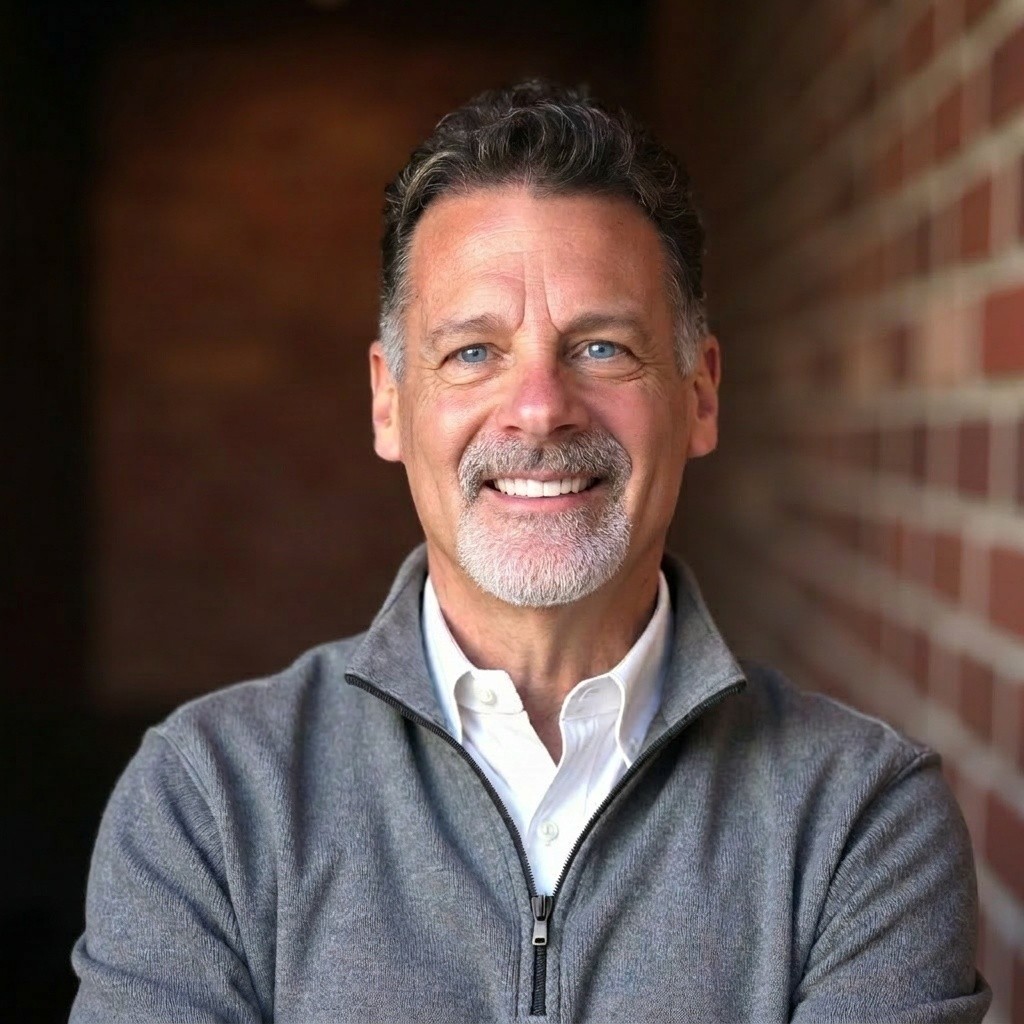
Donald I. Zebe is a Long Island native, Idaho State University graduate, and commercial real estate veteran who spent fourteen years uncovering his great-great-grandfather's secret war against Tammany Hall. He lives in Pocatello, Idaho, with his wife Cyndee, two sons, and seven grandchildren.
Donald I. "Don" Zebe was born in 1954 in the Bronx, New York, raised in a proud Irish-American family that still spoke in hushed awe about their Civil War ancestor. After Idaho State University and a long corporate career, Don is now semi-retired in Pocatello, Idaho.
He shares his life with Cyndee, his wife of 46 years, and is grateful that their children Mike and Jared, along with their wives and grandchildren, all call the same town home.
That same family pride — the stories passed down at the dinner table — eventually became more than just folklore to Don. A passing mention of a Civil War ancestor grew into a years-long pursuit to uncover the truth behind the family legend. What he found surprised him at every turn: a man far more complex, far more consequential, and far more human than the whispered stories had ever let on. The deeper Don dug, the more he realized this was not just his family's story — it was a piece of American history that deserved to be told. And with grandchildren of his own now growing up in the same town, the desire to preserve that truth, to hand them something real rather than a faded rumor, became the force that wouldn't let him stop.
Through pension files, Secret Service records, and long-forgotten trial transcripts, Don spent years chasing a story that history had nearly buried. What emerged was a portrait of David H. Crowley that no family legend could have predicted — a life that touched some of the most dramatic moments of the Civil War era and deserved far more than silence.