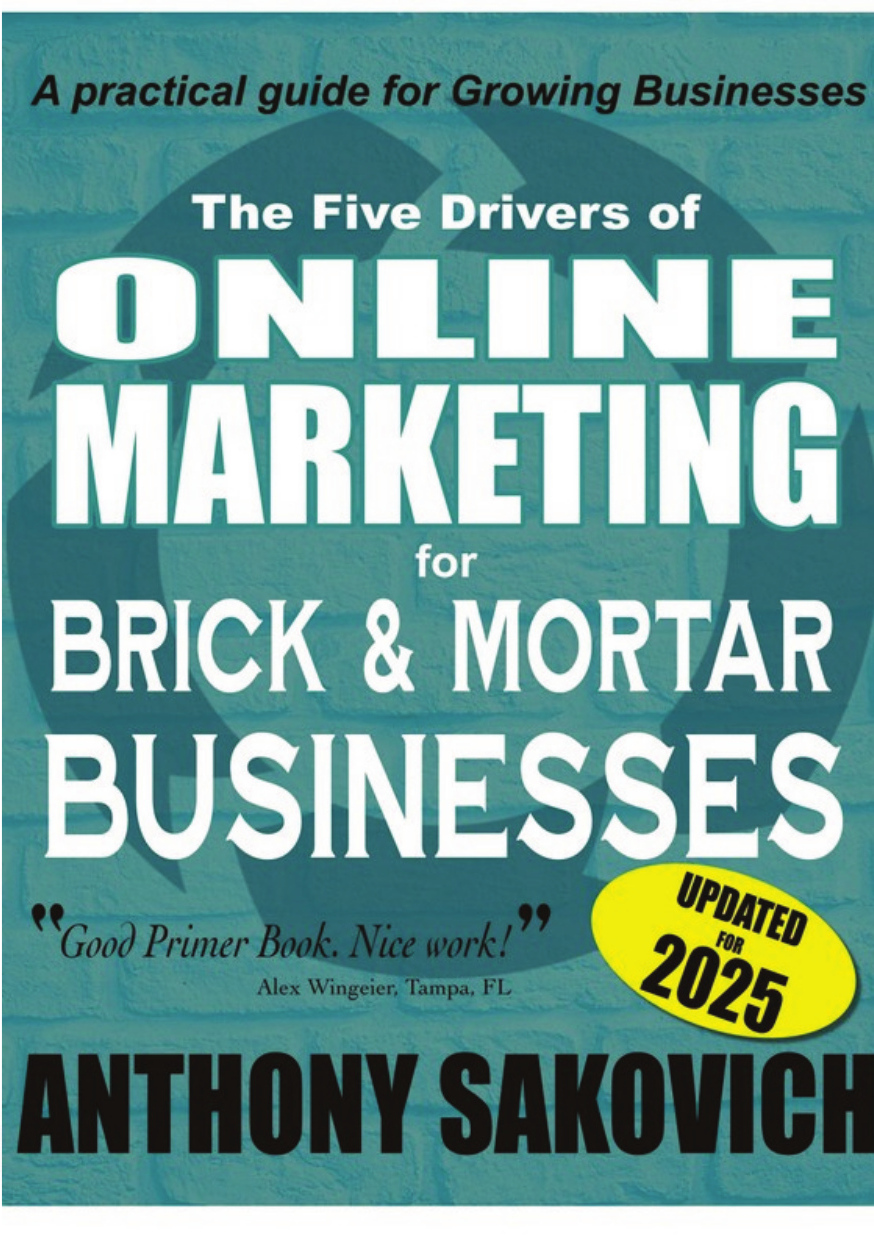
The Five Drivers of Business Marketing Online
by Curious Owl Press
Unlock the Secrets to Standing Out Online—Even If Your Business Has a Front Door.
In a noisy digital world, brick-and-mortar businesses often get left behind. The Five Drivers of Business Marketing Online is your roadmap to reversing that trend. This practical, no-fluff guide empowers local business owners with the five essential forces that drive attention, engagement, and sales in today’s online marketplace.
Written by a veteran marketer with over four decades of experience, this book strips away the hype and delivers a clear framework built specifically for real-world businesses. Whether you run a bakery, law office, clinic, or hardware store, you’ll learn how to:
Attract the right customers without burning your ad budget
Build trust and authority in your local community
Leverage content, reviews, and reputation to dominate search results
Turn browsers into buyers—even if your website is simple
Align your online presence with your in-store values and personality
If you've ever felt overwhelmed by marketing jargon or frustrated by digital “solutions” that don’t fit your business, this book is your antidote. It’s time to stop chasing every trend and start building a magnetic brand that pulls customers toward you—both online and in person.
More books by Curious Owl Press
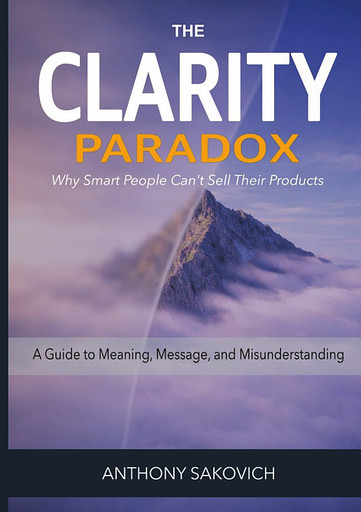
The Clarity Paradox
Why Smart People Can't Sell Their Products
The Clarity Paradox explores a counterintuitive problem faced by capable, intelligent professionals: the deeper their understanding of their own work becomes, the harder it is to explain, position, or sell it to others.
Drawing on decades of observation across advisory, creative, and professional services, Anthony Sakovich examines how clarity often collapses not because people lack knowledge, but because experience itself distorts perspective. Early success hardens assumptions. Language becomes shorthand. Explanations feel obvious to the speaker while remaining opaque to the listener. Over time, effort increases while alignment erodes.
Rather than offering tactics, frameworks, or messaging formulas, the book focuses on diagnosis. It examines how survivorship bias, pattern blindness, and premature certainty shape professional judgment, and how these forces quietly generate confusion in marketing, sales, and decision-making. The result is a situation in which intelligent people solve the wrong problems with growing confidence — mistaking coherence for understanding and familiarity for truth.
The book treats clarity as a discipline rather than an insight, and persuasion as something that follows understanding rather than replaces it. It argues that many so-called communication and positioning failures are, at their core, failures of sequencing: attempts to explain or persuade before the underlying thinking has been examined and settled.
Written for professionals whose work depends on judgment, interpretation, and trust — including consultants, advisors, strategists, and other interpretive roles — The Clarity Paradox offers a framework for recognizing when language has drifted away from reality, and for restoring alignment before ambiguity becomes costly.
This is not a guide to better marketing techniques. It is an examination of why clarity fails in the first place, and what must be seen before it can be restored.
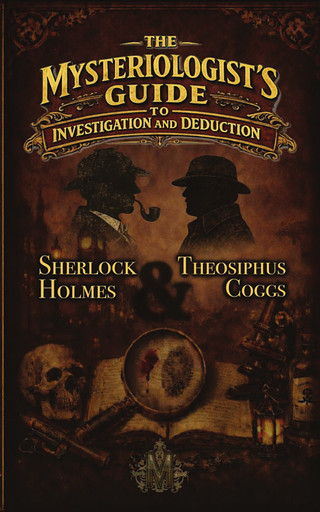
The Mysteriologists Guide to Investigation and Deduction
In an age increasingly defined by haste, spectacle, and the confident assertion of unexamined claims, the disciplined pursuit of truth has quietly fallen out of favour. Conclusions are reached before facts are gathered; theories are embraced before they are tested; and certainty is often mistaken for understanding. The Mysteriologist’s Guide to Investigation and Deduction was written precisely to resist this decay of method.
Originally compiled in the early decades of the twentieth century as an internal handbook for the League of Mysteriologists, this work was never intended as entertainment, nor as a display of cleverness. It was designed as a corrective—a rigorous training of the mind in restraint, observation, and logical discipline. That it now appears in a public edition is not an indulgence, but a necessity.
Within these pages, two formidable intellects address the art of investigation from complementary directions. Mr. Sherlock Holmes, renowned for his powers of observation and relentless insistence upon facts, warns repeatedly of the dangers of premature theory and intellectual vanity. Dr. Theosiphus Coggs, a scholar of logic and method, attends to the deeper architecture of reasoning itself: the structure of sound argument, the value of disproof, the fallibility of consensus, and the quiet mechanisms by which error entrenches itself in even the most educated minds.
Together, their voices form a dialogue not merely about how to investigate, but about how one must think in order to deserve the truth. The reader is instructed not only in deduction, but in the habits that make deduction possible: patience, humility before evidence, and an unwavering refusal to substitute belief for proof.
The lessons contained herein are neither antiquated nor academic. On the contrary, they are urgently modern. Never before has misinformation travelled so quickly, nor has the appearance of expertise been so easily manufactured. The present age depends upon distraction, emotional reaction, and intellectual shortcuts. It profits when individuals abandon method in favour of outrage, allegiance, or convenience. Against this tide, The Mysteriologist’s Guide stands as a deliberate obstacle.
This book does not promise certainty. It offers something more demanding and more valuable: a way of thinking that resists manipulation. It trains the reader to recognise faulty reasoning, to question appealing narratives, and to remain steady when others rush toward conclusions. It reminds us that truth is not discovered by enthusiasm, nor defended by volume, but earned through careful, disciplined inquiry.
For the aspiring Mysteriologist—and for any reader who suspects that clear thinking has become a rare and endangered skill—this volume serves as both instruction and admonition. It asks much of its reader. It offers no shortcuts. But for those willing to submit to its discipline, it provides something increasingly scarce: the means to see clearly in a world that depends upon your not doing so.
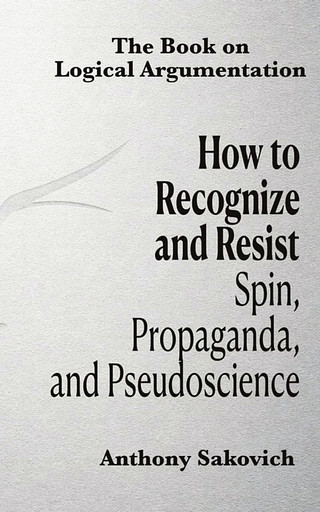
The Book on Logical Argumentation
How to Recognize and Resist Spin, Propaganda, and Pseudoscience
Most people argue from instinct. A few argue from evidence. The difference is knowing the rules.
The Book on Logical Argumentation is the field guide to the most commonly used tricks, traps, and distortions that pass for reasonable argument in politics, science, media, and everyday life. Twenty-one chapters. Twenty-one weapons in your arsenal. Each one named, explained, illustrated with the historical cases where it changed the course of nations, careers, and lives, and equipped with the specific tools to shut it down on the spot.
Cherry-picked evidence. False dilemmas. Manufactured consensus. Emotional appeals dressed as facts. Statistics arranged to tell whatever story someone needed them to tell. Once you know how these work, you cannot unknow it. You will see them in speeches, in headlines, in boardrooms, and across the dinner table. You will see them coming before they land.
The rules of logical argumentation are not complicated. They are just not taught. This book fixes that, in plain language, with real examples, and without the academic scaffolding that keeps most people from ever learning what they actually need to know.
Read it once. Use it forever.