 Derek Pugh Books
Powered by Books.by
Derek Pugh Books
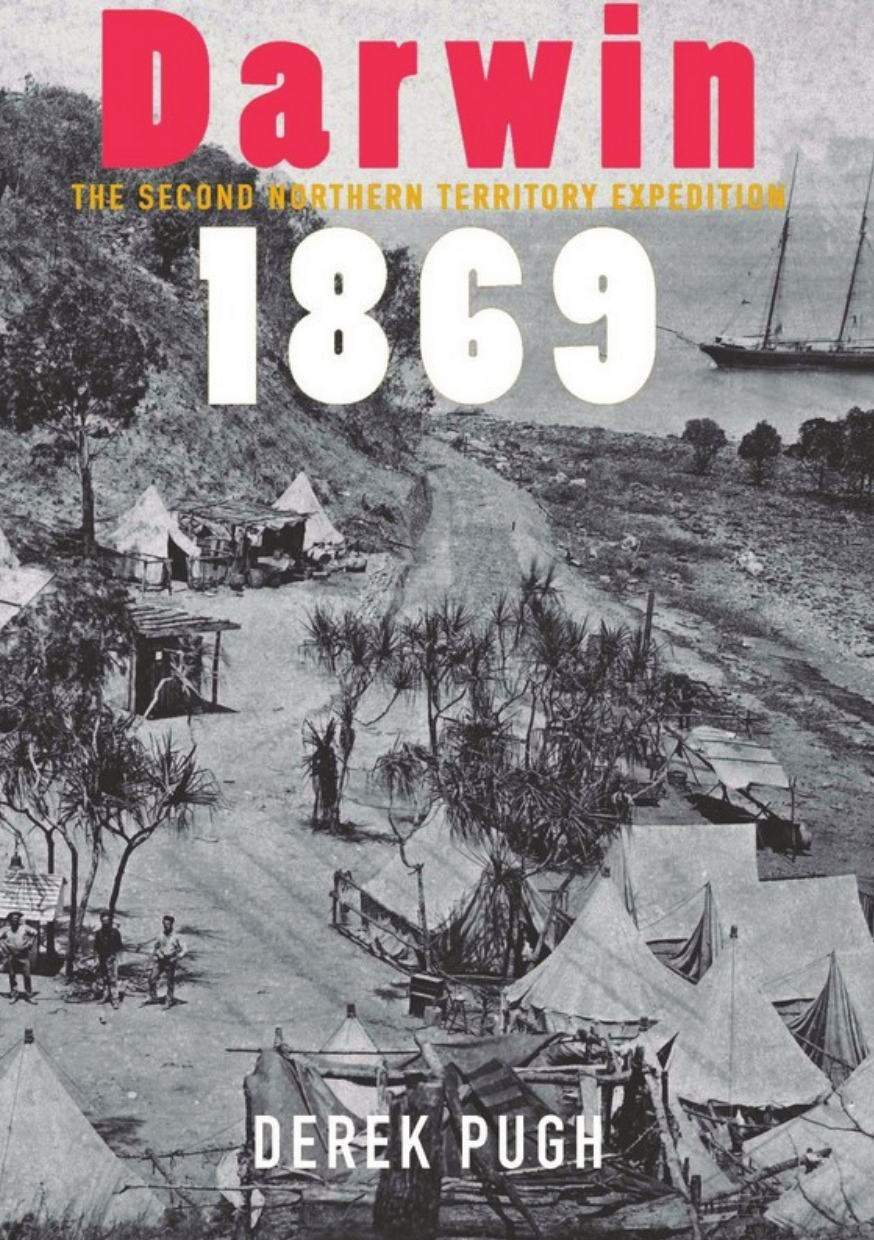
The Second Northern Territory Expedition
by Derek Pugh
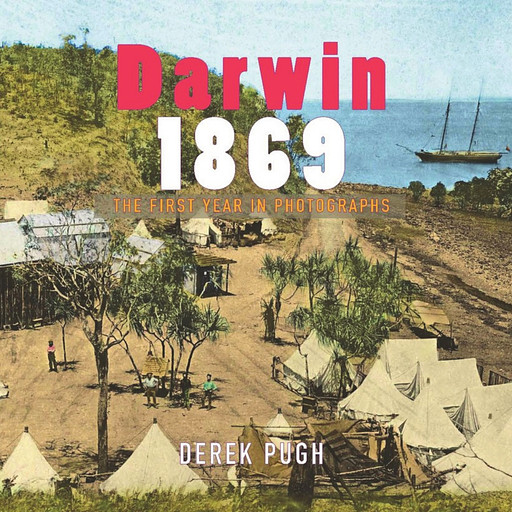
DARWIN 1869: The Second Northern Territory Expedition.Buy Derek Pugh Books
George Woodroffe Goyder was the man for the job. The Adelaide media pushed and pushed and he finally agreed to lead the Second Northern Territory Expedition. Within 8 months, 1000 square miles of the Northern Territory of South Australia was surveyed and ready for the new colony of Palmerston. This is the story of Goyder's expedition, and the men who at last cut a city out of the bush, against tremendous odds, and at a furious speed.
Discover Australia’s last frontier through stories shaped by history and lived experience.
Dr Derek Pugh OAM is an award-winning Australian author and educator whose books reveal the drama, hardship and humanity of the Northern Territory. Writing across history, travel and fiction, he combines meticulous research with vivid, highly readable storytelling. He is best known for his acclaimed histories of the settlement of the Northern Territory and the epic construction of the Overland Telegraph Line, as well as a compelling memoir of life in the remote Arnhem Land community of Maningrida. His fiction includes two novels, including Tammy Damulkurra, a Year 9 set text used nationwide in the Republic of Kiribati. Authoritative yet accessible, Derek Pugh’s books bring Australia’s north to life for general readers, history enthusiasts and students alike. Discover more at derekpugh.com.au.
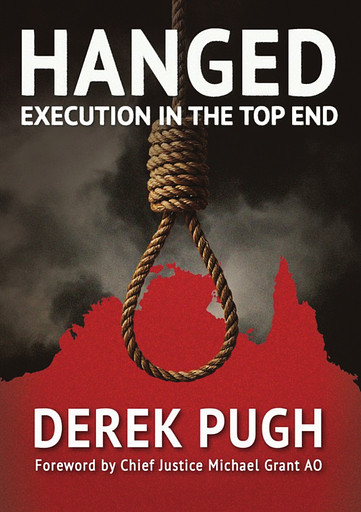
Execution in the Top End
At the far edge of the British Empire, the law was never secure—and its punishments were final.
In the late nineteenth and early twentieth centuries, Australia’s Northern Territory was a vast and isolated frontier where justice operated under extreme conditions. Hanged: Execution in the Top End is the first focused history of capital punishment in this remote colonial outpost.
Drawing on court records, prison files, and official correspondence, historian Derek Pugh reconstructs the cases of men sentenced to death in a region where distance, race, and administrative weakness shaped the outcome of justice. Executions were carried out quietly, without spectacle, in settlements far removed from public scrutiny.
This is not a romantic frontier story. It is a forensic examination of how law functioned at the limits of empire—and how punishment fell most heavily on the marginalised.
Clear-eyed, authoritative, and grounded in primary sources, Hanged will appeal to readers of colonial history, legal history, and true crime at the darker edges of the past.
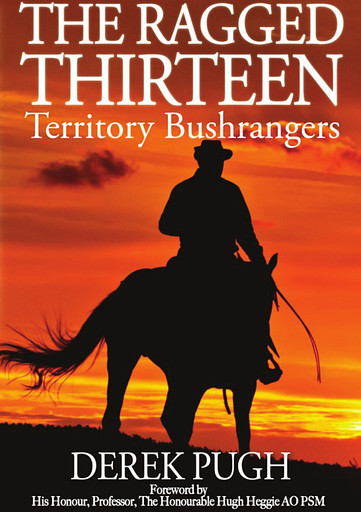
Territory Bushrangers
In 1886 a gang of horsemen ran riot on the Overlanders’ Trail across the Northern Territory and into the Kimberley. They duffed cattle at will, held up wayside pubs and cattle stations with impunity, and drove a small herd of stolen horses.
A part of the Halls Creek goldrush, they became known as the Ragged Thirteen. They were, arguably, the Territory’s only bushranger gang. Called by some the ‘Tea and Sugar Bushrangers’ and by others as ‘the scum of four colonies’, and ‘fugitives from justice’, they were also ‘brilliant horsemen, consummate bushmen, lovers of bush poetry and champions of the underdog’.
Exhaustively researched by Derek Pugh, who followed their 138-year-old trail across the Top End, from Mataranka to Halls Creek, this is their story.
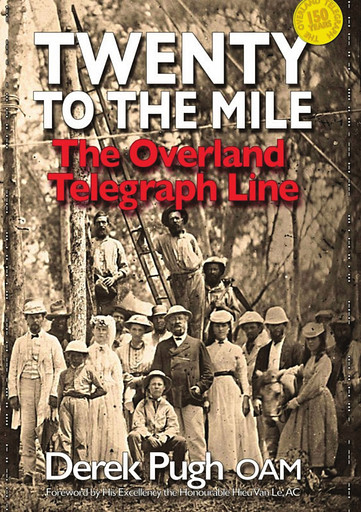
The Overland Telegraph Line
The greatest engineering problem facing Australia – the tyranny of distance – had a solution: the electric telegraph, and its champion was the sheep-farming state of South Australia. In two years, Charles Todd, leading hundreds of men, constructed a telegraph line across the centre of the continent from Port Augusta to Port Darwin. At nearly 3,000 kilometres long and using 36,000 poles at ’20 to the mile’, it was a mammoth undertaking, but at last, in October 1872, Adelaide was linked to London. The Overland Telegraph Line crossed Aboriginal lands first seen by John McDouall Stuart just 10 years before and messages which previously took weeks to cross the country now took hours. Passing through eleven new repeater stations, built in the remotest parts of Australia, the line joined the vast global telegraph network, and a new era was ushered in. Each station held a staff of six and they became centres of white civilization and the cattle or sheep industry as the Aborigines were displaced. The unique stories of how men and women lived and/or died on the line range from heroic, through desperate, to tragic, but they remain an indelible part of Australia’s history.
By turns reflective, tragic and hilarious, Turn Left at the Devil Tree is the story of a visiting teacher in remote Aboriginal Australia. Accompanied by a ‘rough-tough hunting dog’ named Turkey, Derek Pugh founded several outstation schools in the most isolated parts of Arnhem Land.
Spending many years among the people and wildlife of the Top End of the Northern Territory, Derek Pugh revelled in the lifestyle and freedom of the bush and gained an insight into a traditional culture which has been witnessed by only a few outsiders. Told with respect and candour Turn Left at the Devil Tree is Pugh’s ‘slice of history’.
In the remote Top End outstations of Arnhem Land, Derek Pugh, teacher, naturalist and bushman, founded several schools and joined a lifestyle as old as time.
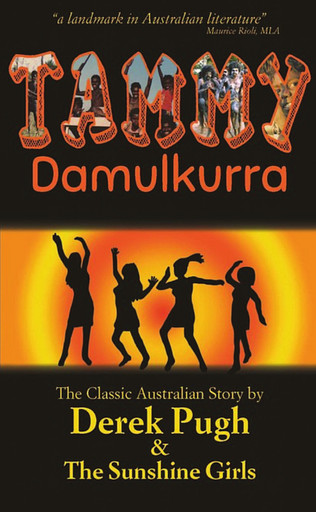
Fifteen year old Tammy Damulkurra lives in Maningrida - a remote Aboriginal community in Arnhem Land. Tammy has friends and likes the disco and thinks at last she has her first boyfriend but he jilts her and Tammy gets into a fight with her arch enemy, Sharon. Tammy's parents send her to the outstations for several weeks to cool off and she quickly gets used to the bush and fishing and hunting with relatives. When she returns to Maningrida her love life is a mess and it's not until she leaves again for school that she realises that it's all going to be okay.