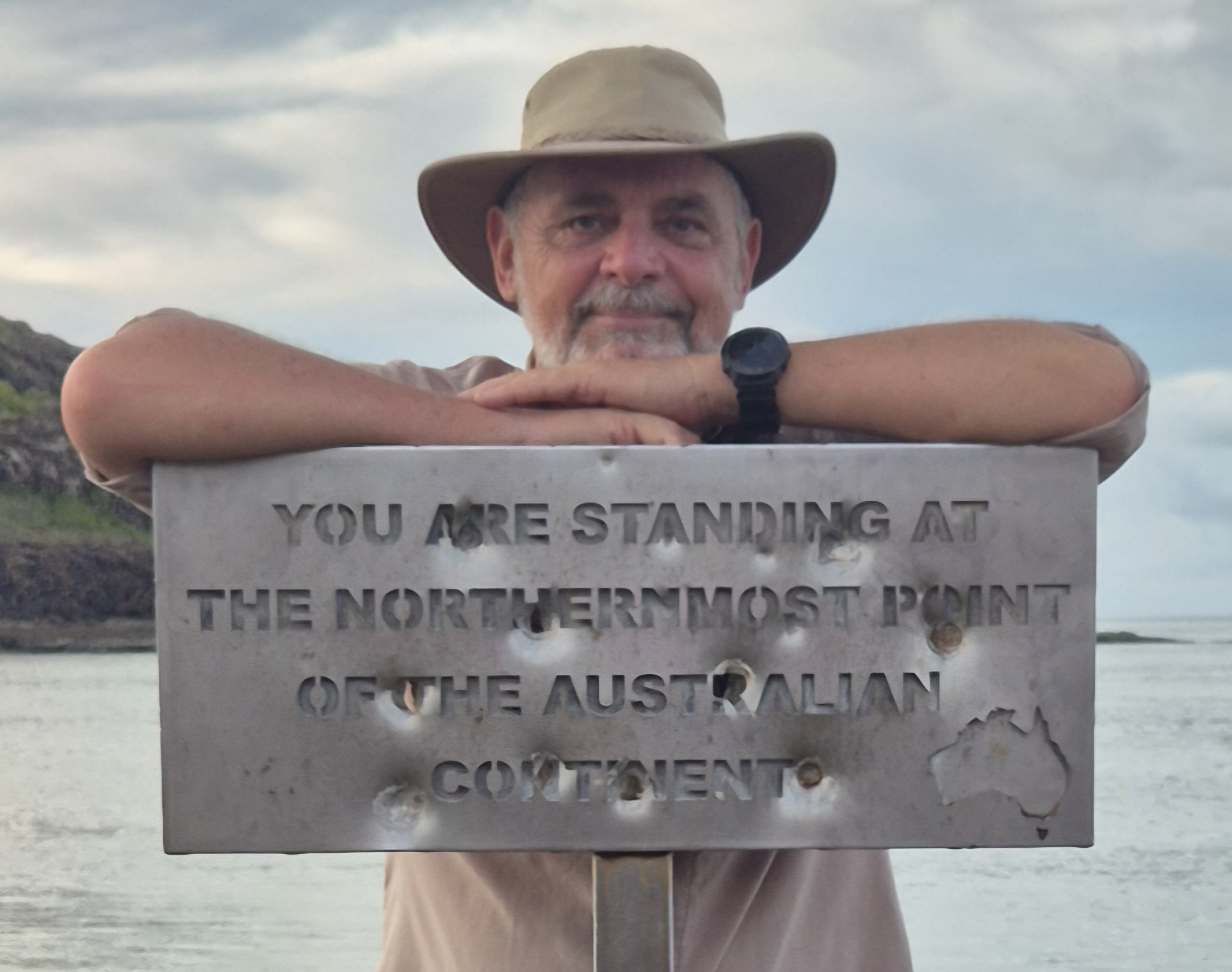
 Derek Pugh Books
Powered by Books.by
Derek Pugh Books
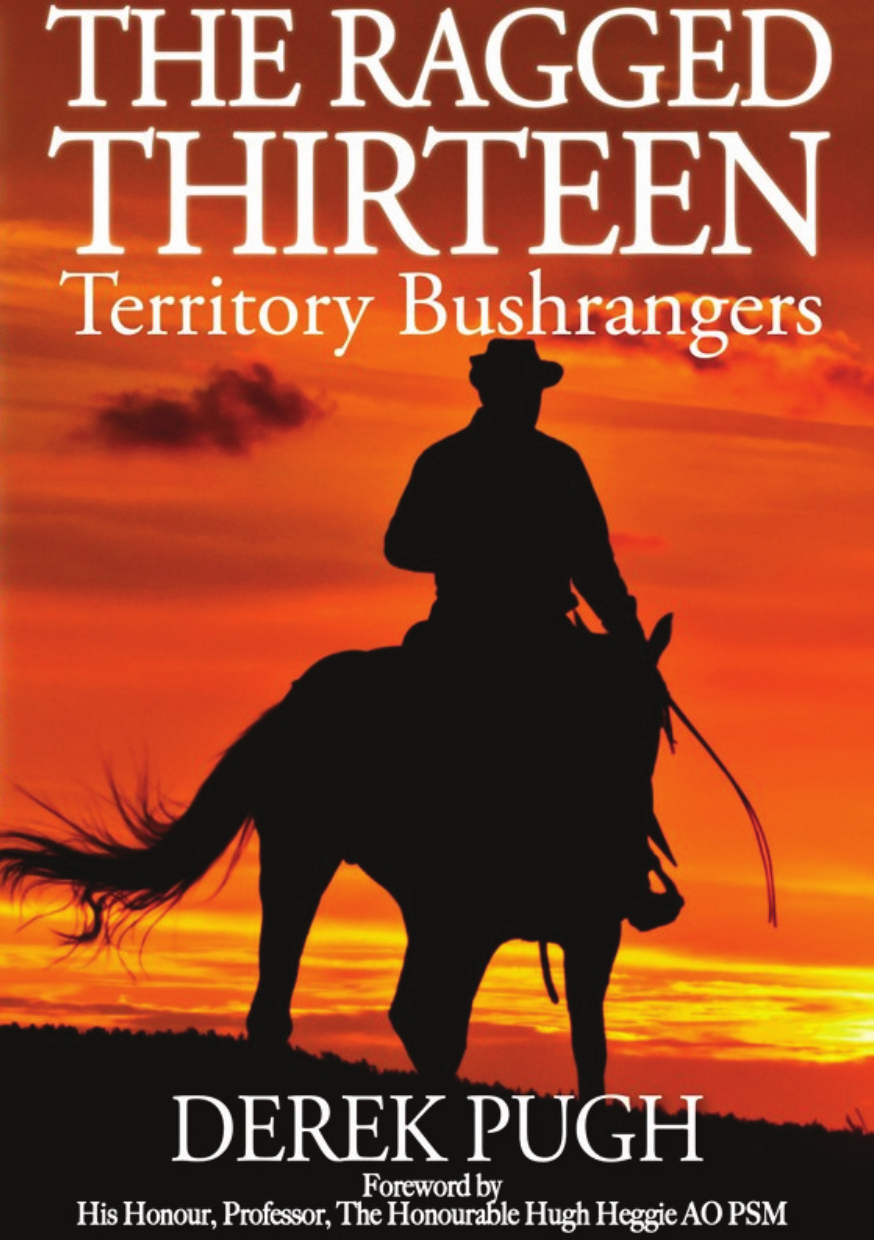
Territory Bushrangers
by Derek Pugh
In 1886 a gang of horsemen ran riot on the Overlanders’ Trail across the Northern Territory and into the Kimberley. They duffed cattle at will, held up wayside pubs and cattle stations with impunity, and drove a small herd of stolen horses.
A part of the Halls Creek goldrush, they became known as the Ragged Thirteen. They were, arguably, the Territory’s only bushranger gang. Called by some the ‘Tea and Sugar Bushrangers’ and by others as ‘the scum of four colonies’, and ‘fugitives from justice’, they were also ‘brilliant horsemen, consummate bushmen, lovers of bush poetry and champions of the underdog’.
Exhaustively researched by Derek Pugh, who followed their 138-year-old trail across the Top End, from Mataranka to Halls Creek, this is their story.
Northern Territory history is a lot of different things to different people. Most people know of the gold rush years, the bombing of the Top End during the war, extraordinary adventures of men and women in the cattle industry, and the overland telegraph line. But who knew the Territory had its own desperate gang of bushrangers riding the ranges from Mataranka to Halls Creek?
When Ned Kelly and Ben Hall were roaming through the bush down south, the Ragged Thirteen were raiding the cattle stations of the north. In my research on this gang of outlaws for a recent book, I travelled the trails they took in 1886 as they headed west to the gold fields of Halls Creek. From a picturesque tropical billabong just north of the must-see tourist destination of Mataranka Hot Springs, I drove a modern 4-wheel-drive, but the gang did it on horseback – using mostly stolen horses. They were young men from South Australia, Queensland, New South Wales, New Zealand and even Scotland, with very few resources – hence their ‘ragged’ look. They had met on the trail and quickly became mates and they were out for a party at the expense of the bush stores and cattle-stations they passed on the way. They duffed cattle when they were hungry, held up wayside pubs or paid with dud cheques when thirsty, and raided cattle stations when their growing herd of horses needed shoes.
They were probably the only bushranger gang in the Northern Territory’s colourful history, and they are mostly forgotten, and this may be because they were not ‘bad’ enough. They were more larrikins than criminals because they never killed anyone, and probably never used their firearms in anger. At Victoria River Downs, for example, the leader, a cattleman named Tom Nugent, played cards with the acting-manager of the station and got him drunk, while the rest of the gang took the back wall off the station store and stole 5 hundredweight of horseshoes, and as much flour, sugar, tea, jam and tobacco as they could carry.
As a result of these crimes, some called them ‘Tea and Sugar Bushrangers,’ but they were also ‘brilliant horsemen, consummate bushmen, lovers of bush poetry and champions of the underdog’.
When the gang finally arrived in Halls Creek, their fame and reputation had arrived before them, but all they had to do to avoid the traps was to break up into anonymous ‘ragged twos’ or ‘ragged threes’ or perhaps bought a new shirt and had a haircut. Whatever they did, none of the thirteen were ever arrested.
After little or no success in the goldfields, some went on to illustrious careers in the cattle industry: Tom Nugent founded Banka Banka Station near Tennant Creek, and Bob Anderson founded Tobermory Station in Queensland, for example. Another, a big bloke named Sandy MacDonald, became a hotelier at the small mining town of Arltunga, east of Alice Springs. Many had families, and their descendants are spread across the continent.
I wrote The Ragged Thirteen: Territory Bushrangers because their story has been an almost forgotten part of the history of the Northern Territory and Kimberley. A century ago, stories told of their exploits abounded around campfires, but these days few people recall the Territory even had bushrangers. To uncover the real story of the Ragged Thirteen, I followed their 138-year-old trail across the rugged Top End. Their story wasn’t just history; it was an adventure.
Discover Australia’s last frontier through stories shaped by history and lived experience.
Dr Derek Pugh OAM is an award-winning Australian author and educator whose books reveal the drama, hardship and humanity of the Northern Territory. Writing across history, travel and fiction, he combines meticulous research with vivid, highly readable storytelling. He is best known for his acclaimed histories of the settlement of the Northern Territory and the epic construction of the Overland Telegraph Line, as well as a compelling memoir of life in the remote Arnhem Land community of Maningrida. His fiction includes two novels, including Tammy Damulkurra, a Year 9 set text used nationwide in the Republic of Kiribati. Authoritative yet accessible, Derek Pugh’s books bring Australia’s north to life for general readers, history enthusiasts and students alike. Discover more at derekpugh.com.au.
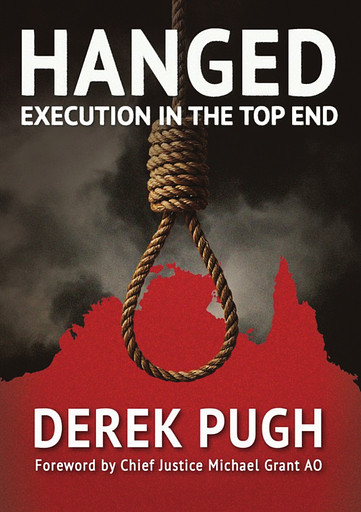
Execution in the Top End
At the far edge of the British Empire, the law was never secure—and its punishments were final.
In the late nineteenth and early twentieth centuries, Australia’s Northern Territory was a vast and isolated frontier where justice operated under extreme conditions. Hanged: Execution in the Top End is the first focused history of capital punishment in this remote colonial outpost.
Drawing on court records, prison files, and official correspondence, historian Derek Pugh reconstructs the cases of men sentenced to death in a region where distance, race, and administrative weakness shaped the outcome of justice. Executions were carried out quietly, without spectacle, in settlements far removed from public scrutiny.
This is not a romantic frontier story. It is a forensic examination of how law functioned at the limits of empire—and how punishment fell most heavily on the marginalised.
Clear-eyed, authoritative, and grounded in primary sources, Hanged will appeal to readers of colonial history, legal history, and true crime at the darker edges of the past.
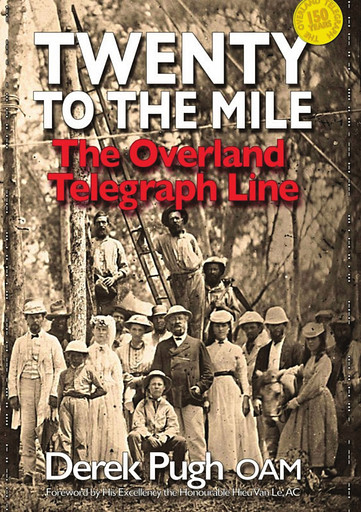
The Overland Telegraph Line
The greatest engineering problem facing Australia – the tyranny of distance – had a solution: the electric telegraph, and its champion was the sheep-farming state of South Australia. In two years, Charles Todd, leading hundreds of men, constructed a telegraph line across the centre of the continent from Port Augusta to Port Darwin. At nearly 3,000 kilometres long and using 36,000 poles at ’20 to the mile’, it was a mammoth undertaking, but at last, in October 1872, Adelaide was linked to London. The Overland Telegraph Line crossed Aboriginal lands first seen by John McDouall Stuart just 10 years before and messages which previously took weeks to cross the country now took hours. Passing through eleven new repeater stations, built in the remotest parts of Australia, the line joined the vast global telegraph network, and a new era was ushered in. Each station held a staff of six and they became centres of white civilization and the cattle or sheep industry as the Aborigines were displaced. The unique stories of how men and women lived and/or died on the line range from heroic, through desperate, to tragic, but they remain an indelible part of Australia’s history.
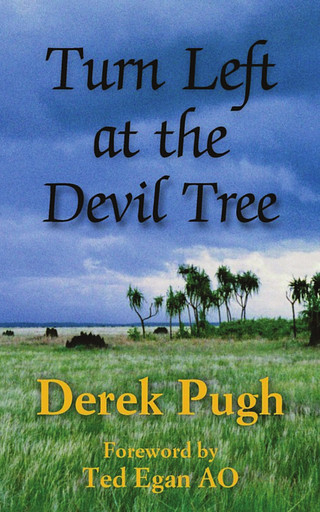
By turns reflective, tragic and hilarious, Turn Left at the Devil Tree is the story of a visiting teacher in remote Aboriginal Australia. Accompanied by a ‘rough-tough hunting dog’ named Turkey, Derek Pugh founded several outstation schools in the most isolated parts of Arnhem Land.
Spending many years among the people and wildlife of the Top End of the Northern Territory, Derek Pugh revelled in the lifestyle and freedom of the bush and gained an insight into a traditional culture which has been witnessed by only a few outsiders. Told with respect and candour Turn Left at the Devil Tree is Pugh’s ‘slice of history’.
In the remote Top End outstations of Arnhem Land, Derek Pugh, teacher, naturalist and bushman, founded several schools and joined a lifestyle as old as time.
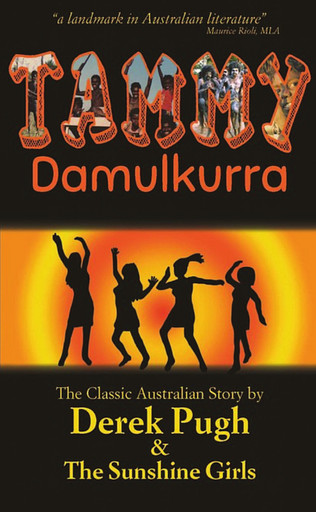
Fifteen year old Tammy Damulkurra lives in Maningrida - a remote Aboriginal community in Arnhem Land. Tammy has friends and likes the disco and thinks at last she has her first boyfriend but he jilts her and Tammy gets into a fight with her arch enemy, Sharon. Tammy's parents send her to the outstations for several weeks to cool off and she quickly gets used to the bush and fishing and hunting with relatives. When she returns to Maningrida her love life is a mess and it's not until she leaves again for school that she realises that it's all going to be okay.