 GPI
GPI
Powered by Books.by
GPI
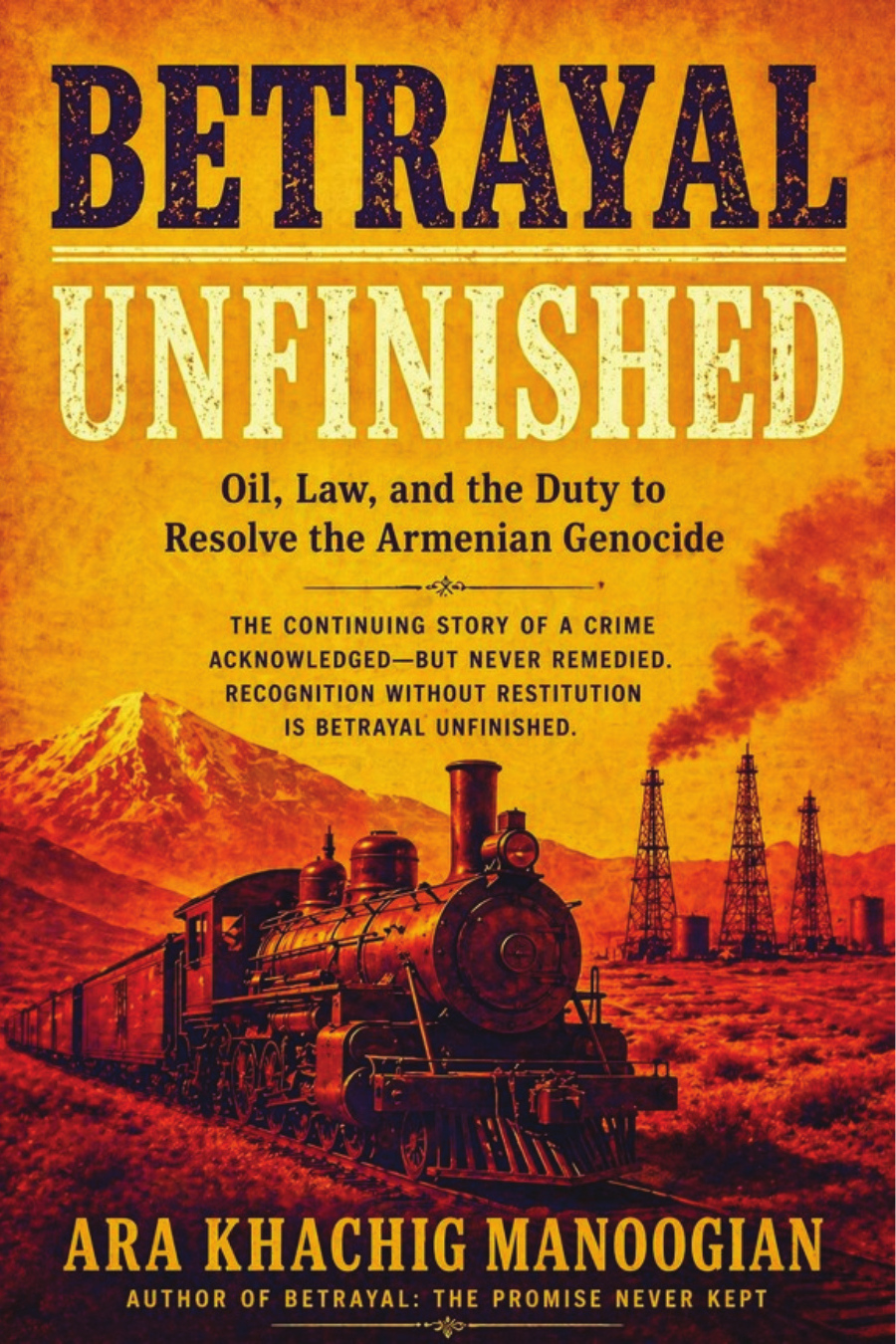
Oil, Law, and the Duty to Resolve the Armenian Genocide -- A Legislator’s Guide To Justice For Armenia
by Ara Khachig Manoogian
Betrayal Unfinished is a powerful examination of the Armenian Genocide not only as a historical crime, but as an unresolved legal and political reality. Author Ara Khachig Manoogian explores how genocide, territorial dispossession, oil politics, and great-power interests shaped the modern Middle East and Caucasus, and why recognition without remedy remains incomplete justice. Blending history, law, and geopolitics, this book challenges governments, lawmakers, and citizens to confront what obligations follow once genocide has been officially acknowledged.
Betrayal Unfinished is a sweeping work of history, law, and geopolitical analysis that argues the Armenian Genocide is not merely a closed chapter of the past, but an unresolved international issue whose consequences continue into the present day. While many governments and institutions now formally recognize the genocide of Armenians committed between 1915 and 1923, this book asks the question few are willing to confront: What legal, political, and moral obligations follow recognition?
Written by Ara Khachig Manoogian, this volume examines how the destruction and dispossession of the Armenian people reshaped borders, transferred wealth, and altered the balance of power across the Middle East and Caucasus. It explores how lands, industries, churches, homes, and strategic resources once belonging to Armenians were absorbed into successor states and later integrated into global systems of trade, diplomacy, and energy politics.
Through archival evidence, historical case studies, and contemporary legal principles, the book traces the links between genocide and profit. It investigates the role of foreign powers, financiers, oil interests, and postwar diplomacy in allowing the outcomes of atrocity to harden into accepted political reality. From the early twentieth century scramble for oil in Baku and the Armenian Highlands, to Soviet-era border engineering, to the modern conflicts involving Artsakh and regional pipelines, the book presents a continuous narrative of power built upon unresolved injustice.
The work also serves as a practical guide for legislators, policymakers, advocates, and citizens. It explains how international law addresses genocide, occupied territories, pillage of natural resources, sanctions, restitution, and the duty of states not to reward or legitimize the fruits of crimes against humanity. Rather than proposing abstract ideals, it offers concrete frameworks for governments that have already recognized the Armenian Genocide but have yet to align policy with principle.
At once historical indictment and forward-looking policy study, Betrayal Unfinished challenges readers to reconsider the meaning of recognition itself. If genocide has been acknowledged, can the world continue business as usual with those who benefit from its results?
Bold, provocative, and deeply researched, this book is for readers of history, international relations, human rights, law, and anyone concerned with how past crimes shape present realities. It argues that remembrance without remedy is not justice, and that betrayal remains unfinished until law is applied with consistency and courage.
Joined books.by 9 months ago.

Tala'at's Execution
A gripping work of historical investigation, this book recounts the dramatic pursuit of Tala'at Pasha after his escape from postwar justice. As the architects of the Armenian Genocide found protection abroad and powerful interests maneuvered behind the scenes, one man refused to let the verdicts of history be ignored. Shahan Natalie, survivor of earlier massacres and mastermind of Operation Nemesis, organized the covert mission that would bring Tala'at to account. Blending political intrigue, hidden alliances, and the desperate struggle for Armenian survival, this book offers a bold and controversial account of justice pursued when nations failed to act.
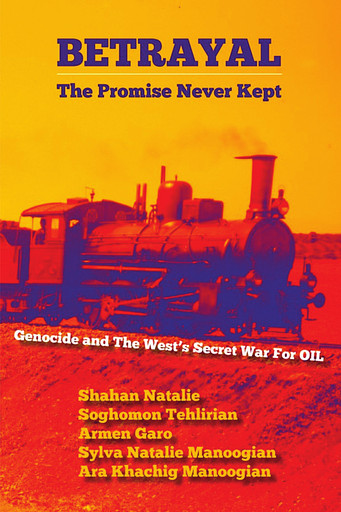
Genocide And The West's Secret War For OIL!
Betrayal: The Promise Never Kept — Genocide And The West’s Secret War For OIL! exposes the forces behind the Armenian Genocide and the geopolitical struggle for oil that shaped World War I. Drawing from the archives of Shahan Natalie, this volume presents a documented narrative linking global powers, financial interests, and wartime policy to the destruction of 2.5 million Armenians between 1894 and 1923.
This volume includes the censored memoirs of Soghomon Tehlirian and traces the events, decisions, and actors behind one of history’s greatest crimes.
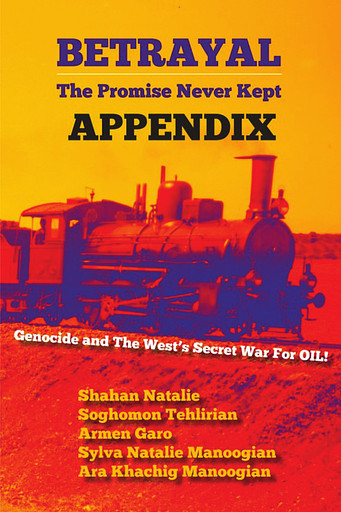
Genocide And The West's Secret War For OIL!
Betrayal: The Promise Never Kept — APPENDIX is the companion volume to the main work, containing the primary source material behind the case.
This volume compiles rare, out-of-print texts, official treaties, government records, and historical documents, including U.S. Congressional material and a full presentation of Armenia’s natural resource holdings. Together, these documents provide the evidentiary foundation supporting the conclusions presented in Volume I.
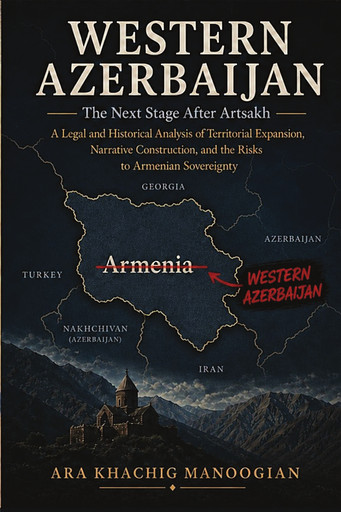
A Legal and Historical Analysis of Territorial Expansion, Narrative Construction, and the Risks to Armenian Sovereignty
After the 2023 depopulation of Artsakh, Azerbaijan’s doctrine of “Western Azerbaijan” has turned Armenia itself into a declared target. In this rigorously documented study, Ara Khachig Manoogian traces how rhetoric becomes state policy: from Soviet border engineering and post-Soviet oil and arms networks to cultural erasure, weaponized “return,” and the manipulation of international law. Western Azerbaijan: The Next Stage After Artsakh is both a warning and a record of how narrative can prepare the ground for territorial expansion—and what that now means for Armenian sovereignty.

Exposing the Fear That Rules Us and the Road Every One of Us Must Walk to Be Free
For nearly eighty years, humanity has lived beneath the fear of nuclear annihilation. The Great Lie challenges the narratives that shaped the nuclear age, examining how fear, propaganda, war, and political power transformed modern civilization while offering a roadmap for breaking free from fear itself and reclaiming a future built on truth, reason, peace, and human freedom.
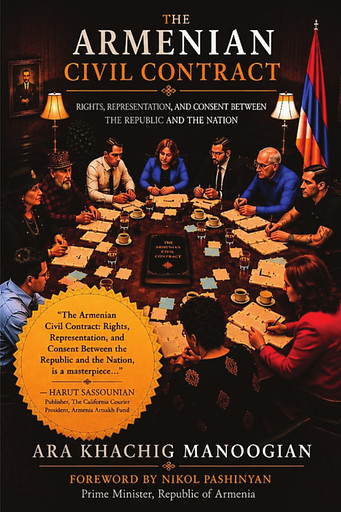
Rights, Representation, and Consent Between the Republic and the Nation
The Armenian Civil Contract explores the relationship between the Republic of Armenia and the global Armenian nation. Drawing on history, international law, constitutional principles, and the Armenian experience, Ara Khachig Manoogian examines questions of sovereignty, representation, diaspora participation, national rights, and consent. At its core, the book asks a fundamental question: who has the authority to negotiate, alter, or surrender rights that belong not merely to a government, but to an entire people? Through historical analysis and contemporary case studies, the book presents a framework for understanding how nations should approach decisions that affect future generations, displaced populations, and the enduring rights of a people.
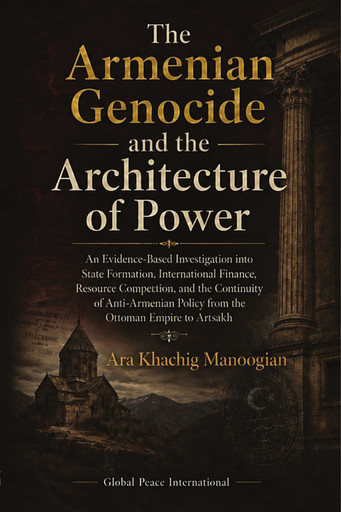
An Evidence-Based Investigation into State Formation, International Finance, Resource Competition, and the Continuity of Anti-Armenian Policy from the Ottoman Empire to Artsakh
An evidence-based investigation into the political, financial, military, and institutional forces surrounding the Armenian Genocide. Drawing on archival records and historical scholarship, Ara Khachig Manoogian traces the destruction and dispossession of the Armenian people from the Ottoman Empire to Artsakh and examines how its consequences were preserved through diplomacy, state formation, and international power.
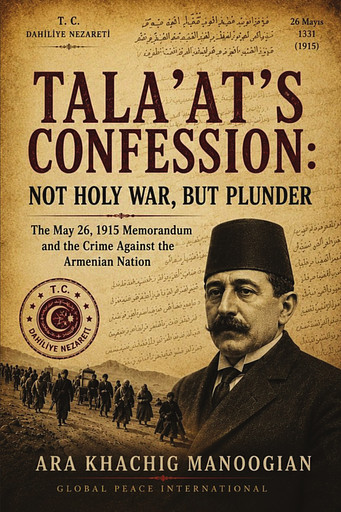
The May 26, 1915 Memorandum and the Crime Against the Armenian Nation
Tala’at’s Confession: Not Holy War, but Plunder presents one of the most important surviving documents of the Armenian Genocide: the Ottoman memorandum of May 26, 1915, authored by Interior Minister Tala’at Pasha. Through documentary analysis and historical evidence, Ara Khachig Manoogian argues that the memorandum constitutes a written confession of a state policy aimed not only at the destruction of the Armenian people, but also at the systematic confiscation and redistribution of their property. The result is a compelling examination of genocide, motive, and organized plunder in the perpetrators' own words.