 Greg Cox
Powered by Books.by
Greg Cox
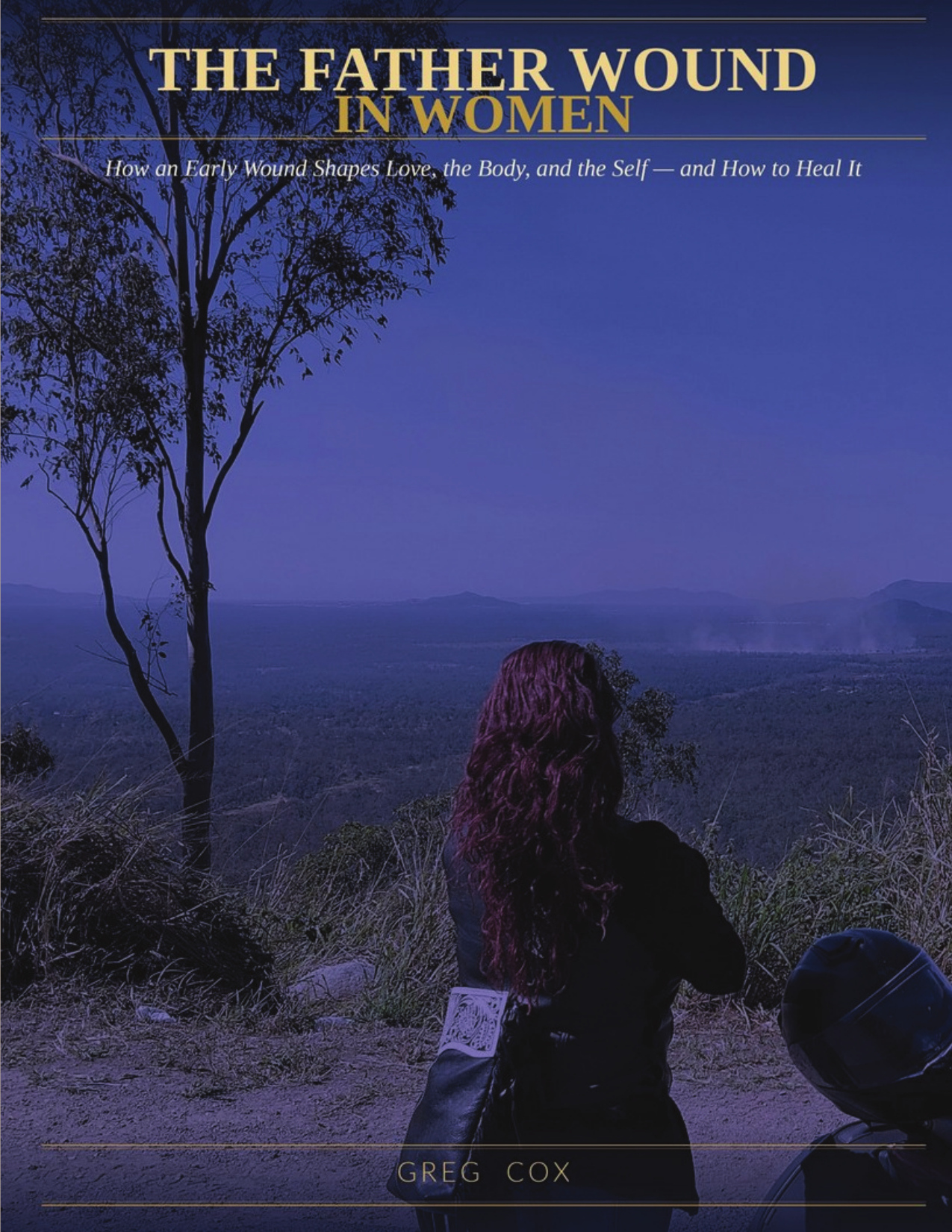
Don't read this book if you are happy with your relationship history
by
You are reading this for one of two reasons. Either you have started to see a pattern in yourself. Or you love someone who has one — and you are out of explanations.
The Father Wound in Women is for both of you. It is a clear, honest account of how an early relationship with a father who was absent, volatile, addicted, or simply unreachable leaves a lasting imprint — on the way a woman attaches, on her body, on the partners she chooses, and on what she does to the ones who are safe. It does not flatter and it does not flinch. Its compassion is in service of its honesty, not a substitute for it.
Grounded in attachment theory, trauma research, and the science of adverse childhood experience, the book moves through the wound's origins, through the body where stress and early loss leave their physical record, into the specific relationship patterns that follow: the pull toward familiar danger, the sabotage of genuine safety, the story a wounded person tells about why things keep ending. Parts V and VI turn toward what changes things — and what it honestly takes.
A father wound is not a punchline. It is one of the most common and least examined forces in adult love — and one of the most changeable.
When a father could not give a child consistent presence, emotional safety, or the steady message that she was worth his time and care, something was written into her before she had any say in it. Not as memory. As adaptation: the needs she learned to hide, the conclusions she drew about her own worth, the theory of love her nervous system built from the data it was given. That writing does not stop when she leaves home. It shows up in who she reaches for, who she pushes away, and the arguments that feel older than the relationship she is having them in.
This book traces that process from its source — the four shapes a father wound most often takes — through the science of childhood adversity and the body, into the specific patterns it creates in adult love. It is built on evidence, honest about that evidence's limits, and direct in a way that does not mistake directness for cruelty.
It speaks to two readers at once: the woman who recognises something of herself here, and the person across from her who has been trying to understand. Before it is done, both their stories are told — because you cannot heal a dynamic you only understand from one side.
The author writes partly from the man's position in this story. That vantage point is the reason the book can see what it sees.
A wound you can name is one you can finally begin to change. This book shows you how.
“"I recognized myself on the first page and didn't put it down. What sets this book apart is that it refuses to make anyone the villain — not the wounded woman, not the father, not the partner trying to understand. It is compassionate and honest in equal measure, and it offers something I had stopped believing was possible: a real way forward. One of the most clear-eyed books on attachment and early wounding I have read."”
Julie McLean
“"Rigorous, readable, and genuinely useful. Cox covers attachment, trauma, and the ACE research without losing the human being at the Centre of it. The dual-audience approach — written for both the woman and the person who loves her — is exactly what this subject needed. A landmark book on a pattern that affects far more people than will admit it."”
Paul Huges
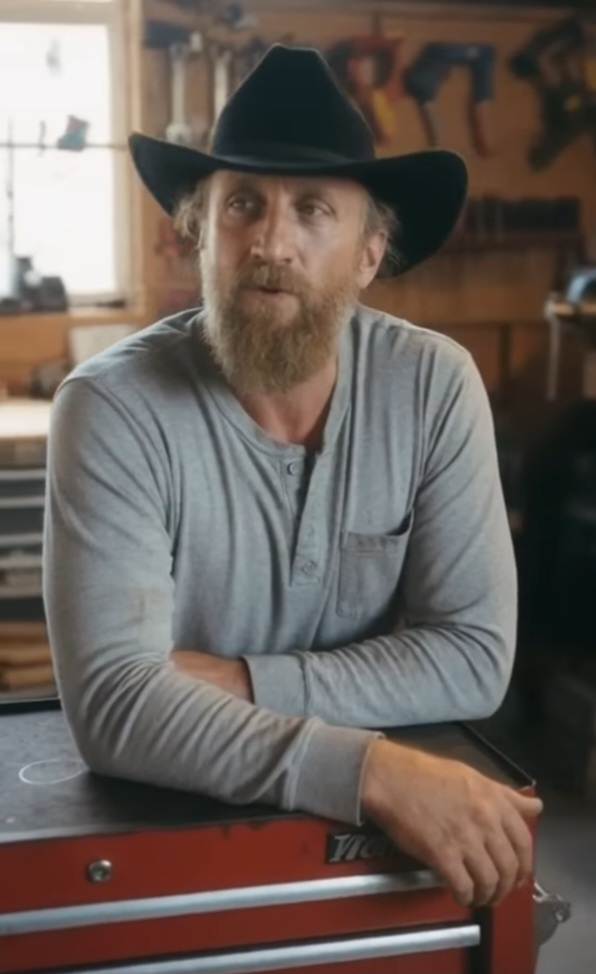
Greg Cox grew up in Townsville and left at seventeen on a motorbike heading north. He has spent the years since then living in the kinds of places that teach you something — the Daintree rainforest, the Atherton Tablelands, the sapphire fields at Rubyvale — and writing about the things he found there. He works as a stevedore at the Port of Townsville. He writes books, songs, and occasionally things that don't fit neatly into either category.
Greg Cox is an Australian author and songwriter based in Townsville, Queensland. He writes across two territories that turn out to be the same territory: the inner life of the individual, and the question of what we owe each other in relationships. His first book, Transcendence, traces the single thread connecting the world's great wisdom traditions — from the Toltec seers and the Gnostic mystics to the quantum physicists — and the discovery they all arrived at independently: that ordinary consciousness is operating far below its actual capacity, and that something can be done about it. His second book, The Father Wound in Women, is a clinically grounded account of how an early relationship with an absent, volatile, addicted, or emotionally unavailable father shapes adult love — and how that pattern changes. It is written from the man's side of the dynamic, for both the woman who recognises herself in it and the person trying to understand her. His autobiographical novel Rufus — the story of a young man who raised a Brahminy kite in the rainforests of Far North Queensland — is forthcoming through HarperCollins. He also writes and records music, and runs the YouTube channel Renegade Phoenix Rising, where he creates content about attachment, relationships, and the long road between who we were and who we are becoming.
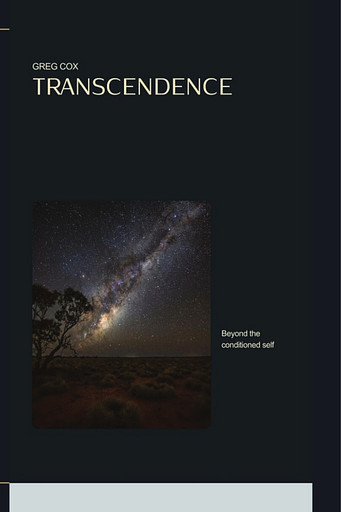
Beyond the Conditioned Self
What if the most important discovery a human being can make has already been made — thousands of times, across every culture and century — and we simply haven't been paying attention?
Transcendence traces the single thread connecting the Toltec seers, the Gnostic mystics, the Buddhist teachers, the Jungian analysts, and the quantum physicists: the recognition that ordinary consciousness is operating in a reduced mode, and that something far larger waits underneath it. Drawing on the Matrix trilogy as a modern mythological map, and on the work of Eckhart Tolle, Carl Jung, and the emerging science of consciousness, this book charts the territory of awakening — what it is, what it is not, and how to move toward it.