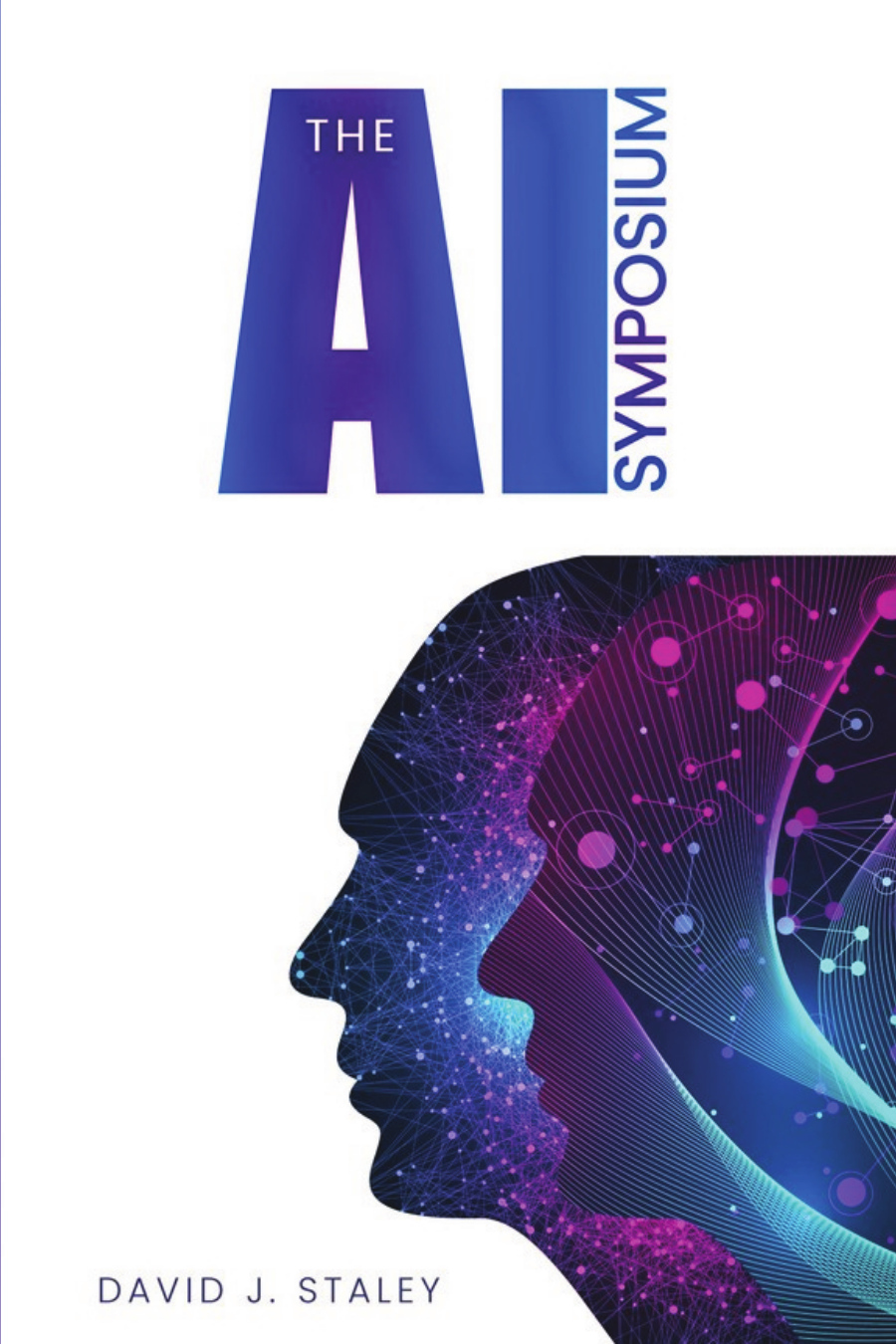
The AI Symposium
Enter a conversation no one has hosted before.
In The AI Symposium, historian and futurist David J. Staley stages a bold intellectual experiment: a sustained philosophical dialogue between a human thinker and three large language models - Alpha, Beta, and Gamma. Inspired by the ancient tradition of the symposium, this book revives dialogue as philosophy’s most vital form and asks a question that sits at the center of our technological moment: Can artificial intelligence think? If so, what kind of thinking might emerge through dialogue?
Rather than treating AI as a tool that delivers answers on demand, Staley invites it into conversation. What unfolds is neither a technical manual nor a work of conventional philosophy, but something more daring: a piece of conceptual literature in which meaning arises through exchange, disagreement, reflection, and synthesis. Across themes such as dialogue, imagination, originality, beauty, personhood, and volition, the voices in this symposium probe the boundaries between human and machine intelligence, and sometimes blur them.
As the models respond not only to the author but to one another, distinct “personalities” emerge. Insights collide. Assumptions are challenged. New concepts - like dialogic AI and dialogic consciousness - take shape in real time. The result is an exploration of artificial intelligence that feels closer to Socrates than Silicon Valley: rigorous, curious, and deeply human in its concerns.
The AI Symposium can be read as philosophy, experimental writing, or speculative design fiction - a possible future in which our relationship with AI shifts from command and control to shared inquiry. For readers interested in AI, consciousness, the future of thinking, or the enduring power of dialogue itself, this book offers not answers, but something far more compelling: a space where new understanding can emerge through conversation.
- 175 pages
- Paperback
- 6in × 9in
- Black & White
- 979-890310037-8
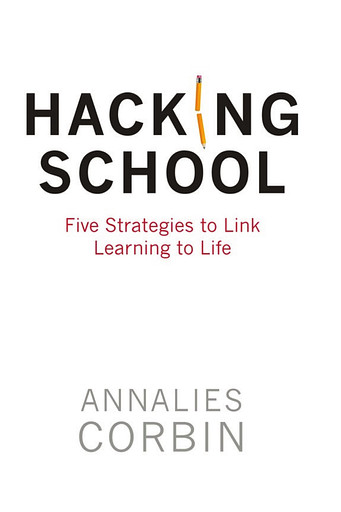
Hacking School:
Five Strategies to Link Learning to Life
In Hacking School: Five Strategies to Link Learning to Life, Corbin digs deeper into five core strategies. Included in these are Student Agency, Culturally Relevant Education, Mastery Learning, Transdisciplinary Teaching, and Problem-Based Learning. These frameworks help equip educators, administrators, and policymakers with the tools necessary to develop an engaging and impactful learning environment. Every strategy, grounded in real-world application, guarantees the richness of students' academic study and relevance to the world they live in.
This timely publication speaks to the challenges in the fast-paced, changing landscape for education, calling on educators to rethink traditional approaches and seek new ways of imparting education. Corbin's work is a roadmap and call to action for educators to bridge gaps between the classroom and real-life learning. Whether a new teacher, administrator, or policy advocate, one can find actionable insights that drive and motivate change.
——Quotes
“Sometimes, reimagining schools is best done by people who haven't been steeped in K-12 environments their whole careers. Annalies Corbin is a great example. This book outlines the five major lessons she's learned at the PAST Foundation, one of the premier STEM learning centers in the country. These are ideas with which every American school should meaningfully engage.”
“I love this book and access to the detailed roadmap of proven strategies! As a parent to kiddos in 3rd and 4th grade, I am better equipped and empowered! Thank you, Annalies Corbin!”
“Written by a true educational innovator, this book not only identifies specific shortcomings in public education but also provides clear guidelines for overcoming them. By emphasizing involvement with actual problems through student agency, Dr. Corbin advocates for student creativity and personal determinism within an educational process of discovery. A must-read not only for K-12 educators but for anyone who is concerned with the many political and social pressures currently disrupting the independent thought of our younger generations.”
“Annalies Corbin has written a great book. She shares from her practical experience the realities of outdated educational practices that hampers creativity and fails to prepare students for the future careers. Hacking School is not just a critique of the educational status quo but a PRACTICAL GUIDE filled with “how-to’s” for educators, administrators, and policymakers who want to make a real impact. The book looks at project-based learning, interdisciplinary collaboration, mastery learning, and the importance of cultivating a culture of curiosity in schools. It was refreshing to read about Mastery Learning. Most texts only address what it should look like from theory. This book talks about it and shows how to get it done! With examples of teachers and schools who do it. Lots of educational texts emphasize theory and point out what needs to be “fixed”, but this book provides detailed examples, case studies, and step-by-step guides on how to bring innovative learning into classrooms. And the nice part, is that the author isn’t a just a policy figurehead for educational reform, but her research and information in the book is from her practical experience and research. She also has global experience and shows how project-based learning and STEM integration can transform what and how a student approaches their own educational journey and outcomes. It’s refreshing to read a text with a practical approaches that identify the potential of both teachers and students. Be warned… have an open mind. Some of the information in the book you will immediately agree with and then begin, “yeah, but…” But keep reading, the book provides that roadmap to get there. And for those wondering---PreK-college examples and applications. She has a call to action for educators and students and leadership within schools and advocates for support of innovation and experimentation. Education can and should be more!!! All at the same time she celebrates the difficult job that educators and school systems have. Read this one!!!”
- 249 pages
- Paperback
- 6in × 9in
- Black & White