
History of the Military Band
by Maxime's Music
About the book
First published in 1889, History of the Military Band stands as one of the earliest attempts to trace, in a coherent and systematic way, the development of military music as both an artistic and social force. Conceived as a continuation and concise synthesis of Georges Kastner’s foundational work, Edmond Neukomm’s study surveys the evolution of military bands across Europe, examining their instruments, organisation, repertoire, and cultural function. Clear in structure and sober in tone, the book offers an invaluable contemporary perspective on how the modern military band emerged during the nineteenth century.
About Edmond Neukomm
Edmond Neukomm was a French music historian and critic active in the latter half of the nineteenth century, a period in which military music occupied a central place in public musical life. Though not a prolific author, Neukomm brought to his historical writing a discerning critical eye and a strong sense of continuity between scholarship and practice. His History of the Military Band was explicitly intended as both a summary and a continuation of Kastner’s earlier research, and it remains significant for its clarity, concision, and its position at the crossroads of musicology, military history, and cultural documentation.
More books by Maxime's Music

The Military Band
A forgotten classic of music history, La Musique Militaire/The Military Band (1917) is Marie Bobillier’s sweeping survey of military music from antiquity to the 19th century. Writing under the pseudonym Michel Brenet, Bobillier explores how armies used music not just to command troops but to shape national identity, inspire patriotism, and elevate public ceremony. With vivid detail and rare insight, she traces the evolution of instruments, ensembles, and the composers who served them. This first English translation brings new life to a work that helped define the field—and finally restores credit to one of its earliest and most eloquent scholars.
Marie Bobillier (1858–1918) was a French musicologist and historian. At a time when women were largely excluded from academic recognition, her meticulous research and elegant prose contributed to modern music history, even as her true identity remained hidden behind a male pseudonym.
On the History of Instrumental Music
On the History of Instrumental Music is a critical re-examination of how instrumental music emerged, developed, and came to be judged. Rather than repeating inherited narratives, the book challenges the belief that instrumental music lagged behind vocal art, arguing instead for its early technical sophistication and artistic independence. Drawing on historical sources, archival evidence, and repertory examples, Eichborn shows how wind and instrumental traditions played a central role in musical life long before they were granted full artistic legitimacy.
Hermann Eichborn (1847–1918) was a German jurist and independent scholar whose writings combined historical insight with sharp cultural criticism. Deeply concerned with the social standing of musicians and the misuse of historical judgement, he argued for what he called productive criticism — historically informed, intellectually rigorous, and morally serious. Though marginal in his own time, Eichborn’s work speaks with striking relevance to modern debates about tradition, progress, and artistic value.
The musical instrument as an ethnographic document
At the dawn of the twentieth century, Belgian musicologist Ernest Closson proposed a remarkable idea: that musical instruments are not merely tools for producing sound, but historical documents capable of revealing the migrations, technologies, beliefs, and cultural exchanges of entire civilisations. Drawing upon archaeology, folklore, anthropology, mythology, and comparative musicology, Closson traces striking connections between the instruments of Europe, Asia, Africa, and the Americas, revealing how similar musical solutions emerged across vast distances of time and geography. Rich in historical curiosity and filled with fascinating examples, "The Musical Instrument as an Ethnographic Document "remains a pioneering contribution to the study of musical instruments and the history of human culture.
The musical situation and popular education in France
First published in 1884, Johannès Weber’s \textit{The Musical Situation and Popular Education in France} offers a detailed contemporary account of French musical life at a moment of important educational and cultural reform. Rather than treating music merely as art, entertainment, or professional training, Weber examines its place within primary schools, popular societies, conservatoires, concerts, theatres, and military bands. His central concern is the relationship between musical instruction and the broader cultivation of public musical taste.
Comparing France with neighbouring countries, especially Germany, Weber argues that a truly musical nation cannot be formed by conservatoires and theatres alone. Music must be rooted in early education, communal practice, and institutions capable of reaching beyond the professional classes. His observations on school singing, choral societies, wind and brass bands, public concerts, and the social value of music remain strikingly relevant to modern debates about music education and cultural life.
This first English translation makes available an important primary source for musicians, conductors, teachers, historians, and all readers interested in the history of music education, public music-making, and the place of music in society.
Observations on Music, and Principally on the Metaphysics of the Art
What is music? Does it imitate nature, express the passions, speak a language, or act upon us in some more mysterious way? First published in Paris in 1779, Michel-Paul Guy de Chabanon’s *Observations on Music, and Principally on the Metaphysics of the Art* is one of the most fascinating eighteenth-century attempts to answer these questions. A man of letters, violinist, composer, and member of the Académie française, Chabanon wrote at a moment when French musical thought was still shaped by debates over opera, imitation, expression, national taste, and the power of melody.
In this elegant and searching work, Chabanon argues that music does not owe its deepest power to words, pictures, or imitation, but to melody itself: to the direct action of organised sound upon the senses, the body, and the soul. Along the way, he reflects on birdsong, dance, theatrical expression, harmony, rhythm, taste, popular judgement, and the strange difficulty of explaining why music moves us. Translated into English by Craig Dabelstein, this volume restores to modern readers a neglected voice from the French Enlightenment, and a book whose questions remain alive wherever music is heard not merely as sound, but as feeling.
The Spirit of Orpheus
On the Respective Influence of Music, Morality, and Legislation
In The Spirit of Orpheus, Gabriel d’Olivier asks one of the oldest and most searching questions in musical thought: what does music do to the human being? First published in Paris in 1804, this remarkable dissertation treats music not merely as an art of pleasing sounds, but as a force acting upon the heart, the imagination, the body, society, morality, religion, and even the deepest structures of nature. For Olivier, music is a science of feeling: a language older than words, capable of consoling sorrow, awakening virtue, shaping public life, elevating worship, and restoring the troubled soul to a momentary sense of harmony.
Strange, ambitious, speculative, and often profoundly humane, *The Spirit of Orpheus* belongs to a world in which music could still be discussed alongside philosophy, medicine, theology, politics, mathematics, and natural science. Modern readers may not follow Olivier in every conclusion, but his central insight remains strikingly alive: music is not a luxury added to life, but one of the means by which life becomes bearable, intelligible, and humane. This first English translation by Craig Dabelstein brings a forgotten voice in the philosophy of music back into circulation, inviting musicians, teachers, conductors, scholars, and thoughtful listeners to reconsider the moral and emotional power of the art they love.
The Singing Flames
Vibration Theory and Considerations on Electricity
*The Singing Flames* is one of the strangest and most fascinating musical books of the nineteenth century. In it, Frédéric Kastner tells the story of the pyrophone, or fire organ: a musical instrument in which flames enclosed within glass tubes are made to sing. What began as a laboratory curiosity — the mysterious phenomenon of “singing flames” — became, in Kastner’s imagination, a new instrument with a keyboard, a musical compass, and a voice of its own. Contemporary listeners compared its sound to the human voice, the Aeolian harp, and the melancholy harmonies of nature.
This volume is not merely the story of an eccentric invention. It belongs to a remarkable age in which music, physics, electricity, optics, public spectacle, and poetic speculation often met in the same room. Kastner moves from acoustic experiment to musical possibility, from gas flames to theatrical dreams, from scientific demonstration to a grand theory of vibration linking sound, light, heat, electricity, and life itself. Sometimes practical, sometimes visionary, and sometimes beautifully strange, *The Singing Flames* preserves a forgotten moment when the boundaries between laboratory, concert hall, and imagination were still wonderfully porous.
Two Centuries at the Opéra
An anecdotal, artistic, eccentric, picturesque, and gallant chronicle
For two centuries, the Paris Opéra was far more than a theatre: it was a world of artistic ambition, political intrigue, spectacular triumphs, disastrous fires, eccentric personalities, glittering careers, and magnificent scandals. In this lively and richly anecdotal chronicle, Nérée Desbarbres leads the reader behind the curtain to meet the directors, conductors, singers, dancers, composers, patrons, and adventurers who shaped the institution from its foundation in 1669 to the eve of the Palais Garnier. By turns scholarly, humorous, admiring, and mischievous, Two Centuries at the Opéra brings to life the vanished culture of French grand opera and ballet, preserving the human stories that formal histories so often leave behind.
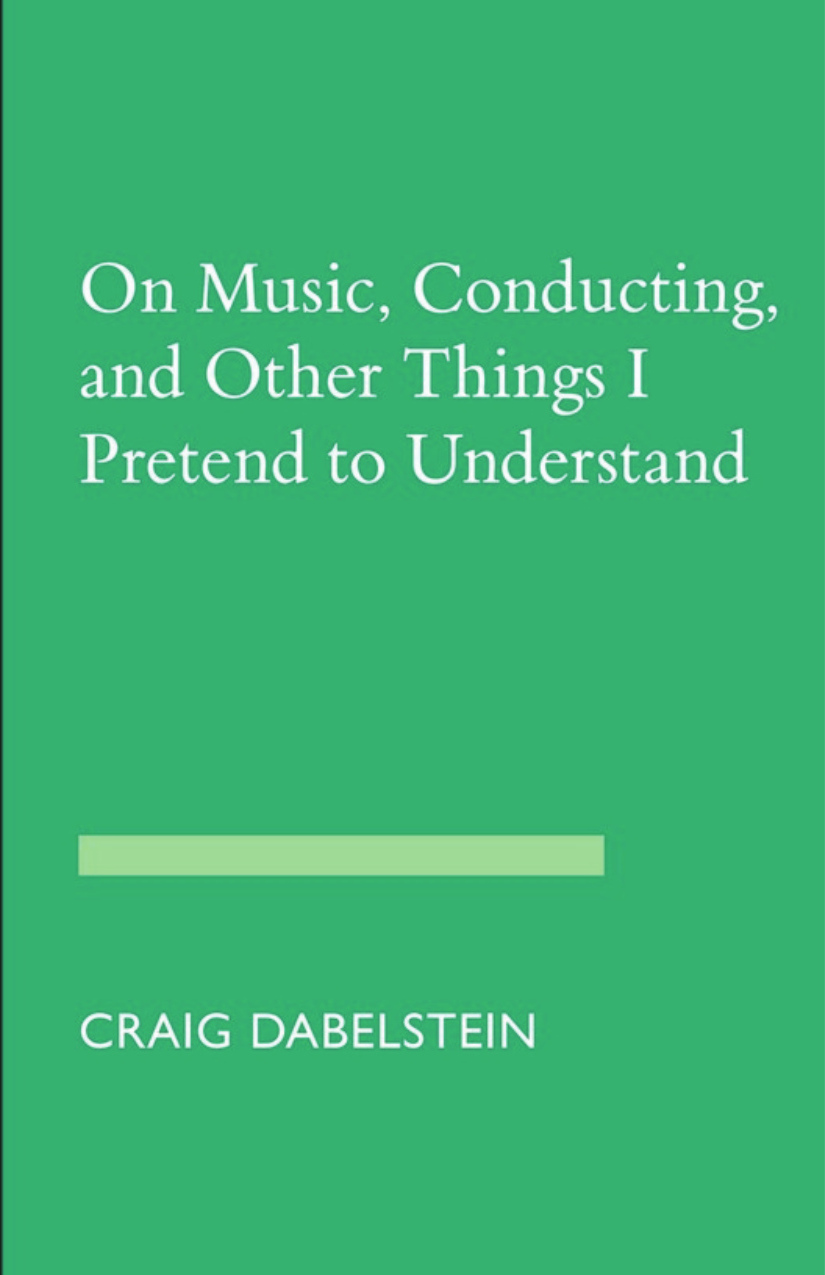
On Music, Conducting, and Other Things I Pretend to Understand
What is music education really teaching — and what responsibility comes with standing in front of others and asking them to make art?
In this book of essays, Craig Dabelstein reflects on more than thirty years of conducting and teaching, examining the aesthetic, psychological, and ethical dimensions of music education. These writings explore repertoire, taste, emotion, listening, and the quiet ways musical choices shape performers and audiences alike.
This is not a manual or a method. It offers no quick solutions or guaranteed outcomes. Instead, it argues that music is never neutral — that every programming decision, rehearsal habit, and performance carries meaning beyond the notes.
Written for conductors and music educators at any level, this book invites readers to listen more closely, choose more deliberately, and take the human impact of music seriously.
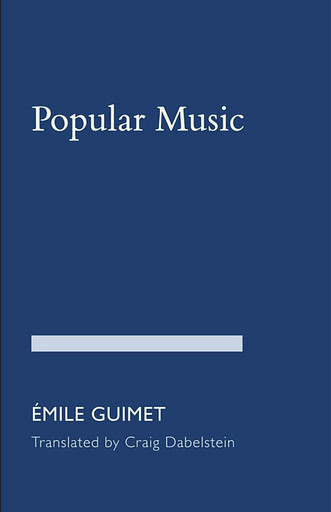
Popular Music
Émile Guimet (1836–1918) is remembered today as the founder of the Musée Guimet in Paris, one of the world’s great museums of Asian art. Far less known is the Guimet of 1869: a young industrialist, humanist, and passionate observer of musical life, speaking with unusual clarity about the social power of music.
In La Musique populaire, Guimet offers a searching examination of the choral and band movements of his time. He praises music as a force for education, character, and civic cohesion, while delivering a sharp indictment of musical competitions that reward hierarchy, bureaucracy, and the illusion of progress over genuine artistic growth. Against these hollow triumphs, he argues for non-competitive festivals, collective music-making, and education grounded in taste, judgement, and shared experience.
Written at a moment when popular music societies were reshaping cultural life across Europe, Guimet’s reflections feel strikingly modern. His belief that music belongs not to prizes or institutions, but to communities — and that its highest purpose lies in forming the human being — gives this brief but incisive text a resonance that extends far beyond its century.
This volume presents Guimet’s speech in English for the first time, with a critical apparatus that situates his arguments historically while allowing their questions to speak directly to our own time.
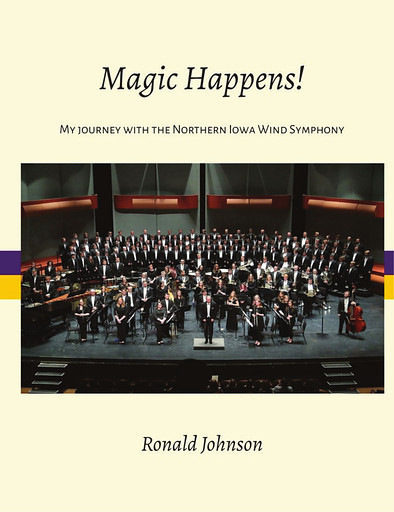
Magic Happens!
My Journey with the Northern Iowa Wind Symphony
This is the story of Ronald Johnson's 35-year journey with the Northern Iowa Wind Symphony. It is a story of what they did together in those 35 years, of where they started, where they traveled and, eventually, where they ended. It is a story of what they accomplished together, what they hoped for, what they dreamed, and what they created. There are discussions of repertoire selection and programming, and accounts of the Northern Iowa Wind Symphony's six concert tours to Hungary and Italy.
Ronald Johnson is Director of Bands Emeritus, and Professor Emeritus of Music at the University of Northern Iowa. He was a member of the faculty in the School of Music, conducting the Wind Symphony and the Chamber Wind Players, from the fall of 1982 until his retirement in the spring of 2017. Dr. Johnson has appeared as a guest artist with professional and municipal ensembles in China, Germany, Hong Kong, Hungary, Israel, Italy, Latvia, Slovenia, Spain, Sweden, and Switzerland. In 2002, in a ceremony in Vatican City (Rome), he was invested in L’ Ordre des Chevaliers du Sinai for “significant contributions to humanity.” Dr. Johnson has been given the Silver Baton Award by Kappa Kappa Psi Band Fraternity; the Orpheus Award from Phi Mu Alpha Music Fraternity, and an honorary diploma from Il Conservatorio Luca Marenzio di Brescia in Italy.
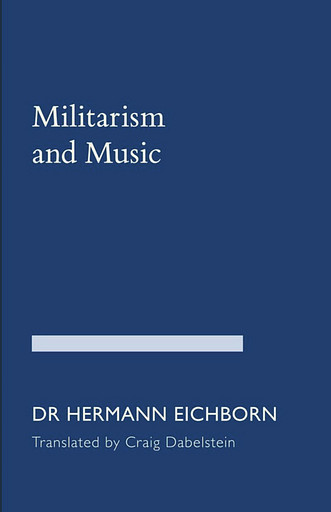
Militarism and Music
First published in 1909, Militarism and Music is a thoughtful exploration of the historical relationship between military organisation and musical culture. Hermann Eichborn examines how military structures have influenced musical institutions, repertoire, and modes of performance, situating military music within a broader social and cultural context. Rather than focusing narrowly on bands alone, the book ranges across musical history, offering reflections on discipline, education, and the public role of music. Written on the eve of profound upheavals in European history, Eichborn’s study provides a valuable perspective on how music has functioned within organised society.
Dr Hermann Eichborn was a German musicologist, critic, and cultural thinker active at the turn of the twentieth century, whose work reflects a deep unease with the uncritical glorification of militarism in European society. Writing in an era when military values permeated education, civic life, and the arts, Eichborn brought a rare ethical seriousness to musical scholarship, insisting that music could not be separated from the social forces that shaped it. Militarism and Music stands as his most provocative work: a testament to an independent mind willing to challenge prevailing assumptions about music’s supposed moral neutrality.
On the Necessity of Military Bands
Adolphe Sax, celebrated inventor of the saxophone and tireless reformer of military music, makes a bold and impassioned case in De la Nécessité des musiques militaires (1867) for the cultural, moral, and economic importance of the military band. Drawing upon history, personal experience, and the authority of figures like Spontini and Sarrette, Sax defends the wind band not merely as a ceremonial ornament, but as a vital institution of national identity, public instruction, and industrial prosperity.
Presented here in English for the first time, this translation restores Sax’s original voice and rhetoric in a style faithful to the nineteenth century. With footnotes and historical commentary, it offers modern readers, conductors, and music historians a glimpse into the mind of one of the most influential instrument makers of his age—and into a forgotten era when music, patriotism, and public life were powerfully intertwined.
The military band and the musical organization of an army
Following the victory of the band of the Prussian Guards at the 1867 European Military Band Competition in Paris, Wilhelm Wieprecht, the director of all the music of the Royal Prussian Guard Corps, promised Emperor Napoleon III of France that he would write him a detailed memorandum on the purposes and organisation of military music. Repeated illness and official matters prevented Wieprecht from presenting this memorandum to the Emperor in person, and finally the Franco–German war made it impossible. The memorandum was eventually published after Wieprecht’s death in 1872. This work contains Wieprecht’s detailed instructions for the instrumentation of all military bands, as well as the roles and responsibilities of the conductors and musicians.
Wilhelm Wieprecht (1802–1872) was a visionary German bandmaster, composer, and conductor who revolutionized military and brass band music. Renowned for his innovations in instrumentation, Wieprecht modernized the entire Prussian military music system.
The need to reconstitute the School of Military Music on a new basis to improve regimental music
Originally published in 1838, Frédéric Berr’s The Need to Reconstitute the School of Military Music on a New Basis to Improve Regimental Music is a treatise on the structure and administration of military bands in 19th-century France. A distinguished clarinetist, composer, and pedagogue, Berr presents an argument for reforming military music education, advocating for a systematic approach to training soldier-musicians, improving regimental orchestras, and eliminating the reliance on civilian musicians (gagistes).
This first-ever English translation by Craig Dabelstein brings Berr’s insights to a modern audience, shedding light on a pivotal moment in the history of military music. Essential reading for music historians, military scholars, and wind band enthusiasts, this edition preserves Berr’s original vision while making it accessible to contemporary readers.
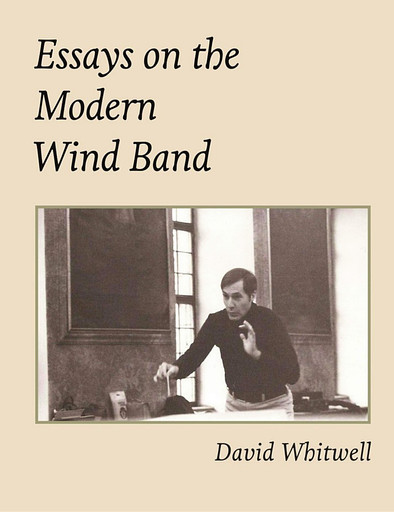
Essays on the Modern Wind Band
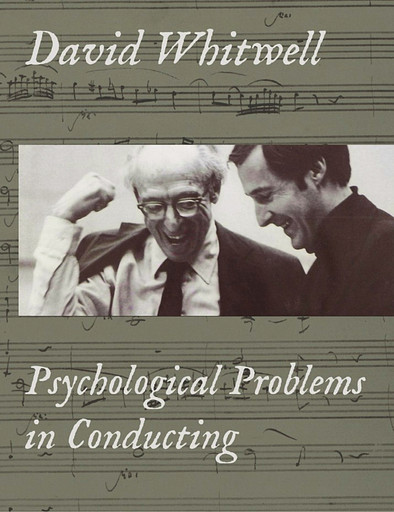
David Whitwell is one of the most influential college band directors of the twentieth century and the author of more than sixty books on music, education, history and aesthetics. In this new collection of essays, "Essays on the Modern Wind Band", he provides a broad perspective of the American Wind Band from his lifetime of experience as performer, teacher, conductor and musiclogist. Through a series of enlightening and thought-provoking essays, David Whitwell provides his unique opinion on such topics as wind band history, repertoire, ethics, and education, as well as behind-the-scenes stories of band organizations, composers, conductors and competitions. The book concludes with an intimate portrait of his long-time friend, Frederick Fennell.
Francis Planté
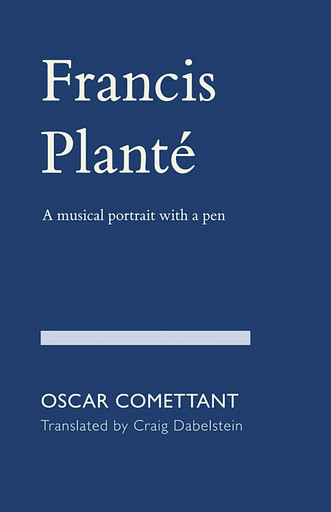
Musical portrait with a pen
Francis Planté (1839–1934) was a celebrated French pianist renowned for his technical prowess and deeply expressive style. He displayed prodigious musical talent from an early age, studying under esteemed musicians like Antoine Marmontel and performing in public by the age of 10. His playing was characterized by clarity, precision, and emotional depth, which won him admiration across Europe. He was especially noted for his interpretations of the works of composers such as Mozart, Beethoven and Chopin, and he was known to have a close friendship with many renowned artists of his time, including Franz Liszt, who influenced his artistic development. Planté left a legacy that extended beyond his own performances. He largely retired from public life in the early 20th century but continued to inspire generations through his recordings and teachings.
Oscar Comettant (1819–1898) was a French composer, music critic, and writer known for his explorations of music from around the world. Comettant trained as a musician in Paris and developed a wide-ranging interest in various cultures, which greatly influenced his work and thinking. As a composer, he wrote operas, symphonies, songs, and chamber music, but he gained more recognition as a music critic and travel writer. His insightful critiques appeared in prominent French publications, where he advocated for innovative and international perspectives in music. Comettant’s extensive travels through North and South America, Asia, and Oceania fueled his curiosity, leading to several notable works on the music of indigenous cultures and non-Western traditions. His book La Musique, les Musiciens et les Instruments de Musique chez les différents peuples du monde (1869) was one of the first ethnomusicological studies in France, marking him as a pioneer in the field.