 Regenerations
Powered by Books.by
Regenerations
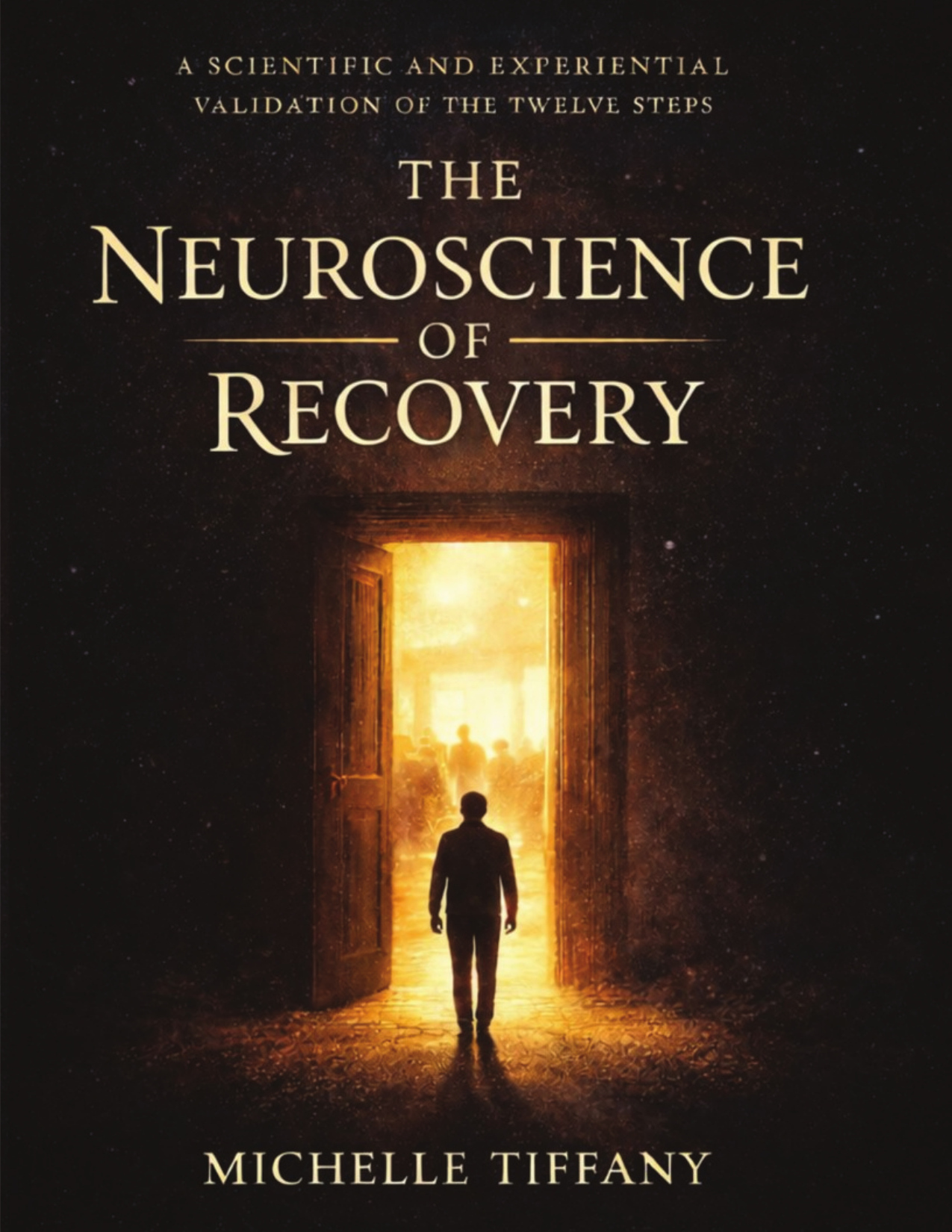
A Scientific and Experiential Validation of the Twelve Steps
by Michelle Tiffany
For nearly ninety years, millions of people have walked into church basements, community centers, and hospital conference rooms, sat down in folding chairs, and found a way through addiction that nothing else had given them. The program worked. Nobody could fully explain why.
The Neuroscience of Recovery is the book that finally does.
Written for people in recovery, for the clinicians who support them, and for anyone who has ever sat in one of those chairs and wondered what was actually happening — this is the first comprehensive account of the twelve steps of AA and NA as a neuroscience-validated rehabilitation protocol. Not a spiritual program with science as an interesting footnote. A neuroscience program with spiritual language as its original vocabulary, developed through observation and lived experience nearly ninety years before the brain imaging existed to confirm what it was doing.
What the science reveals is extraordinary.
When Bill Wilson and Bob Smith assembled the twelve steps in 1935, they had no knowledge of mesolimbic dopamine systems, prefrontal hypofunction, allostatic dysregulation, or the Default Mode Network. They had careful observation and the willingness to share what worked. What they built, step by step, turns out to be a sequence of practices that engages the core neurobiological mechanisms of addiction and the core requirements of sustained recovery — in an order that is not arbitrary, that creates the neurological conditions for each subsequent step, and that produces documented, measurable changes in the structure and function of the human brain.
Step One's admission of powerlessness is not defeat. It is the first honest confrontation with the incentive salience mechanism — the hijacked dopamine system that makes the substance feel necessary even when the person knows it is destroying them. The admission doesn't fix the prefrontal cortex. But it creates the conditions in which the fixing can begin.
Step Two's "coming to believe" is the activation of the brain's predictive processing system — the iterative updating of the model the brain holds about what is possible, through exposure to the living evidence of other people's recovery. Hope is not a feeling. It is a neurobiological process. The fellowship is how it gets started.
Step Four's fearless moral inventory engages the memory reconsolidation window — the brief period during which retrieved memories are malleable, susceptible to the rewriting that recovery requires. Step Five's disclosure to another human being provides the social neurobiological conditions that reconsolidation needs to complete: the experience of being fully known and not abandoned, which the brain's threat-appraisal system requires in order to begin revising the prediction that full honesty is incompatible with continued acceptance.
Steps Eight and Nine — the list of harms and the making of amends — activate the recovering moral cognition networks, close the cortisol-generating guilt loops of unresolved harm, and engage the prosocial reward circuitry that is neurochemically distinct from and healthier than addictive reward. The amends process is not punishment. It is, in the most precise neurobiological sense, the restoration of the self.
Steps Ten, Eleven, and Twelve are the daily maintenance and deepening of everything the earlier steps built — the metacognitive training of the ongoing inventory, the contemplative neuroplasticity of prayer and meditation, and the prosocial reward and identity consolidation of service work. Each of these practices has a documented neurobiological mechanism. Each produces measurable changes in the brain. And each is available, for free, in a room near you, every day of the week.
This is not a book that reduces the tradition to its mechanisms.
The neuroscience characterizes what is happening in the brain during recovery. It does not — and cannot — account for the full meaning of what it is like to be a human being making these particular changes in a particular life. The science and the tradition are two maps of the same territory. Both are needed. Neither is complete without the other.
What the science offers is something the tradition has long deserved: not a challenge, but a confirmation. A vocabulary for people who need a different entrance into the same room. A framework for clinicians who have wondered how to integrate evidence-based practice with the fellowship. An answer, finally, to the question that has followed the program since 1935.
The Neuroscience of Recovery covers the full arc — from the neurobiological architecture of powerlessness in Chapter One to the long-term structural changes that twenty years of recovery practice produces in Chapter Thirteen, with fourteen chapters of rigorous, accessible science along the way. Each chapter opens with a brief human vignette, grounds its argument in peer-reviewed research, and closes with specific clinical implications for practitioners. An extensive glossary, clinical assessment tools, resources for people in recovery, and a comprehensive bibliography are included.
Who this book is for:
For the person in recovery who has always known the program worked but has never had a scientific framework for their own transformation — and who deserves one.
For the person considering recovery who finds the spiritual language of the steps alienating — and who needs a different door into the same room.
For the clinician who has referred patients to twelve-step programs without fully understanding what they were referring them to — and who wants to work with the science rather than alongside it.
For the family member trying to understand what is happening in the brain of someone they love.
For the researcher, the therapist, the counselor, the sponsor, and the skeptic.
For anyone who has ever sat in a folding chair, looked around at the people in that room, and thought: there is something real happening here. I don't know what it is yet. But it's real.
The tradition knew it worked. Now we know why.
Michelle Tiffany writes at the intersection of neuroscience, recovery, and clinical practice. The Neuroscience of Recovery has been in process for years and is now her third published book.
Joined books.by 3 months ago.
How Creativity Heals the Human Mind
Creativity is not a talent. It is a fundamental human healing mechanism — and most of us lost access to it long ago. Becoming True shows how to find the way back, one mark at a time.
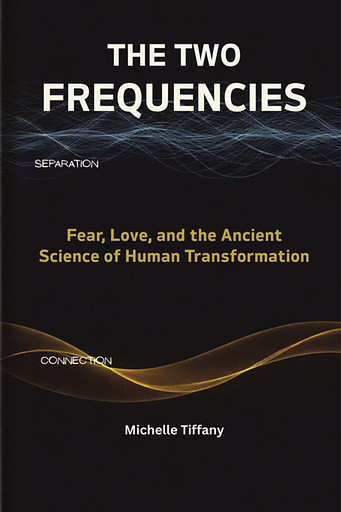
Fear, Love, and the Ancient Science of Human Transformation
Every human being is operating from one of two places: fear or love. Not as a metaphor — as a neurological reality that shapes every relationship, every choice, and every life.
The Two Frequencies brings together behavioral science, ancient wisdom, and the groundbreaking work of Chase Hughes, Jamie Winship, and Taylor Welch to map the two worldviews that drive all human behavior — and show you exactly how to cross from one to the other.