DID JESUS SIN?
by Frans Hansen
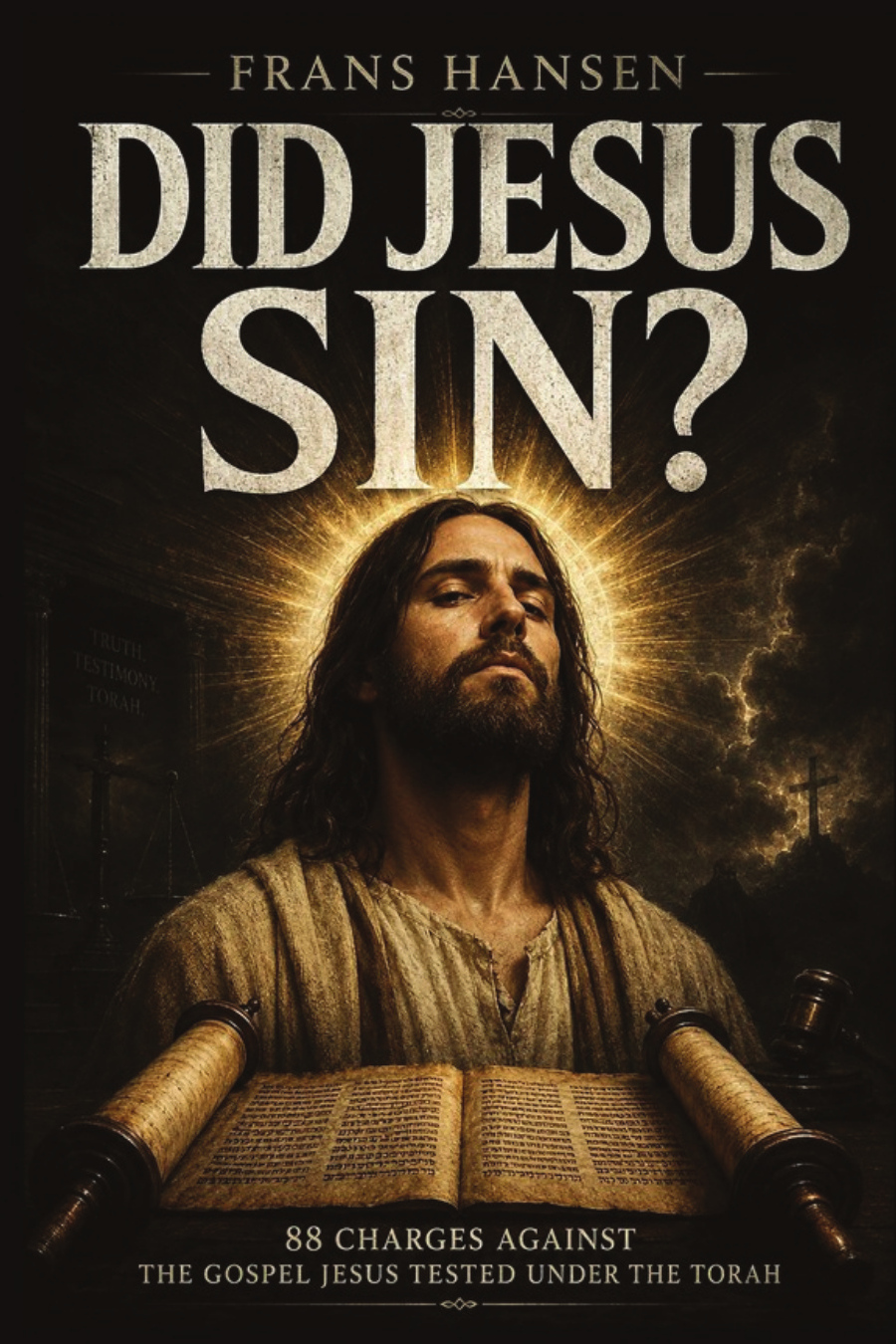
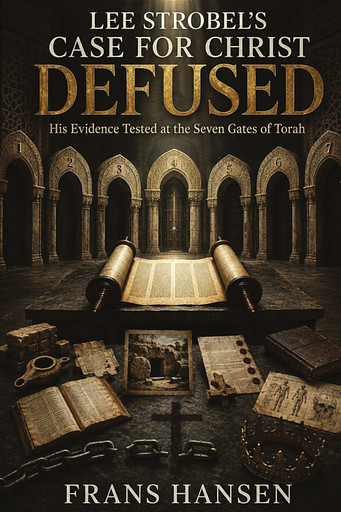
Did Jesus sin? Christianity cannot treat that question as secondary. If Jesus violated Torah, revised divine command, failed a prophetic test, or authorized a covenantal system the Hebrew Bible forbids, then the central Christian claims about sinlessness, sacrifice, messiahship, and divine authority collapse.
In this revised second edition, Frans Hansen examines 88 charges against the Gospel Jesus under the standards of the Torah, not later church theology. The book tests the Gospel record against Deuteronomy 4, Deuteronomy 13, Deuteronomy 18, covenant law, prophetic accountability, and the Bible’s own definitions of sin and obedience.
This is not a casual attack on Christianity. It is a structured legal-style prosecution of the Christian claim that Jesus fulfilled the Torah without transgressing it. Each charge is weighed, rated, and tested against possible defenses. The result is a direct challenge to the foundation beneath Christian atonement, messianic fulfillment, and New Testament authority.
For Christians willing to test inherited claims, Jews seeking counter-missionary clarity, and serious readers of the Hebrew Bible, this book asks the question Christianity cannot afford to answer lightly: if even one charge stands, what remains of the Gospel Jesus?
More books by Frans Hansen
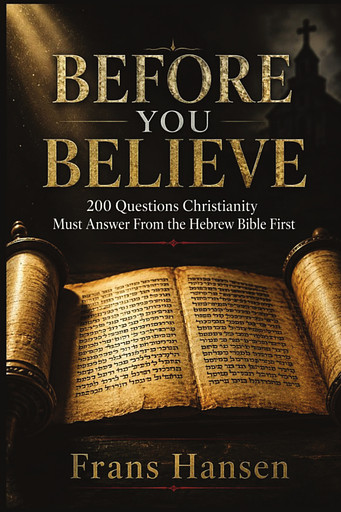
BEFORE YOU BELIEVE
200 Questions Christianity Must Answer From the Hebrew Bible First
Before you believe, answer Moses first.
Christianity claims the Hebrew Bible as its foundation. It says Jesus fulfilled Moses, completed the Prophets, opened the true meaning of Scripture, and brought the covenant to its intended goal. But there is one question that must be asked before the New Testament is allowed to speak as judge:
Can Christianity prove its claims from the Hebrew Bible first?
Before You Believe puts that question on trial 200 times.
This book tests major Christian doctrines under the standards Christianity says it inherited: Torah, the Prophets, and the Writings. It does not begin with church authority, later creeds, New Testament assumptions, or missionary slogans. It begins where the argument must begin: with the God of Israel, the covenant given to Israel, and the public promises recorded in Tanakh.
Inside, Frans Hansen examines questions such as:
Can “fulfillment” make Torah commandments non-binding without becoming subtraction?
Do miracles or resurrection claims overrule Deuteronomy’s covenant test?
If Jesus is the Messiah, where is the messianic world promised by the Prophets?
Does Jeremiah’s new covenant abolish Torah, or write Torah on Israel’s heart?
Can a divine human redeemer be proven from the Hebrew Bible before Christian doctrine is assumed?
Does Isaiah 53 identify Jesus, or has the servant been removed from Isaiah’s own context?
Can the New Testament serve as proof when its authority is the very issue under examination?
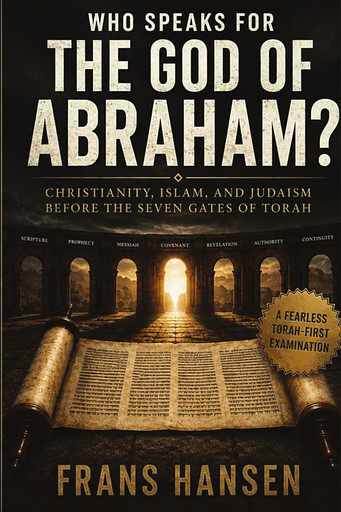
Each question follows a disciplined method: identify the Christian claim, examine the controlling Hebrew Bible texts, state the strongest Christian answer, expose the hidden assumption, and test the answer through the Seven Gates: text, theme, time, Torah, Tanakh, public prophetic result, and whether the conclusion is proved from the passage rather than read backward into it.
This is not a book about insulting Christians. It is a book about refusing circular theology. A doctrine may be coherent inside Christianity and still fail as proof from the earlier revelation Christianity claims to fulfill.
Sharp, direct, and built for serious debate, Before You Believe is for readers who want to test missionary claims without surrendering the rules of evidence before the trial begins.
If the claim is true, bring the Hebrew.
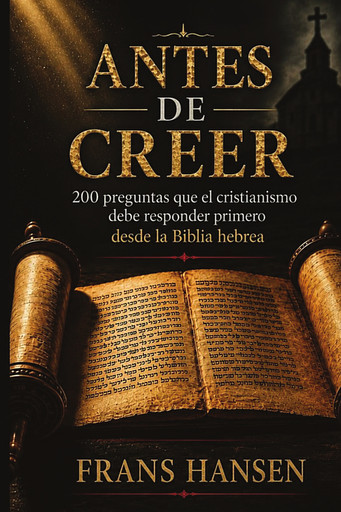
ANTES DE CREER
200 preguntas que el cristianismo debe responder primero desde la Biblia hebrea
El cristianismo afirma que sus doctrinas nacen de la Biblia hebrea.
Pero ¿puede demostrarlo sin utilizar primero el Nuevo Testamento, la autoridad de la Iglesia o doctrinas desarrolladas siglos después?
ANTES DE CREER presenta 200 preguntas que obligan al cristianismo a defender sus afirmaciones desde Moisés, los Profetas y los Escritos antes de apelar a textos cristianos posteriores.
Frans Hansen somete las principales doctrinas cristianas a un contrainterrogatorio sistemático:
¿Autoriza la Torah a suspender sus propios mandamientos?
¿Pueden los milagros anular la prueba de Deuteronomio 13?
¿Cumplió Jesús las expectativas públicas del Mesías?
¿Anuncia Isaías 53 realmente la crucifixión?
¿El nuevo pacto de Jeremías cancela la Torah o la escribe en el corazón de Israel?
¿Puede el Nuevo Testamento certificarse a sí mismo como autoridad?
Cada argumento se examina desde el texto anterior, su audiencia original, el contexto del pacto y las promesas hechas a Israel. Las respuestas cristianas más fuertes son presentadas y luego probadas sin permitir que la conclusión discutida controle la evidencia.
Este libro no pide al lector que rechace el cristianismo por emoción, tradición o prejuicio. Le exige algo más difícil: comprobar si sus fundamentos están realmente presentes en la Biblia hebrea.
Para cristianos que se atreven a examinar lo que creen, judíos que quieren reconocer los métodos misioneros, noájidas, estudiantes de la Biblia y lectores interesados en el debate entre el Tanakh y el Nuevo Testamento.
Antes de aceptar la conclusión cristiana, examina primero la evidencia de Moisés.
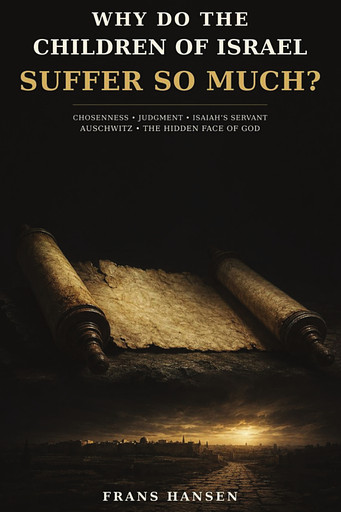
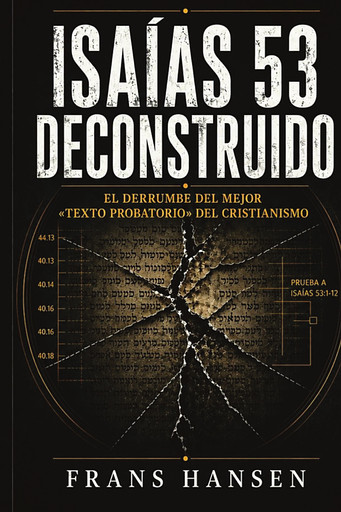
Isaías 53 deconstruido
El derrumbe del mejor «texto probatorio» del cristianismo
Durante siglos, Isaías 53 ha sido presentado como la prueba definitiva de que la Biblia hebrea predijo la muerte y resurrección de Jesús. Este libro somete esa afirmación a una prueba que rara vez se permite: leer el capítulo dentro del propio libro de Isaías, examinar el hebreo, identificar a los hablantes y respetar las categorías de la Torá.
El resultado es contundente. Isaías ya había identificado al siervo como Israel. Isaías 52 presenta a naciones y reyes atónitos ante su restauración. Isaías 53 registra la confesión de quienes habían interpretado el sufrimiento de Israel como señal de rechazo divino. Las imágenes del siervo —desprecio, pérdida de belleza, heridas, ovejas llevadas al matadero, aparente muerte, descendencia, largos días y vindicación— encajan con Israel y Sion en el exilio mucho mejor que con una biografía cristológica individual.
Capítulo por capítulo, la obra examina términos decisivos como eved, lamo, zera, asham, nasa y ya’arich yamim; confronta la doctrina de la sustitución penal con la Torá; analiza el uso de Isaías 53 en el Nuevo Testamento; y presenta el testimonio de Rashi, Radak, Ibn Ezra, el Targum, el Talmud, el Midrash y otras fuentes judías.
No es un ataque contra personas. Es una defensa del texto. Isaías 53 debe volver a Isaías. Cuando eso sucede, el supuesto «texto probatorio» cristiano se derrumba y emerge el verdadero mensaje del profeta: Israel puede ser herido sin ser rechazado, juzgado sin ser reemplazado y humillado sin perder su elección. Al final, Hashem vindica a Su siervo ante las naciones.
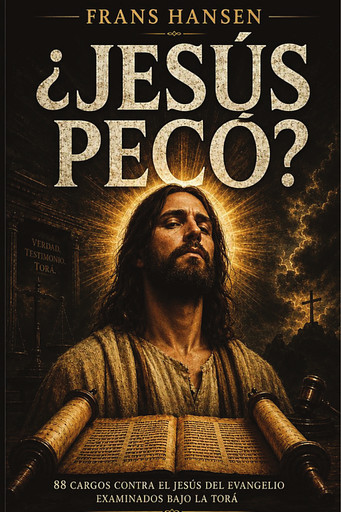
¿JESÚS PECÓ?
88 cargos contra el Jesús del Evangelio examinados bajo la Torá
El cristianismo afirma que Jesús fue sin pecado, cumplió la Torá y posee autoridad divina para definir el camino hacia Dios. Este libro somete esa afirmación a una prueba directa: si el Jesús canónico añade, quita, reemplaza o desplaza mandamientos y categorías de la Torá, la doctrina de su impecabilidad no sobrevive.
En ¿Jesús pecó?, Frans Hansen presenta 88 cargos contra el Jesús de los Evangelios, evaluados bajo un marco de Torá primero. El libro distingue entre acusaciones decisivas, hallazgos fuertes, cargos corroborativos y casos débiles, sin fingir que todas las pruebas tienen el mismo peso. Examina juramentos, mediación exclusiva, carne y sangre, bautismo triádico, autoridad sobre el sábado, perdón de pecados, profecías fechadas, abolición apostólica de la Torá y otros puntos centrales del Nuevo Testamento.
La tesis es simple y devastadora: el cristianismo no necesita perder los 88 cargos para caer. Una sola violación establecida derrota la afirmación universal de impecabilidad. Varios hallazgos adicionales muestran que el problema no es una frase aislada, sino un patrón de reescritura del pacto.
Este no es un libro devocional ni una crítica superficial. Es una acusación estructurada, calibrada y contra-misionera para lectores dispuestos a preguntar si el Jesús del canon cristiano pasa realmente la prueba de la Torá.
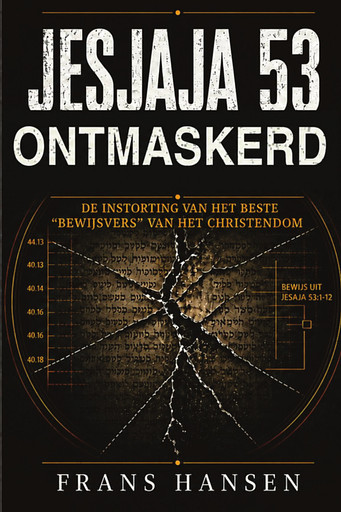
Jesaja 53 ontmaskerd
De instorting van het beste “bewijsvers” van het christendom
Al bijna tweeduizend jaar wordt Jesaja 53 gepresenteerd als het overtuigendste bewijs dat de Hebreeuwse Bijbel Jezus als lijdende Messias voorspelt. Maar wat gebeurt er wanneer dit beroemde hoofdstuk niet vanuit het Nieuwe Testament, maar binnen Jesaja zelf wordt gelezen?
Jesaja 53 ontmaskerd onderzoekt de identiteit van de Knecht vanuit de Hebreeuwse tekst, de omliggende hoofdstukken en het bredere verbondskader van de Tenach. De analyse volgt Jesaja’s eigen aanwijzingen, waarin de Knecht herhaaldelijk Israël wordt genoemd, en onderzoekt de rol van het rechtvaardige overblijfsel als vertegenwoordiger van het volk.
Ook de sterkste christelijke tegenargumenten worden niet ontweken. Begrippen als asham, zera en lamo, de enkelvoudige taal van de passage en de messiaanse toepassingen in Targum Jonathan, Sanhedrin, Ruth Rabbah en Midrasj Tanchuma worden rechtstreeks onderzocht.
Daaruit volgt een beslissend onderscheid: de Messias kan als rechtvaardige Israëliet binnen de collectieve Knecht worden betrokken, zonder dat hij de enige referent is. Een messiaanse toepassing bewijst daarom niet dat Jesaja uitsluitend over de Messias spreekt, dat deze Messias Jezus is, of dat het hoofdstuk de christelijke leer van kruisverzoening bevat.
De christelijke bewijsvoering staat of valt niet met de vraag of Jezus op onderdelen in de passage kan worden herkend. Zij moet bewijzen dat Israël, het rechtvaardige overblijfsel en iedere andere tekstueel mogelijke referent worden uitgesloten.
Dit boek legt bloot waarom dat bewijs ontbreekt.
Wie Jesaja 53 na dit onderzoek opnieuw leest, zal het hoofdstuk niet langer kunnen behandelen als een losstaand christelijk bewijsvers.
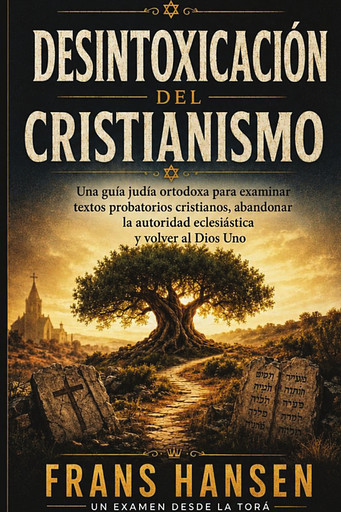
DESINTOXICACIÓN DEL CRISTIANISMO
Una guía judía ortodoxa para examinar textos probatorios cristianos, abandonar la autoridad eclesiástica y volver al Dios Uno
¿Qué ocurre cuando las “profecías” cristianas se leen primero en hebreo, dentro de su contexto original y bajo las reglas de la propia Torá?
Durante siglos, millones de personas han aprendido que la Biblia hebrea apunta de forma inevitable a Jesús, que la Iglesia posee la clave para interpretar a Moisés y a los Profetas, y que rechazar esa lectura equivale a rechazar a Dios. Pero esa conclusión suele depender de traducciones discutibles, textos fuera de contexto y una autoridad eclesiástica asumida antes de ser demostrada.
Desintoxicación del cristianismo somete esas afirmaciones a un examen directo. No parte del Nuevo Testamento ni de credos posteriores. Parte de la Torá, del Tanaj y del principio de que un texto anterior debe comprenderse antes de que otra autoridad pretenda gobernarlo.
Este libro examina preguntas que se evitan:
¿Cumple Jesús las condiciones mesiánicas expuestas por los Profetas? ¿Isaías 53 habla de un mesías divino que muere por los pecados del mundo? ¿El “nuevo pacto” de Jeremías elimina la Torá o la escribe en el corazón de Israel? ¿La Trinidad puede derivarse del hebreo bíblico? ¿Exige el Tanaj un sacrificio humano para obtener perdón? ¿Puede una segunda venida reparar profecías que no se cumplieron en la primera? ¿Tiene la Iglesia autoridad para reemplazar a Israel o declarar caduca la alianza del Sinaí?
Frans Hansen analiza los textos probatorios más utilizados por misioneros y apologistas cristianos: Isaías 7 e Isaías 53, los Salmos 2, 22 y 110, Miqueas 5, Daniel, Zacarías, Malaquías, Jeremías 31 y otros pasajes clave. Cada afirmación se prueba mediante el hebreo, el contexto literario, el público original y el resultado prometido.
El libro también expone los problemas de fondo que sostienen el sistema cristiano: el círculo de autoridad entre Iglesia, canon y cristología; la relectura de Israel como Iglesia; la idea de una Torá “cumplida” hasta quedar sin vigencia; la doctrina del pecado original; la expiación vicaria; la encarnación; y la transferencia de atributos y funciones del Dios de Israel a Jesús.
Pero este no es solo un manual de refutación. También aborda lo que sucede después de que cae la certeza religiosa. Quienes abandonan la autoridad eclesiástica no dejan atrás únicamente una doctrina. Pueden perder comunidad, lenguaje espiritual, costumbres y vínculos familiares. El miedo al infierno, la culpa, el reflejo de volver a Jesús y la sensación de haber traicionado a Dios pueden permanecer incluso cuando los argumentos ya han sido desmontados.
Por eso Desintoxicación del cristianismo acompaña al lector desde la investigación hasta la recuperación. Enseña a separar a Dios de la Iglesia, la fe del miedo, el texto de la presión y la verdad de la costumbre. También ofrece herramientas para reconocer tácticas misioneras, comprobar citas y responder sin discusiones interminables.
La obra está dirigida a cristianos que desean comprobar lo que creen, excristianos que necesitan reconstruir su vida espiritual, judíos que buscan protección frente a la actividad misionera y noájidas que desean servir al único Dios sin apropiarse de obligaciones que pertenecen al pacto de Israel.
El tono es firme porque las afirmaciones son graves. Sin embargo, el objetivo no es despreciar a los cristianos. Las personas no son el blanco; las doctrinas, los métodos y las interpretaciones sí. La sinceridad de un creyente merece respeto, pero no convierte una lectura en verdadera. Una doctrina debe sostenerse por sus fuentes, no por la bondad de quienes la profesan.
Este libro propone una regla sencilla: antes de aceptar que una revelación posterior redefine a Dios, la Torá, el pecado, la expiación, Israel y el Mesías, esa revelación debe demostrar su autoridad conforme a las normas de la revelación anterior.
Lee el hebreo. Recupera el contexto. Comprueba la promesa. Examina la autoridad.
Respeta a las personas. Pon a prueba el sistema. Retorna al único Dios
Más información:
[https://franshansen.com/](https://franshansen.com/)
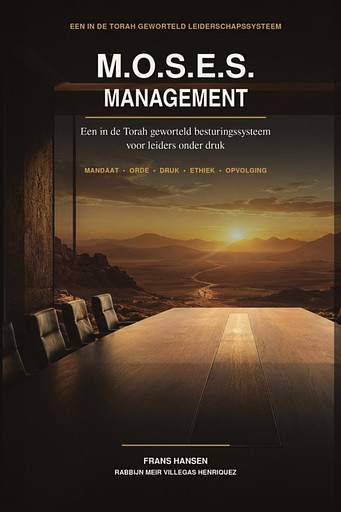
M.O.S.E.S. MANAGEMENT
Een in de Torah geworteld besturingssysteem voor leiders onder druk
Leiderschap faalt zelden in rustige tijden. Het faalt wanneer druk stijgt, mensen trekken aan macht, beslissingen te lang blijven liggen en één persoon onmisbaar wordt.
M.O.S.E.S. Management laat zien hoe leiders gezag kunnen dragen zonder zelf het zwakke punt van hun organisatie te worden. Gebaseerd op de leiderschapsweg van Moshe Rabbeinu vertaalt dit boek de Torah naar een praktisch besturingssysteem voor bestuurders, ondernemers, directeuren, managers, adviseurs en leiders van onderwijs-, publieke en geloofsgedreven organisaties.
Dit boek geeft geen vrome managementtaal. Het geeft een scherp raamwerk voor echte bestuurlijke druk: mandaat, orde, crisis, macht, delegatie, weerstand, cultuur, opvolging en nalatenschap.
Aan de hand van twaalf managementprotocollen en vijf beslissingspoorten helpt M.O.S.E.S. Management u om:
beslissingen te nemen onder druk;
mandaat en verantwoordelijkheid helder te krijgen;
oprichtersafhankelijkheid en leiderschapsknelpunten te herkennen;
macht te begrenzen voordat zij schade veroorzaakt;
beter te delegeren zonder controleverlies;
teams door weerstand en onzekerheid te leiden;
opvolging en continuïteit op tijd te bouwen.
Voor leiders die meer nodig hebben dan strategie, inspiratie of techniek. Voor leiders die willen bouwen met gezag, ethiek, structuur en rekenschap.
M.O.S.E.S. Management is een werkboek voor wie leidinggeven niet ziet als positie, maar als toevertrouwde verantwoordelijkheid.
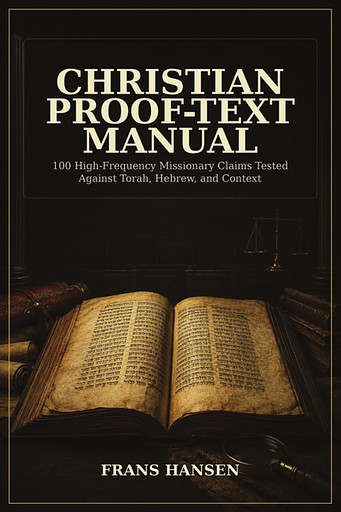
Christian Proof-Text Manual
100 High-Frequency Missionary Claims Tested Against To-rah, Hebrew, and Context
Christian missionaries often win the argument before the Bible is even opened.
A familiar English phrase is quoted. A New Testament writer says “fulfilled.” The conclusion is announced. The Hebrew, the speaker, the audience, the historical crisis, and the rest of the chapter disappear.
Christian Proof-Text Manual puts those missing controls back on the table.
This compact 6×9 reference guide examines 100 high-frequency Christian claims drawn from Isaiah, Psalms, Daniel, Zechariah, Torah, the Gospels, Paul, and Hebrews. Each claim is tested through a disciplined Torah-first method:
What does the Hebrew or source text actually say?
What does the immediate context require?
Would the original audience have heard the Christian meaning?
Does the interpretation preserve Torah-defined covenant categories?
Does the wider Tanakh support the conclusion?
Did the promised public messianic results occur?
Is the claim proved—or read backward into the text?
Every entry includes:
the missionary claim;
the original textual setting;
the Hebrew or source-text control;
the interpretive jump;
the strongest responsible Christian rebuttal;
a Torah-first response;
a complete Seven-Gate ledger;
a fifteen-second answer;
a return question;
a clear verdict;
a source trail for deeper study.
The book does not defeat Christianity by ignoring its strongest arguments. It states them clearly, grants genuine textual contact where it exists, and then tests whether that contact actually proves Jesus, incarnation, Trinity, covenant replacement, human sacrifice, or Torah’s abolition.
It also includes fair-use control cases where New Testament citations preserve the earlier text responsibly. That matters. A method that can acquit a fair use has more authority when it rejects a false one.
Use this manual for:
interfaith study;
live missionary conversations;
Hebrew Bible classes;
church claim analysis;
Jewish and Noahide education;
personal recovery from proof-text theology;
rapid-reference debate preparation.
This is not a book of slogans. It is a courtroom manual.
The New Testament may make the claim. Torah remains the judge.
Read the whole passage. Bring the Hebrew. Test the result.