 Frans Hansen
Powered by Books.by
Frans Hansen
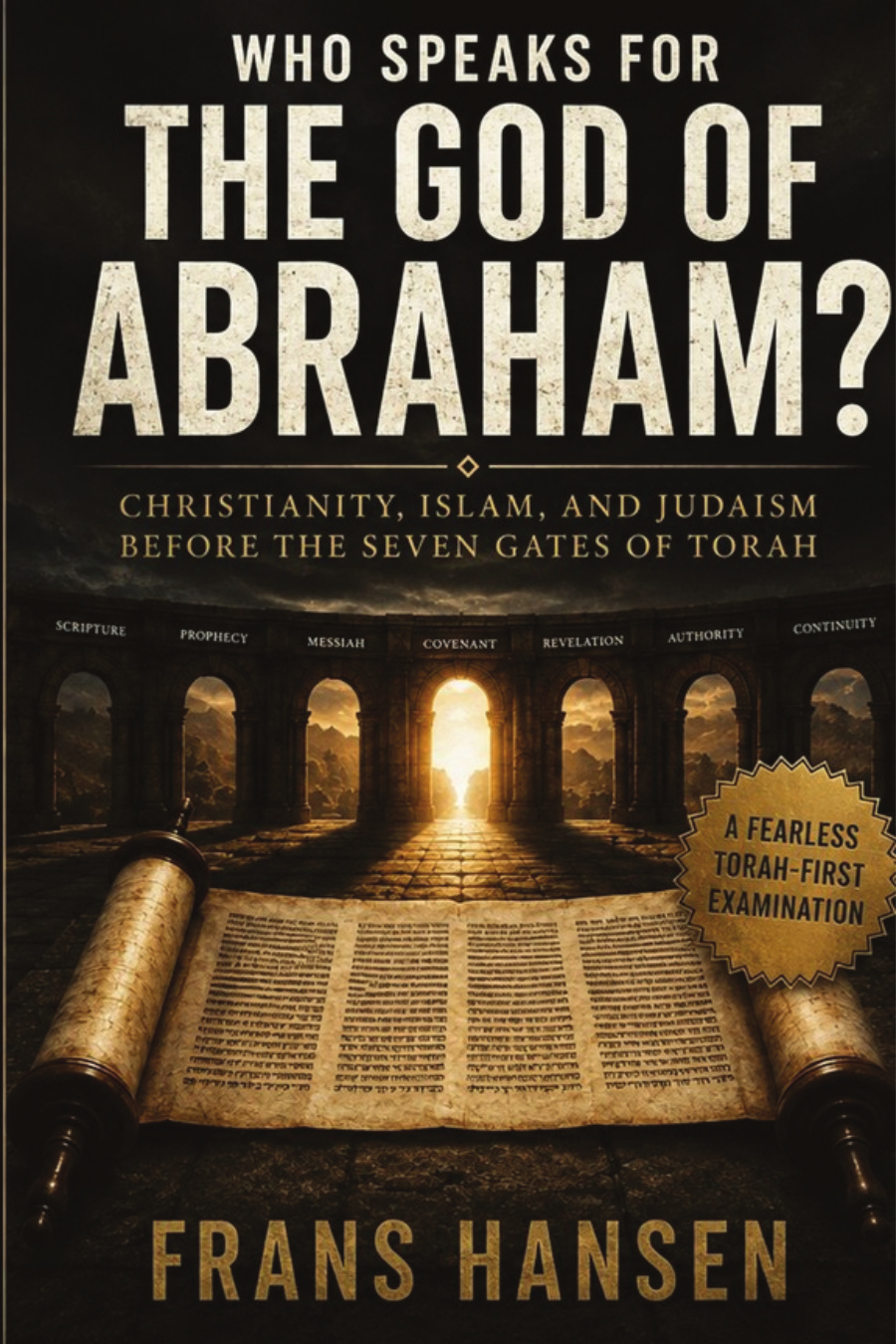
Christianity, Islam, and Judaism Before the Seven Gates of Torah
by Frans Hansen
Three religions claim Abraham. Their claims cannot all be true.
Christianity places Jesus within the divine identity. Islam declares Muhammad the final prophet. Judaism maintains that the Torah remains the governing covenantal authority. Who Speaks for the God of Abraham? tests these competing claims against the texts they invoke.
Using the Seven Gates of Torah, Frans Hansen separates genuine continuity from assumed authority. Direct, evidence-led, and unsparing, this book asks the question interfaith dialogue usually avoids: who has actually established the right to speak for Abraham’s God?
Abraham is claimed by three religions. But a shared name does not create a shared authority.
Christianity declares Jesus to be Israel’s Messiah and part of the divine identity. Islam rejects that claim and presents Muhammad and the Qur’an as God’s final correction and confirmation. Judaism rejects both later authorities and continues to place Torah, Israel, and the Mosaic covenant at the centre of the record.
These positions do not merely differ. They contradict one another.
*Who Speaks for the God of Abraham?* examines which tradition has established the right to define the God invoked through Abraham, Moses, Israel, covenant, prophecy, and revelation. Frans Hansen applies his Seven Gates of Torah to the strongest Christian, Muslim, and Jewish arguments. Each claim is tested against primary texts, historical context, Torah continuity, prophetic criteria, public fulfilment, and the evidence required to establish authority.
Christianity must show why resurrection or apostolic interpretation authorizes worship of Jesus and jurisdiction over Israel’s covenant. Islam must show why Muhammad and the Qur’an may govern the revelation they claim to confirm. Judaism must demonstrate the scope of rabbinic authority without pretending that every later tradition came directly from Sinai.
The book does not hide its Torah-first standard, manufacture equality between historically unequal claims, or treat sincerity as proof. It distinguishes contact from continuity, interpretation from replacement, and religious conviction from demonstrated authority.
For Christians, Muslims, Jews, Noahides, and serious readers of Scripture, this is not another polite celebration of “three Abrahamic faiths.” It is a disciplined examination of the bridge each faith claims to possess.
Before accepting anyone’s claim to speak for the God of Abraham, examine whether that bridge actually exists.
Frans Hansen is an author whose work explores theological questions with clarity, directness, and a strong concern for truth. His writing engages Scripture, doctrine, and religious tradition with a careful but uncompromising voice, aiming to help readers think more deeply about faith, interpretation, and spiritual responsibility.
Frans Hansen is an author whose work focuses on theology, Scripture, and the serious questions that shape faith and religious identity. His writing is marked by clarity, directness, and a strong commitment to examining religious claims carefully rather than accepting inherited assumptions without question. In his books, Hansen engages biblical texts, doctrine, tradition, and spiritual responsibility with a thoughtful but uncompromising voice. He writes for readers who want more than surface-level reflection: people who are willing to test ideas, follow arguments, and consider the consequences of belief. His work often combines theological analysis with a concern for moral seriousness, urging readers to approach faith with honesty, discipline, and a willingness to confront difficult questions. Through his writing, Hansen seeks to encourage deeper understanding, clearer thinking, and a more responsible engagement with Scripture and truth.
Citas, «cumplimiento» y mesianismo frente al texto hebreo
Un examen implacable de Mateo bajo la plomada de la Torá que demuestra por qué sus afirmaciones cristianas no resisten el hebreo, el contexto, la halajá ni las pruebas mesiánicas del Tanaj.
Quotations, “Fulfillment,” and Messianism Tested Against the Hebrew Text
Matthew says “fulfilled.” This book asks the question missionaries avoid: did the Hebrew text ever say what Matthew claims it said?
Citaten, “vervulling” en messianisme getoetst aan de Hebreeuwse tekst
Mattheüs beweert dat Jezus de profeten vervulde, maar wat blijft daarvan over wanneer de Torah de bewijsregels bepaalt?
Chosenness, Judgment, Isaiah’s Servant, Auschwitz, and the Hidden Face of God
A Torah-first investigation of why Israel suffers, what Auschwitz destroys in easy theology, and how faith can survive without blaming the victims.
The Virgin Birth, the Broken Paternal Line, and the Apologetics Built to Bridge It
Christianity calls Jesus the son of David—but can it prove the Davidic line after denying Joseph was his biological father?
His Evidence Tested at the Seven Gates of Torah
Strobel's The Case for Christ built its verdict on small, plausible steps. Frans Hansen asks the question it skips: even if the history holds up, where does Torah say it proves Messiah? Using a rigorous seven-gate method, this book grants Strobel's strongest findings — then shows why they fall short of the theology built on them. Torah-first, source-audited, and fair to the strongest Christian case.
A Torah-First Examination of Evidence That Demands a Verdict
What happens when Evidence That Demands a Verdict is tested by the very Scriptures Christianity claims to fulfill? Frans Hansen separates historical evidence from theological inference and puts prophecy, resurrection, deity, and covenant claims under Torah-first scrutiny. The result is not that Christianity has no evidence, but that the evidence does not carry the verdict the McDowells demand.
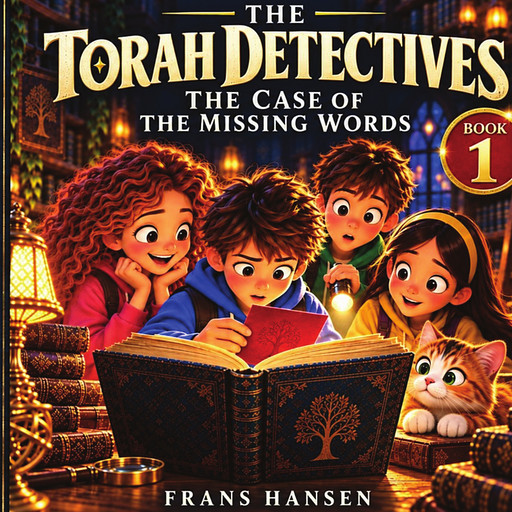
The Case of The Missing Words (Book 1)
Four young detectives, a mysterious bookmark and a quotation with missing words. An illustrated Jewish mystery about checking the evidence, protecting friendships and admitting mistakes. For shared reading at ages 7–9.
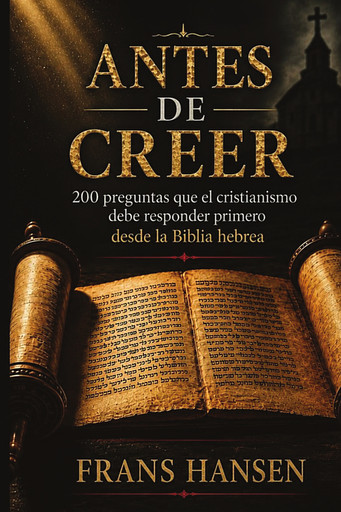
200 preguntas que el cristianismo debe responder primero desde la Biblia hebrea
Has creado la edición española de ANTES DE CREER y ahora necesitas una frase promocional breve para venta online. Corrígeme si buscas algo más académico o más confrontativo.
200 preguntas que obligan al cristianismo a demostrar sus afirmaciones desde la Biblia hebrea antes de apelar al Nuevo Testamento.
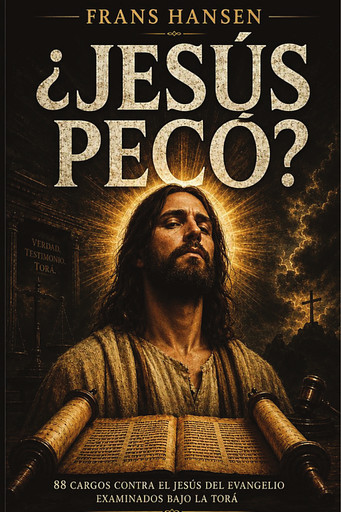
88 cargos contra el Jesús del Evangelio examinados bajo la Torá
¿Jesús pecó? examina 88 cargos contra el Jesús de los Evangelios bajo la Torá y sostiene que una sola violación establecida basta para derrumbar la afirmación cristiana de impecabilidad universal.
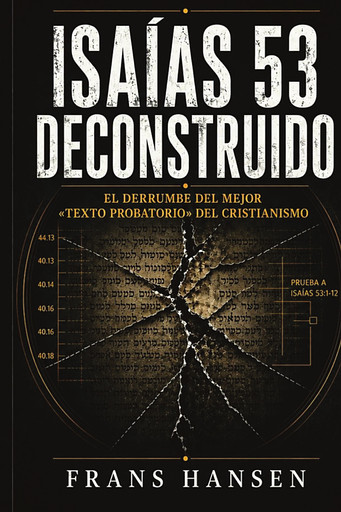
El derrumbe del mejor «texto probatorio» del cristianismo
Isaías 53 no anuncia el reemplazo de Israel: leído en hebreo y dentro de su contexto, expone el error de las naciones y proclama la vindicación del siervo de Hashem.
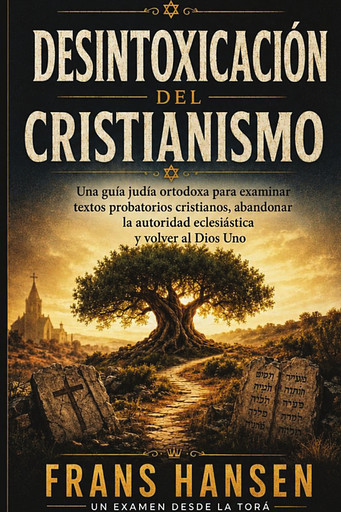
Una guía judía ortodoxa para examinar textos probatorios cristianos, abandonar la autoridad eclesiástica y volver al Dios Uno
¿Qué ocurre cuando las “profecías” cristianas se leen primero en hebreo, dentro de su contexto original y bajo las reglas de la Torá?
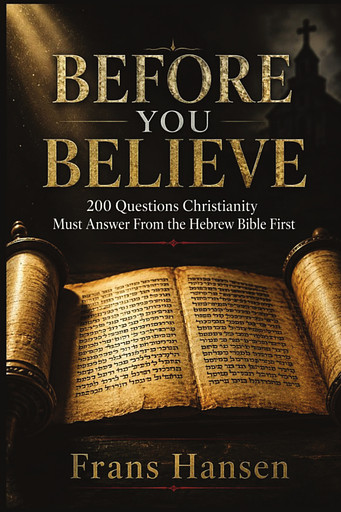
200 Questions Christianity Must Answer From the Hebrew Bible First
Can Christianity prove its claims from the Hebrew Bible first?
Before You Believe puts that question on trial 200 times.
This book tests major Christian doctrines under the standards Christianity says it inherited: Torah, the Prophets, and the Writings. It does not begin with church authority, later creeds, New Testament assumptions, or missionary slogans. It begins where the argument must begin: with the God of Israel, the covenant given to Israel, and the public promises recorded in Tanakh.
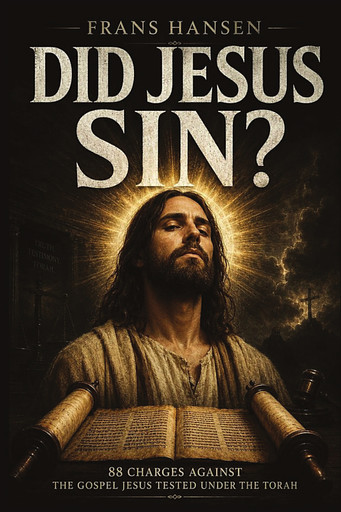
88 Charges Against the Gospel Jesus Tested Under the Torah
A forensic Torah-based case testing whether the Gospel Jesus remains sinless when judged by the legal standards of the Hebrew Bible.
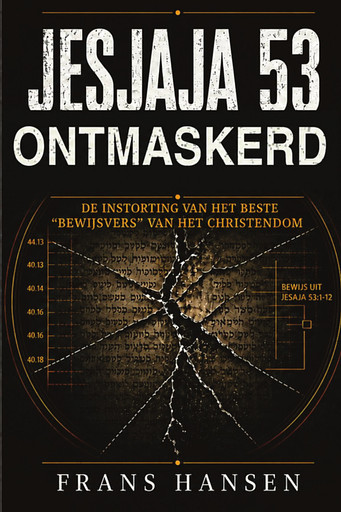
De instorting van het beste “bewijsvers” van het christendom
We brengen de blurb terug tot één krachtige verkoopzin, gericht op de ontbrekende exclusieve bewijskracht voor Jezus. De nadruk ligt op tekst en context; corrigeer mij als u hem agressiever wilt.
Een scherp Torah-eerst onderzoek dat onthult waarom Jesaja 53 geen exclusief bewijs voor Jezus levert.
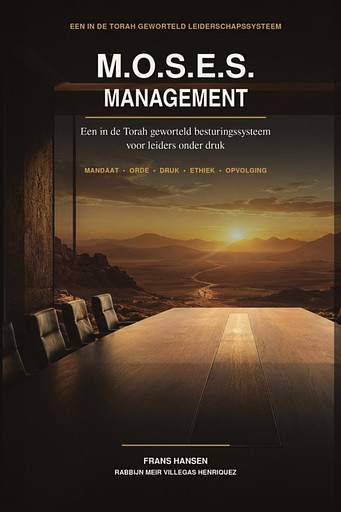
Een in de Torah geworteld besturingssysteem voor leiders onder druk
Een Torah-geworteld managementsysteem voor leiders die onder druk gezag, ethiek, orde en opvolging moeten bewaken.
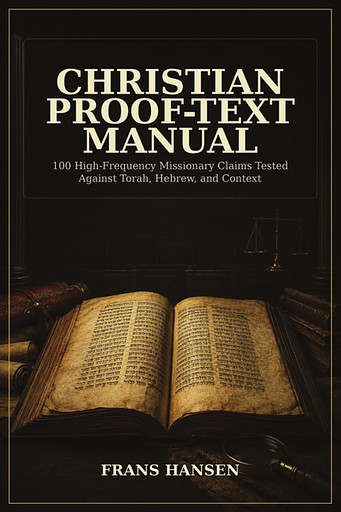
100 High-Frequency Missionary Claims Tested Against To-rah, Hebrew, and Context
A familiar English phrase is quoted. A New Testament writer says “fulfilled.” The conclusion is announced. The Hebrew, the speaker, the audience, the historical crisis, and the rest of the chapter disappear.