Powered by Books.by
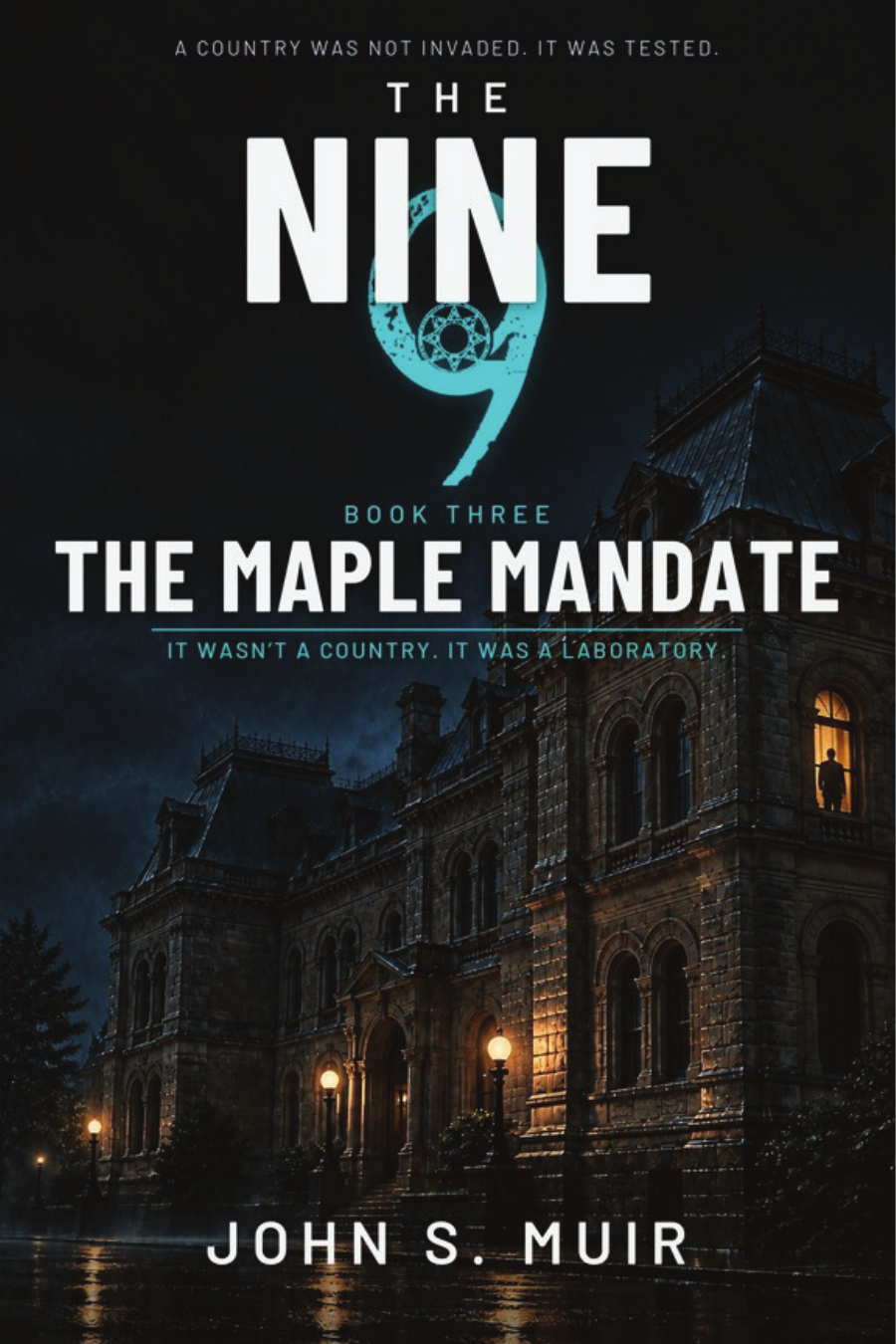
"The American Seat is too loud. We need a quiet, compliant laboratory." Basel, 1917, a finger on a wall map. What followed was not an invasion, or a coup, or anything a historian could afterward put a date on. It was a century of paperwork — ninety-one clarifications to one regulation over sixty years, sixty-two of which widened a tolerance. Not one narrowed one.
"The American Seat is too loud," the man said, in a bank in Basel, in the early months of 1917, with his finger on a wall map. "Too prone to volatile individualist spasms. We need a quiet, compliant laboratory."
The man across the mahogany looked at where the finger had stopped. "Canada? It is a colony. An empty timber yard."
"Precisely."
What followed was not an invasion. It was not a coup or an occupation or anything a historian could afterward put a date on. It was a century of paperwork.
In 2018 the file series came out from under its fifty-year retention stamp: MAPLE MANDATE, CLASS 2 — twenty-nine cartons, catalogued, boxed, shelved and publicly requestable. Nobody asked for it. It sat there for seven years, entirely legal and entirely available, which turns out to be the most effective place to keep a thing.
Nora Lavigne has been a reporter for nineteen years and has one rule she has never broken: the moment a reporter puts herself on the timeline, she stops being a reporter and becomes a witness. She is about to learn what that rule costs.
Because the evidence is not a document anybody hid. It is ninety-one clarifications issued to the same regulation over sixty years. Sixty-two of them widened a tolerance. Not one narrowed one.