Your website is the lobby. Your storefront is the register. A good author website explains who you are. A good book storefront converts readers into customers, handles checkout, and gives you the order data you need to build the next launch.
Your website builds trust, captures newsletter signups, and hosts your media kit. Your storefront handles book details, formats, shipping, payments, and post-purchase communication.
Different jobs, different tools. Here's how the responsibilities break down.
| Job | Author website | Book storefront (Books.by) |
|---|---|---|
| Reader trust | Biography, media, events, newsletter, press kit | Product proof, reviews, buying confidence |
| Book checkout | Needs ecommerce setup or outbound links | Built for book formats, shipping, and payments |
| Print fulfilment | Manual or third-party plugin | Print-on-demand built in (US, UK, EU, AU) |
| Ebook delivery | Manual file hosting or plugin | Instant digital delivery after purchase |
| Customer data | Newsletter signups if configured | Order details and buyer emails from every sale |
| ISBN | Not applicable | ISBN support for eligible Books.by books |
| SEO / content | Blog, long-form content, keyword pages | Product pages and author page |
| Cost | $50–200/yr (hosting + domain) | $99/yr (everything included) |
| Best CTA | Learn, join list, book events | Buy paperback, ebook, bundle, or signed copy |
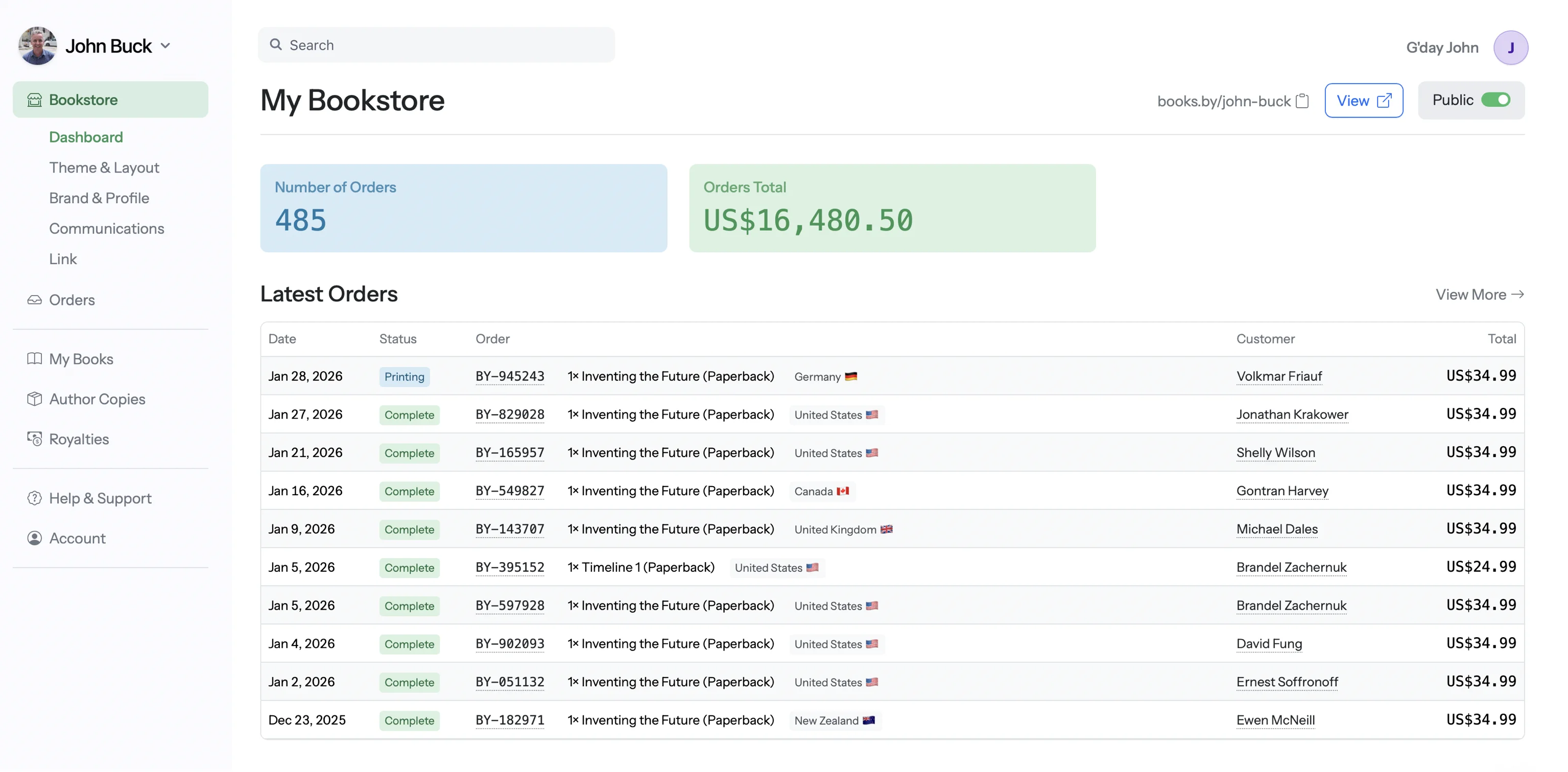
What does it actually cost to sell books through each approach?
You handle setup, maintenance, security updates, and fulfilment integration yourself.
You upload your book, set your price, and share your link. Everything else is handled.
Your website does the content job. Your storefront does the commerce job. Cheaper than building ecommerce into your site.
A Books.by storefront with your author page is enough to start selling. It gives you a professional web presence, a place to send readers, and email capture from day one. Add a full author website later when you have content to publish — a blog, media kit, or event calendar.
Your website hosts reading order guides, character profiles, and newsletter content. Your storefront handles the catalogue — series bundles, format selection, and checkout. Link every "buy" button on your site to your Books.by store.
Your consulting or coaching website shouldn't become a custom ecommerce project just to sell your book. Add a Books.by storefront for the book, link to it from your site, and keep each surface focused on its job.
After a talk, the audience is warm and ready to buy. A QR code should land on a mobile-ready book checkout page — not a generic homepage with a buried buy button. Your Books.by storefront is optimised for exactly this moment.
Every book page on your author website should have a primary "Buy direct" button linking to your Books.by storefront, with a secondary "Also on Amazon" link below it.
Your Books.by author page can link back to your website for readers who want to learn more about you, join your newsletter, or find your blog.
Social media bios, email signatures, podcast show notes, and speaking slides should link to your storefront — not your website. When someone is ready to buy, send them to the checkout, not the lobby.
Most benefit from both. A website is your content home. A storefront is your transactional surface. Together they cost $150–300/year — cheaper than building ecommerce into your website.
Technically yes, but it needs ecommerce plugins, payment processing, tax handling, and fulfilment integration added on top. A dedicated storefront like Books.by handles those natively. Most authors link their website's buy buttons to their storefront.
A simple author website (Squarespace, WordPress) costs $50–200/year. A Books.by storefront costs $99/year. Total: $150–300/year. This is cheaper than adding ecommerce to your website ($200–500+ in plugins alone).
For traffic you generated yourself, lead with your direct storefront. You earn 2–3× more per sale and capture the buyer's email. Include Amazon as a secondary option for readers who prefer it.
Yes. Your Books.by storefront includes an author page with your bio, photo, and book catalogue. Many authors start with just the storefront and add a separate website later when they need blogging, a press kit, or content marketing.