
A pastor once told me: "I've been preaching the same sermon series for fifteen years. Why haven't I written a book?" He finally did — a 40-day devotional — and sold 2,000 copies to his congregation in the first month. No agent. No publisher. Just his message, his people, and a simple way to get the book into their hands.
That's the opportunity in Christian publishing. You likely already have an audience — a congregation, a Bible study group, a ministry network, a podcast following. The question isn't whether people will buy your book. It's whether you'll finally write it.
Why Self-Publishing Makes Sense for Christian Authors
Traditional Christian publishing is brutally selective. The major houses — Thomas Nelson, Zondervan, Baker, Crossway — receive thousands of proposals and publish a few hundred titles per year. Most require authors to have an established "platform": 50,000+ social media followers, a large church, or a speaking ministry. If you're a pastor of a 200-person church with an important message, good luck.
Self-publishing flips this equation. Your book can be available in weeks, not years. You keep creative control over your content. And you earn dramatically higher royalties — money that can support your ministry rather than a publisher's shareholders.
But there's a deeper reason. Many Christian authors I work with have messages that traditional publishers consider too niche, too regional, or too specific. A book for new believers navigating divorce. A study guide for a particular denomination. A devotional written for healthcare workers. These books matter to specific communities, even if they won't sell 100,000 copies. Self-publishing makes them possible.
Types of Christian Books to Self-Publish
Christian publishing isn't one genre — it's many. The format, structure, and marketing approach varies significantly based on what you're writing.
Devotionals
Daily or topical devotionals remain one of the strongest categories in Christian publishing. Readers use them as part of their morning quiet time, often returning to the same devotional year after year or seeking new ones when they finish.
Format: 30-day, 60-day, or 365-day formats are standard. Each entry includes a Scripture passage, a reflection (200-500 words), and often a prayer or action step.
Design consideration: Devotionals benefit from generous margins and space for personal notes. Many readers treat them as journals. Consider paperback rather than hardcover so readers can write in them comfortably.
Pricing: $12.99-$17.99 for paperback devotionals. 365-day devotionals can command $19.99-$24.99 due to their length.
Bible Studies
Bible studies are designed for group use — small groups, Sunday school classes, women's ministry, men's ministry. The structure should facilitate discussion and personal application.
Format: 6-8 week studies are most popular. Each session includes Scripture reading, teaching content, discussion questions, and personal application. Leave space for writing responses.
Companion materials: Consider whether you need a leader's guide (with facilitation tips and answer keys) in addition to the participant workbook. Some authors create video content to accompany the study.
Bulk sales opportunity: Churches often buy 10-50 copies at a time. Building bulk pricing into your strategy is essential. On Books.by, you can create discount codes for group purchases while still keeping far more than you would through wholesale distribution.
Faith Memoirs
Personal testimonies of faith — conversion stories, healing journeys, seasons of struggle and redemption. These connect with readers through vulnerability and the evidence of God's work in ordinary lives.
Structure: Unlike secular memoir (which is often chronological), faith memoirs often work best organized thematically around spiritual lessons. What did you learn? How did you grow? What can readers apply to their own lives?
Writing consideration: Avoid preaching at readers. Let the story carry the message. The most powerful faith memoirs show rather than tell — readers draw their own spiritual conclusions.
Ministry Resources
Leadership books, church planting guides, pastoral resources, ministry training materials. These position you as a thought leader while serving others in ministry.
Audience: Be specific about who you're writing for. "Church leaders" is too broad. "Youth pastors in their first three years of ministry" is a book you can actually write well.
Practical focus: Ministry leaders are busy. They want actionable content, not academic theology. Include frameworks, templates, and step-by-step processes they can implement immediately.
Cover Design for Christian Books
Christian book covers have evolved significantly. The "hands holding a Bible with sunbeam" era is mostly over. Contemporary Christian covers are cleaner, more professional, and often indistinguishable from secular books in the same category.
What Works Now
- Devotionals: Soft, inviting colors. Nature imagery (mountains, water, gardens). Clean typography. Often include visual elements that suggest peace and reflection.
- Bible studies: Bold, clear title. Study-related imagery (ancient manuscripts, pastoral scenes). Must communicate "this is for groups" at a glance.
- Faith memoirs: Similar to secular memoir covers — can use photography, illustration, or typographic designs. Should match the emotional tone of the story.
- Ministry/leadership: Professional, clean, often typographic-focused. Similar to business books. Avoid overly "churchy" imagery if you want crossover appeal.
Common mistakes: Too many visual elements. Overly ornate fonts. Stock photos of people praying. Covers that scream "Christian book" rather than "quality book that happens to be Christian."
Scripture Copyright Considerations
This catches many Christian authors off guard: Bible translations are copyrighted.
If you're quoting Scripture extensively (which most Christian books do), you need to understand the permissions for your chosen translation:
| Translation | Copyright Status | What You Can Quote |
|---|---|---|
| NIV | Copyrighted (Zondervan) | Up to 500 verses without permission, but no more than 25% of your book |
| ESV | Copyrighted (Crossway) | Up to 500 verses; up to 50% of one book of the Bible |
| NKJV | Copyrighted (Thomas Nelson) | Up to 500 verses; must not exceed 25% of your book |
| KJV | Public domain | Unlimited — no restrictions |
| WEB | Public domain | Unlimited — no restrictions |
| NASB | Copyrighted (Lockman) | Up to 500 verses; up to 50% of one book of the Bible |
All copyrighted translations require proper attribution. Include the copyright notice in your front or back matter. If you exceed the fair use limits, you'll need to request formal permission from the publisher — which may involve fees.
Marketing Christian Books: Your Built-In Advantage
Here's what makes Christian publishing different from other genres: you likely already have a community.
If you're a pastor, you have a congregation. If you lead a ministry, you have supporters. If you speak at events, you have an email list. If you have a podcast or YouTube channel, you have subscribers.
This community is your marketing advantage. You don't need to cold-start from zero like most authors do.
Selling to Your Congregation or Ministry
Your church or ministry is your primary market — and direct sales are by far the most profitable way to reach them.
Consider the math. If you sell a $15 paperback through Amazon, you might earn $4-5 after their cut and print costs. If you sell that same book through your own Books.by store, you earn $10+.
Even better: when someone buys through your store, you get their email address. You can follow up with them, nurture that relationship, and let them know when your next book releases.
Practical approaches:
- Church bulletin and announcements: Mention your book during service (appropriately — no one wants a sales pitch from the pulpit). Include the link in church emails.
- Small group launches: Offer your book as a small group study. If ten small groups of eight people each use your study guide, that's 80 sales from one suggestion.
- Table at events: Set up a signing table after services or at church events. Having physical copies available for immediate purchase is powerful.
- Ministry website: Link to your book prominently. Many ministry leaders leave book promotion as an afterthought on their sites.
Beyond Your Church: Wider Distribution
Once you've reached your immediate network, you may want broader distribution.
Amazon: Makes your book discoverable to Christians searching for topics you cover. Useful for long-term passive sales, though royalties are lower.
IngramSpark: Gets your book into the catalog that Christian bookstores like Lifeway and Mardel use to order inventory. Worth doing if bookstore presence matters to you.
Church networks: Denominations, associations, and parachurch organizations often promote books by affiliated authors. Reach out to your network's communications team.
Christian podcasts: Guest appearances on podcasts that serve your target audience. Podcast listeners often buy books discussed on shows they trust.
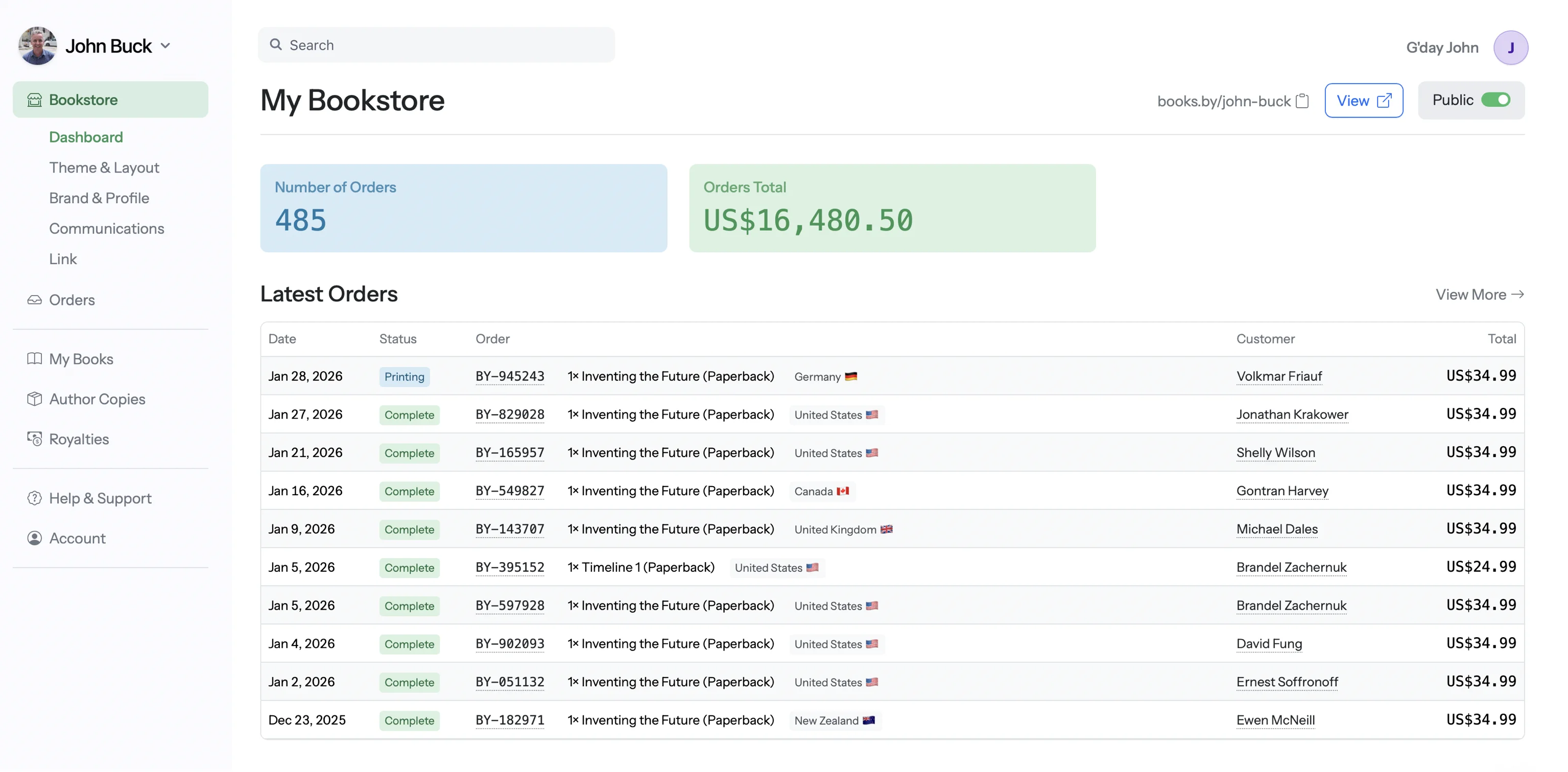
Sell Directly to Your Congregation
Build your own bookstore, offer bulk ordering for small groups, and keep 100% of royalties. No content restrictions. $99/year, unlimited books.
Bulk Orders: The Church Advantage
Here's something unique to Christian publishing: bulk sales are common. Churches buy copies for small group studies. Ministries stock books for events. Organizations purchase resources for training.
With Books.by, you can handle bulk orders profitably:
- Create discount codes (e.g., "GROUP10" for 10% off orders of 10+ books)
- Sell directly — you keep far more per book than you would through wholesale distribution
- Ship to one address for group pickup (reducing shipping costs)
- Use print-on-demand so you never carry inventory
A church buying 30 copies of your $15 study guide represents $450 in revenue. If you're earning $10 per book on direct sales, that's $300 profit. Through traditional distribution, you might earn $90-120. The math speaks for itself.
Content Considerations for Christian Publishers
Editorial Sensitivity
Christian readers expect theological accuracy. Depending on your audience, this may mean:
- Careful exegesis of Scripture passages
- Awareness of denominational distinctives (if you're writing for a specific tradition)
- Sensitivity to theological disagreements (if you're writing for a broad Christian audience)
Consider having a theologically trained reader review your manuscript before publishing. A pastor or seminary-trained friend can catch issues that a secular editor would miss.
Platform Control: Why It Matters
Some Christian authors have experienced challenges with major platforms over content that addresses social issues from a Biblical perspective. While outright censorship is rare for mainstream Christian content, the concern is legitimate.
When you sell through your own store, you control the platform entirely. No retailer can delist your book or refuse to carry it. This matters if your message is prophetic, countercultural, or addresses controversial topics.
Pricing Strategy for Christian Books
Christian readers expect fair pricing — neither suspiciously cheap (which signals low quality) nor premium (unless the content warrants it).
| Book Type | Paperback Price | Ebook Price |
|---|---|---|
| Daily devotional (30-60 days) | $12.99–$15.99 | $7.99–$9.99 |
| Annual devotional (365 days) | $17.99–$24.99 | $12.99–$14.99 |
| Bible study workbook | $14.99–$19.99 | $9.99–$12.99 |
| Faith memoir | $14.99–$18.99 | $8.99–$11.99 |
| Ministry/leadership | $16.99–$24.99 | $11.99–$14.99 |
For small group bulk purchases: Consider offering 15-20% discount on orders of 10+ copies. You can still make strong margins on direct sales while making it easier for churches to adopt your study.
Calculate Your Royalties
See how much more you could earn selling Christian books directly through Books.by compared to Amazon KDP.
Frequently Asked Questions
Absolutely. Many successful Christian authors self-publish. Traditional houses are highly selective and often require an existing platform. Self-publishing lets you get your message out immediately, maintain creative control, and keep far higher royalties.
Use IngramSpark for distribution to chains like Lifeway and Mardel. You'll need a professional cover, proper ISBN, and standard trade discount. For local Christian bookstores, approach them directly — many support local authors, especially those connected to area churches.
Modern Bible translations are copyrighted. Most allow quoting up to 500 verses without permission (with proper attribution). The KJV and WEB are public domain with no restrictions. Check the specific requirements for your chosen translation.
30, 60, 90, or 365-day formats are standard. Each entry typically includes Scripture, a short reflection (200-500 words), and a prayer or action step. Use 5.5" x 8.5" or 6" x 9" for print, and leave space for journaling.
Direct sales are most profitable. Set up a Books.by store, promote in bulletins and church communications, and offer bulk ordering for small groups. You keep 100% of royalties and can offer group discounts while still earning more than through Amazon.
Yes — this is one of the best strategies. Include discussion questions, create a companion guide, and market to small group leaders. A 6-8 week study creates built-in bulk sales opportunities and word-of-mouth within church networks.
Amazon and major retailers rarely censor mainstream Christian content. If you're concerned about addressing controversial topics from a Biblical perspective, selling through your own store (like Books.by) gives you complete control — no platform can reject or delist your book.
Paperback devotionals: $12.99-$17.99. Bible studies: $14.99-$19.99. Faith memoirs: $14.99-$18.99. Ministry/leadership: $16.99-$24.99. Consider bulk discounts for churches buying 10+ copies for small groups.