
There's something peculiar about mystery readers that took me years to fully appreciate: they don't just read books — they collect detectives. They'll follow the same PI, the same amateur sleuth, the same FBI agent across twenty books and a decade of their reading life. They remember details the author forgot. They catch continuity errors. They care.
This presents an extraordinary opportunity for self-published authors. Where traditional publishers see risk in committing to a long series, you can plan for exactly that kind of extended relationship with your readers. Where bookstores struggle to stock deep backlists, your own store can offer every title you've ever written. Where Amazon keeps your readers anonymous, direct sales give you their emails — and a way to announce every new case your detective takes on.
The genre does demand specific craft. Mystery readers have consumed hundreds of books. They know the conventions intimately. They'll forgive experimental structure but never a cheat ending. Getting both the writing and the business right is what separates sustainable careers from one-book experiments.
The Mystery Reader: Who They Are and How They Buy
Before we talk about covers and pricing, you need to understand who's actually reading these books. The mystery and thriller audience has distinct demographics and buying behaviors that shape everything else.
They're voracious. The average mystery reader consumes 1-2 books per week. They're not sampling genres — they're devoted to this one. When they finish a book they love at 2am, they're buying the next one before they fall asleep.
They're older, on average. The core mystery demographic skews 45+, though thrillers pull younger with action-oriented subgenres. This audience remembers buying physical books and still prefers them for many — paperback sales remain strong here when other genres have gone fully digital.
They're series-loyal. A reader who loves book one will often buy books two through twelve within a month. I've watched Books.by authors gain a single new reader and see fifteen sales follow. This is the backlist power that makes the genre so attractive for long-term thinking authors.
They're community-oriented. Mystery readers gather in Facebook groups, subreddits, library clubs, and convention circuits. Word of mouth is powerful. A recommendation from a trusted voice can move hundreds of copies.
Understanding Subgenres: Crucial Distinctions
Mystery and thriller is not one market — it's a constellation of distinct subgenres, each with different readers, conventions, and expectations. Misidentifying your subgenre means marketing to the wrong people.
Cozy Mysteries
Amateur sleuths, small-town settings, minimal violence (usually off-page), often themed around a hobby or profession (knitting, baking, bookstores, cats). The detective solves cases through observation and wit, not forensics or gunfights. These readers want comfort, charm, and a satisfying puzzle.
Key demographic: Women 45+, extremely voracious series readers
Police Procedurals
Professional investigators working cases through institutional channels. Realistic forensics and procedure. Often gritty and urban, featuring morally complex protagonists. Series typically follow a detective or team across cases while developing ongoing personal storylines.
Key demographic: Readers who value authenticity and detail, mixed gender
Psychological Thrillers
The threat is internal, domestic, or relational rather than external. Unreliable narrators are common. Tension through dread and paranoia rather than action. These often work as standalones, each exploring a different fractured psyche.
Key demographic: Literary crossover readers, book club audiences, women 25-55
Action Thrillers
Fast pacing, high stakes, often involving espionage, military operations, or international intrigue. Protagonists with specialized skills (ex-military, assassins, spies). Physical danger central to the narrative. Series with recurring heroes dominate.
Key demographic: Male-skewing, wide age range
Series vs. Standalone: The Strategic Choice
Let me be direct: series overwhelmingly dominate mystery and thriller sales. If you're writing in this genre and not planning for series, you're making a deliberate choice to work harder for less money.
The math is simple. When a reader finishes a standalone, you have to find a new reader to make another sale. When a reader finishes book one of a series, they often buy books two through five before the week ends. Every marketing dollar you spend to acquire that reader multiplies across your backlist.
But series require planning. Some guidelines:
Design your detective for longevity. Your protagonist needs room to grow across many books without resolving their core tensions too quickly. A character whose central wound heals in book two has nowhere to go in book seven.
Write complete stories, not cliffhangers. Each book should resolve its central mystery satisfyingly. Readers hate feeling manipulated. The series hook comes from wanting to spend more time with the character, not from needing resolution of a dangling plot.
Consider interconnected standalones. Some authors write books that share a world (a town, a forensics team, a law firm) but feature different protagonists. This gives variety while maintaining backlist momentum.
The exception: psychological thrillers and domestic suspense often work better as standalones. Each book explores a unique situation; readers don't expect to follow a character across multiple psychological breakdowns.
Cover Conventions: Visual Signals That Sell
Mystery and thriller covers are highly codified. Readers make split-second decisions based on whether your cover matches their expectations. Here's what works in each subgenre:
| Subgenre | Visual Style | Typography | Color Palette |
|---|---|---|---|
| Cozy Mystery | Illustrated, whimsical, themed elements (cats, cupcakes, bookshops) | Playful serif or script | Bright, cheerful |
| Police Procedural | Urban scenes, crime tape, gritty textures | Bold sans-serif | Dark, desaturated |
| Psychological Thriller | Isolated figures, blurred faces, abstract imagery | Clean, often distressed | Cool blues, grays |
| Domestic Suspense | Houses, silhouettes (often women), suburban scenes | Elegant but ominous | Muted, atmospheric |
| Action Thriller | Silhouetted heroes, weapons, explosions, international locations | Military/stencil style | High contrast, reds |
The most common mistake: covers that are "too literary." A tasteful, minimalist cover that would work for literary fiction will be invisible in thriller charts. Your cover needs to signal genre instantly at thumbnail size.
Pacing: The Non-Negotiable Skill
If there's one craft element that separates successful mystery and thriller authors from struggling ones, it's pacing. Readers come to this genre specifically for the tension, the momentum, the need to keep turning pages.
For thrillers, this means:
- Short chapters — often under 2,000 words, sometimes under 1,000
- Chapter-ending hooks — questions raised, threats looming, discoveries pending
- Escalating stakes — each act should raise the danger level
- Ticking clocks — deadlines, countdowns, time pressure
For mysteries, you can breathe more, but timing of revelations is critical. Readers are actively trying to solve the puzzle. Reveal too much too early and the middle sags. Reveal too late and they feel cheated.
The brutal edit test: for every scene, ask whether it advances plot, deepens character, or plants/pays off clues. If it does none of these, cut it. Mystery readers notice padding immediately.
Pricing Strategy: The First-in-Series Funnel
The series model creates a specific pricing opportunity. Your first book isn't primarily a revenue source — it's a reader acquisition tool. The money comes from books two through ten.
| Product | Price Range | Strategic Purpose |
|---|---|---|
| First-in-series ebook | Free – $2.99 | Reader acquisition funnel |
| Later series ebooks | $4.99 – $6.99 | Primary revenue |
| Ebook box sets (3+ books) | $7.99 – $12.99 | Value for binge readers |
| Individual paperbacks | $12.99 – $16.99 | Collector/gift market |
| Paperback box sets | $29.99 – $44.99 | Premium superfan offering |
Making book one free (permafree) or deeply discounted ($0.99) can dramatically accelerate reader acquisition. Yes, you sacrifice that first sale. But a reader who gets book one free and loves it might buy books two through eight at full price within days. The math works.
Calculate Your Royalties
See how much more you could earn selling mystery & thriller books directly through Books.by compared to Amazon KDP.
Building Direct Reader Relationships
Here's the uncomfortable truth about Amazon: when someone buys your book there, you never learn who they are. Amazon guards that customer relationship fiercely. You can't email them about your next release. You can't offer them exclusive content. You're dependent on Amazon's algorithm to show them your new book when it launches.
Direct sales change this equation entirely.
When a reader buys from your Books.by store, you get their email address (with permission). You can contact them directly when the next book in the series drops. You can offer loyal readers early access, signed bookplates, or exclusive short stories.
This matters enormously for series-driven genres like mystery and thriller. Your back catalog is valuable precisely because readers want everything. But they need to know it exists — and know when new entries come out.
The funnel for mystery authors:
- Acquire readers through promotions, ads, or word of mouth
- Offer a reader magnet (prequel novella, short story) for email signup
- Sell directly from your own store when possible
- Announce every new release directly to your list
- Offer series bundles and complete collections
On a $4.99 ebook sold through Amazon, you net roughly $3.49. On Books.by, you net $4.69 after payment processing. That's $1.20 more per book. Across a 10-book series with a healthy readership, direct sales add up to thousands of dollars in additional income — plus the invaluable customer relationship.
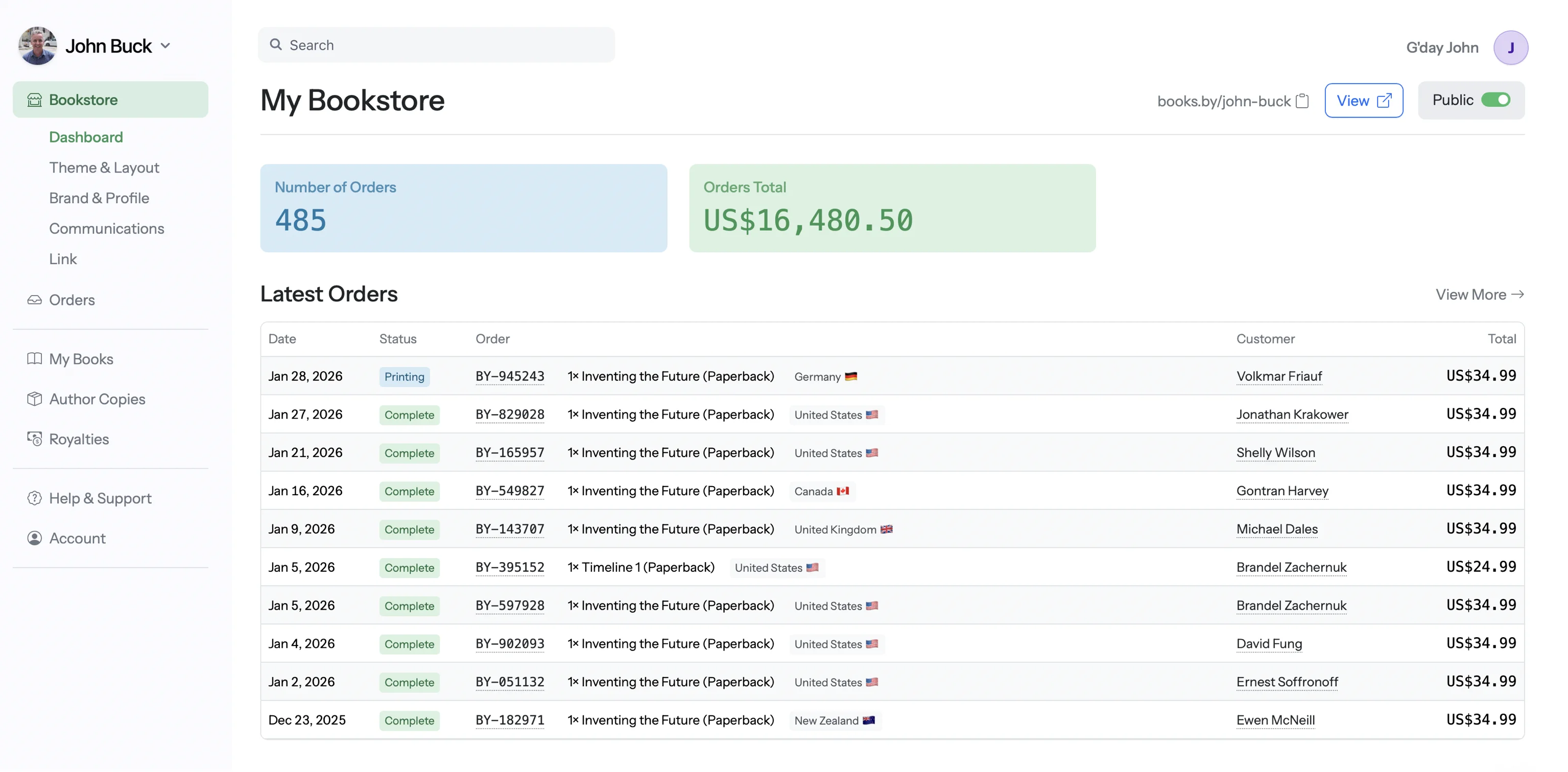
Sell Your Series Directly to Readers
Build your own bookstore, offer series bundles, and capture customer emails. Keep 100% of royalties on every sale. $99/year for unlimited books.
Marketing That Actually Works for Mystery Authors
Mystery readers are newsletter people. They subscribe to BookBub, Fussy Librarian, and genre-specific recommendation lists. They follow authors they love and open those emails. This makes email marketing disproportionately effective compared to other genres.
Tactics That Deliver
BookBub Featured Deals: The gold standard. A BookBub deal on a free or $0.99 first-in-series can generate thousands of downloads and significant read-through to later books. The catch: acceptance rates are low (under 20%), and you need reviews and a polished package to qualify.
Newsletter Swaps: Partner with other mystery authors to cross-promote to each other's lists. Your reader who just finished a cozy mystery wants another cozy mystery. Match subgenres carefully.
Stacked Promotions: Coordinate a price drop with multiple newsletter promotion services on the same day. The combined effect can push books onto bestseller lists, creating additional algorithmic visibility.
Reader Magnets: A prequel novella or short story featuring your detective, offered free for email signup. Place the offer in the back matter of every book. Mystery readers who enjoyed the main book will often sign up to get more of that character.
What Often Fails
Social media as primary driver: Mystery readers are generally less social-media-active than romance or YA readers. Instagram and TikTok can supplement, but they rarely drive significant sales alone.
General book marketing advice: Most "how to market your book" content is written for nonfiction or literary fiction. Mystery has its own ecosystem. Apply general advice cautiously.
Print Considerations for Crime Fiction
Mystery readers still buy print at higher rates than many genres. Part of this is demographic (older readers often prefer physical books), and part is the collector mentality — readers want the complete set on their shelf.
For Books.by authors, this creates opportunity:
- Consistent spine design — When books sit together on a shelf, matching spines create visual appeal and signal "series" immediately
- Series box sets — Printed sets of books 1-3 or complete series make excellent gifts and premium offerings
- Signed editions — Mystery readers value signed copies; offer bookplates or signed books through your direct store
Print costs for a typical mystery novel (80,000 words, roughly 300 pages, B&W interior) run approximately $6.06 through Books.by. At a $14.99 retail price, your margin is substantial — and 100% of it stays with you.
Frequently Asked Questions
Series overwhelmingly dominate mystery and thriller sales. Readers who love your detective or protagonist want more cases, not a new character. Write book one so it works as a complete story but leaves room for the character to continue. The exception: psychological thrillers and domestic suspense often work better as standalones.
Cozy mysteries typically run 60,000-80,000 words. Traditional mysteries hit 70,000-90,000 words. Thrillers range from 80,000-100,000+ words. Let the story dictate length while staying within genre expectations — padding destroys the pacing these readers demand.
Cozies feature illustrated, whimsical covers with bright colors. Procedurals use dark, gritty imagery with bold typography. Psychological thrillers show isolated figures or abstract imagery. Domestic suspense features houses and silhouettes. Your cover must immediately signal your specific subgenre.
Critical — it's arguably the defining characteristic. Thrillers need short chapters, frequent cliffhangers, and escalating stakes. Every scene must advance plot, deepen character, or plant/payoff clues. Ruthlessly cut anything that doesn't earn its pages.
Ebooks: $0.99-$2.99 for series starters, $4.99-$6.99 for later books. Print: $12.99-$16.99 depending on length. Consider making book one permanently free or deeply discounted as a reader funnel — the money comes from books two through ten.
Email list is paramount — mystery readers are highly newsletter-responsive. BookBub Featured Deals, newsletter swaps with other mystery authors, and stacked promotions work well. Reader magnets (prequel novellas) build lists effectively.
Yes, and you should. Mystery readers prefer complete series or multi-book bundles. With Books.by, you create bundles, offer discounts, and sell directly while keeping 100% of royalties. You also capture customer emails for future releases.