
Horror doesn't top the bestseller charts. It doesn't dominate BookTok (though it's growing there). It's not the genre venture capitalists talk about when they describe the creator economy.
But horror has something most genres don't: readers who identify as horror readers. They don't just read horror — they're part of the horror community. They follow horror podcasts, attend horror conventions, collect horror books like artifacts. When they find an author they love, they don't just buy the next book. They buy the limited edition, the signed copy, and the hardcover they already own in paperback.
That kind of reader loyalty changes the business model entirely.
Horror's Subgenres: Each One Is a Different Market
Horror is not monolithic. The reader who loves psychological horror and the reader who loves splatterpunk might as well be in different genres. Understanding where your work sits matters more in horror than almost any other genre.
Psychological Horror. Unreliable narrators, creeping dread, ambiguity about what's real. Think Shirley Jackson, Paul Tremblay. These readers want to be unsettled, not shocked. They overlap with literary fiction readers and are willing to pay more for trade paperbacks. Novels run 70,000-90,000 words.
Cosmic/Lovecraftian Horror. Unknowable entities, existential dread, the insignificance of humanity. A dedicated niche with passionate readers. Novellas (25,000-45,000 words) work exceptionally well here — the form suits the genre's sense of disorientation. Small press publishers like Nightscape and Tenebrous thrive in this space, which tells you the audience is real and paying.
Supernatural Horror. Ghosts, demons, hauntings, cursed objects. The broadest horror subgenre and the most accessible to mainstream readers. This is where you'll find the most overlap with thriller readers. Novels run standard length (65,000-85,000 words) and series potential is strong.
Slasher/Splatterpunk. Graphic, visceral, transgressive. A smaller but intensely loyal audience. These readers seek out indie authors specifically because traditional publishers shy away from extreme content. If this is your niche, lean into it — half-measures please nobody.
Folk Horror. Rural isolation, pagan traditions, nature as threat. Surging in popularity thanks to films like Midsommar and The Witch. Readers want atmosphere above all else. Covers featuring forests, stone circles, and isolated structures perform well.
Why Horror Thrives on Direct Sales
Here's something I've observed across thousands of Books.by authors: horror authors have the highest direct-sales-to-Amazon ratio of any genre. More than romance. More than literary fiction. More than non-fiction.
Why? Three reasons:
1. Community-driven discovery. Horror readers don't browse Amazon categories to find new books. They listen to podcasts (This Is Horror, The NoSleep Podcast, Horror Vanguard), follow creators on social media, and take recommendations from other horror fans. When someone recommends your book with a link to your store, readers click. They're already sold — the community did the selling.
2. Collector mentality. Horror readers collect books the way vinyl enthusiasts collect records. They want the signed edition, the limited print run, the variant cover. Amazon can't offer any of that. Your own store can.
3. Content restrictions. Amazon has content guidelines that disproportionately affect horror. Extreme horror, splatterpunk, and certain supernatural content can trigger Amazon's review process, resulting in books being delisted or suppressed in search. Your own store has no such restrictions.
The Royalty Math for Horror
Horror has a quirk that almost no other genre has: readers binge backlists. Someone who discovers your work in October will buy four or five of your titles before Halloween. Romance and thriller readers binge too, but horror's binge culture is unusually intense — fans seek out everything an author has written, including the early work.
That means royalty per book matters less than royalty per author. The right comparison isn't "what do you earn on one $15.99 paperback?" — it's "what does a backlist of 10 horror titles earn you over a year?"
And that's just paperbacks at standard prices. Add in limited editions — a numbered run of 100 signed hardcovers at $44.99 nets you roughly $34 per copy on Books.by, which is $3,400 of revenue that simply does not exist on Amazon because Amazon does not do limited editions.
The compounding effect is what most horror authors miss. Every new release lifts the backlist. A reader who buys your new novella also buys your two-year-old novel, your short story collection, and the small-press chapbook you put out before you knew what you were doing. Each of those backlist sales is twice as valuable on a direct platform.
Plug your own catalogue size and pricing into the royalty calculator to see what your specific backlist is worth on each platform.
Cover Art: Horror's Make-or-Break Element
In most genres, a cover needs to look professional. In horror, a cover needs to make someone feel something. Dread, unease, morbid curiosity — the cover is doing emotional work before the reader opens the book.
The best horror covers share a few traits:
- Suggestion over exposition. Don't show the monster. Show the shadow it casts, the door it's behind, the aftermath of its presence. The reader's imagination is scarier than anything you can depict.
- Negative space. Horror covers use emptiness deliberately. A vast dark space with a small figure. A nearly blank cover with a single unsettling detail. The void is the point.
- Muted or monochromatic palettes. Black, deep red, desaturated greens and blues. Avoid bright colors. The exception is splatterpunk, which often uses stark red-on-black or neon accents.
- Typography as mood. Serif fonts for literary/psychological horror. Distressed or hand-drawn fonts for supernatural. Bold, jagged fonts for splatterpunk. The font choice signals the subgenre before the reader processes the imagery.
Budget $400-$800 for a custom horror cover. This is one genre where AI-generated or stock-photo covers are immediately obvious and actively hurt sales. Horror readers are visual — they'll notice.
Building Your Horror Community
Horror is a genre where community building directly translates to book sales. The readers are already gathering — you just need to show up.
Podcasts. Horror has an unusually strong podcast ecosystem. Getting interviewed on horror podcasts (even small ones with 500 listeners) converts well because podcast listeners are engaged and trust the host's recommendations. Pitch yourself as a guest once you have a book out.
Substack and newsletters. Horror readers will subscribe to a Substack where you post short fiction, behind-the-scenes writing notes, or curated horror recommendations. This builds your mailing list organically. When your next book launches, these subscribers are your first buyers.
Horror conventions. Events like StokerCon, NecronomiCon, and regional horror cons are gold. Bring physical books, offer to sign them, and connect with other authors. The horror community is small enough that showing up repeatedly builds genuine name recognition.
Reddit and Discord. r/horrorlit is active and supportive of indie authors. Horror Discord servers are growing. Participate genuinely — horror fans have excellent radar for self-promotion disguised as community engagement.
Novellas and Short Fiction: Horror's Secret Weapon
Most genres penalize short works. Horror rewards them.
Novellas (20,000-40,000 words) are a legitimate format in horror — not a lesser product. Some of the most celebrated horror works are novellas: The Hellbound Heart (Clive Barker), The Ballad of Black Tom (Victor LaValle), Ring Shout (P. Djèlí Clark). Horror readers accept and actively seek out shorter works.
This changes the economics. A novella takes 4-8 weeks to write versus 4-8 months for a full novel. You can publish more frequently, test subgenres faster, and build your backlist quickly.
Price novellas at $2.99-$3.99 for ebook and $9.99-$12.99 for a slim paperback. Use our page count calculator to see how a 30,000-word novella translates to page count and printing costs.
Short story collections also sell in horror — a rarity among genres. A well-curated collection with a strong theme (body horror stories, haunted house stories, cosmic dread) can sell as well as a novel if packaged correctly.
Pricing Horror Books
| Format | Price Range | Notes |
|---|---|---|
| Ebook (novella) | $2.99–$3.99 | Don't price below $2.99 — you lose Amazon's 70% tier |
| Ebook (novel) | $4.99–$5.99 | Horror readers pay slightly more than thriller readers |
| Paperback | $13.99–$16.99 | Standard range for 250-350 page books |
| Hardcover | $22.99–$29.99 | Horror readers buy hardcovers at above-average rates |
| Limited/signed edition | $29.99–$59.99 | The direct-sales sweet spot — horror fans collect these |
Limited editions deserve special attention. A numbered run of 100-200 signed copies with a variant cover, printed on higher-quality paper, priced at $39.99-$49.99 — this is a proven revenue stream for horror authors with an established readership. You can't do this through Amazon. You can through your Books.by store.
Sell Horror Direct. No Content Restrictions.
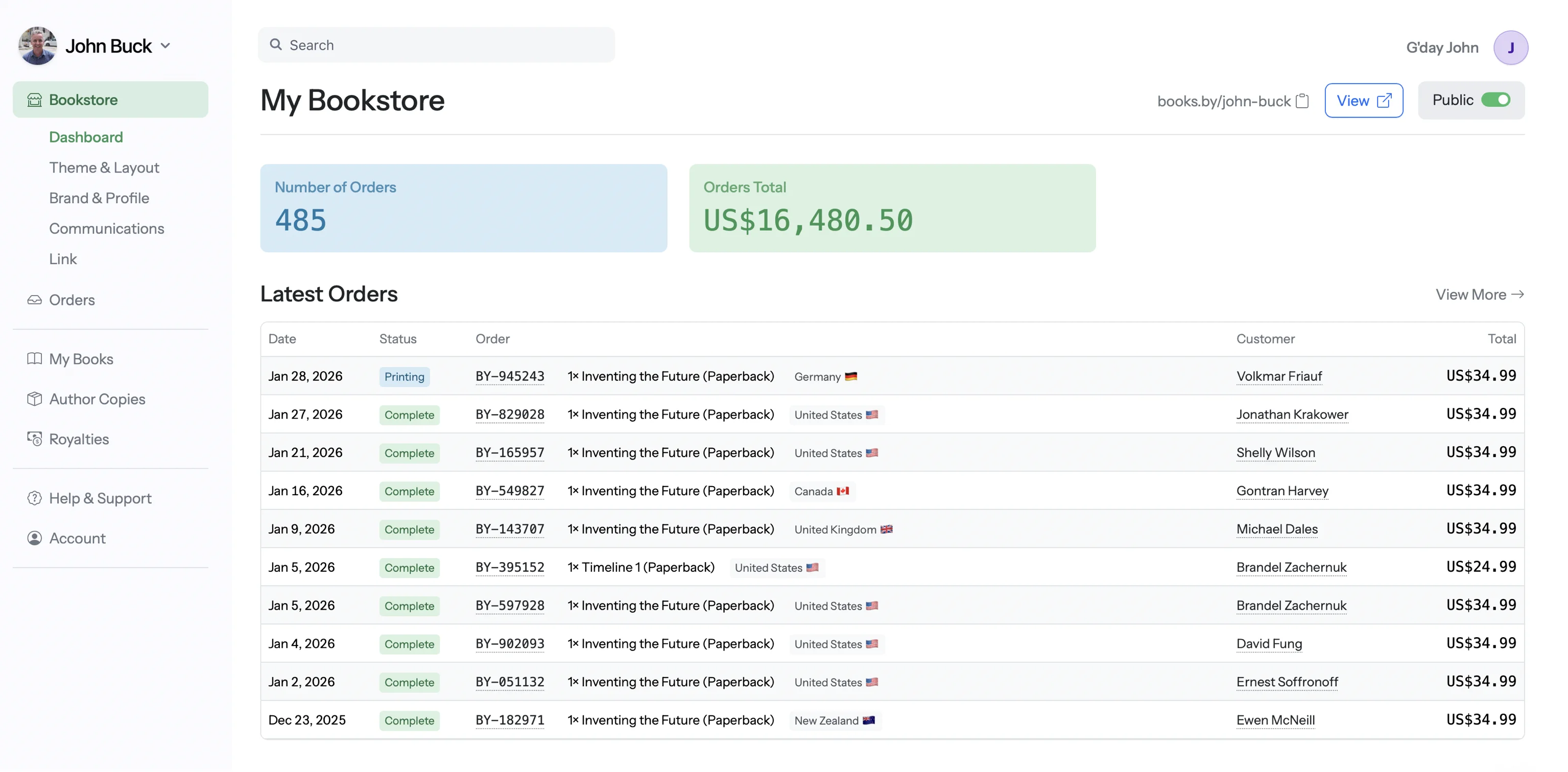
Your own bookstore, limited editions, signed copies, 100% royalties. Horror readers want to buy from you — give them the store. Starting at $99/year.
Frequently Asked Questions
Yes. Horror is a smaller market but fiercely loyal. Mid-tier indie horror authors with 5-10 books earn $1,000-$5,000/month. Less competition, stronger reader loyalty, and horror fans buy physical books and special editions at higher rates. Direct sales are disproportionately effective.
Psychological horror (dread, unreliable narrators), cosmic/Lovecraftian (unknowable entities), supernatural (ghosts, demons), slasher/splatterpunk (graphic violence), folk horror (rural, pagan), and creature horror (monsters, cryptids). Each has distinct reader expectations for tone, pacing, and content intensity.
Critical. Horror covers need to evoke dread through suggestion, not graphic imagery. Dark palettes, negative space, unsettling composition. Budget $400-$800 for custom art. AI-generated or stock-photo covers are immediately obvious in horror and actively hurt sales.
Horror is one genre where going wide or direct-first often outperforms KU. Horror readers are community-driven discoverers, collectors who want signed/limited editions, and Amazon's content restrictions disproportionately affect horror. Direct sales through your own store can be more profitable than KU page-reads.
Horror is flexible. Novellas (20,000-40,000 words) are a legitimate format. Novels run 60,000-80,000 words. Cosmic horror can push to 100,000. Short story collections also sell. This flexibility lets you publish more frequently and test subgenres faster.
Horror series work differently. Connected standalones (shared universe, different protagonists) are effective. Anthology series with themed collections work uniquely well in horror. Many successful authors alternate between standalones and series to keep their catalogue diverse and reach different subgenre readers.